AI voice mouse sourcing: 7 Critical Checks When Sourcing AI Voice Mice for Middle East Distribution in 2026
7 Critical Checks When Sourcing AI Voice Mice for Middle East Distribution in 2026
AI voice mouse sourcing has become a real procurement decision for Middle East distributors because multilingual voice input is moving from novelty to daily office tool. This guide gives distributors seven verifiable checks — language coverage, firmware quality, OEM flexibility, MOQ, certification, sample validation, and logistics — before signing a distribution agreement. The checklist below is designed to help you separate a repeatable, sellable AI peripheral from a short-lived gadget.
Table of Contents
Table of Contents
AI voice mouse sourcing: Table of Contents
- Short Answer: What Should Middle East Distributors Check First?
- Key Takeaways
- Why the Middle East Is an Early Market for AI Voice Peripherals
- Check 1: Arabic and Multilingual Voice Accuracy
- Check 2: Firmware and App Roadmap
- Check 3: OEM vs ODM vs Private Label Options
- Check 4: MOQ, Tooling, and Cost Structure
- Check 5: Certification and Import Compliance
- Check 6: Sample Testing Protocol
- Check 7: Lead Time, Battery Shipping, and After-Sales
- Key Facts for Buyers
- Common Mistakes and Buyer Red Flags
- Practical Buyer Checklist
- FAQ
- Conclusion
Short Answer: What Should Middle East Distributors Check First?
Before committing to an AI voice mouse supplier, distributors should verify three things in order: real-world voice accuracy for the languages their buyers actually use, firmware and app update commitments in writing, and certification coverage for each destination market. MOQ, tooling cost, and lead time matter, but they are only meaningful once language performance and compliance are confirmed through samples and documentation.
Key Takeaways
- Language coverage and accuracy — not hardware specs — determine whether an AI voice mouse sells in the Middle East.
- Firmware update commitments should be written into the supply agreement, not left to verbal promises.
- Private label, logo customization, and packaging customization are usually available at lower volumes than full ODM.
- MOQ depends on whether the SKU is stocked, semi-custom, or fully custom; tooling only applies to fully custom designs.
- Certification requirements vary by country and by whether the device contains a rechargeable lithium battery.
- Samples should be tested with the buyer’s own accounts, devices, and language combinations.
- Battery-containing peripherals add shipping documentation and carrier restrictions that distributors should plan for.
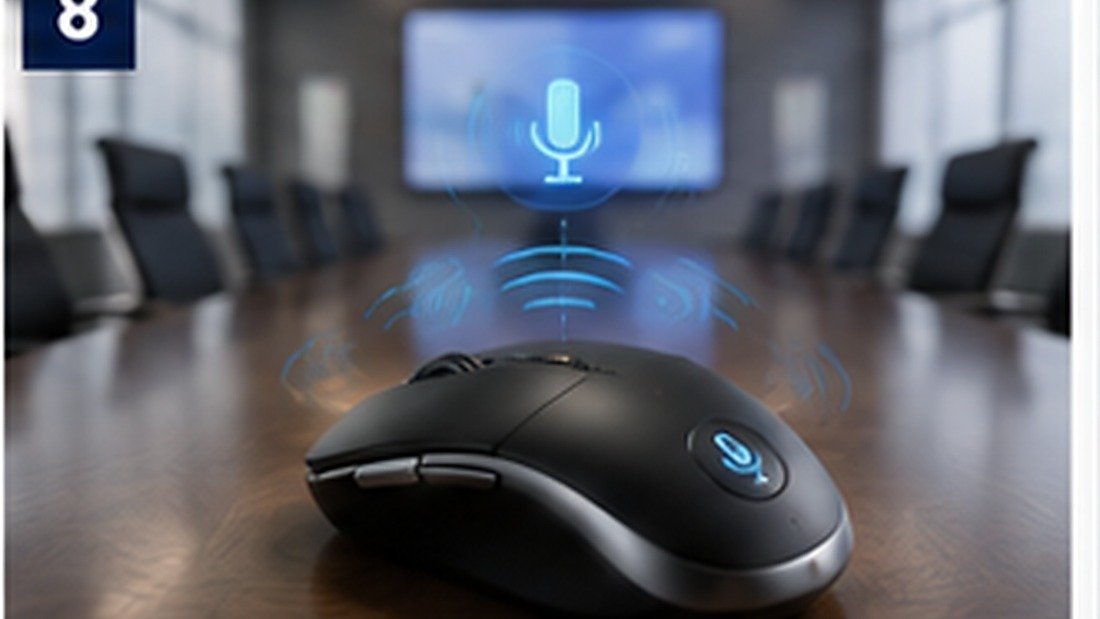
Why the Middle East Is an Early Market for AI Voice Peripherals
The Middle East office and education market has a practical reason to adopt voice-input peripherals: many professional users work across Arabic and English, and often a third language for trade. Typing Arabic on a standard Latin keyboard is slower and less accurate than typing English, which makes voice input a genuine productivity gain rather than a gimmick.
For distributors, this creates a category that sits between two familiar ones: computer peripherals and AI hardware. That overlap is an advantage in retail and B2B channels, because the product can be sold into IT resellers, corporate procurement, education technology suppliers, and e-commerce marketplaces with the same core SKU and different positioning.
An AI Voice Mouse is typically positioned as an office productivity device with voice input, translation, and shortcut control. Distributors should treat it as a multi-channel product, not a single-channel accessory.
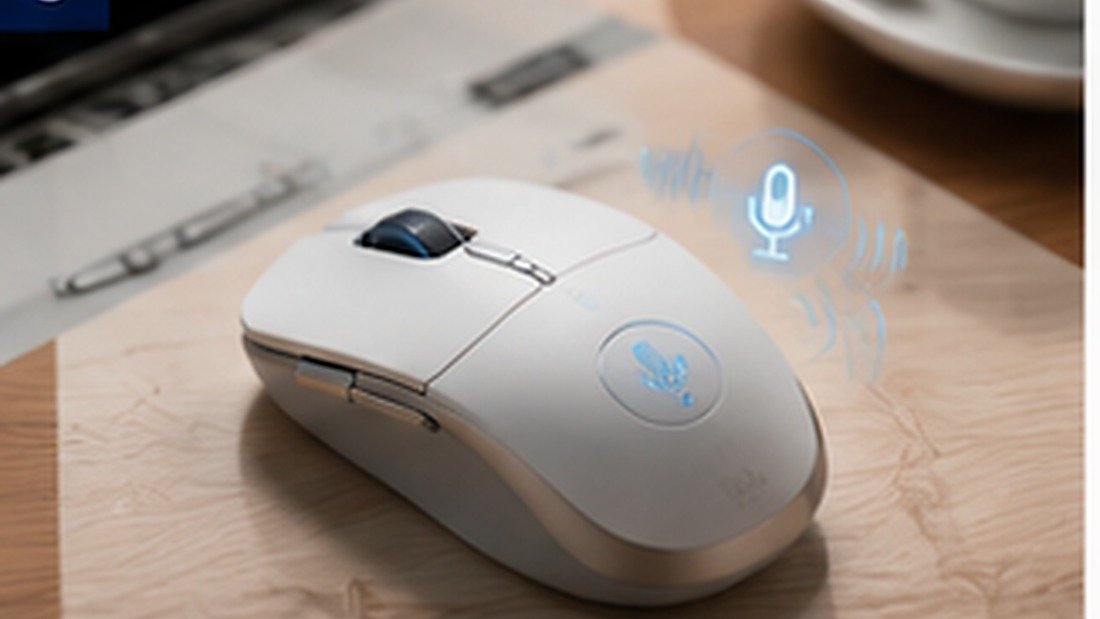
Check 1: Arabic and Multilingual Voice Accuracy
Voice accuracy is the single check that determines return rates. A distributor who imports 5,000 units with weak Arabic recognition will spend more on customer support and marketplace returns than on the original margin.
What to test
- Dictation accuracy in Modern Standard Arabic and at least one regional dialect the supplier claims to support.
- Switching between Arabic and English within the same sentence or paragraph.
- Performance in a normal office environment with background conversation, not a silent test room.
- Latency — how long the device takes to produce text after the user stops speaking.
- Behavior when the user has a strong accent or speaks quickly.
How to verify
Ask the supplier to send sample units and run your own test script: 20 fixed sentences per language, repeated three times, scored for accuracy. This produces a number you can compare across suppliers instead of an opinion.
Buyers should also ask whether voice processing happens on the device, in a companion app, or through a cloud service. Cloud-based recognition can deliver better accuracy but depends on connectivity and may involve data handling questions that corporate and government buyers will raise. Device-side processing reduces data exposure but may limit language coverage. Neither model is automatically better — the right choice depends on your channel.
Check 2: Firmware and App Roadmap
AI peripherals improve or degrade over time depending on firmware updates. A distributor buying a fixed hardware spec without a software commitment is buying a snapshot that may be outdated within a year.
Ask the supplier for:
- How often firmware updates are released, and how they are delivered to end users.
- Whether the companion app is maintained in-house or licensed from a third party.
- What language additions are planned, and on what schedule.
- Whether the supplier provides release notes that a distributor can forward to resellers.
This is where AI office productivity hardware differs from a conventional mouse. The hardware is a delivery mechanism; the software is the product experience.
For related AI devices in the same buying category, distributors may also evaluate AI translators, since buyers in multilingual markets often purchase voice input and translation as a bundle.
[Image suggestion: a distributor’s test bench with an AI voice mouse connected to a laptop running an Arabic dictation test. ALT: AI voice mouse sourcing sample test for Arabic dictation accuracy.]
Check 3: OEM vs ODM vs Private Label Options
Distributors frequently use the terms OEM, ODM, and private label interchangeably, which leads to mismatched quotations. The table below clarifies the difference before you request pricing.
| Model | What the Supplier Provides | What the Buyer Provides | Typical Use Case |
|---|---|---|---|
| Private Label | Existing device, buyer’s brand on product and packaging | Logo files, packaging artwork | Fast market entry, testing a new channel |
| OEM | Manufacturing to buyer’s specification and brand | Specifications, brand assets, sometimes industrial design | Distributors with defined product requirements |
| ODM | Design, firmware, app, and manufacturing | Requirements brief, brand assets, volume commitment | Brands wanting a differentiated model |
For a first Middle East distribution deal, private label or light OEM is usually the pragmatic entry point: it validates demand with minimal tooling risk. Full ODM makes sense once sell-through data supports a custom SKU.
STAR KING offers private label and OEM/ODM programs; specific options, minimum quantities, and tooling ownership terms depend on the project scope and should be confirmed per quotation. Review the private label OEM/ODM program for the general process before opening a project discussion.
Check 4: MOQ, Tooling, and Cost Structure
MOQ is not a single number. It changes with customization depth, and distributors who understand the tiers negotiate better.
- Stock SKU with standard packaging: usually the lowest MOQ tier.
- Logo customization on product and box: moderate MOQ, may involve setup costs.
- Custom packaging design: higher MOQ to justify printing runs.
- Custom firmware, app skin, or new industrial design: highest MOQ, and may include tooling charges.
Ask for a landed cost estimate, not just an FOB unit price. Landed cost includes freight, insurance, import duty, and local clearance. Duty rates and value-added tax treatment vary by destination country, and buyers should verify current rates with a customs broker rather than rely on a supplier’s estimate.
Also clarify who owns tooling and molds if a custom design is developed. Mold ownership should be stated in writing, including what happens if the relationship ends.
Check 5: Certification and Import Compliance
Certification is the check most often assumed and least often verified. Requirements depend on the specific product configuration, whether it contains a rechargeable lithium battery, and the destination market. Distributors should verify with a local compliance agent or customs broker.
| Area | What It Covers | Buyer Action |
|---|---|---|
| Wireless/RF approval | Devices with Bluetooth or other radio transmitters | Confirm the supplier holds approvals for the markets you sell into |
| Electrical safety (e.g., CE for EU) | Product safety and EMC | Request test reports, not just certificate images |
| Battery transport (e.g., UN38.3, MSDS) | Lithium battery shipping documentation | Confirm documents are available before booking freight |
| RoHS-style restrictions | Restricted substances in electronics | Verify scope covers the exact SKU and accessories |
Two practical points for Middle East distribution: certificates must match the exact model and configuration you import, and a certificate for a similar model from the same factory is not a substitute. Reference the official program pages for accurate scope — for example, the U.S. FCC equipment authorization procedures and the EU CE marking framework — and confirm local requirements separately.
[Image suggestion: compliance documents and a sample unit on a desk, with certification test report pages visible. ALT: AI voice mouse sourcing compliance documents and certification test reports.]
Check 6: Sample Testing Protocol
Samples are not a formality. They are the cheapest risk reduction available to a distributor, and they should be tested under conditions that resemble the end user’s environment.
A workable sample test plan
- Test at least three units from the production-intent batch, not a hand-built golden sample.
- Run the device for a full working day to check battery claims under real use.
- Pair the device with the operating systems your market actually uses, including older versions.
- Test the companion app installation process in both Arabic and English interfaces.
- Check pairing stability after the device is unplugged, reconnected, and used on a second computer.
- Record failure points with photos and timestamps for the supplier discussion.
Ask whether the supplier offers pre-shipment inspection and what the inspection checklist covers. A defined inspection routine, even a simple one, is a stronger quality signal than a verbal assurance.
Check 7: Lead Time, Battery Shipping, and After-Sales
Lead time planning should start from the day the deposit clears, not the day the order is placed. For custom packaging or private label, add artwork approval time and printing time.
Because AI voice mice typically contain a rechargeable lithium battery, shipping usually requires appropriate battery documentation and may be restricted by carrier and by air cargo rules. Buyers should confirm documents such as UN38.3 test summaries and safety data sheets are prepared before freight booking, and should expect some carriers to handle battery goods differently from standard cargo.
After-sales terms deserve equal attention:
- Warranty length and what it covers — device failure, battery degradation, or both.
- Whether spare units are included in the initial order for replacement handling.
- Who pays return freight, and how defective units are credited.
- Whether spare parts such as charging cables or dongles are stocked for your market.
Key Facts for Buyers
| Item | What Distributors Should Confirm |
|---|---|
| Languages supported | Arabic and English at minimum; confirm dialects separately |
| Processing model | On-device, app-based, or cloud — affects privacy and connectivity claims |
| Customization tiers | Private label, logo, packaging, custom firmware, full ODM |
| MOQ drivers | Customization depth, packaging print runs, tooling needs |
| Certification | Must match exact SKU; verify by destination market |
| Battery documentation | UN38.3 and MSDS availability before shipment |
| Lead time | Deposit-to-shipment, plus artwork approval for custom orders |
| Warranty and spares | Coverage terms, replacement policy, spare parts availability |
Common Mistakes and Buyer Red Flags
Common mistakes
- Approving a PO based on a demo video instead of hands-on samples.
- Assuming an existing certificate covers a new model or configuration.
- Comparing suppliers on FOB price only, without landed cost.
- Accepting verbal firmware update commitments with no written schedule.
- Ordering custom packaging before artwork and language checks are approved.
Red flags
- Certificates that cannot be linked to a specific model number.
- Refusal to send production-intent samples or to allow third-party inspection.
- Unclear answers about who owns tooling and mold design.
- No documented process for firmware or app updates.
- Pressure to sign an exclusive distribution agreement before samples are tested.
Distributors who want a broader view of supplier evaluation criteria may find the STAR KING resources blog useful for planning the next stage of due diligence.
Practical Buyer Checklist
- Target languages and dialects defined and tested
- Sample units from production-intent batch requested
- Voice accuracy test script scored and documented
- Firmware and app update policy confirmed in writing
- Customization tier selected: private label, OEM, or ODM
- MOQ, setup costs, and tooling ownership clarified
- Certification scope matched to exact model and market
- Battery shipping documents requested
- Landed cost estimated with a customs broker
- Lead time confirmed from deposit, including artwork approval
- Warranty terms, spare parts, and return policy reviewed
- Pre-shipment inspection method agreed
FAQ
What is the minimum order quantity for private label AI voice mice?
MOQ depends on the customization tier. Stock SKUs with logo printing typically carry the lowest requirement, while custom packaging, firmware, or industrial design raise the threshold. Request a written MOQ table for each tier before comparing suppliers.
Do AI voice mice need certification for Middle East markets?
Requirements vary by country and by whether the device includes wireless transmission and a rechargeable battery. Buyers should confirm current rules with a local compliance agent and verify that certificates match the exact model being imported.
How should a distributor test Arabic voice accuracy?
Use a fixed test script of about 20 sentences per language, repeated three times per device, in a normal office environment. Score accuracy per device so results are comparable across suppliers.
Can the voice processing work without an internet connection?
It depends on the model. Some devices process speech locally, some rely on a companion app, and some use cloud services. Ask the supplier to state which model applies and what happens when connectivity is limited.
Are samples charged?
Sample policies vary. Many suppliers charge for samples and shipping, sometimes crediting the cost against a later bulk order. Confirm the policy, and confirm that samples come from the production-intent batch.
What documents are needed to ship a mouse with a lithium battery?
Lithium battery shipments usually require documents such as UN38.3 test summaries and safety data sheets, and carriers may apply specific handling rules. Confirm documentation with the supplier and the freight forwarder before booking.
Who owns the tooling if we develop a custom model?
Tooling ownership should be defined in the supply agreement. Buyers investing in molds should confirm in writing who holds the tooling and what happens to it if the commercial relationship ends.
Conclusion
AI voice mouse sourcing for Middle East distribution succeeds or fails on the same fundamentals as any hardware category: verified performance, written commitments, matched certification, and clear cost and lead time. Voice accuracy in the languages your buyers actually use is the first filter, because no amount of competitive pricing compensates for a device that frustrates end users. From there, firmware roadmap, customization tier, MOQ structure, and after-sales terms determine whether a distribution agreement is repeatable. Distributors who test samples before signing and document every commitment will be in a stronger position in every negotiation that follows.
Next Step
If you are evaluating AI voice peripherals for a Middle East distribution program, the fastest way to move forward is to test the product and confirm specifications directly. Request product samples to run your own language and accuracy tests, and discuss customization, MOQ, and certification documentation for your target markets with the STAR KING team.
Discuss Your Smart Wearable OEM/ODM Project
Planning a smart ring, smart watch, smart band, AI glasses, AI translator, or AI voice mouse project? Contact STAR KING to discuss product positioning, sample testing, customization scope, certification requirements, lead time, and quotation details.

Team Star King

Scan WhatsApp QR code