AI Translators for Southeast Asia: 7 Checks Importers Must Run Before Purchase
AI Translators for Southeast Asia: 7 Checks Importers Must Run Before Purchase
AI translators for Southeast Asia succeed at import scale only when a supplier matches your exact language mix, connectivity model, landed-cost ceiling, and certification files. Before issuing a purchase order, importers should verify seven items: language coverage and update policy, offline vs. online translation, SIM/Wi-Fi/eSIM connectivity, battery and charge-port standard, per-unit landed cost at your MOQ, certification and battery documentation for your target countries, and OEM/private-label scope. This guide explains how to run each check and how to compare suppliers with a structured scorecard.
Table of Contents
Table of Contents
AI translators for Southeast Asia: Short Answer
To buy AI translators for Southeast Asia with confidence, request: (1) a live demo in your top 3 languages, (2) the language list and OTA update policy in writing, (3) the offline/online architecture and data plan terms, (4) the battery spec, charge port, and UN38.3-related documentation, (5) your landed-cost model at three MOQs, (6) certification status for each destination country, and (7) a signed sample with your logo and packaging. If any of these is missing, your purchase risk rises sharply after goods ship.
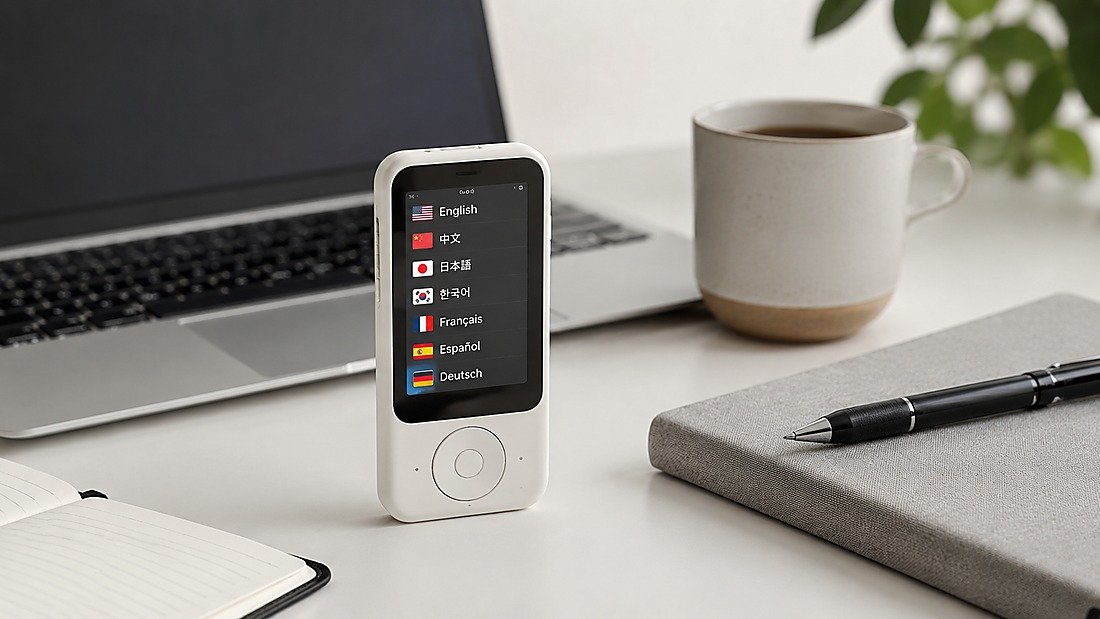
Table of Contents
- Why Southeast Asia Buyers Order AI Translators Differently
- Check 1 — Language Coverage, Dialects, and Update Policy
- Check 2 — Offline vs. Online Translation Architecture
- Check 3 — Connectivity: SIM, Wi-Fi, eSIM, and Data Cost
- Check 4 — Battery, Charging, and Travel Constraints
- Check 5 — Landed Cost and MOQ Planning
- Check 6 — Certification, Battery, and Import Compliance
- Check 7 — OEM/Private Label Scope and Tooling
- Comparison Table: Three Buyer Profiles
- Common Mistakes and Buyer Red Flags
- Practical Buyer Checklist (Pre-PO)
- FAQ
- Conclusion
Key Takeaways
- Language coverage numbers mean little without a live demo in your exact buyer languages and a written update policy.
- Offline translation affects battery, memory, and price; confirm which languages work without internet.
- eSIM/SIM/Wi-Fi choices change your support burden and your customers’ monthly costs.
- Build a landed-cost model at three MOQ tiers before you accept a quoted FOB price.
- Certification requirements depend on product configuration and destination country — verify per SKU.
- Private-label scope should cover logo, packaging, app name, and language defaults before tooling begins.
- A pre-shipment inspection plan reduces the risk of receiving mixed-firmware or mismatched-language units.
Key Facts for Buyers
| Item | What to Ask | Why It Matters |
|---|---|---|
| Language coverage | Full list + dialects + update policy | Prevents post-launch returns when buyers expect specific languages |
| Translation mode | Offline vs. online; toggle control | Affects battery, memory, cost, and rural usability |
| Connectivity | SIM slot, eSIM, Wi-Fi, Bluetooth | Defines data plan needs and support tickets |
| Battery | Capacity, runtime, charge port | Field reliability and accessory planning |
| Compliance | Certificates per destination country | Customs clearance and retailer acceptance |
| OEM/ODM scope | Logo, app name, packaging, language defaults | Brand differentiation and repeat orders |
| MOQ | Tiered pricing at 3 volumes | Cash flow and sell-through planning |
Why Southeast Asia Buyers Order AI Translators Differently
Southeast Asia is not one market. Singapore, Malaysia, and Thailand often favor premium, English-forward devices sold through organized retail and corporate channels. Indonesia, Vietnam, and the Philippines include large price-sensitive e-commerce tiers that reward flexible MOQs and strong local-language performance. Buyers in this region frequently need English, Mandarin Chinese, Bahasa Indonesia/Malay, Thai, Vietnamese, Tagalog, plus major regional trade languages like Japanese and Korean.
That reality changes what “good” looks like. A device with 100 languages but weak offline performance in Bahasa Indonesia will underperform in a Jakarta e-commerce listing. A high-end device with excellent offline accuracy but a rigid 3,000-unit MOQ may not fit a startup distributor in Ho Chi Minh City. Before purchase, define the top five languages your buyers will actually test on the demo unit.
Importers typically sell AI translators through retail chains, education distributors, travel retail, corporate gifting, and marketplace sellers. Each channel has a different tolerance for FCC/CE paperwork, warranty handling, and firmware update cadence. Your purchase decision should reflect the channel, not just the spec sheet.
Check 1 — Language Coverage, Dialects, and Update Policy
Every supplier quotes a number. Few can explain what happens when a buyer in Medan or Cebu expects a dialect that is not in the current build. Treat the language list as a living document, not a static feature.
What to request
- A written language list with dialect notes (e.g., Mandarin vs. Cantonese, Bahasa Indonesia vs. Bahasa Melayu).
- The OTA firmware update process: how often, who controls it, and whether it is free.
- A live demo in your top three languages during the sample review.
- Clarity on translation direction — 1-way, 2-way, or multi-party conversation mode.
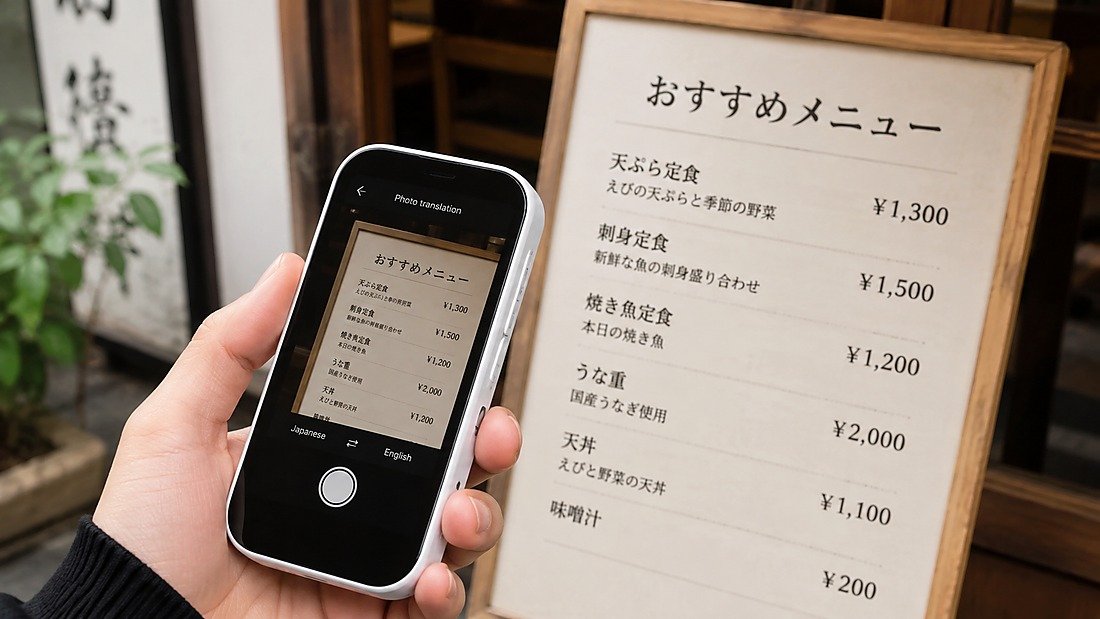
Ask the supplier to demo a real sentence your buyers will use: airport check-in, a hospital intake question, a factory safety instruction. Consumer-style marketing demos rarely represent those scenes accurately. For broader product context, see our AI translators product page.
If your buyers care about corporate gifting or field operations, cross-check the device against your deployment scenario. Devices intended for workplace use often sit alongside office hardware, so a look at the AI office productivity solution can help you align your pitch to the right buyer.
Check 2 — Offline vs. Online Translation Architecture
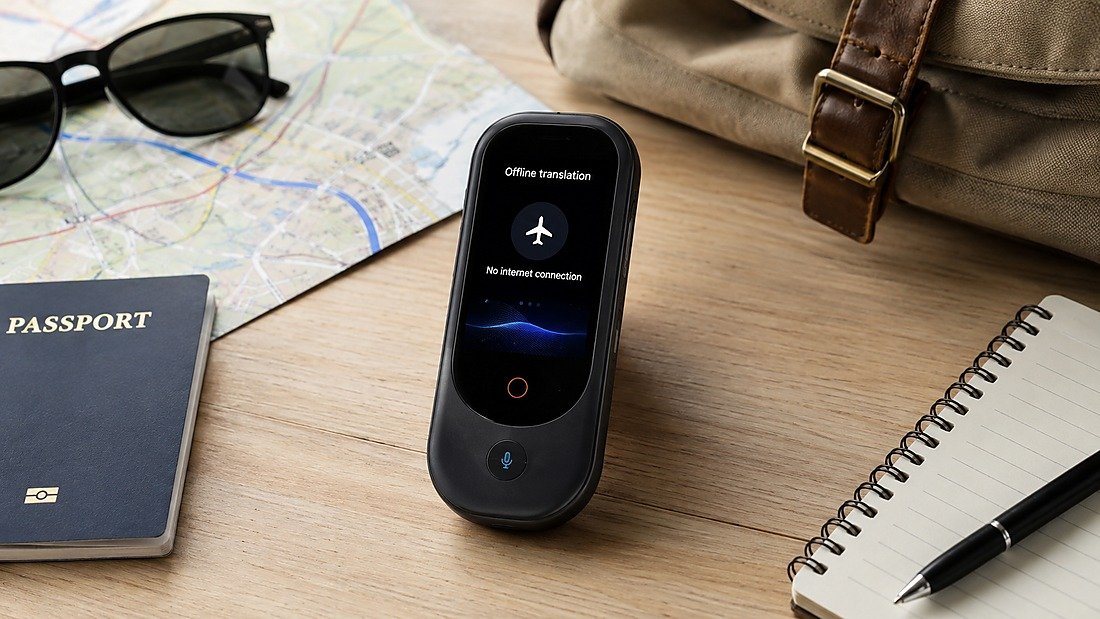
Offline translation is the single largest technical decision in this category. It determines memory size, battery drain, bill of materials, and whether your end customer needs a data plan to use the device at all.
Practical implications
- Fully online devices are usually lighter and cheaper but depend on Wi-Fi or SIM data.
- Hybrid devices support core languages offline and fall back online for long-tail pairs.
- Fully offline devices are often the most useful in rural or cross-border travel but cost more and update less frequently.
Ask the supplier to define: which languages work offline; how large the offline models are; how firmware updates add or remove languages; and whether an offline-to-online switch is user-controllable. Buyers importing into Indonesia, Vietnam, and the Philippines should weigh offline coverage against data affordability; buyers serving Singapore and Malaysia corporate accounts often accept online-only designs with premium look-and-feel.
Check 3 — Connectivity: SIM, Wi-Fi, eSIM, and Data Cost
Connectivity decisions show up on your support desk long after the PO. Each option comes with trade-offs.
| Connectivity | Buyer Benefit | Trade-off to Manage |
|---|---|---|
| Wi-Fi only | Lowest unit cost; ideal for classrooms and office use | Not usable outdoors or in transit |
| SIM slot | Works anywhere with a local SIM | Requires you or the end user to source data plans |
| eSIM | Activates without a physical SIM; travel retail friendly | Carrier support varies by country; may need per-market deals |
| Wi-Fi + SIM/eSIM | Flexible across channels | Highest BOM; more firmware paths to test |
Confirm whether the device requires a paid app subscription, a bundled data plan, or a free tier. Subscription requirements affect your retail price and your customer’s total cost of ownership. For regional network context, buyers can consult the GSMA for mobile ecosystem data.
Check 4 — Battery, Charging, and Travel Constraints
Battery behavior is a real purchase variable, not a spec-sheet footnote. A translator that lasts a full trade show day is a different product from one that needs a midday charge.
- Confirm capacity, expected runtime for continuous translation, and standby time.
- Check the charge port — USB-C is now expected in most Southeast Asian markets.
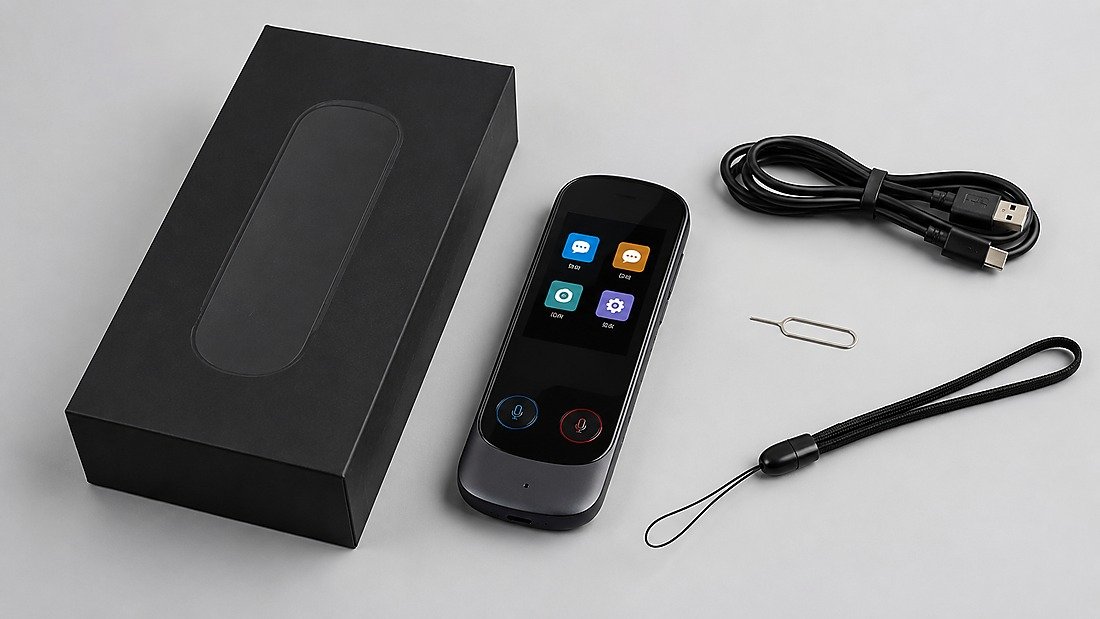
- Ask whether the device supports fast charging and whether the charger is bundled.
- Ask whether the battery is user-replaceable or factory-serviceable.
Lithium battery logistics are non-negotiable. Air shipments typically require IATA Dangerous Goods Regulations alignment and a UN38.3-related test summary. Buyers should verify documentation for each SKU rather than assume a blanket approval.
Need help matching battery behavior to a specific sales channel? You can request samples and a quotation to test against your real-world scenarios.
Check 5 — Landed Cost and MOQ Planning
FOB price is not your purchase price. Build a landed-cost model before you commit.
| Cost Layer | Typical Drivers | Buyer Action |
|---|---|---|
| FOB unit price | MOQ, BOM, offline model size, packaging | Request tiered quotes at 3 MOQs |
| Freight | Mode, weight, battery handling | Compare air vs. sea with duty estimate |
| Duty & tax | HS code, country rules | Confirm classification with your broker |
| Compliance | Certificates, labeling, manuals | Quote cost and timeline upfront |
| After-sales | Spares, return rate, warranty | Budget 2–5% of revenue, verify locally |
MOQ pressure usually appears at three points: custom packaging, custom logo/tooling, and offline language pack volume. Ask for a matrix: MOQ vs. unit price vs. lead time vs. customization level. For foundational reading on tiered sourcing, see our private label OEM/ODM solution.
Check 6 — Certification, Battery, and Import Compliance
Compliance in Southeast Asia is country-specific. Confirm the exact SKU, destination country, and product configuration before assuming any certification applies.
- CE/FCC may be required by some destination markets and retail partners; verify per SKU.
- RoHS and similar material restrictions may apply depending on the market.
- UN38.3 battery test summaries are commonly required for air freight of lithium batteries.
- MSDS may be requested by freight forwarders.
- Local type approval (e.g., telecom/radio) may be required for Wi-Fi/SIM devices; buyers should verify with a local agent.
Ask for the certificate PDFs, issuing lab, and the exact model number listed. The FCC maintains a public equipment authorization database at FCC OET Equipment Authorization, which buyers can use to verify claims.
Check 7 — OEM/Private Label Scope and Tooling
Private label AI translators are increasingly common in Southeast Asia, especially for corporate gifting and education. The scope, though, is broader than a printed logo.
- Logo customization: device shell, boot screen, packaging, manual.
- App customization: app name, app icon, splash screen, default languages.
- Packaging customization: retail box, inserts, warranty card, language of user manual.
- Firmware customization: default language order, region defaults, offline pack selection.
- Tooling development: only needed if you require a new housing; clarify ownership and amortization.
Before purchase, agree on who owns the tooling, what happens if the relationship ends, and how spare parts are supplied. Also clarify your MOQ rights if the supplier later changes firmware.
Comparison Table: Three Buyer Profiles
| Profile | Priority | Recommended Setup | Typical Risk |
|---|---|---|---|
| Startup brand (1,000-unit pilot) | Low MOQ, fast reorder | Stock model + logo + custom box | Firmware lock-in; weak offline languages |
| Distributor (5,000-unit range) | Margins and after-sales | Standard model + SIM/eSIM variant | Data plan cost, local certification gaps |
| Corporate/retail chain (10,000+ units) | Brand fit and compliance | OEM housing + app + multi-language pack | Long tooling timeline; update governance |
Common Mistakes and Buyer Red Flags
- Accepting a language count without a live demo in your top five languages.
- Assuming offline coverage exists when the SKU is online-only.
- Ignoring data plan economics for end users.
- Treating a generic CE/FCC statement as proof for every SKU.
- Not requesting UN38.3 and MSDS before booking air freight.
- Approving packaging without a physical pre-production sample.
- Ignoring firmware update governance — who pushes, how often, and at what cost.
- Failing to confirm tooling ownership or spare parts supply in writing.
Red flags: no demo unit available; refusal to share the actual language list; shipping documents that list a different model number than quoted; vague MOQ language; no named after-sales contact.
Practical Buyer Checklist (Pre-PO)
- Live demo completed in your top 3 languages.
- Language list and update policy in writing.
- Offline/online architecture confirmed for each SKU.
- Connectivity choice confirmed (Wi-Fi/SIM/eSIM).
- Battery spec, charge port, and bundled accessories confirmed.
- Tiered MOQ quotes obtained at 3 volumes.
- Landed cost model built with duty, freight, compliance costs.
- Certification PDFs reviewed per destination country and SKU.
- UN38.3 and MSDS available for freight booking.
- OEM/private-label scope documented: logo, app, packaging, firmware.
- Sample signed off; pre-shipment inspection plan agreed.
FAQ
How many languages do AI translators for Southeast Asia typically cover?
Most modern AI translators support dozens of languages online, but offline coverage is usually narrower. Importers should request a written language list and confirm accuracy in Bahasa Indonesia, Thai, Vietnamese, Tagalog, and Mandarin during a live demo.
Do I need CE or FCC certification to import into Southeast Asia?
Requirements vary by country and product configuration. CE and FCC are commonly requested by retailers and some markets, but local approvals may also apply. Buyers should verify with a local customs agent or regulator for each destination.
Can I lower MOQ for a pilot launch?
Yes, if you accept a stock housing, standard firmware, and neutral packaging. Custom tooling and custom app builds typically require higher volumes because they carry setup costs.
Are offline AI translators worth the higher cost?
For buyers targeting rural areas, cross-border travel, or field operations, offline capability can reduce support issues and improve customer satisfaction. For corporate and retail channels in major cities, online-only designs often suffice.
Who handles firmware updates after purchase?
Ask for a written update policy: who initiates updates, whether they are free, how end users apply them, and whether they can affect certification. Verify this in the supply agreement.
What should I budget for landed cost beyond the FOB price?
Typical added layers include freight, duty/tax, compliance documentation, and warranty/after-sales. Buyers should model at least three cost layers and validate duty classification with a local broker.
Can I private-label the AI translator for my brand in Southeast Asia?
Often yes, but scope matters. Logo, packaging, app name, boot screen, and default language order are common customizations. Tooling ownership, spare parts supply, and firmware governance should be agreed in writing before the PO.
Conclusion
Buying AI translators for Southeast Asia at scale is a discipline of verification. The seven checks here — language coverage, offline architecture, connectivity, battery, landed cost, compliance, and OEM scope — cover nearly every decision that determines whether a shipment performs or returns. The most reliable importers are not the ones who negotiate the lowest FOB price; they are the ones who build a landed-cost model, verify certification per SKU, run a live demo in their buyers’ languages, and lock down private-label scope before tooling.
As you compare suppliers, focus on evidence: written language lists, demo recordings, certificate PDFs, tiered MOQ quotes, and signed samples. Those five artifacts separate a safe purchase order from a costly one.
STAR KING CTA
Ready to move from evaluation to purchase? STAR KING supports importers across Southeast Asia with AI translator samples, tiered MOQ quotations, private-label logo and packaging customization, and documentation support for freight and compliance. Compare specifications, confirm certification requirements, or discuss an OEM/ODM program by requesting a quotation.
Discuss Your Smart Wearable OEM/ODM Project
Planning a smart ring, smart watch, smart band, AI glasses, AI translator, or AI voice mouse project? Contact STAR KING to discuss product positioning, sample testing, customization scope, certification requirements, lead time, and quotation details.

Team Star King

Scan WhatsApp QR code