
AI voice mouse procurement: AI Voice Mouse for Corporate Procurement in the Middle East: 7 Critical Checks Before You Buy
November 8, 2026 · Team Star King
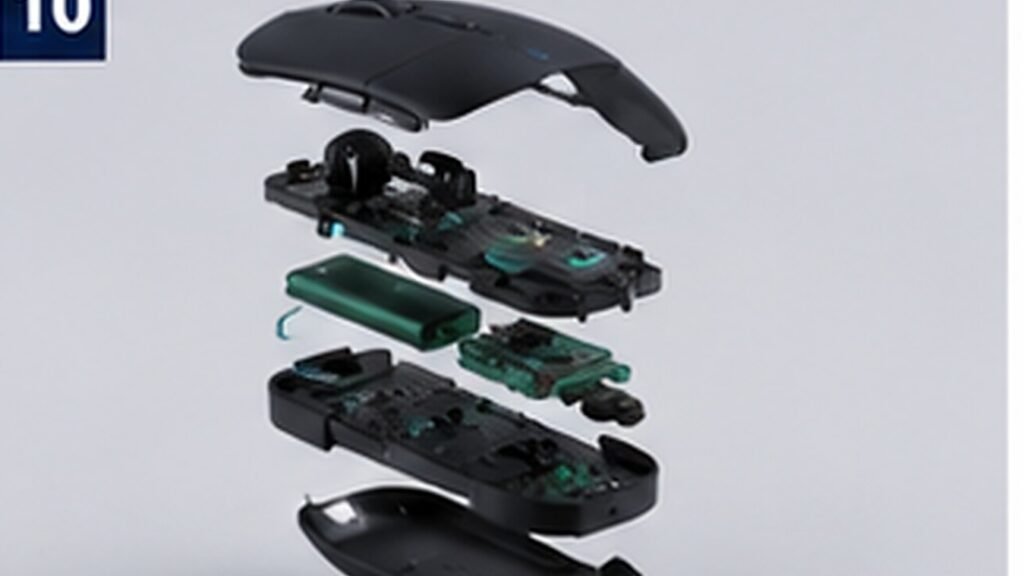
AI Voice Mouse for Corporate Procurement in the Middle East: 7 Critical Checks Before You Buy
When evaluating AI voice mouse procurement in the Middle East, corporate buyers should prioritize Arabic language support, regional compliance, supplier reliability, and total cost of ownership. This guide outlines seven critical checks—from speech recognition accuracy to certification and after-sales service—to help procurement teams make informed decisions and avoid costly mistakes.
Table of Contents
Table of Contents
AI voice mouse procurement: Table of Contents
- Short Answer
- Key Takeaways
- Key Facts for Buyers
- Introduction
- 1. Define Your Use Case and User Profile
- 2. Verify Arabic Language Support and Accuracy
- 3. Assess Hardware and Software Integration
- 4. Confirm Compliance with Regional Standards
- 5. Evaluate Supplier Reliability and OEM/ODM Capabilities
- 6. Plan for Testing, Piloting, and Quality Assurance
- 7. Calculate Total Cost of Ownership and ROI
- Common Mistakes and Red Flags
- Buyer Checklist
- FAQ
- Conclusion
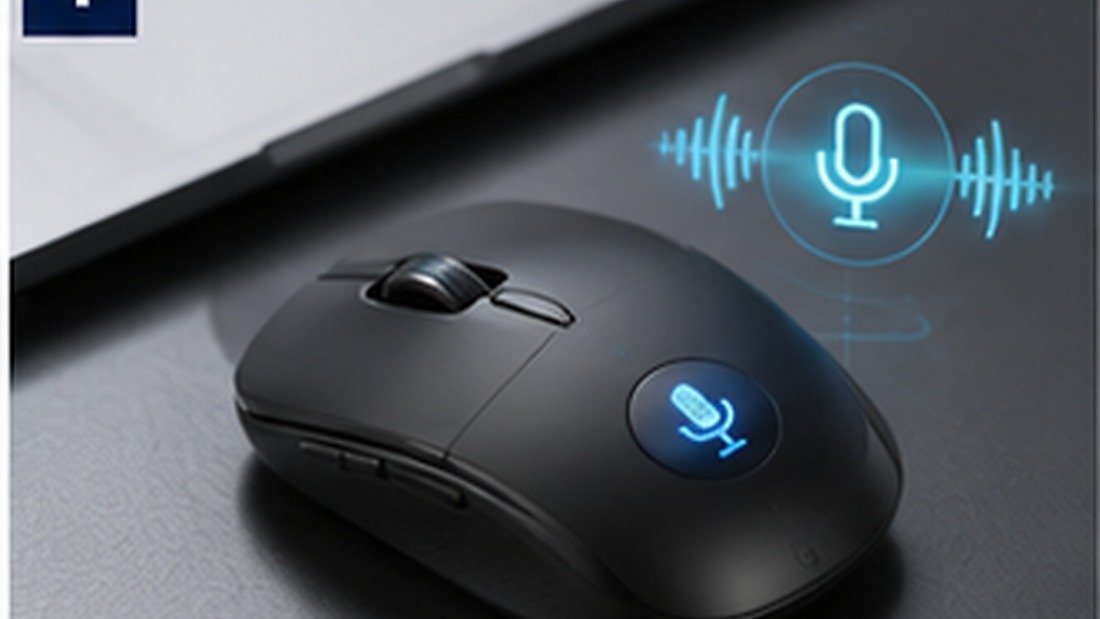
Short Answer
For corporate procurement in the Middle East, the most critical factors in AI voice mouse procurement are Arabic language support, compliance with regional certifications, supplier track record, and after-sales service. Buyers should request samples for pilot testing, verify certifications, and clarify MOQs and lead times before committing to bulk orders.

Key Takeaways
- Arabic support is non-negotiable for most Middle East deployments; test accuracy with local dialects.
- Compliance may require G-Mark, CITC, or other regional certifications depending on the country.
- Evaluate suppliers on their OEM/ODM experience, quality control processes, and references.
- Pilot testing with a sample batch is essential to validate performance in your environment.
- Calculate total cost of ownership (TCO) including software subscriptions, training, and support.

Key Facts for Buyers
| Factor | Typical Requirement | Buyer Action |
|---|---|---|
| Language Support | Arabic (MSA and dialects), English | Request a demo and test with native speakers |
| Compliance | G-Mark (GCC), CITC (Saudi Arabia), CE/FCC for import | Verify certificates and test reports |
| MOQ | 500–1,000 units for OEM; lower for private label | Negotiate based on pilot results |
| Lead Time | 30–60 days after PO | Confirm schedule and shipping terms |
| Warranty | 12–24 months | Clarify RMA process and local support |
| Software Updates | Regular firmware/software updates | Check update policy and roadmap |

Introduction
AI voice mice are gaining traction in Middle East enterprises as tools to boost productivity, especially for multilingual staff. However, procurement teams face unique challenges: ensuring Arabic language accuracy, navigating regional certification, and selecting a supplier who can meet volume and customization needs. This guide provides a structured approach to AI voice mouse procurement, with seven critical checks that cover technical, commercial, and compliance aspects. By following these steps, you can mitigate risks and secure a solution that delivers long-term value.

1. Define Your Use Case and User Profile
Before shortlisting suppliers, clearly define how the AI voice mouse will be used. Consider:
- Primary tasks: Dictation, translation, voice commands, or accessibility?
- User environment: Office, call center, field, or shared spaces?
- Language needs: Arabic, English, or other languages? Which dialects?
- Integration: Does it need to work with existing software (e.g., Microsoft Office, CRM)?
For example, a call center may require high accuracy in Arabic dialects and seamless integration with telephony systems, while a corporate office might prioritize multilingual dictation and ergonomic design. Documenting requirements upfront will guide your evaluation and help suppliers propose suitable configurations.
2. Verify Arabic Language Support and Accuracy
Arabic support is often the deciding factor in the Middle East. Many AI voice mice claim multilingual support, but accuracy varies. Request a demo unit and test with native speakers using real-world scenarios:
- Test Modern Standard Arabic (MSA) and local dialects (e.g., Gulf, Egyptian, Levantine).
- Evaluate accuracy in noisy environments (open office, call center).
- Check support for code-switching (Arabic/English mixed speech).
- Assess latency and responsiveness.
Ask the supplier for details on their speech recognition engine, training data, and continuous improvement process. A supplier with a strong track record in Arabic NLP is preferable.
3. Assess Hardware and Software Integration
AI voice mice combine hardware (microphone, buttons, ergonomics) and software (speech recognition, AI models). Evaluate:
- Hardware quality: Build materials, battery life, connectivity (USB, Bluetooth), compatibility with OS (Windows, macOS).
- Software ecosystem: Driver support, firmware update mechanism, companion app features.
- Integration: Compatibility with enterprise software (e.g., Office 365, Zoom, CRM) and support for custom APIs.
If you require custom integrations, discuss with the supplier early. For more on AI office productivity solutions, see AI Office Productivity.
4. Confirm Compliance with Regional Standards
Compliance is a critical procurement gate. In the Middle East, requirements vary by country:
- GCC: G-Mark certification for electronic products.
- Saudi Arabia: CITC approval for wireless devices.
- UAE: TDRA registration for telecom equipment.
- Other markets: CE (Europe) or FCC (US) may be accepted as a baseline.
Always request copies of certificates and test reports. Note that certification status depends on the specific product configuration and target market; buyers should verify with local authorities. For general compliance guidance, refer to the International Electrotechnical Commission (IEC).
5. Evaluate Supplier Reliability and OEM/ODM Capabilities
Choose a supplier with proven experience in AI hardware and a solid quality management system. Consider:
- Manufacturing experience: Years in business, production capacity, and existing clients (references).
- Quality control: Incoming inspection, in-process checks, final testing, and pre-shipment inspection.
- OEM/ODM services: Customization options (logo, packaging, firmware), MOQs, and development timeline.
- Supply chain stability: Component sourcing, lead time management, and logistics partners.
For buyers seeking private label AI devices, STAR KING offers flexible OEM/ODM programs; see Private Label OEM/ODM.
6. Plan for Testing, Piloting, and Quality Assurance
Never skip pilot testing. Request sample units from shortlisted suppliers and run a trial with a representative user group for 2–4 weeks. Evaluate:
- Speech recognition accuracy in your environment.
- Hardware durability and battery life.
- Software stability and update experience.
- User feedback on ergonomics and ease of use.
Also, review the supplier’s quality assurance process: do they perform drop testing, aging testing, and functional testing on every batch? Request pre-shipment inspection reports. For more on quality, explore Smart Retail & E-commerce solutions.
7. Calculate Total Cost of Ownership and ROI
The purchase price is only part of the cost. Consider:
- Unit price: Negotiate based on volume and customization.
- Software subscriptions: Some AI features may require ongoing fees.
- Training and support: Budget for user training and technical support.
- Maintenance and replacements: Warranty terms and RMA costs.
- Import duties and logistics: Factor in shipping and customs clearance.
Build a TCO model over 3–5 years to compare suppliers. A higher upfront price may be justified by lower support costs and longer lifespan.
| Cost Category | Typical Range (per unit) | Notes |
|---|---|---|
| Unit Price (FOB) | $25–$50 | Depends on specs and volume |
| Software Subscription | $0–$20/year | Optional; check if included |
| Shipping & Customs | 10–20% of unit price | Varies by country and method |
| Training | $5–$10/user | One-time or annual |
| Warranty & Support | 3–5% of unit price/year | Negotiate service level |
Common Mistakes and Red Flags
Avoid these pitfalls in AI voice mouse procurement:
- Overlooking Arabic accuracy: Assuming generic multilingual support is sufficient without testing local dialects.
- Ignoring certification: Importing devices without required regional approvals (e.g., G-Mark, CITC).
- Choosing on price alone: Low-cost suppliers may cut corners on quality or support.
- Skipping pilot testing: Deploying without validation can lead to user rejection and sunk costs.
- Unclear MOQs and lead times: Failing to confirm scalability and delivery schedules.
- No local support: Without a regional service partner, RMA can be slow and costly.
Red flags include suppliers who cannot provide test reports, are evasive about certifications, or lack references from similar projects.
Buyer Checklist
Use this checklist to evaluate AI voice mouse suppliers:
- ☐ Define use case and user profile (tasks, language, environment).
- ☐ Request demo unit and test Arabic accuracy with native speakers.
- ☐ Verify hardware specs and software integration capabilities.
- ☐ Confirm required certifications for each target country.
- ☐ Assess supplier’s OEM/ODM experience and quality control process.
- ☐ Review sample test reports and pre-shipment inspection procedures.
- ☐ Conduct pilot testing with a representative user group.
- ☐ Calculate TCO including subscriptions, training, and support.
- ☐ Clarify MOQ, lead time, payment terms, and warranty.
- ☐ Check after-sales support and local RMA process.
FAQ
What is the typical MOQ for AI voice mice?
MOQs vary by supplier and customization level. For standard models, MOQs may start at 500 units; for full OEM/ODM with custom branding, MOQs can be 1,000 units or more. Always negotiate based on your pilot results and forecast.
How can I verify Arabic speech recognition accuracy?
Request a sample unit and test it with native Arabic speakers from your target region, using realistic tasks and environments. Ask the supplier for accuracy benchmarks and details on their language model training data.
Which certifications are required for AI voice mice in the Middle East?
Requirements vary by country. Commonly, G-Mark is needed for GCC countries, CITC approval for Saudi Arabia, and TDRA registration for the UAE. CE or FCC may be accepted as a baseline. Always confirm with local authorities or a certified compliance consultant.
What should I look for in a supplier’s quality control process?
Look for documented QC procedures including incoming material inspection, in-process checks, final testing, and pre-shipment inspection. Request test reports for drop, aging, and functional tests. A supplier with ISO 9001 certification is preferable.
How long does shipping and customs clearance take for bulk orders?
Lead times typically range from 30 to 60 days after order confirmation, depending on production schedules and shipping method. Customs clearance can add 1–2 weeks. Factor these into your deployment timeline.
Can AI voice mice be customized with our corporate branding?
Yes, most suppliers offer logo and packaging customization. Some also provide firmware and software customization. Discuss your requirements early and confirm MOQs and development timelines.
What is the typical warranty period?
Standard warranties are 12–24 months. Clarify what is covered, the RMA process, and whether local support is available. Consider negotiating an extended warranty or service level agreement for large deployments.
Conclusion
AI voice mouse procurement in the Middle East requires careful evaluation beyond the product itself. By following these seven checks—focusing on Arabic support, compliance, supplier reliability, testing, and total cost—corporate buyers can select a solution that enhances productivity and minimizes risk. Partnering with an experienced supplier like STAR KING, which offers OEM/ODM flexibility and quality assurance, can streamline the process. For more details on AI hardware, explore our AI Voice Mouse product page.
Next Steps
Ready to evaluate AI voice mice for your organization? Request a quotation or discuss your OEM/ODM project with our team. We can provide samples, certification documentation, and customization options tailored to your needs.
Useful Official References for Buyers
- FCC equipment authorization guidance
- European Commission CE marking information
- Bluetooth SIG specifications
Discuss Your Smart Wearable OEM/ODM Project
Planning a smart ring, smart watch, smart band, AI glasses, AI translator, or AI voice mouse project? Contact STAR KING to discuss product positioning, sample testing, customization scope, certification requirements, lead time, and quotation details.

Team Star King

Scan WhatsApp QR code
Leave a Reply