
AI Voice Mouse OEM for Middle East System Integrators: 7 Checks Before You Request a Quote in 2026
October 9, 2026 · Team Star King
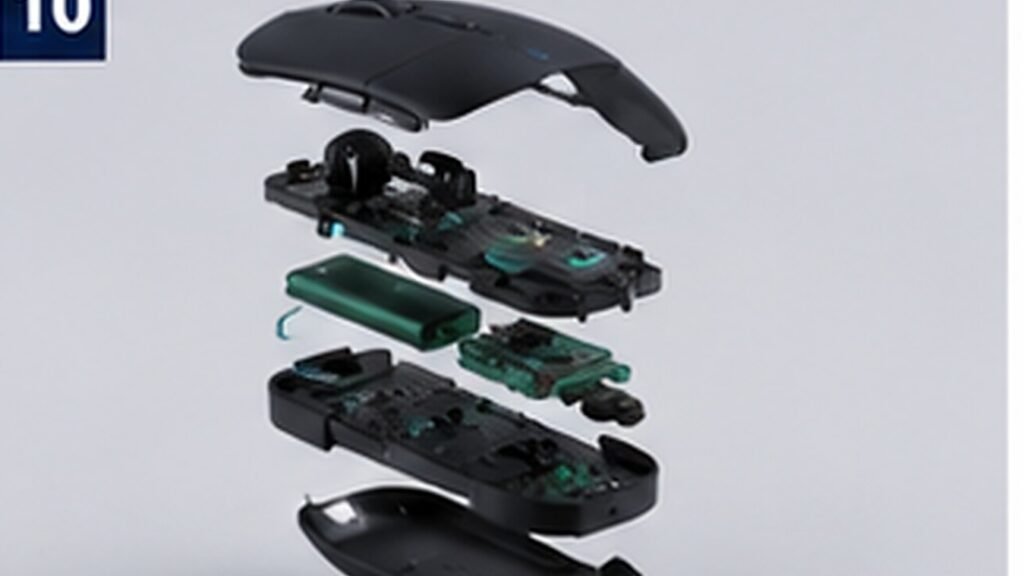
AI Voice Mouse OEM for Middle East System Integrators: 7 Checks Before You Request a Quote in 2026
AI voice mouse OEM: Short Answer
Before you send an RFQ for an AI voice mouse OEM project to Middle East system integrators’ procurement teams, confirm seven things: voice engine coverage for Arabic, RF and wireless certification for GCC markets, MOQ and pricing tiers, pilot quantities and lead time, firmware and app customization options, packaging and brand ownership terms, and after-sales terms. This guide walks through each check with practical evaluation criteria and a buyer checklist.
Table of Contents
Table of Contents
Introduction
If you are serving Middle East system integrator projects — government offices, enterprise rollouts, “smart office” desks, call centers, conference rooms, healthcare administration, education IT — your customers are demand-driven: they need a reliable, project-ready AI voice mouse with Arabic and English voice support, low deployment friction, and a documented traceability trail. System integrators rarely buy on unit price alone; they buy on configuration stability, pilot turnaround, and compliance paperwork that survives procurement audits. This guide explains what an AI voice mouse is in a B2B context, then lays out seven checks every system integrator should run before issuing a formal RFQ in 2026.

Table of Contents
- 1. What Is an AI Voice Mouse in a B2B Context?
- 2. Check 1 — Language and Voice Engine Coverage
- 3. Check 2 — RF, Wireless and GCC Compliance
- 4. Check 3 — MOQ, Pricing Tiers and Landed Cost
- 5. Check 4 — Pilot Quantities and Lead Time Planning
- 6. Check 5 — Firmware, App and Enterprise Deployment
- 7. Check 6 — Packaging, Brand and Tooling Ownership
- 8. Check 7 — After-Sales, Warranty and Spare Parts
- 9. Comparison Table: Three Sourcing Routes for AI Voice Mouse RFQs
- 10. Common Mistakes and Buyer Red Flags
- 11. Practical Buyer Checklist for Your RFQ Package
- 12. FAQ
- 13. Conclusion

Key Takeaways
- The AI voice mouse OEM RFQ stage is where integrators either lock in a stable 12–24 month supply or inherit avoidable project risk.
- Arabic voice coverage, not English-only, is the single most common gap in Middle East AI voice mouse RFQs.
- Wireless and RF compliance is market-specific: GCC regulators (e.g. UAE TDRA, Saudi CST) publish their own type-approval rules. Buyers should verify which certificates apply to the specific SKU and dongle frequency band.
- MOQ tiers, tooling ownership and firmware update routes are three negotiable points that most integrators leave on the table.
- A structured pilot with fleet-level test scenarios de-risks a 500–5,000 unit rollout more effectively than a price reduction.

Key Facts for Buyers
| Item | What buyers should confirm before RFQ |
|---|---|
| Product type | AI voice mouse (wireless, with on-device or host-app voice-to-text and voice-command features) |
| Typical B2B use cases | Enterprise desktops, government offices, call centers, conference rooms, education IT, healthcare admin |
| Compliance scope (indicative) | CE / UKCA (EU/UK), FCC (US), RoHS, REACH, UN38.3 (if Li-ion battery), GCC type approvals where applicable — confirm per SKU |
| Wireless considerations | Dongle band (2.4 GHz), Bluetooth version; RF approvals are market-specific |
| Software layer | Desktop app, driver package, voice engine provider, on-device vs cloud transcription, Arabic language availability |
| MOQ planning | Confirm per SKU; sample orders, pilot orders and bulk orders usually have different MOQ and pricing tiers — [STAR KING TO CONFIRM] |
| Lead time planning | Sample lead time, pilot lead time, mass production lead time, shipping from port of origin — [STAR KING TO CONFIRM] |
| Customization | Logo, packaging, keyboard layout, firmware defaults, enterprise MDM-friendly deployment — [STAR KING TO CONFIRM] |
What Is an AI Voice Mouse in a B2B Context?
An AI voice mouse is a computer mouse that combines traditional pointer input with a built-in microphone and software layer that converts speech to text, triggers voice commands, or in some models provides real-time translation. For B2B buyers, the relevant definition is narrower than the consumer one: an AI voice mouse for enterprise deployment must support repeatable configuration across hundreds or thousands of endpoints, provide a manageable desktop or host-app layer, and carry the wireless compliance documentation the target market requires.
Buyers should evaluate AI voice mice on five axes: (1) voice engine quality and language coverage for the target market; (2) connectivity (dongle, Bluetooth, wired fallback); (3) software deployment model (silent install, group policy, MDM, no-admin install); (4) BOM stability and long-term supply commitment; and (5) the sourcing supplier’s ability to support project-based volume, not just catalog sales. STAR KING’s AI Voice Mouse product line is built for this OEM/private-label B2B framework, with customization and integration options subject to configuration and market requirements [STAR KING TO CONFIRM].
Check 1 — Language and Voice Engine Coverage
Middle East deployments almost always require Arabic + English at minimum, and often a third language such as French, Urdu, Hindi or Farsi depending on the workforce mix. Confirm three things in writing before RFQ:
1.1 Which languages the voice engine actually supports
Ask the supplier to provide the exact language list, the voice engine provider, and whether transcription runs on-device, in the cloud, or both. On-device transcription has a lower latency and better data residency story; cloud transcription often has higher accuracy for less common languages. Each has trade-offs on privacy, cost and network dependency — buyers should state the priority in the RFQ.
1.2 How the software handles code-switching
Real-world Middle East office speech often mixes Arabic and English in the same sentence. Ask the supplier for a test script that includes bilingual dictation, and run it during pilot. A single-language-only engine will fail at the pilot stage, not at the RFQ stage — which is why this check matters before you commit.
1.3 Where voice data is processed and stored
Government and healthcare integrators frequently require that voice data not leave the customer’s network or region. Confirm the data flow: on-device, on-prem, regional cloud, or global cloud. If cloud-based, verify the data center region. This is typically a contract requirement, not a technical preference — buyers should verify with their end client early.
Check 2 — RF, Wireless and GCC Compliance
Wireless mice contain a 2.4 GHz dongle and, in some models, a Bluetooth radio. Each regulated market imposes its own type-approval regime. In the GCC this includes the UAE’s Telecommunications and Digital Government Regulatory Authority (TDRA) and Saudi Arabia’s Communications, Space & Technology Commission (CST) for radio and telecom equipment, plus national standards bodies for product safety. What applies depends on the specific SKU, the wireless module used, and the destination country.
2.1 Documents to request before RFQ
- Current test reports (CE, FCC, RoHS, REACH where applicable) mapped to the exact SKU
- UN38.3 test report and MSDS if the mouse contains a Li-ion battery
- Wireless module certification (module-level certificate may not cover the finished product — confirm)
- Declaration of conformity templates the supplier can co-sign for your local importer
2.2 Caveats buyers should keep in mind
Certification requirements are configuration- and market-specific. A CE mark on one model does not automatically transfer to a customized model with a different battery, radio module or motherboard. Buyers should confirm relevance per SKU, per destination. When in doubt, work with a local agent or authorized test house in the destination market — avoid assuming that an EU or US certificate guarantees GCC type approval.
Check 3 — MOQ, Pricing Tiers and Landed Cost
For AI voice mouse OEM projects, MOQ and pricing are rarely list-price conversations. They are tiered and depend on configuration, packaging, branding, firmware work, and order cadence. Ask the supplier to give you three quotes—sample, pilot, and mass production—with the specific conditions each tier requires.
3.1 Pricing components to itemize
| Cost component | What to ask the supplier |
|---|---|
| Unit BOM | Standard configuration vs customized configuration |
| Firmware/software | One-time NRE or per-unit license? |
| Packaging | Brown box vs printed retail packaging; MOQ per artwork |
| Logo/branding | Laser, silk print, IMD; tooling cost if applicable |
| Certification | Existing certificates included; new certificates quoted separately |
| Testing | Pre-shipment inspection, functional test, aging test |
| Logistics | FOB port, estimated carton sizes, HS code |
| Warranty reserve | Replacement rate assumption and spare parts pricing |
3.2 Landed cost reminder
GCC import cost includes customs duty, VAT, clearing, and any local certification fees. A unit price that is 8% lower FOB can disappear after GCC logistics and type-approval costs are added. Build a landed cost model early. If you plan to distribute in multiple GCC countries, treat each destination as a separate compliance and cost line.
Check 4 — Pilot Quantities and Lead Time Planning
System integrators should never skip a pilot, even for a product with mature consumer reviews. The pilot stage validates the end-to-end rollout: unboxing, driver or app deployment, voice recognition accuracy in the customer’s environment, IT approval, user training, and after-sales escalation flow.
4.1 What a realistic pilot requires
- 10–50 units across at least two environments (e.g. office and call center)
- A signed pilot scope document (test cases, acceptance criteria, duration, exit criteria)
- A dedicated technical contact on the supplier side
- A firmware freeze for the pilot, with a documented change-control process
4.2 Lead time components
Lead time is not one number. It is sample lead time + pilot lead time + mass production lead time + shipping lead time + customs clearance. Buyers should request a written lead time matrix from the supplier, since each stage may depend on current material availability and factory load — [STAR KING TO CONFIRM]. A rule of thumb for GCC integrators: cushion 30–45 days of buffer for first production runs and 15–30 days for repeat runs, depending on model and customization depth.
Check 5 — Firmware, App and Enterprise Deployment
Enterprise customers rarely accept a consumer-grade installation flow. The desktop app or driver layer must be deployable through standard IT tools, and the firmware must support a stable update path that does not break configurations you already shipped.
5.1 Deployment questions to ask
- Does the app support silent install and MSI/EXE packaging?
- Is admin privilege required to install the driver?
- Does it work with group policy and common endpoint management platforms?
- Is there a whitelisting/packaging route for restricted networks?
- Do firmware upgrades happen over USB, over the air, or via the app?
5.2 Firmware and app customization options
Typical customization options for AI voice mouse OEM projects include: default language pair, hotkey layout, branded onboarding screens, telemetry off by default, and disabling of specific voice functions. Buyers should confirm which options are available per model and whether customization is done via firmware change (one-time NRE) or app-level configuration (per-user). For enterprise deployments that combine voice input with translation devices, AI Voice Mouse and AI Translator integrations can be scoped together to simplify IT rollout.
Check 6 — Packaging, Brand and Tooling Ownership
Packaging is where the difference between an OEM and a private-label project usually shows up. Get these terms on paper before you issue the RFQ.
6.1 Packaging scope
- Manual, warranty card, and quick-start card — languages and layout
- Retail box design and print; MOQ per artwork version
- Barcode, GS1, and regulatory labels for each destination market
- Bundle options (mousepad, dongle holder, USB-C adapter)
6.2 Tooling, firmware and industrial design ownership
If the project involves new tooling or custom industrial design, the ownership terms should state who owns the tooling, where it is stored, and how it is transferred if the relationship ends. For firmware and app customization, confirm whether source code, binary, or only update rights are granted. These terms are usually negotiable at the RFQ stage and nearly impossible to renegotiate after tooling starts. Compare this with adjacent categories — for example, the ownership model that applies to a smart wearable OEM program — at STAR KING Private Label OEM/ODM.
Check 7 — After-Sales, Warranty and Spare Parts
Middle East system integrators are typically on the hook for on-site support. Before you sign, confirm how replacement units, spare dongles, and firmware support will work for the full warranty period.
- Warranty period and what it covers (unit, battery, dongle)
- Defective unit return policy and RMA flow
- Replacement unit lead time and pricing for out-of-warranty service
- Spare part availability commitment for the contract period
- Firmware and app update commitment, including security patches
- Escalation path and response time expectations
Ask for a sample RMA form and a written escalation matrix. If the supplier cannot produce both, that is an early signal to revisit your shortlist.
Comparison Table: Three Sourcing Routes for AI Voice Mouse RFQs
| Route | Best for | Typical strengths | Typical risks |
|---|---|---|---|
| Catalog reseller | Small pilot, generic SKU, urgent need | Fast sample, low MOQ | Little customization; certification papers may not cover customized models |
| OEM/ODM factory direct | Mid-to-large rollouts, private-label branding | Customization, MOQ tiers, tooling options, direct engineering contact | Longer sample and pilot stage; requires clear scope document |
| Hybrid (factory + local integrator) | GCC multi-country projects | Local compliance coverage, in-country support | Higher landed cost; must define responsibility between parties |
For most Middle East system integrators preparing an RFQ in 2026, factory direct is the right base case for the first project, with a local partner layered in for destination-market certification and after-sales coverage. If the rollout spans multiple GCC markets, define certificate ownership country by country.
Common Mistakes and Buyer Red Flags
Common mistakes
- Sending an RFQ with a single unit price target and no scope document, then receiving uncomparable quotes
- Assuming a CE or FCC certificate on a standard model transfers automatically to a customized model
- Skipping the pilot and going straight from sample to 1,000-unit purchase order
- Not specifying Arabic + English code-switching test cases
- Underestimating lead time by assuming one consolidated number for all stages
- Not clarifying ownership of tooling, firmware or industrial design
Buyer red flags
- Supplier refuses to sign a pilot scope document
- Certification documents reference a model number that does not match the SKU you intend to import
- No named engineering contact; only a sales contact
- No RMA process documented
- Firmware updates provided as a one-time binary with no stated support window
Practical Buyer Checklist for Your RFQ Package
| # | Checklist item | Confirmed by |
|---|---|---|
| 1 | Pilot scope document signed by supplier | Procurement + engineering |
| 2 | Exact SKU and configuration table attached to RFQ | Buyer |
| 3 | Voice engine language list and data flow documented | Supplier |
| 4 | CE / FCC / RoHS / UN38.3 / MSDS status per SKU | Supplier |
| 5 | GCC type-approval path confirmed per destination country | Buyer + local agent |
| 6 | MOQ tiers for sample, pilot, and mass production | Supplier |
| 7 | Landed cost model ready for at least one destination | Buyer |
| 8 | Lead time matrix (sample, pilot, mass, shipping) | Supplier |
| 9 | Firmware and app deployment requirements confirmed with IT | Buyer |
| 10 | Packaging and branding spec attached | Buyer |
| 11 | Tooling/firmware/ID ownership terms in writing | Supplier |
| 12 | Warranty, RMA and spare parts commitment | Supplier |
FAQ
Q1. What MOQ should a Middle East system integrator expect for an AI voice mouse OEM order?
MOQ depends on configuration, packaging and whether the project uses standard or customized tooling. Buyers should ask for three tiers — sample, pilot, mass production — and treat them as separate negotiations. Exact MOQ figures are configuration-specific [STAR KING TO CONFIRM].
Q2. Does an AI voice mouse need separate certification for each GCC country?
Type-approval rules for radio equipment are set nationally. UAE, Saudi Arabia and other GCC markets each run their own approval processes, and requirements depend on the radio module, frequency band and product classification. CE or FCC certificates do not automatically replace GCC type approvals. Buyers should verify requirements with a local agent or authorized test house for each destination.
Q3. How do I test Arabic voice recognition during a pilot?
Define a bilingual test script with at least 40–60 sentences mixing Arabic and English, run it on a representative user group, and score accuracy, latency and correction effort. Compare results across at least two rooms or office environments to evaluate microphone performance in real deployment conditions.
Q4. Can the supplier customize firmware or the desktop app for our rollout?
Common customization options include default language pair, hotkey layout, branded onboarding, admin-install packaging, and disabling specific voice features. The feasibility and cost of each option depend on the model and platform. Buyers should confirm the available customization scope and the ownership terms for the resulting firmware or app before RFQ [STAR KING TO CONFIRM].
Q5. What is a realistic lead time for a first production batch?
Lead time depends on sample, pilot, mass production and shipping stages, plus any customization depth. First production runs typically need more buffer than repeat runs, and buyers should request a written lead time matrix from the supplier for the specific SKU and configuration [STAR KING TO CONFIRM].
Q6. Does the AI voice mouse need UN38.3 or MSDS documents?
If the device includes a lithium-ion battery, UN38.3 test summaries and an MSDS are commonly requested for air shipment and by customs in many markets. Confirmation depends on the specific battery configuration and shipping method — buyers should verify with the supplier and their freight forwarder.
Q7. How should we handle spare parts and warranty across multiple GCC sites?
Define a warranty reserve, agree a defective-unit rate assumption, and request a documented RMA flow. For multi-site deployments, plan a small in-country buffer stock and confirm the supplier can ship individual dongles and accessories separately from full units.
Conclusion
For Middle East system integrators, the AI voice mouse RFQ is a project decision, not a catalog decision. Seven checks — language and voice engine coverage, RF and GCC compliance, MOQ and landed cost, pilot and lead time, firmware and app deployability, packaging and ownership, and after-sales support — define the difference between a smooth 12–24 month rollout and a stalled project. Run all seven before you sign anything, and treat the pilot as a hard gate rather than a formality.
If your rollout spans GCC markets, coordinate compliance and support responsibilities between the supplier and your local partner early. If your project also includes translation or voice capture at the desktop, review the adjacent AI Office Productivity solution set and the “STAR KING resources blog for complementary sourcing guides.
STAR KING CTA
Ready to move your AI voice mouse project from requirement to pilot? Share your deployment scenario, target GCC markets, expected quantities, and required languages, and STAR KING will respond with a spec-matched configuration, MOQ guidance, and a pilot plan.
Request an AI voice mouse quotation
Image Suggestions
- Placement: After the Short Answer block — Product hero shot of the AI voice mouse on a modern office desk.
- Placement: In the voice engine section — Screen capture of the bilingual dictation test script (Arabic + English).
- Placement: In the compliance section — Document tray showing CE / FCC / RoHS / UN38.3 documentation set.
- Placement: In the pilot section — Pilot deployment dashboard or RMA flowchart.
Useful Official References for Buyers
- FCC equipment authorization guidance
- European Commission CE marking information
- Bluetooth SIG specifications
Discuss Your Smart Wearable OEM/ODM Project
Planning a smart ring, smart watch, smart band, AI glasses, AI translator, or AI voice mouse project? Contact STAR KING to discuss product positioning, sample testing, customization scope, certification requirements, lead time, and quotation details.

Team Star King

Scan WhatsApp QR code
Leave a Reply