
AI voice mouse OEM: 7 Critical Checks Before Ordering AI Voice Mouse OEM for Middle East Startups in 2026
October 5, 2026 · Team Star King
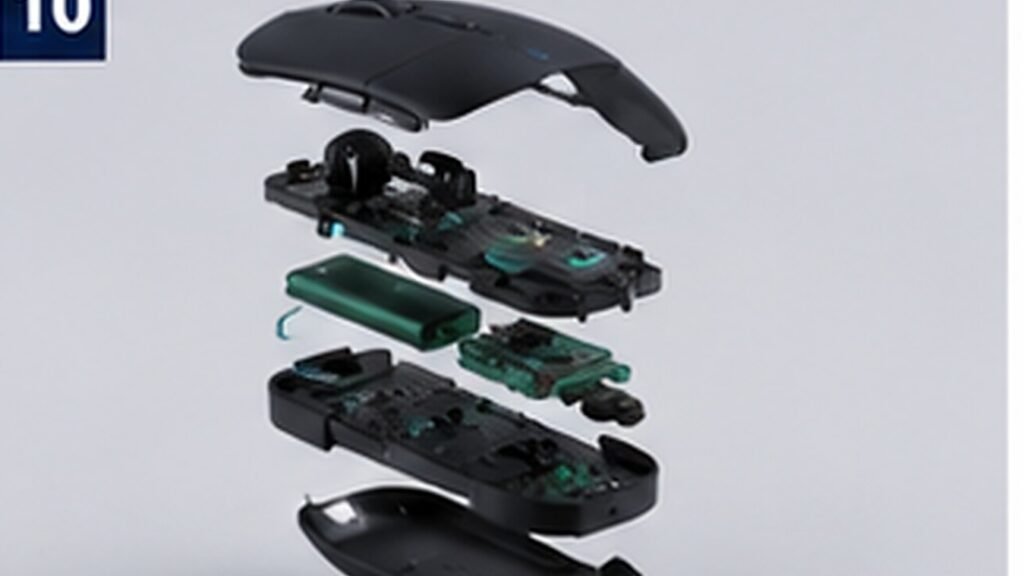
7 Critical Checks Before Ordering AI Voice Mouse OEM for Middle East Startups in 2026
If you are a startup brand preparing to source an AI voice mouse OEM for the Middle East, the fastest way to protect your launch is to validate seven procurement checks before paying a deposit: language and ASR accuracy in Arabic, MOQ structure, firmware and app customization rights, certification for GCC markets, sample-gate testing, battery and shipping compliance, and realistic lead times. Most first-time AI hardware founders lose money not on the product idea but on missing one of these checks, because a voice mouse is simultaneously a hardware device, a multilingual software product, and a battery-powered item regulated for air freight. This guide is written for that exact stage: you have chosen a category, you believe Arabic-first productivity tools have demand in Saudi Arabia and the UAE, and you are now comparing manufacturers. Use the seven checks below as a purchase-stage filter.
Table of Contents
Table of Contents
AI voice mouse OEM: Table of Contents
- Direct Answer: What Should Startups Verify First?
- Key Takeaways
- Key Facts for Buyers
- Check 1: Arabic Language and ASR Accuracy
- Check 2: MOQ Structure and Startup-Friendly Tiers
- Check 3: Firmware and App Customization Rights
- Check 4: Certification for GCC Markets
- Check 5: Sample Testing Protocol
- Check 6: Battery Safety and International Shipping
- Check 7: Lead Time and Production Planning
- Comparison Table: Generic vs OEM AI Voice Mouse
- Common Mistakes and Buyer Red Flags
- Practical Buyer Checklist
- FAQ
- Conclusion

Direct Answer: What Should Startups Verify First?
For a Middle East launch, verify Arabic voice recognition quality first, because the entire value proposition of an AI voice mouse collapses if the device transcribes Arabic poorly. Then confirm MOQ, firmware customization rights, GCC certification path, and battery documentation before you commit to tooling or a private label run. A supplier who cannot show documented Arabic test results and battery safety files is not ready for a serious GCC launch.

Key Takeaways
- Arabic ASR quality — Modern Standard Arabic plus common Gulf dialects — is the single most important purchase-stage variable for a voice mouse targeted at Saudi Arabia, the UAE, and neighboring markets.
- MOQ is usually negotiable in tiers; startup brands should ask for a paid sample and a pilot batch before committing to full production volume.
- Firmware, app, packaging, and logo customization rights should be negotiated in writing, not only discussed in a chat thread.
- GCC market access typically depends on G-Mark (GSO conformity) and radio type approval where applicable; requirements vary by country and buyers should verify with a local agent.
- A lithium-polymer battery mouse requires UN38.3 test summaries, MSDS, and often a shipping test report before airlines accept it.
- Realistic production timelines from deposit to first shipment are usually measured in weeks, not days, and should be planned backward from your launch date.

Key Facts for Buyers
| Item | Typical Status | What the Buyer Should Verify |
|---|---|---|
| Focus category | AI voice mouse (input + AI assistant device) | Confirm whether the device does on-device, cloud, or hybrid processing |
| Arabic support | Often limited or dialect-sensitive | Request a recorded test in MSA and at least one Gulf dialect |
| MOQ | Usually higher for private label than for white label | Ask for tiered pricing at several quantities [STAR KING TO CONFIRM] |
| Firmware/app customization | Possible but scope-dependent | Get written scope: UI strings, voice models, app build, updates |
| GCC certification | May require G-Mark and radio approvals | Confirm per country; Saudi and UAE differ in process |
| Battery documentation | UN38.3, MSDS typically expected | Request current test summaries and verification of validity |
| Shipping | Lithium batteries are regulated goods | Confirm packaging, SOC limits, and courier acceptance |
| Lead time | Sample to mass production is multi-stage | Request a dated schedule with milestone approvals |
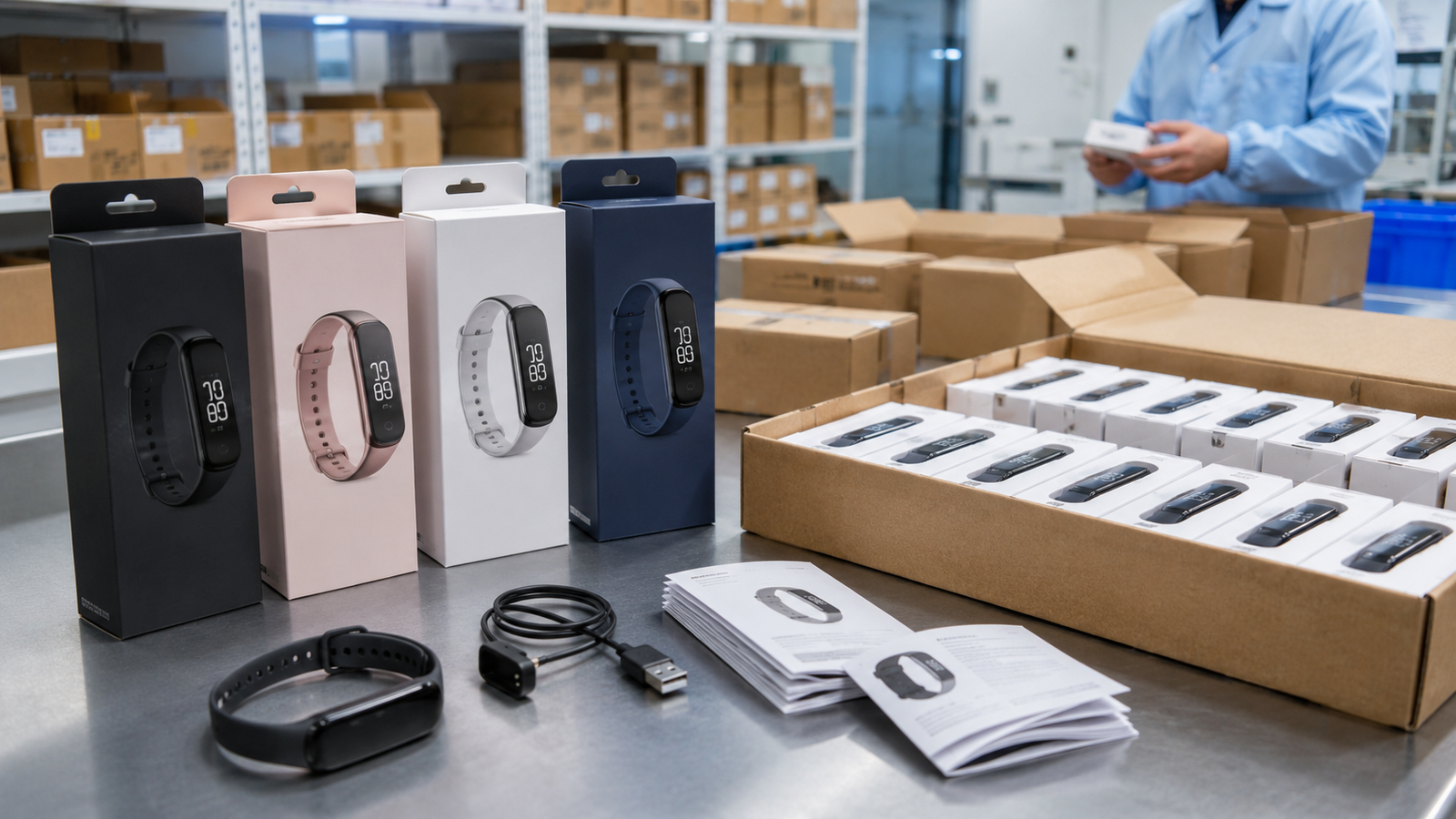
Check 1: Arabic Language and ASR Accuracy
Arabic is not one input problem. Modern Standard Arabic (MSA) is used in formal writing and news, but daily speech in Riyadh, Jeddah, Dubai, and Doha shifts into regional dialects with different pronunciation and vocabulary. A voice mouse that performs well in English may degrade sharply in Arabic, especially with code-mixed speech where users alternate between Arabic and English phrases mid-sentence.
How to Evaluate Arabic Voice Quality
- Ask for a live or recorded demonstration using MSA sentences from your own product script.
- Provide a short list of 20–30 real sentences your users would dictate — emails, WhatsApp replies, meeting notes — and request transcription output.
- Check whether recognition happens on-device, in the cloud, or hybrid, and how latency behaves on a typical Gulf mobile network.
- Confirm whether the vendor can support dialect-specific tuning as a firmware or model update in a later version.
The underlying voice engines used in this category — such as Whisper, Google Speech-to-Text, or vendor-proprietary models — differ in Arabic performance. Buyers should not accept “supports Arabic” as a specification; they should accept a measurable test. This is the point where many startups discover that the marketing claim and the shipping firmware are not the same thing. If your product concept depends on Arabic productivity, review the workflow assumptions behind the AI office productivity solutions page before you lock a supplier.
Check 2: MOQ Structure and Startup-Friendly Tiers
MOQ is the second filter because it directly determines how much capital is locked before you have any market feedback. AI voice mice are assembled products with firmware, so MOQ is affected by:
- Whether you accept the manufacturer’s standard neutral housing or request a custom color or shell finish.
- Whether packaging is neutral, printed with your logo, or fully custom.
- Whether firmware is stock with a logo splash or modified with your app and voice prompts.
- Whether you require exclusive tooling — which almost always raises the minimum order.
Startups should ask for a tiered quotation: sample quantity, pilot batch, and full production volume. Then compare total landed cost, not unit price, because freight, duties, certification, and local distribution add real cost. For Middle East buyers importing from China, a per-unit “cheap” quotation can become expensive once G-Mark testing and lithium battery shipping are added. Discuss realistic MOQ planning with a supplier early rather than after design is frozen.
Check 3: Firmware and App Customization Rights
In AI hardware, the firmware is the product. A voice mouse has at least three customizable layers: the embedded firmware, the companion or desktop app, and the cloud service that handles speech recognition or translation. Before ordering, clarify:
- Which UI strings, voice prompts, and default languages can be changed and who pays for the change.
- Whether the app can be white-labeled under your brand in the Apple and Google stores, and who owns the developer accounts.
- What happens if the upstream AI provider changes pricing or deprecates a model — is there a fallback?
- Whether over-the-air (OTA) update rights rest with you or the manufacturer.
- Whether source code, SDK, or API documentation is provided, and under what license.
For startups, the risk is not paying for customization — it is receiving a device you cannot update. Ask for a written customization scope that lists deliverables, revision rounds, and who owns the resulting firmware build. If the model uses Bluetooth for pairing, the relevant interoperability specifications are published by the Bluetooth SIG; suppliers should be able to state which specification version their module conforms to.
Check 4: Certification for GCC Markets
Market access is country-specific. In the Gulf region, many electrical and electronic products fall under the Gulf Conformity Mark (G-Mark), coordinated by the Gulf Standardization Organization, while radio and telecommunications devices may also require type approval from the local regulator — for example CITC in Saudi Arabia or TDRA in the UAE. Requirements typically depend on product configuration, wireless bands, and whether the device is classified as ITE, radio equipment, or both.
Buyers should:
- Ask the supplier which certifications currently apply to the exact SKU, not the general product family.
- Request certificate numbers and issuing laboratories, then verify them independently.
- Confirm who is the legal applicant — many certificates are issued to the factory or a trading company, which can complicate your own resale.
- Budget time for local testing if the existing certificate does not cover your market.
International electrical safety and EMC standards such as those published by the IEC often form the technical basis for regional approvals. This is not legal advice; buyers should verify current requirements with a qualified local compliance agent before shipping.
Check 5: Sample Testing Protocol
Do not treat the sample as a courtesy. Treat it as a paid acceptance test with a written protocol. A practical sample gate for an AI voice mouse includes:
- Arabic and English dictation accuracy on your own sentence list.
- Latency and stability over a 30-minute continuous use session.
- Pairing behavior with Windows, macOS, Android, and iOS as applicable to your target users.
- Button, scroll, and sensor durability after repeated use.
- Battery runtime under realistic use, not only idle.
- Packaging, user manual, and branding accuracy.
Order more than one sample where budget allows, so you can test across devices and users. If the supplier refuses a paid sample arrangement, that itself is a red flag. Startups should also agree in advance on what constitutes acceptance and what triggers a rework or refund discussion.
Check 6: Battery Safety and International Shipping
A voice mouse contains a rechargeable lithium battery, which makes it a regulated item for air freight. Standard documents buyers should expect include:
- UN38.3 test summary for the battery or the battery-containing device.
- Material Safety Data Sheet (MSDS) for the battery.
- Battery specification sheet and, where applicable, a shipping test report.
- Correct package marking and state-of-charge limits as required by the airline or courier.
Lithium battery transport rules are set internationally and are summarized in resources from the IATA Dangerous Goods Regulations. Buyers shipping to the Middle East should confirm with their freight forwarder which documentation the destination customs authority accepts. Do not assume that a supplier’s existing test reports cover your battery configuration if you change capacity or cell supplier.
Check 7: Lead Time and Production Planning
Lead time is a schedule, not a number. For an AI voice mouse OEM project, the timeline typically includes:
- Sample selection and paid sample delivery.
- Customization scope agreement and firmware review.
- Pilot batch production and acceptance testing.
- Mass production and quality inspection.
- Packaging, labeling, and pre-shipment inspection.
- Freight booking and customs clearance.
Plan backward from your retail or marketplace launch date, and add buffer for certification and Chinese New Year or Ramadan production slowdowns, which affect factory availability. Ask the supplier for a dated milestone schedule with named approval points. Buyers who treat lead time as a single figure almost always underestimate it. If your product roadmap also includes other categories such as AI translators, sequence the projects so firmware and packaging effort is not duplicated.
Comparison Table: Generic vs OEM AI Voice Mouse
| Dimension | Generic / White Label | OEM / Private Label |
|---|---|---|
| Branding | Supplier brand or neutral | Your logo, packaging, and app |
| Language | Fixed language set | Customizable prompt and UI language, subject to engine support |
| MOQ | Lower | Typically higher; tiered by customization |
| Firmware control | Supplier-controlled | Negotiated; scope in writing |
| Certification | Supplier’s existing certificates | May need re-application under your brand or local agent |
| Landed cost | Lower bill of materials, fewer controllable costs | Higher upfront, more control over margin |
| Best fit | Fast market test | Startup brand building a defensible product |
If you are already comparing configurations, it helps to review how a supplier structures its private label OEM/ODM program before you request final pricing.
Common Mistakes and Buyer Red Flags
These are the patterns that damage first-time AI hardware projects in the Middle East:
- Trusting a translated brochure instead of a live demo. Marketing text about “Arabic support” is not evidence of speech recognition quality.
- Paying a deposit before defining acceptance criteria. Without written acceptance tests, rework disputes are hard to resolve.
- Assuming existing certification transfers to your brand. Certificates are often issued to the factory or a trading entity.
- Ignoring battery shipping documentation. Missing UN38.3 or MSDS files can delay or block air freight.
- Choosing the lowest unit price. Landed cost includes freight, duties, certification, and local marketing.
- No firmware update plan. If language models improve later, the ability to push OTA updates matters.
- Unclear IP ownership. Confirm who owns molds, firmware builds, and app code before production.
None of these are exotic risks. They are the common gaps that appear in startup hardware projects that move too quickly from idea to purchase order.
Practical Buyer Checklist
- Arabic and English ASR demonstrated on your own sentence list.
- Tiered MOQ quotation with unit price, packaging cost, and tooling cost separated.
- Written firmware and app customization scope with revision rounds.
- Certification status for each target country, with certificate numbers and issuing lab.
- Paid sample with a written acceptance protocol.
- UN38.3 summary, MSDS, and battery specification sheet for the exact configuration.
- Dated production schedule with milestone approvals and buffer for holidays.
- Agreement on IP, mold ownership, and OTA update rights.
- Named after-sales contact and warranty terms in writing.
- Landed cost model including freight, duty, and local compliance fees.
FAQ
1. What MOQ should a startup expect for an AI voice mouse OEM order?
MOQ depends on how much customization you request. Neutral-housing units with your logo on the packaging usually require a lower minimum than fully custom firmware and tooling. Ask for tiered pricing at several quantities, and treat the pilot batch as the bridge between sample and full production [STAR KING TO CONFIRM].
2. Can an AI voice mouse support Arabic dialects?
Support varies by speech engine and model. Some products handle Modern Standard Arabic better than Gulf dialects, and code-mixed Arabic–English speech is harder still. Request a recorded test in the exact dialect your users speak before you commit.
3. Which certifications are needed for Saudi Arabia and the UAE?
Many electronics and radio products fall under G-Mark (Gulf Conformity Mark), and radio devices may also need type approval from the local regulator, such as CITC in Saudi Arabia or TDRA in the UAE. Requirements typically depend on the exact product and wireless configuration, so buyers should verify with a local compliance agent.
4. How long does production take from deposit to shipment?
Expect a multi-stage schedule that includes sample approval, firmware work, pilot production, mass production, inspection, and freight. Plan backward from your launch date and add buffer for certification and holiday shutdowns. Suppliers should provide a dated milestone plan.
5. Is a lithium battery shipping certificate always required?
Because a voice mouse contains a rechargeable lithium battery, air transport is regulated. UN38.3 test summaries and an MSDS are commonly requested, and additional documentation may apply depending on the courier and route. Confirm with your freight forwarder before booking.
6. What should I check in a paid sample before placing a volume order?
Test Arabic and English dictation on your own sentences, measure latency over continuous use, verify pairing across your target operating systems, check battery runtime, and confirm branding and packaging accuracy. Define acceptance criteria in writing.
7. Can the manufacturer customize the firmware and app with my brand?
Firmware and app customization is usually possible but scope-dependent. The written agreement should specify deliverables, revision rounds, who owns the developer accounts, and whether OTA updates remain under your control.
Conclusion
For a Middle East startup, the AI voice mouse OEM decision is less about picking a device and more about validating a supply chain. Arabic voice quality, MOQ structure, firmware rights, GCC certification, sample testing, battery documentation, and lead time planning are the seven checks that separate a launchable product from an expensive lesson. Address them in order, document every answer, and treat the paid sample as a real acceptance test rather than a formality. Suppliers who welcome this level of scrutiny are generally the ones able to support a scaling brand. If your next step is comparing configurations or confirming what is possible for your volume, request a quotation and ask for a written scope tied to the seven checks above.
Ready to move from research to a real project? Request a quotation for your AI voice mouse configuration, including Arabic language requirements and target GCC markets, and discuss your OEM/ODM options with the team.
Explore the AI Voice Mouse product page or review our AI office productivity solutions before you finalize your product brief.
Discuss Your Smart Wearable OEM/ODM Project
Planning a smart ring, smart watch, smart band, AI glasses, AI translator, or AI voice mouse project? Contact STAR KING to discuss product positioning, sample testing, customization scope, certification requirements, lead time, and quotation details.

Team Star King

Scan WhatsApp QR code
Leave a Reply