
AI translator sourcing: 7-Point AI Translator Sourcing Checklist for Southeast Asia Retail Chains (2026 RFQ Guide)
October 5, 2026 · Team Star King
7-Point AI Translator Sourcing Checklist for Southeast Asia Retail Chains (2026 RFQ Guide)
Direct answer: AI translator sourcing for Southeast Asian retail chains starts with locking four variables before you request pricing — the offline language set your shoppers actually need, the real-time translation latency and accuracy you can test, the certification pack required per country, and a private-label volume plan that fits your shelf strategy. Suppliers should give you testable samples, documented coverage, and a landed-cost quote, not a brochure.
Table of Contents
Table of Contents
Southeast Asia is one of the most multilingual retail regions in the world. A single mall in Bangkok, Jakarta, or Kuala Lumpur can host buyers speaking Thai, Bahasa Indonesia, Malay, Vietnamese, Tagalog, Mandarin, and English within one afternoon. That reality is why AI translator sourcing has moved from a novelty category to a real shelf decision for retail chains. Store operators want staff tools that reduce miscommunication at service counters, and shoppers increasingly want a take-home device that works without relying on a phone app or stable data connection. For a retail buying team preparing an RFQ in 2026, the difference between a profitable program and a warehouse of returns usually comes down to seven checks — not the marketing spec sheet.
This guide is written for procurement and category managers at regional retail chains evaluating AI Translators as a private-label or co-branded program. It covers the buyer decision points that show up in real RFQs: language coverage, offline vs. cloud translation, MOQ and pricing levers, sample testing, compliance for ASEAN markets, packaging and branding, and after-sales planning.
Table of Contents
- Short Answer
- Key Facts for Buyers
- Key Takeaways
- What Is AI Translator Sourcing?
- 1. Language Coverage and Real-Time Translation Quality
- 2. Offline vs. Cloud Translation Architecture
- 3. Hardware, Battery, and Form Factor Decisions
- 4. MOQ, Cost Structure, and Landed Cost
- 5. Sample Testing and Validation
- 6. Certification and Southeast Asia Import Compliance
- 7. Private Label, Packaging, and After-Sales Planning
- RFQ Decision Table: What to Ask vs. What to Verify
- Common Mistakes and Buyer Red Flags
- Practical Buyer Checklist
- FAQ
- Conclusion
Short Answer
AI translator sourcing is the process of selecting, testing, and contracting a manufacturer or ODM partner to supply portable real-time translation devices — either off-the-shelf or private label — for a defined target market. For Southeast Asia retail chains, the critical sourcing variables are language coverage, offline reliability, MOQ flexibility, certification per country, and warranty support. Buyers should verify each with samples and documentation before signing a bulk order.

Key Facts for Buyers
| Buyer Question | What to Verify | Why It Matters for SE Asia Retail |
|---|---|---|
| How many languages are supported? | Request the exact language matrix and offline vs. cloud split | Tourist and migrant-worker conversations rarely stay in one language pair |
| Does it work offline? | Test translation with Wi-Fi and SIM disabled | Coverage gaps in malls, markets, and transit hubs are common |
| What is the MOQ? | Confirm trial, private-label, and mass-production tiers | Trial volumes reduce inventory risk for a new category |
| What certifications apply? | Match documentation to each destination country | Requirements differ across ASEAN markets and depend on configuration |
| Can the app and packaging be customized? | Clarify app branding, firmware locks, and packaging scope | Retail chains usually need their own brand and localized manuals |
| What is the lead time? | Ask for sample, tooling, and mass-production timelines | Pricing and delivery windows drive category launch dates |
Key Takeaways
- Define the exact language pairs and offline coverage your stores and shoppers need before requesting quotes.
- Offline translation is a hard requirement in many Southeast Asian environments; cloud-only devices can fail in weak-signal locations.
- MOQ is negotiable at the trial stage but rises quickly once private-label packaging, firmware, and app branding are involved.
- Certification requirements vary by country and device configuration; buyers should verify each destination market rather than assume a blanket approval.
- Sample testing should cover accent variety, background noise, latency, and battery life — not just a scripted demo.
- Landed cost, not unit price, is the number that determines retail margin.
What Is AI Translator Sourcing?
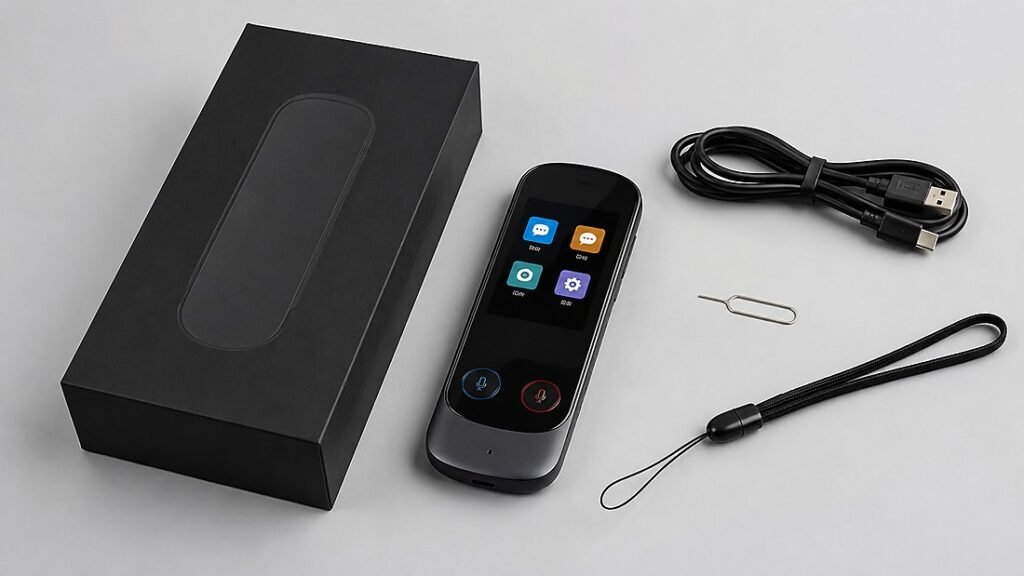
AI translator sourcing is the procurement process through which a retail chain, distributor, or brand selects a hardware partner to manufacture portable translation devices. A modern AI translator typically combines a microphone array, a processor running machine-translation models, a speaker, a display, and often a companion app. Some models rely on cloud translation engines; others bundle offline engines so the device continues working without a data connection.
For a retail chain, sourcing is not just about the device. It is about the total program: how the product is branded, what documentation ships in the box, which languages are preloaded, what warranty the chain can credibly offer, and what happens when a customer returns a unit. That is why this guide frames the process as a seven-point checklist rather than a single vendor comparison.
If your chain is building a broader multilingual hardware shelf, it helps to review how other categories are structured — see our AI office productivity solutions for related device categories, and the resources blog for procurement guides.
1. Language Coverage and Real-Time Translation Quality
The first sourcing question is not “how many languages?” but “which language pairs, at what quality, in what conditions?” A device claiming 100+ languages may perform acceptably on English–Mandarin and poorly on Thai–Vietnamese or Bahasa Indonesia–Tagalog. For Southeast Asian retail, the pairs that matter most often include local language to English, local language to Mandarin, and cross-border pairs used by tourists and migrant workers.
How to evaluate language coverage
- Ask for a written language matrix that separates offline and cloud-supported pairs.
- Request accuracy notes or benchmarks per pair, understanding that no vendor can guarantee uniform quality across all pairs.
- Test with local accents — the same language can behave differently across regions.
- Confirm whether new language packs can be added after purchase via firmware or app updates.
Real-time translation also depends on latency. A two-second delay is acceptable in many service-counter conversations; a five-second delay breaks the flow. Ask the supplier to demonstrate latency under realistic noise, not in a quiet room. Buyers should treat vendor latency claims as directional and confirm with their own testing.
2. Offline vs. Cloud Translation Architecture
Offline capability is often the deciding factor for Southeast Asian retail deployments. Malls, outdoor markets, ferry terminals, and rural branches frequently have inconsistent connectivity. A cloud-only translator that fails when the network drops will generate complaints quickly.
Questions to resolve before quoting
- Which languages run fully offline, and what is the on-device model size?
- Does offline mode degrade accuracy or vocabulary compared with cloud mode?
- How does the device switch between offline and cloud engines?
- Is there a subscription cost for premium cloud translation, and who pays it — the retailer or the end customer?
Subscription models matter commercially. If the device depends on a paid cloud service, the retail chain needs a clear story for the customer, plus a plan for what happens if the service changes. Buyers should ask the supplier to document the commercial terms in writing.
3. Hardware, Battery, and Form Factor Decisions
Form factor drives the selling story. Handheld two-way translators suit service counters and travel retail; earbud-style or wearable formats suit shoppers who want discreet translation. For a retail chain, the practical question is which format travels best on a shelf and survives handling in a store environment.
Hardware variables to compare
- Battery capacity and realistic usage hours, not standby claims.
- Charging standard and cable type — proprietary chargers create returns.
- Screen size and readability in bright retail lighting.
- Speaker quality for two-way conversation in noisy spaces.
- Microphone array performance and noise handling.
Battery safety documentation becomes relevant at shipping and import stages. Lithium batteries are regulated, and buyers should confirm that the supplier can provide the relevant transport and safety documentation for the specific configuration. If the product line expands toward wearables, it is worth reviewing how smart rings handle similar battery and compliance questions, since those constraints are shared across portable hardware.
4. MOQ, Cost Structure, and Landed Cost
MOQ is where many retail RFQs stall. Suppliers typically offer a sample tier, a trial-order tier, and a mass-production tier, each with different pricing. Private-label requirements — custom logo, packaging, firmware splash screen, or app branding — usually raise the MOQ because they introduce setup and tooling work.
Cost levers buyers should map
- Unit price at each volume tier, valid for a defined quotation period.
- Setup or tooling costs for customized enclosures or packaging.
- Firmware and app customization fees.
- Freight, duties, and local handling — the components of landed cost.
- Payment terms and any deposit structure.
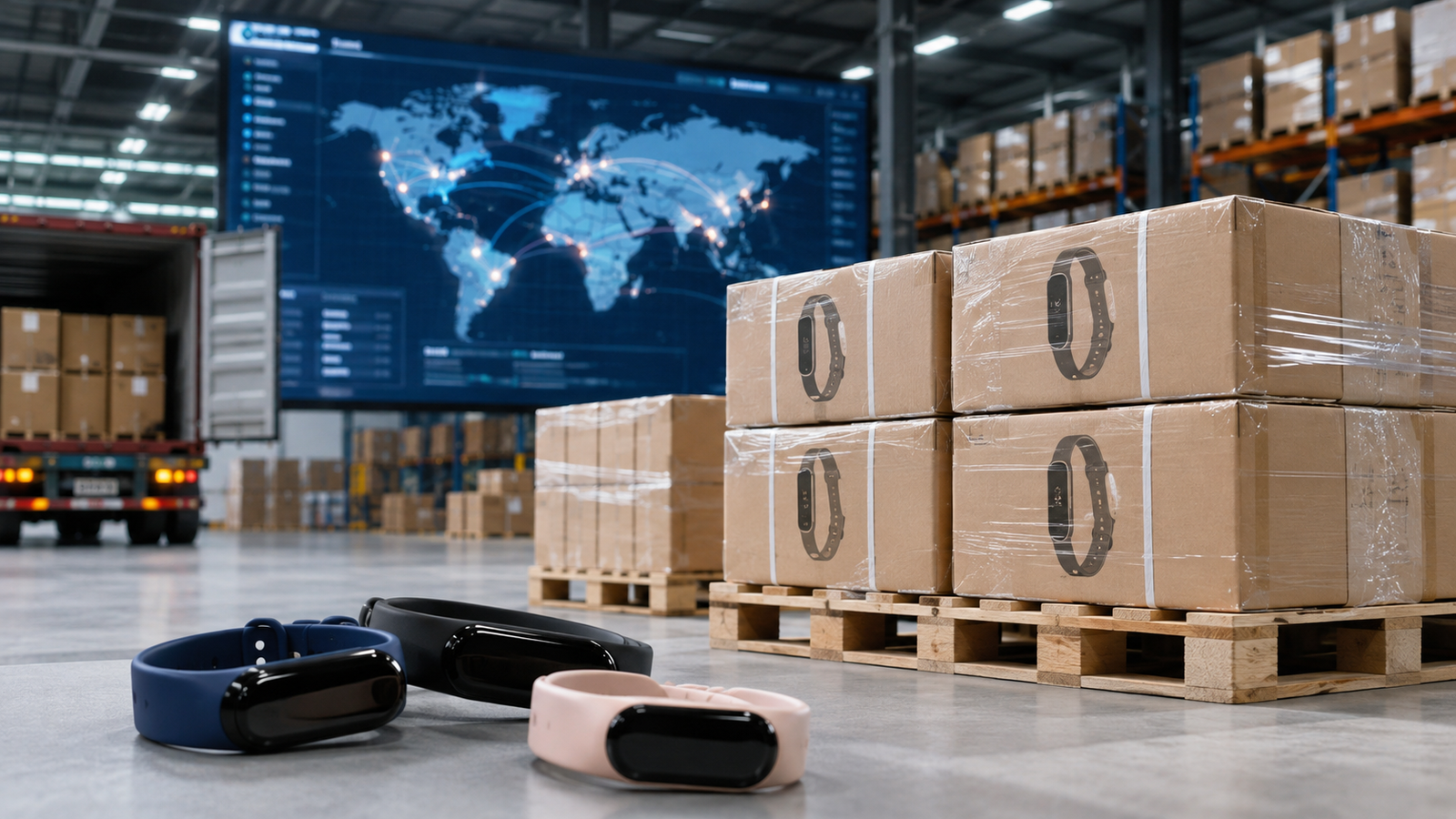
Landed cost is the number the retail chain should use for margin planning. A lower unit price can be worse once freight, import duties, and local distribution are added. Ask the supplier to quote on a defined Incoterm so comparisons are consistent. For a structured view of how MOQ and lead time interact across categories, see our private label OEM/ODM solution page.
For chains that want to test the category before committing to a full private-label program, a soft entry point is to start with a small trial order under the supplier’s standard brand while the customization scope is finalized. That keeps the shelf move fast without locking in tooling spend.
5. Sample Testing and Validation
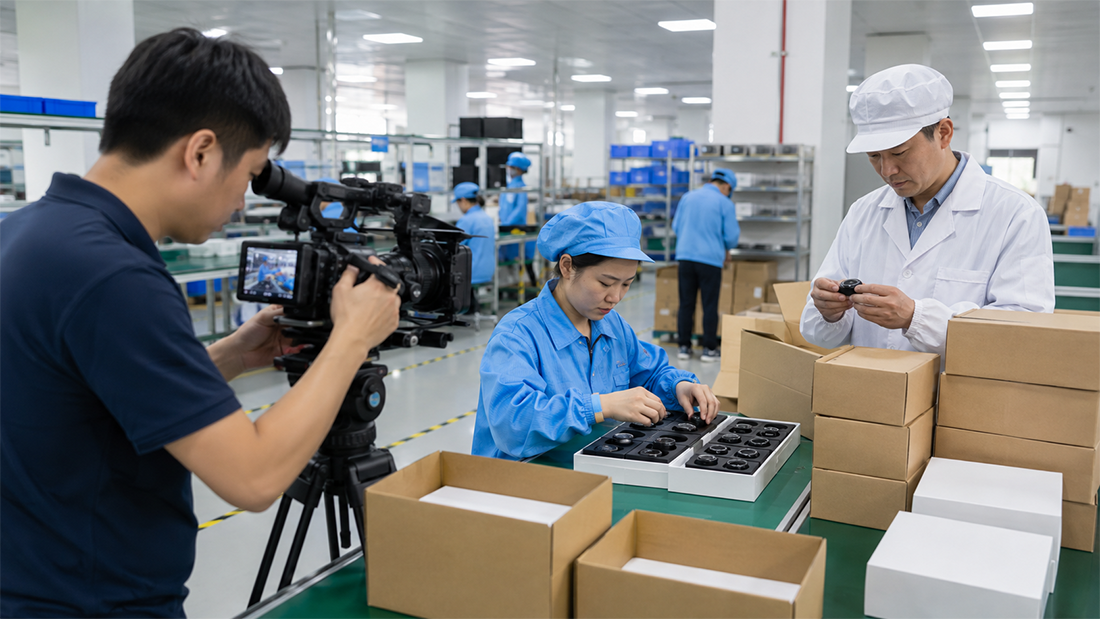
Samples are where sourcing claims get tested. A scripted demo in a supplier’s office proves very little. Buyers should design a short validation protocol and run it themselves, ideally with staff who speak the target languages.
A practical sample test protocol
- Test each priority language pair, including less common pairs.
- Include accent variety from your own markets.
- Test in noisy conditions similar to a store or transit hub.
- Measure response latency across several attempts.
- Drain the battery under realistic use and record actual hours.
- Test the companion app installation, pairing, and update process.
- Check build quality, button feel, and screen visibility.
Document results in a scoring sheet so multiple devices can be compared objectively. Buyers should also confirm that the sample configuration matches the intended production configuration; a prototype that differs from mass production introduces risk.
6. Certification and Southeast Asia Import Compliance
Certification requirements for AI translators depend on the product configuration and the destination market. Buyers should not assume that a single certificate covers every Southeast Asian country. Typical documentation requests include radio equipment approvals, electrical safety documents, and battery transport documentation for lithium cells.
Common documentation areas to request
- Radio and wireless approvals for the device’s connectivity modules.
- Electrical safety documentation where applicable.
- Battery transport and safety documentation, including UN38.3 test summaries and material safety documentation.
- Country-specific import documentation required by local customs.
Frameworks such as the FCC equipment authorization process in the United States and the EU CE marking framework are useful reference points for how radio and safety compliance is structured, even when your target markets are in Southeast Asia. Local requirements differ, and buyers should verify them with a qualified compliance consultant or their import agent before finalizing an order.
Ask the supplier which certifications are already held for the specific model and which would need to be arranged. Where documentation is not yet available, the supplier should be able to explain the timeline and cost. Our OEM/ODM program pages outline how customization and certification planning are typically sequenced.
7. Private Label, Packaging, and After-Sales Planning
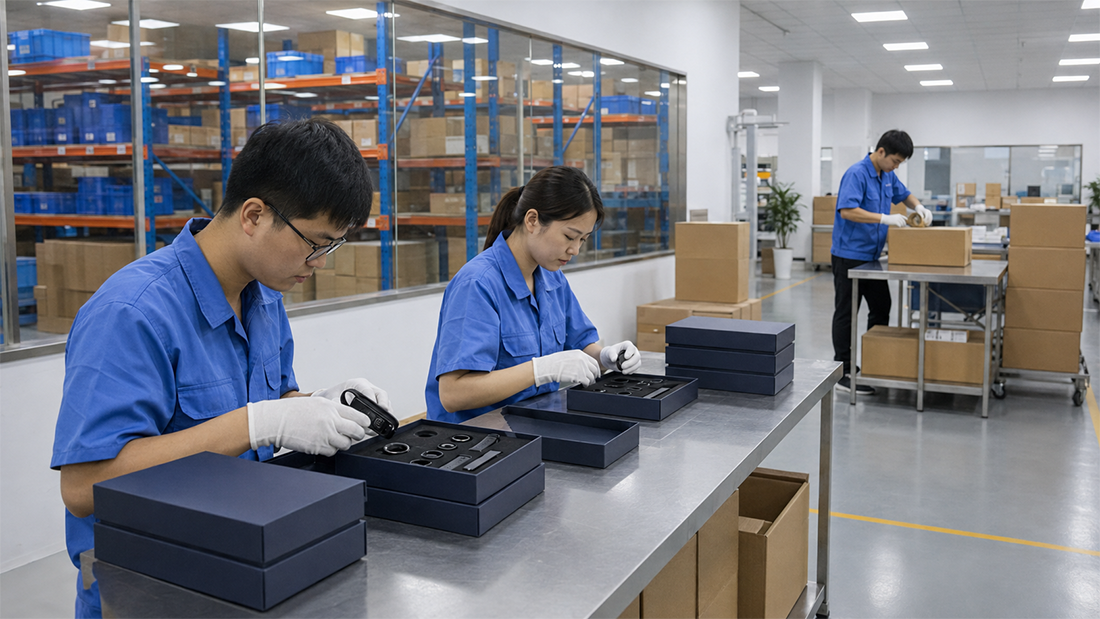
Retail chains rarely sell unbranded electronics. Private label drives margin and shelf identity, but it also creates obligations: localized packaging, correct manuals, branded app experience where applicable, and a warranty process customers can use.
Private label scope to define in the RFQ
- Logo placement on the device and accessories.
- Retail packaging design and localized language requirements.
- User manual translation and regulatory label content.
- App branding, splash screens, and account setup flow, if an app is involved.
- Warranty length, RMA process, and spare parts availability.
App customization is often the longest lead item because it touches software development, testing, and store submission. Buyers should ask who owns the app assets, what happens if the relationship ends, and whether firmware updates can be delivered independently. Clarifying intellectual property and tooling ownership early avoids disputes later.
After-sales planning is not optional for a retail chain. A clear return and repair path protects brand trust. Buyers should confirm the warranty terms in writing and agree on how defective units are handled — replacement, credit, or repair.
RFQ Decision Table: What to Ask vs. What to Verify
| Sourcing Area | Ask the Supplier | Verify Independently |
|---|---|---|
| Language coverage | Full language matrix, offline vs. cloud split | Test priority pairs with local accents |
| Offline performance | Offline model coverage and switching logic | Run sample with connectivity disabled |
| Battery | Realistic usage hours and charging standard | Drain test under normal use |
| MOQ and pricing | Tiered pricing and setup costs | Compare landed cost across Incoterms |
| Certification | Which approvals are held for this model | Confirm with import agent per country |
| Customization | Logo, packaging, and app scope | Review proofs before mass production |
| Lead time | Sample, tooling, and production timelines | Confirm against your launch date |
| After-sales | Warranty terms and RMA process | Ask for the written policy |
Common Mistakes and Buyer Red Flags
Common mistakes
- Choosing a supplier on unit price alone without calculating landed cost.
- Accepting a language count without checking the specific pairs you need.
- Skipping offline testing because the demo used Wi-Fi.
- Assuming one certificate covers all Southeast Asian markets.
- Ordering private label packaging before finalizing the device configuration.
- Leaving warranty and RMA terms verbal.
Buyer red flags
- The supplier cannot produce a written language matrix.
- Certification questions are answered vaguely or with promises only.
- Samples differ noticeably from the quoted production specification.
- MOQ, pricing, or lead time changes repeatedly during the RFQ.
- The supplier will not document warranty and spare parts terms.
- App or firmware ownership is left unclear.
Practical Buyer Checklist
- Define priority language pairs for each target country.
- Confirm offline coverage for the pairs that matter most.
- Request samples and run a written test protocol.
- Map MOQ tiers and confirm setup costs for customization.
- Calculate landed cost using a defined Incoterm.
- Verify certification requirements per destination market with an import agent.
- Agree on packaging, manual language, and app branding scope in writing.
- Document warranty, RMA, and spare parts terms.
- Confirm lead times against your category launch date.
- Clarify IP, tooling ownership, and firmware update responsibilities.
FAQ
What is the typical MOQ for an AI translator order?
MOQ varies by supplier and configuration. Standard-brand trial orders usually start lower than private-label orders, because customization adds setup and packaging work. [STAR KING TO CONFIRM] exact MOQ for AI Translators.
Do AI translators work without internet access?
Some models include offline translation engines for a defined subset of languages, while others rely on cloud engines. Buyers should confirm the offline language matrix and test the device with connectivity disabled.
Which certifications are required for Southeast Asia?
Requirements depend on the product configuration and the destination country. Buyers should verify radio, safety, and battery documentation with a qualified import agent for each market rather than assuming a single certificate covers the region.
How long does shipping take from a Chinese manufacturer?
Lead times for ready stock typically run days, while production and custom packaging add weeks. [STAR KING TO CONFIRM] typical production timeline for AI Translators.
Can I customize the packaging and app?
Many manufacturers offer logo, packaging, and app customization. Scope, MOQ impact, and lead time vary, so buyers should request a written customization proposal before committing.
How do I confirm the languages I need are supported?
Request the supplier’s language matrix, then test priority pairs with local accents in your own sample evaluation. Do not rely on total language counts alone.
What should I check before signing a bulk order?
Confirm sample test results, written pricing and MOQ, customization scope, certification status, lead time, and warranty terms in the purchase agreement.
Conclusion
AI translator sourcing for Southeast Asian retail chains is a structured decision, not a catalog pick. The seven checks in this guide — language coverage, offline architecture, hardware choices, MOQ and landed cost, sample validation, certification, and private-label after-sales — cover the points that most often determine whether a category launch succeeds. Buyers who verify each area with documentation and their own testing reduce the risk of returns, compliance surprises, and margin erosion.
Ready to Move Your AI Translator RFQ Forward?
Send your target language pairs, volume tier, packaging requirements, and destination markets, and we will respond with a customization and pricing proposal. Request a quotation or share your OEM/ODM scope to start the project.
Discuss Your Smart Wearable OEM/ODM Project
Planning a smart ring, smart watch, smart band, AI glasses, AI translator, or AI voice mouse project? Contact STAR KING to discuss product positioning, sample testing, customization scope, certification requirements, lead time, and quotation details.

Team Star King

Scan WhatsApp QR code
Leave a Reply