
AI Translators for Private-Label Brands in Southeast Asia: 7 Steps to a Profitable OEM Program
October 6, 2026 · Team Star King
AI Translators for Private-Label Brands in Southeast Asia: 7 Steps to a Profitable OEM Program
Direct answer: For most private-label brands entering Southeast Asia, a successful AI translator program comes down to 7 steps: define language coverage and offline needs, choose ODM/OEM or white-label, validate firmware and real-time translation, lock MOQ/lead time, verify connectivity bands, prepare certification and branding, and run pilot QC before mass production.
Table of Contents
Table of Contents
AI translators for private-label brands are not commodity accessories. Buyers in Southeast Asia need devices that handle multiple languages, unstable connectivity, and price-sensitive retail. The typical cycle from concept to sellable inventory is 8-16 weeks, but the details—MOQ tiers, firmware lock, ATEX-free battery documentation, and import paperwork—decide your landed cost and whether you can scale to 20,000+ units. This guide is written for private-label brands, importers, and e-commerce sellers who want a clear, repeatable procurement process rather than marketing brochures.
Short Answer (Quick Snapshot)
AI translators for private-label brands are OEM/ODM devices with real-time translation firmware that can be rebranded via logo, packaging, app skin, and language presets. In Southeast Asia, demand concentrates in travel retail, call-center tooling, education, and field service. A realistic launch starts with 500–1,000 units per SKU, 8–12 week lead time for standard ODM, and 12–16 weeks for custom tooling. Verify offline translation coverage, band support, and certification paperwork before committing to a purchase order.
Key Takeaways
- 7-step procurement framework covering coverage, ODM/OEM, MOQ, connectivity, compliance, QC, and scale-up.
- Offline translation and battery documentation are the two most expensive late-stage surprises in Southeast Asia.
- MOQ moves more with tooling and firmware scope than with unit cost.
- Certification is configuration-specific: bands, battery watt-hours, and radio modules change the test matrix.
- Run a 30–50 unit pilot build with final firmware and packaging before scaling.
What Are AI Translators for Private-Label Brands?
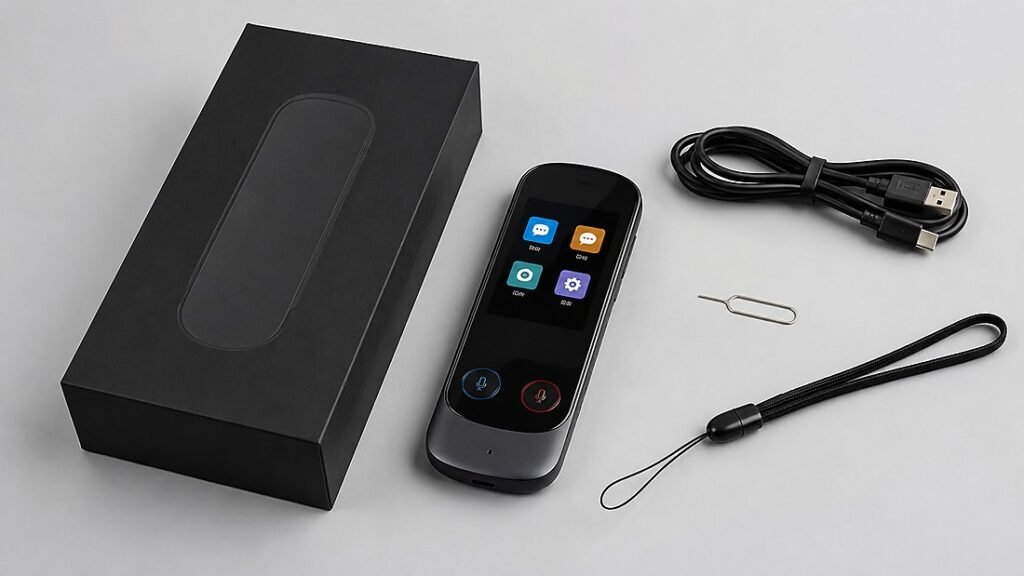
AI translators for private-label brands are portable or handheld devices that capture speech (and sometimes text/photos), send audio to an on-device or cloud model, and return translated speech or display output in near real time. In an OEM/ODM context, the buyer’s brand sits on the device shell, packaging, companion app, and marketing claims—while the underlying hardware and firmware come from a manufacturing partner.
For Southeast Asia, three configurations cover most use cases:
- Handheld two-way translator — travel, hospitality, retail counters.
- Earbud/earpiece translator — meetings, call centers, education.
- Pocket/bi-directional screen translator — field service, logistics, government gate staff.
A note on claims: consumer translation devices are convenience tools. Unless a device has specific regulatory clearance as a medical or safety-critical system, avoid language such as “certified interpretation” or “legally binding translation.” Regulatory treatment varies by country and use case — buyers should verify requirements with a local compliance advisor.
Image placeholders (2–4 recommended):
- [IMAGE 1: AI TRANSLATORS FOR PRIVATE-LABEL BRANDS DEVICE FAMILY] Place after “What Are AI Translators…”
- [IMAGE 2: REAL-TIME TRANSLATION UI SCREEN CAPTURE] Place after Step 3
- [IMAGE 3: PRIVATE-LABEL PACKAGING RETAIL DISPLAY] Place after Step 5
- [IMAGE 4: OEM QC + BATTERY/COMPLIANCE CHECKLIST] Place after Step 7
Step 1 — Define Language Coverage and Use Cases First
Do not start with a supplier catalog. Start with the language pairs your buyers will actually use. In Southeast Asia, English–Vietnamese, English–Thai, English–Indonesian, English–Malay, English–Filipino, and Mandarin–local pairs dominate. Tourist corridors (Bangkok, Bali, Singapore, Ho Chi Minh City) and cross-border trade push additional Japanese and Korean demand.
Buyer decision lens
Ask:
- Which 6–10 language pairs represent 80% of your end-customer use?
- Does the device need offline translation (airplane, remote sites) or is Wi-Fi only acceptable?
- Is voice-only sufficient, or is text/photo OCR required?
- Will the device be used in noisy environments (market stalls, airports) where a headset or earpiece format wins?
Each answer changes firmware scope, BOM, and cost. Offline translation typically requires on-device models and higher storage; that directly affects MOQ and unit economics.
Step 2 — ODM, OEM, or White-Label? Choose Your Mode
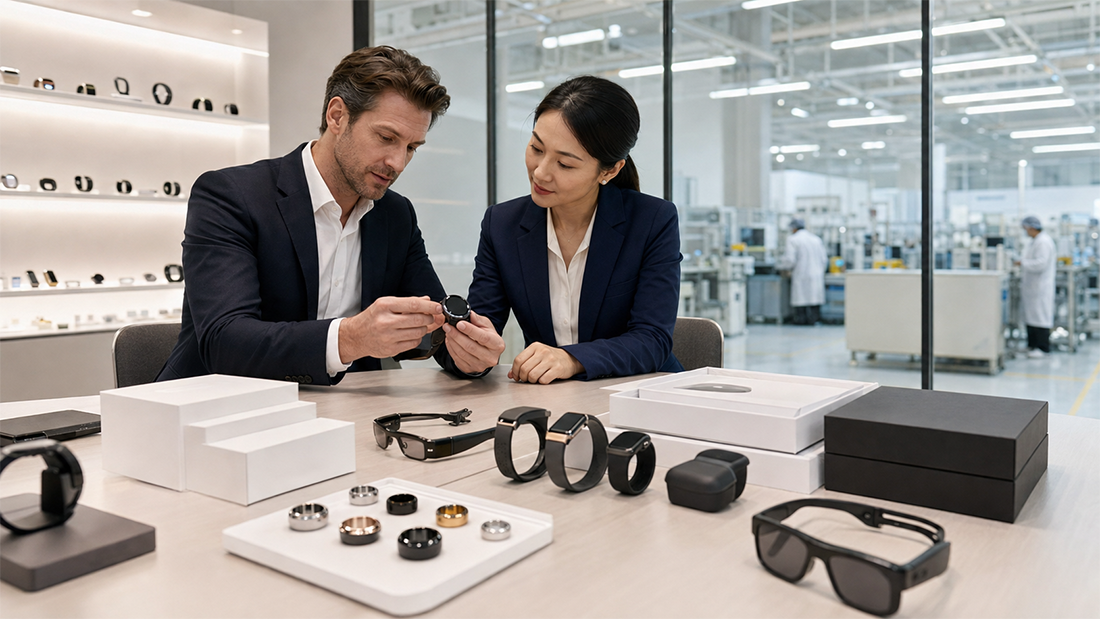
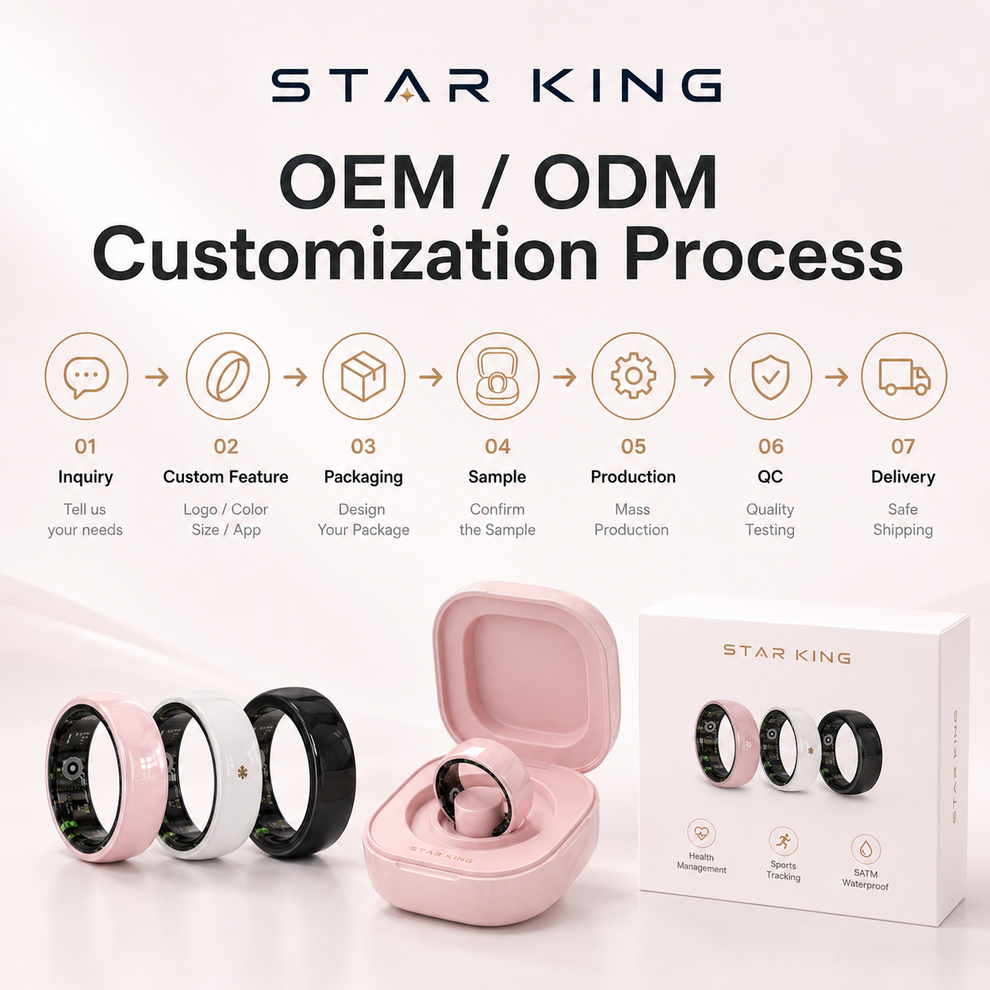
For most private-label brands in Southeast Asia, white-label (logo + packaging only) is the fastest route to market, while ODM (modified hardware/firmware) fits brands with differentiated positioning. Full OEM (custom tooling, custom board, custom enclosure) is the slowest and most capital-intensive path and only makes sense above 5,000–10,000 units per SKU.
| Model | Typical Scope | MOQ Signal | Best For |
|---|---|---|---|
| White-Label | Logo, packaging, app skin | Lower (often 300–1,000) | Fast launch, e-commerce tests |
| ODM | FW customization, colors, app UI, language presets | Mid (often 1,000–3,000) | Regional brands needing differentiation |
| OEM | Custom tooling, custom PCB, UVP | High (typically 5,000+) | Established brands, distribution at scale |
Requesting firmware and app customization details early helps anchor expectations. Confirm which items are locked and which can be adjusted later without re-tooling.
Soft CTA (mid-article): If you are evaluating AI translators for private-label brands and want to compare ODM and white-label scopes side by side, request a project review with STAR KING to see which configuration fits your target price band. AI Translators by STAR KING
Step 3 — Language Packs, Offline Translation, and Firmware Lock
Firmware is where brand differentiation quietly lives. You can decide:
- Which language pairs are pre-installed vs. downloadable.
- Whether the UI is English-first, local-language-first, or both.
- How translation results are displayed (text, spoken, dual-screen).
- Whether the app includes a history log, favorites, or shared phrasebooks.
Offline translation trade-offs
| Factor | Offline | Cloud |
|---|---|---|
| Reliability in low-signal regions | High | Low |
| Latency | Lower | Network-dependent |
| Unit cost | Higher BOM/storage | Lower BOM, recurring cloud cost |
| Language coverage | Narrower | Broader |
| Privacy/data handling | More on-device | Requires clear data policy |
Ask suppliers what happens to the app if you change cloud providers. A well-structured firmware partnership should let you keep the device working even if a backend changes, or at minimum define a migration plan.
Real-Time Translation quality testing
Test with real scripts from your target market. Ask a supplier for sample recordings of phrases that reflect local pronunciation, code-switching, and slang. A translation device that shines on clean studio English may underperform on the streets of Jakarta. This is where a pilot run beats a spec sheet.
Step 4 — Connectivity, Bands, and Ecosystem
Southeast Asia uses a mix of 4G LTE bands. If your device depends on cellular connectivity, confirm band support against the countries you are selling into. Wi-Fi and Bluetooth-only models avoid many band issues but require a phone tether for cloud features.
- Bluetooth — app pairing, audio accessories, firmware updates.
- Wi-Fi — cloud translation, OTA updates, content sync.
- Cellular (optional) — standalone functionality.
Bluetooth and Wi-Fi implementations must align with regional radio approvals, which typically involve testing against the applicable national communications authority. Sellers can check official documentation from regulators such as the U.S. FCC equipment authorization database for reference structure, but Southeast Asian markets have their own regimes. Verify requirements per country.
Step 5 — MOQ, Tooling, Packaging, and Lead Time
MOQ is the single most misunderstood line item in AI translator procurement. It is not fixed; it moves with tooling, firmware scope, packaging, and factory scheduling windows.
What moves MOQ up or down
- Custom enclosure tooling often pushes MOQ into the thousands.
- Standard housing with logo print may allow a few hundred per SKU.
- Custom retail packaging and inserts usually add a minimum print run on top of the device MOQ.
- New color or finish options may require separate small-batch runs.
| Activity | Typical Range | Notes |
|---|---|---|
| Sample development | 2–4 weeks | White-label samples faster |
| Tooling + DFM | 4–8 weeks | Only for full OEM |
| Pilot build | 2–4 weeks | 30–50 units recommended |
| Mass production | 4–8 weeks | Depends on capacity and component supply |
| Shipping & customs | 1–4 weeks | Air/sea mix varies |
Plan for a 4–8 week buffer on the first order to absorb rework, packaging corrections, and documentation delays. For brands new to private label, a Private Label OEM/ODM program can simplify sampling and packaging steps.
Step 6 — Certification and Compliance for Southeast Asia
Certification is where market entry either accelerates or stalls. Regulations vary by country, and compliance depends on the specific configuration of your device (radio module, battery capacity, charger, packaging claims). Never assume a generic certificate applies to your SKU.
Common building blocks
- Radio/EMC approvals — required for wireless devices; scope varies by regulator.
- Battery transport — lithium cells and packs typically require UN 38.3 test summaries and are subject to shipping rules set by operators and national authorities.
- Safety documentation — depending on the market, a supplier may provide an IEC 62133-2 battery cell test report and an MSDS.
- Local labeling and language requirements — some countries expect local-language packaging or manuals.
For battery and transport reference, consult official UN test summary guidance and carrier rules. The IATA Dangerous Goods Regulations is a starting reference for air shipping. Local practices differ, and buyers should verify with their freight forwarder and customs broker.
If your product makes any health, safety, or interpretation claim, the rules become stricter. Keep claims to what the device can reliably demonstrate and document.
For Southeast Asia specifically, expect to confirm:
- Country-specific labeling rules (some require an importer name and local contact).
- Radio conformity requiring testing or acceptance of supplier evidence.
- Optional e-commerce marketplace requirements (platform documentation, batch codes).
Soft CTA (mid-article): Certification and customization requirements are configuration-specific. To compare scope and compliance expectations for your market, request a quote through STAR KING. Request a Quote
Step 7 — Sample Validation, QC, and Pilot Build
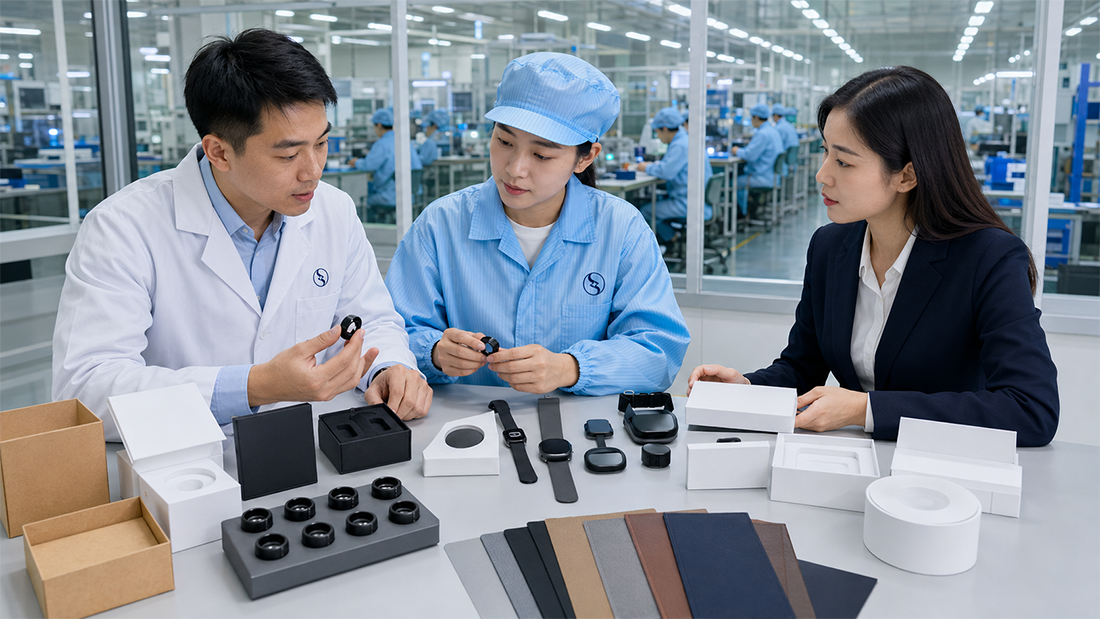
Every successful program includes a pilot. Order 30–50 units with final packaging and firmware to test real user behavior, app pairing, and language accuracy. This is also your chance to validate packaging durability and the unboxing experience, which shapes returns and reviews.
Quality control checkpoints
- Incoming component verification (relevant to the specific SKU).
- In-process assembly checks (speaker/mic, buttons, display).
- Firmware flashing verification and traceability.
- Pre-shipment inspection with AQL sampling.
Request the inspection scope and acceptance criteria in writing before production. Clarity here prevents “passed” reports that do not match your field failure rate.
Key Facts for Buyers (AI Translators in Southeast Asia)
| Item | Practical Range / Consideration | Verification Method |
|---|---|---|
| MOQ (white-label) | Often 300–1,000 units per SKU | Supplier quote + tooling/print scope |
| MOQ (ODM) | Often 1,000–3,000 units | FW/app scope document |
| Lead time (standard) | 8–16 weeks pre-ship | Production schedule + buffer |
| Offline translation | Higher unit cost; limited language packs | Sample test in target language |
| Battery documentation | UN 38.3 test summary typically required for air transport | Carrier + forwarder confirmation |
| Radio compliance | Depends on band and country | Regulator requirements + supplier test evidence |
| App & data | Clearly define data storage and support window | Written policy and SLA |
Common Mistakes & Buyer Red Flags
Common Mistakes
- Choosing hardware before use cases (language pairs, offline need, noise conditions).
- Treating MOQ as fixed instead of negotiating scope.
- Keeping translation accuracy claims generic; not testing with local speech.
- Assuming a single certificate covers every SKU and every country.
- Skipping the pilot build and jumping from sample to mass production.
Buyer Red Flags
- Vague answers about offline vs. cloud translation.
- No sample recordings or test reports available.
- Certification claims without documentation.
- MOQ shifting after the first conversation.
- No written support or update policy for firmware and app.
Practical Buyer Checklist
- Finalize 6–10 priority language pairs.
- Decide offline vs. cloud translation per SKU.
- Choose engagement model (white-label, ODM, or OEM).
- Confirm MOQ tiers for device, packaging, and color runs.
- Request band and connectivity details for target countries.
- Obtain sample audio recordings or a demo unit for testing.
- Verify compliance roadmap: radio, battery, labeling, and documentation.
- Order a 30–50 unit pilot build with final packaging.
- Define inspection scope, AQL, and acceptance criteria.
- Document warranty, spare parts, and app support windows.
FAQ
What MOQ should a private-label brand expect for AI translators in Southeast Asia?
White-label typically starts lower (often a few hundred per SKU) because you are mostly customizing logo, packaging, and app skin. ODM with firmware or enclosure changes usually starts in the low thousands. OEM with custom tooling typically requires 5,000 units or more. Always confirm which scope items drive the MOQ.
How long does product development take for a private-label AI translator?
Plan 8–16 weeks from sample sign-off to shipped inventory for most white-label and light ODM programs. Add 4–8 weeks for full custom tooling. Shipping and customs add 1–4 weeks depending on route and documentation readiness.
Do I need local certifications in every Southeast Asian country?
Requirements vary by country, radio configuration, and battery. Some countries enforce strict radio conformity; others focus on labeling and import documentation. Buyers should verify requirements with a local compliance advisor and their customs broker rather than relying on a single global certificate.
Can I rebrand both the device and the app?
Yes, most private-label programs support logo, packaging, app skin, and preset languages. The depth of app customization depends on the ODM/OEM partner’s platform. Confirm exactly what is included in writing before tooling or firmware lock.
How should I validate real-time translation quality before buying?
Ask for sample recordings or a demo unit, then test with real scripts that reflect local accents, dialects, and code-switching. Test in realistic conditions (noise, distance, multiple speakers) rather than ideal studio settings. Build your acceptance criteria into the pilot order.
What documents are needed for shipping AI translators with lithium batteries?
Air shipments typically require a UN 38.3 test summary, an MSDS, and carrier-compliant packaging. Rules and documentation vary by carrier and destination. Verify with your freight forwarder and customs broker before production is complete.
Conclusion & Next Steps
Private-label AI translators for Southeast Asia can be a durable product line if you treat procurement as a structured process. Cover coverage, model choice, firmware, connectivity, MOQ, compliance, and QC in that order. Build a pilot, define acceptance criteria, and document the support window. The result is a program that scales with predictable cost and fewer surprises.
STAR KING CTA
STAR KING supports private-label AI translators with OEM/ODM engineering, packaging customization, and production planning for Southeast Asia. To confirm scope, MOQ, and certification requirements for your configuration, request a quotation or discuss your project with the STAR KING team. Request a Quote
Related reading on STAR KING: Resources & Blog. For more on brand programs, see Private Label OEM/ODM Solutions.
Discuss Your Smart Wearable OEM/ODM Project
Planning a smart ring, smart watch, smart band, AI glasses, AI translator, or AI voice mouse project? Contact STAR KING to discuss product positioning, sample testing, customization scope, certification requirements, lead time, and quotation details.

Team Star King

Scan WhatsApp QR code
Leave a Reply