
AI Smart Glasses for UK EdTech: 7 Checks Before You Sign an OEM Contract
October 6, 2026 · Team Star King

AI Smart Glasses for UK EdTech: 7 Checks Before You Sign an OEM Contract
Before you sign an OEM contract, verify seven things: MOQ and pilot terms, UKCA/CE and battery documentation, language support, classroom software integration, pilot-unit testing scope, packaging and deployment logistics, and tooling/IP ownership. AI smart glasses for UK EdTech procurement fail most often at the certification and pilot-verification stage, not the hardware stage — so the RFQ you send now determines whether your school trial is credible or expensive. This guide is written for UK education technology buyers at the request-for-quotation stage.
Table of Contents
Table of Contents
AI smart glasses: Table of Contents
- Short Answer
- Key Takeaways
- Key Facts for Buyers
- Check 1: MOQ and Pilot Program Structure
- Check 2: UKCA, CE and Battery Documentation
- Check 3: Language Support and Translation Quality
- Check 4: Classroom Software and MDM Integration
- Check 5: Pilot Unit Testing Scope
- Check 6: Packaging, Charging and Deployment Logistics
- Check 7: Tooling Ownership, Warranty and IP Terms
- Pilot vs. Full-Rollout Decision Table
- Common Mistakes and Buyer Red Flags
- Practical Buyer Checklist
- FAQ
- Conclusion

Short Answer
For UK EdTech deployments, AI smart glasses should be evaluated as a compliance-sensitive, firmware-driven purchase rather than a consumer gadget. Before signing, confirm MOQ and pilot terms in writing, require UKCA/CE and battery transport documentation per configuration, test language and software integration in a real classroom, and clarify tooling, IP and warranty ownership. If a supplier cannot provide configuration-specific documents, treat that as a procurement risk, not a paperwork delay.
Key Takeaways
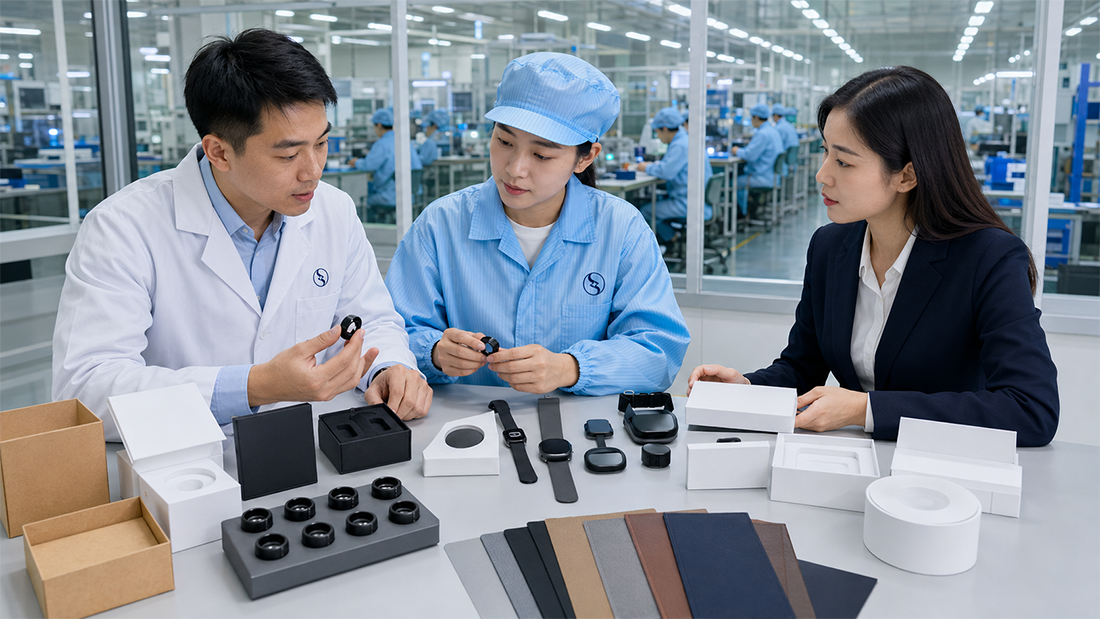
- MOQ is usually tied to hardware color, memory/display configuration and packaging, not just total order volume. Ask for a written MOQ matrix.
- UKCA marking applies to many electronic products placed on the Great Britain market; CE marking remains relevant for Northern Ireland. Confirm which applies to your SKU and configuration.
- Rechargeable AI glasses typically require UN38.3 test summaries and MSDS documents for air freight. Buyers should verify these are current for the exact battery in the model you order.
- EdTech buyers should define translation, voice-command and accessibility requirements before sampling, not after.
- Pilot programs should be scoped to a fixed number of units, a fixed duration, and a documented success metric.
- Tooling, firmware IP and app customization ownership must be stated in the contract, not assumed.
- Certification requirements depend on product configuration and target market; buyers should verify with the supplier and, where needed, a UK compliance advisor.
Key Facts for Buyers
| Procurement Item | Typical Expectation | What to Verify |
|---|---|---|
| MOQ | Tiered by configuration | Written MOQ matrix by color, storage, packaging |
| Sample Lead Time | Weeks, varies by customization | Confirm sample fee, refund policy, and shipping terms |
| UK Market Compliance | UKCA and/or CE depending on market | Declaration of Conformity and test reports per configuration |
| Battery Transport | UN38.3 and MSDS often required | Current documents matching the battery model number |
| Language Support | Varies by firmware/SDK | Test UK classroom languages and accents before rollout |
| Warranty | Typically 12 months [STAR KING TO CONFIRM] | RMA process, spare parts availability, return shipping terms |
| Production Lead Time | Weeks after PO and deposit [STAR KING TO CONFIRM] | Written schedule with milestone dates |
| Tooling & IP | Depends on agreement | Ownership clauses for molds, firmware, app code |
Check 1: MOQ and Pilot Program Structure
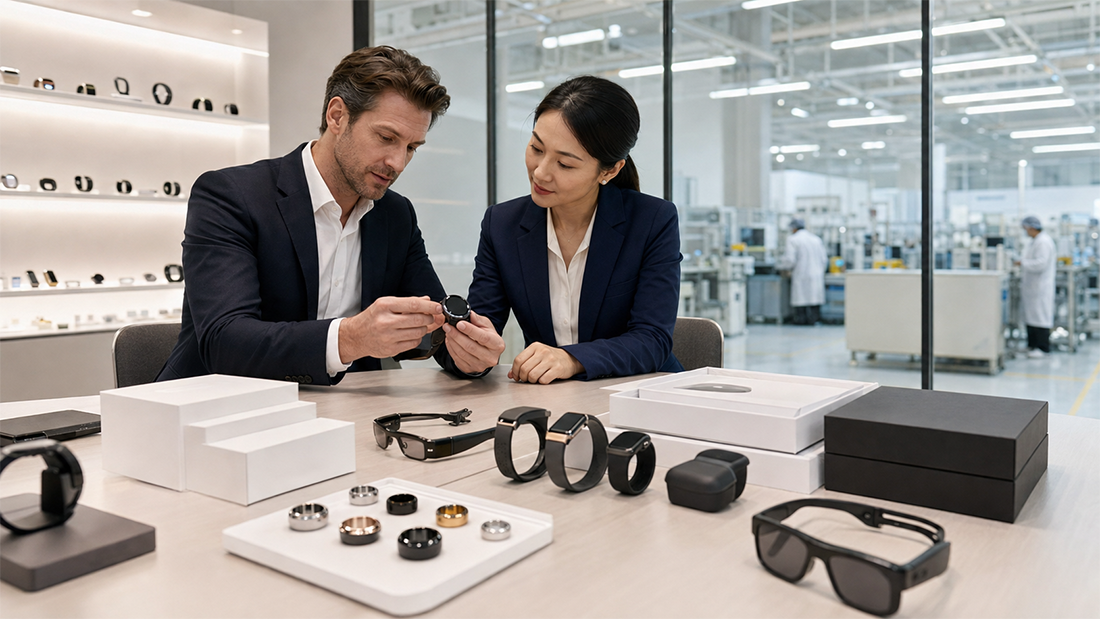
MOQ is one of the first commercial terms an AI smart glasses supplier will quote, and one of the easiest to misunderstand. In practice, MOQ is rarely a single number. It is usually a matrix: a minimum quantity per color, per hardware configuration, and per packaging variant. A supplier might accept 500 units total but require 200 units per color. For EdTech buyers, which often order a single SKU in one color, this distinction matters.
What to ask in your RFQ
- What is the MOQ for a base configuration with standard packaging?
- What is the MOQ if I change the logo, packaging or firmware defaults?
- Can a smaller pilot order be produced under the same tooling and firmware as the mass-production order?
Many suppliers structure pilots separately from mass production. That can be useful, but ask whether the pilot units come from the same firmware branch and hardware revision as the production run. If they do not, your pilot results may not predict production behavior.
For related guidance on how customization choices affect minimums, see private label OEM/ODM solutions.
Check 2: UKCA, CE and Battery Documentation
This is the check that most often delays UK EdTech deployments. Placing electronics on the UK market involves specific documentation, and the applicable marking depends on where in the UK the product will be placed. UKCA marking is used for many products placed on the market in Great Britain. CE marking continues to be recognized in certain contexts, including Northern Ireland. Buyers should verify which regime applies to their specific product and destination.
Documents to request per configuration
- A Declaration of Conformity referencing the exact product and configuration.
- Test reports relevant to the product, such as EMC, safety and radio (for wireless models).
- Battery documentation: UN38.3 test summary and MSDS for the rechargeable cell or pack.
- RoHS documentation, where applicable.
Do not accept a general catalog of certificates. Ask for documents that match the model number, configuration and battery you are ordering. For background on UK requirements, see the official UK Government guidance on using the UKCA marking. For battery transport, refer to the IATA Dangerous Goods Regulations framework used by air carriers.
A supplier that treats these questions as unusual is a signal worth noting. A supplier that answers them per configuration is a better fit for a UK public-sector or school deployment.
For broader certification context, review STAR KING’s quality and compliance resources before finalizing your RFQ.
Check 3: Language Support and Translation Quality
AI smart glasses are often evaluated for two different jobs in education: assisted communication and real-time translation. Both depend on firmware, cloud services and the underlying models. For UK buyers, English is the primary classroom language, but many schools support pupils and families who speak additional languages. That shifts the evaluation criteria.
What to test before committing
- Which language pairs are supported at launch, and which are planned?
- Does the device process speech on-device, in the cloud, or both? This affects latency, privacy and internet requirements.
- How does it perform with UK regional accents and classroom background noise?
If your use case involves multilingual classroom support, consider whether the device is a fit for a structured business and education display and device solution rather than a stand-alone purchase.
Check 4: Classroom Software and MDM Integration
Education deployments rarely accept a closed device. Your IT team will ask how the AI smart glasses interact with existing management and identity systems. That is a software question, and it should be asked during the RFQ, not after the purchase order.
Integration questions to include
- Is there an SDK or API for custom applications?
- Can firmware defaults be customized for your deployment?
- Does the companion app support the account and device management model your schools use?
- Can updates be controlled or scheduled to avoid disrupting lessons?
Customization options vary by supplier and project scope. STAR KING’s OEM/ODM program is structured to discuss firmware and app customization during project scoping, which is the right time to raise these points.
Confirm which of these capabilities are standard, which are optional, and which require a project-specific development fee. “We can look into it” is not a specification.
Check 5: Pilot Unit Testing Scope
A pilot is not a favor; it is a defined test with a defined purpose. EdTech buyers should specify what the pilot is meant to prove and how success will be measured.
Suggested pilot framework
- Fixed unit count and duration (for example, 30 days with a defined number of devices and users).
- Documented test categories: translation accuracy, battery life under classroom use, comfort during a full lesson, and connectivity.
- A named internal owner and a structured feedback form.
- A decision gate: expand, adjust, or stop.
Ask the supplier whether pilot units can be produced from the same firmware and hardware revision as the intended production run. If not, ask what will change. For teams sourcing multiple categories, the same discipline applies to smart watches and other wearable devices in a broader rollout.
Check 6: Packaging, Charging and Deployment Logistics
In an education setting, the box and the charging setup are part of the product. A device that is hard to charge, store or label creates operational cost long after the purchase order is closed.
Items to define in the RFQ
- Retail or bulk packaging, and whether it can be customized for schools.
- Charging method: case, dock, cable, or a combination.
- Serial number and asset-tagging options for device tracking.
- Shipment terms and Incoterms, and who handles import duties and VAT.
- Battery shipping documentation and carrier requirements for air freight.
Charging logistics and battery documentation are also relevant if you are evaluating AI smart glasses alongside other rechargeable devices in a single procurement.
Check 7: Tooling Ownership, Warranty and IP Terms
These are contract terms, not product features, and they are frequently left to the end. That is a mistake. Tooling ownership, firmware IP and warranty obligations determine what happens if you need to change suppliers, scale up, or repair a fleet after two years.
Terms to clarify in writing
- Who owns the tooling, molds and fixtures paid for by the buyer?
- Who owns custom firmware, app code and design files?
- What is the warranty period, and what does it cover?
- How are repairs handled, and how quickly can spare parts be supplied?
- What happens to tooling and IP if the relationship ends?
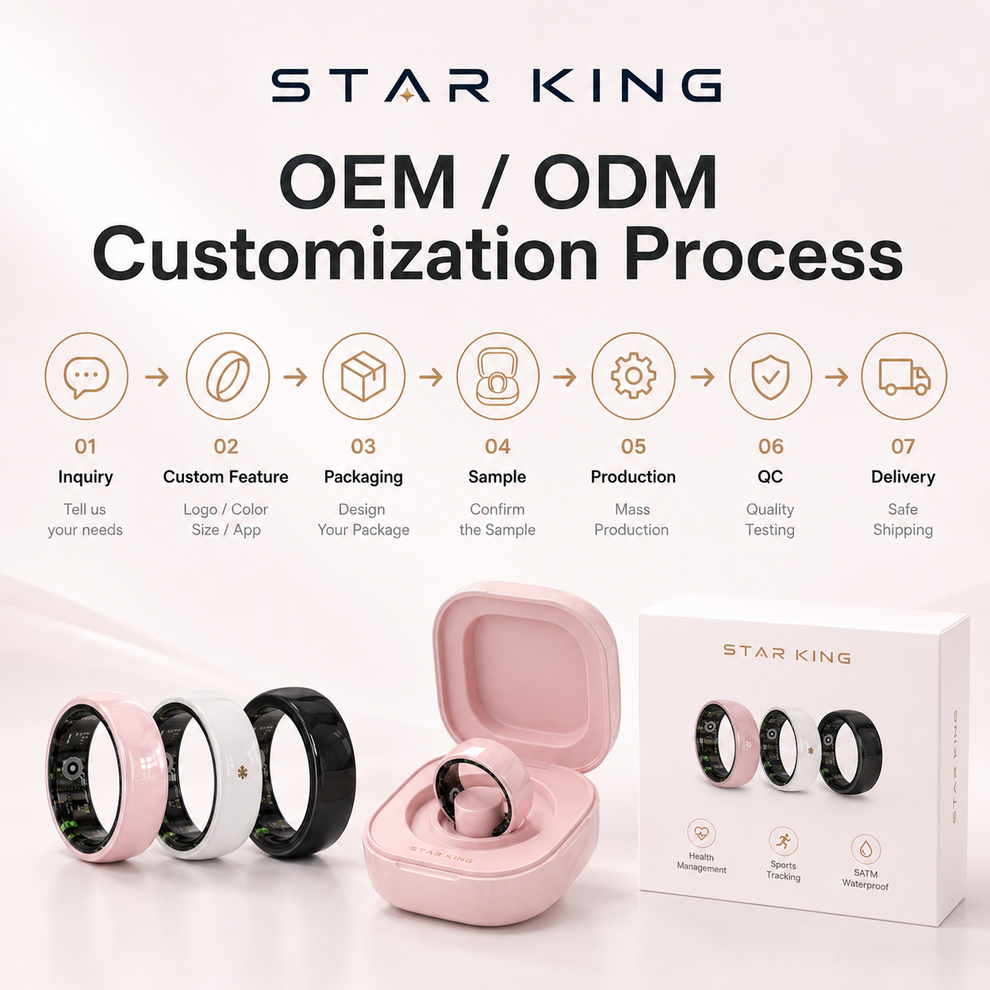
If you are at the point of comparing customization options, discussing an OEM/ODM project with a named contact is more productive than exchanging general emails. Bring your draft clauses.
Pilot vs. Full-Rollout Decision Table
| Decision Factor | Pilot Order | Full Rollout |
|---|---|---|
| Typical quantity | Small, fixed sample size | Mass production tier |
| Primary purpose | Validate hardware, software and user acceptance | Deploy at scale |
| Documentation needed | Key documents per configuration | Full document pack per SKU |
| Customization depth | Limited to firmware defaults and light branding | Logo, packaging, firmware, app options |
| Lead time | Weeks, varies by project | Weeks after PO and deposit [STAR KING TO CONFIRM] |
| Decision gate | Defined success metrics | Contract renewal or expansion |
Common Mistakes and Buyer Red Flags
Common mistakes
- Sending a vague RFQ without configuration, quantity, market or certification expectations.
- Accepting a generic certificate pack instead of configuration-specific documents.
- Skipping the pilot and moving directly to a large order.
- Leaving tooling and IP ownership out of the contract.
- Assuming translation accuracy without testing UK accents and school environments.
Buyer red flags
- The supplier will not provide battery documents for the specific battery model.
- MOQ changes verbally without written confirmation.
- Firmware or SDK capabilities are described in general marketing language rather than technical terms.
- Warranty and RMA terms are unclear or only verbal.
- The supplier discourages a pilot or adds conditions that make it impractical.
Practical Buyer Checklist
- Written MOQ matrix by configuration, color and packaging.
- Sample order terms, fees and shipping method confirmed.
- UKCA/CE documentation and Declaration of Conformity per configuration.
- UN38.3 and MSDS for the exact battery in the ordered model.
- Language pairs and on-device vs. cloud processing confirmed.
- SDK/API and firmware customization scope agreed.
- Pilot plan with fixed units, duration and success metrics.
- Packaging, charging and serial-number scheme defined.
- Incoterms, duties and VAT responsibilities confirmed.
- Tooling, IP, warranty and RMA terms in the contract.
FAQ
What MOQ should a UK EdTech buyer expect for AI smart glasses?
MOQ varies by supplier and configuration. Ask for a written matrix showing minimums per color, per hardware variant and per packaging option, because a single total figure often hides per-variant floors.
Do AI smart glasses need UKCA or CE marking for UK schools?
Many electronic products placed on the Great Britain market require UKCA marking, while CE marking remains relevant in certain contexts such as Northern Ireland. Buyers should confirm which regime applies to their specific product and destination, and obtain a Declaration of Conformity per configuration.
What battery documents are needed to ship AI smart glasses to the UK?
Rechargeable devices commonly require a UN38.3 test summary and MSDS for air freight. Requirements can depend on the carrier and shipment method, so verify current documentation matches the exact battery model before booking freight.
Can a supplier produce a small pilot order before mass production?
Some suppliers can. Ask whether pilot units come from the same firmware branch and hardware revision as the intended production run, and define success metrics before ordering.
What should be tested during a classroom pilot?
Focus on translation accuracy with UK accents, battery life under a full lesson, comfort, connectivity and software integration. Assign a named owner and a structured feedback form.
Who owns the tooling and firmware IP for custom AI smart glasses?
Ownership depends on the contract. Buyers should confirm in writing who owns molds, fixtures, design files, firmware and app code, and what happens to them if the relationship ends.
What is the typical warranty for OEM smart glasses?
Warranty terms vary by supplier and project. Confirm the period, what is covered, how RMAs are handled and how quickly spare parts can be supplied. STAR KING’s standard terms are [STAR KING TO CONFIRM].
Conclusion
AI smart glasses for UK EdTech procurement succeed when the commercial, compliance and software questions are answered before the contract is signed, not after. MOQ and pilot structure, UKCA/CE and battery documentation, language and integration testing, deployment logistics, and tooling/IP ownership are all procurement decisions. Treat them as such, and your RFQ will produce comparable, defensible quotes rather than a collection of unanswered questions.
STAR KING CTA
If you are preparing an RFQ for AI smart glasses for a UK education deployment, STAR KING can supply configuration details, MOQ information, sample options and available documentation for review. To move from general inquiries to a scoped project, request a quotation and include your target configuration, quantity, certification expectations and pilot plan.
Discuss Your Smart Wearable OEM/ODM Project
Planning a smart ring, smart watch, smart band, AI glasses, AI translator, or AI voice mouse project? Contact STAR KING to discuss product positioning, sample testing, customization scope, certification requirements, lead time, and quotation details.

Team Star King

Scan WhatsApp QR code
Leave a Reply