
AI translator suppliers: How Retail Chains in Southeast Asia Should Evaluate AI Translator Suppliers: 7 Critical Checks Before You Commit
November 16, 2026 · Team Star King
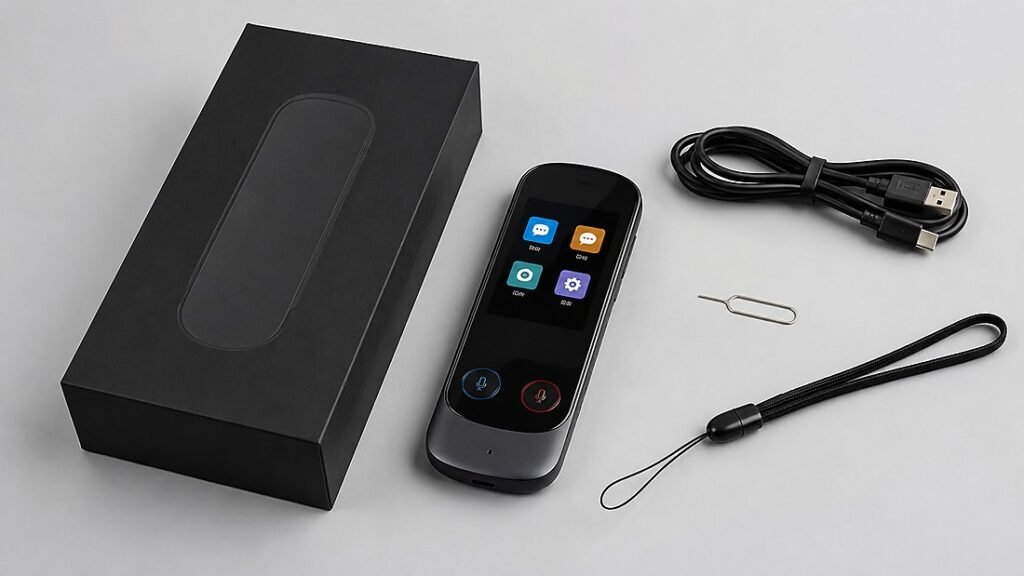
How Retail Chains in Southeast Asia Should Evaluate AI Translator Suppliers: 7 Critical Checks Before You Commit
When Southeast Asian retail chains source AI translators, the decision hinges on seven supplier checks: multilingual accuracy for regional languages, firmware and app integration, battery safety and air-freight compliance, MOQ and landed cost, certification readiness, packaging and brand customization, and after-sales support across multiple countries. This guide explains how to evaluate AI translator suppliers using those checks, with procurement tables, buyer red flags, and a practical checklist built for retail buyers in Indonesia, Thailand, Vietnam, the Philippines, Malaysia, and Singapore.
Table of Contents
Table of Contents
AI translator suppliers: Short Answer
Retail chains in Southeast Asia should select AI translator suppliers by validating seven areas: language coverage for SEA languages, offline and cloud translation behavior, app and software maintenance, battery and transport compliance, MOQ and landed cost, certification and labeling for each destination country, and in-region after-sales support. Buyers should request sample devices, verify firmware update plans, and confirm certification status per product configuration before signing a purchase order.
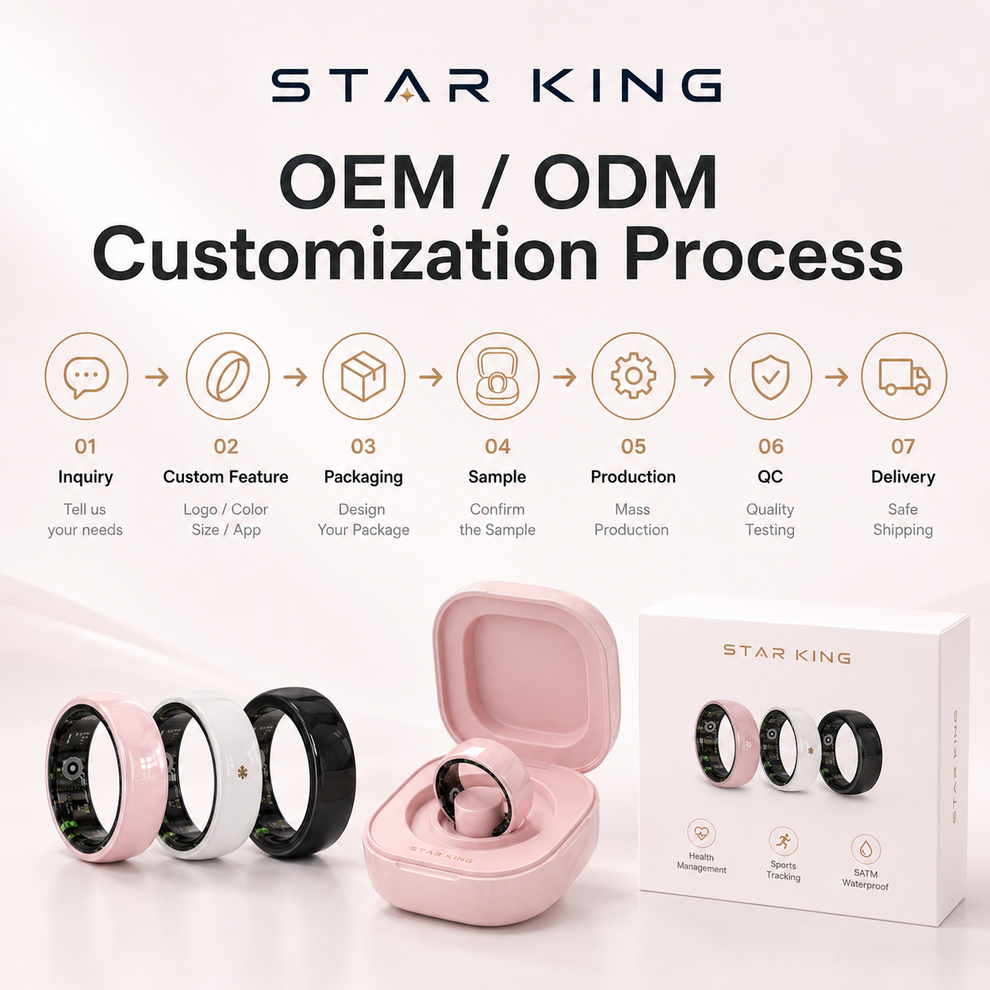
Table of Contents
- Why AI Translators Require a Different Supplier Evaluation
- Check 1: Multilingual Coverage for Southeast Asia
- Check 2: Translation Engine and App Integration
- Check 3: Battery Safety and Air Transport Compliance
- Check 4: MOQ, Pricing, and Landed Cost
- Check 5: Certification and Labeling for Each Market
- Check 6: OEM/ODM Customization and Packaging
- Check 7: After-Sales, Warranty, and Spare Parts
- Key Facts for Buyers
- Common Mistakes and Buyer Red Flags
- Practical Buyer Checklist
- FAQ
- Conclusion
Key Takeaways
- Language coverage in Southeast Asia is not uniform; verify support for Indonesian, Thai, Vietnamese, Filipino, Malay, and English as used in retail settings.
- AI translator suppliers should provide a clear firmware update schedule and app maintenance plan; otherwise devices age quickly in multi-year retail programs.
- Battery-powered translators require UN38.3 test summaries and MSDS for air freight; confirm documents per model and shipping configuration.
- MOQ and landed cost should be evaluated together, including duties, port charges, and in-country distribution.
- Certification requirements differ by country; buyers should verify CE, FCC, RoHS, and local telecom or labeling rules for each destination.
- Samples are essential for testing noise environments, dialect handling, and real-world translation speed before committing to a retail launch.
Why AI Translators Require a Different Supplier Evaluation
AI translators are hybrid hardware-software products. Unlike a pair of earbuds or a smart band, the value of an AI translator depends heavily on the translation engine, firmware behavior, and companion app. A supplier that can manufacture a compact device may not be able to maintain language models, push firmware updates, or support multiple app versions across retail chains. For retail buyers in Southeast Asia, these software layers matter because device performance is judged in noisy malls, airport shops, and customer service counters where several languages are spoken daily.
The region is also fragmented. A retail chain operating in Indonesia, Thailand, and Vietnam may need three different power labeling formats and three certification profiles. Some countries have additional requirements for wireless devices, radio-frequency equipment, or battery transport. Buyers should treat the procurement as a program, not a single purchase order, and evaluate AI translator suppliers against the full lifecycle: sample testing, certification, launch, and after-sales.
For a broader view of how AI hardware fits into retail and office environments, refer to our business and education solutions overview.
Check 1: Multilingual Coverage for Southeast Asia
Retail chains should begin by testing language pairs that match real customer interactions, not just English-to-Chinese demonstration phrases. Ask the supplier for a written list of supported languages and offline versus cloud modes. Confirm whether the device supports Indonesian, Thai, Vietnamese, Filipino, Malay, and English, and whether it can switch quickly between them. In tourist areas, customers may speak Mandarin, Japanese, or Korean; verify those pairs as well if your stores serve international shoppers.
What to test in the sample phase
- Recognition accuracy in noisy environments, such as store entrances or checkout counters.
- Regional accents and code-switching, which is common in Southeast Asian cities.
- Latency: how long the device takes to produce speech after a phrase is spoken.
- Offline mode coverage and whether critical languages degrade without connectivity.
- Battery behavior during continuous translation use.
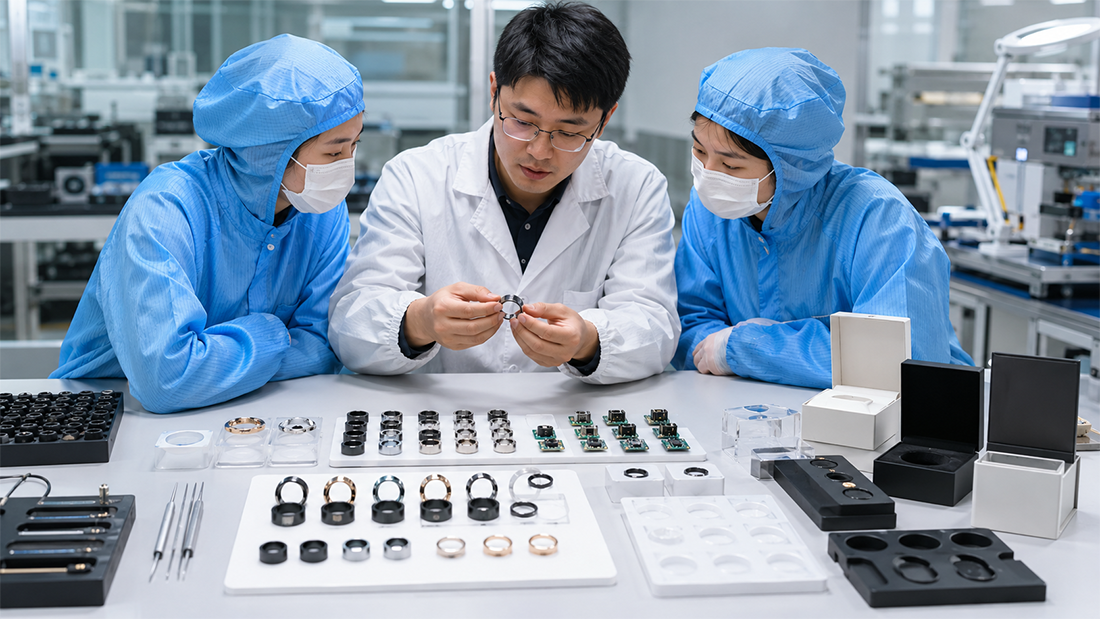
A supplier that can document test conditions and provide sample devices for field testing is easier to qualify than one that only offers demo videos. If your chain needs a broad language set, ask about the AI translators product line and request a configuration discussion.
| Language Pair | Offline Support | Cloud Support | Typical Retail Use Case |
|---|---|---|---|
| English ↔ Indonesian | [STAR KING TO CONFIRM] | Yes (cloud-based) | Customer service, product information |
| English ↔ Thai | [STAR KING TO CONFIRM] | Yes (cloud-based) | Tourist areas, airport retail |
| English ↔ Vietnamese | [STAR KING TO CONFIRM] | Yes (cloud-based) | Retail staff assistance |
| English ↔ Filipino | [STAR KING TO CONFIRM] | Yes (cloud-based) | Customer care counters |
| English ↔ Malay | [STAR KING TO CONFIRM] | Yes (cloud-based) | Cross-border retail |
Check 2: Translation Engine and App Integration
The translation engine is the core of the product, but the app is where retail chains manage devices, update language packs, and collect usage data. Ask suppliers about their firmware customization options, app platform support (Android, iOS), and update history. A supplier that can explain how they version firmware and how they notify buyers about updates is more likely to support a multi-year roll-out.
Consider whether you need a private-label app or can use the supplier’s standard app. If you operate stores across several countries, a centralized dashboard for device status may be helpful, but it should not create data residency or privacy problems. In Southeast Asia, data protection rules vary by country; buyers should confirm where translation data is processed and whether the supplier retains audio or text.
If your procurement team also evaluates voice-controlled devices for office use, our AI voice mouse page describes how voice input hardware is configured in workplace settings.
Check 3: Battery Safety and Air Transport Compliance
AI translators contain lithium batteries, so shipping across Southeast Asia usually requires compliance documents. Suppliers should provide a UN38.3 test summary and an MSDS for the battery configuration used in each model. Air carriers and freight forwarders typically ask for these documents before accepting shipments. If the supplier cannot provide them promptly, the delivery timeline becomes uncertain.
Buyers should also confirm that the battery capacity, charging method, and packaging meet their internal safety requirements. For retail chains, devices may be stored in back rooms for weeks before sale; check temperature range and storage guidelines. The IATA Dangerous Goods Regulations provide a useful reference for lithium battery shipping requirements. For more on battery safety in wearable and handheld devices, see our related reading on STAR KING’s resources blog.
Check 4: MOQ, Pricing, and Landed Cost
Retail chains with multiple stores often need a launch quantity that justifies custom packaging and brand materials. AI translator suppliers may set different MOQs for standard devices versus customized versions. Ask for both. A standard product with your logo may have a lower MOQ than a fully custom enclosure. Plan a pilot order for a few flagship locations, then scale after sell-through data is available.
Landed cost includes more than the unit price. Consider freight, insurance, import duties, value-added tax, port handling, and in-country distribution. Southeast Asian countries have different import regimes; confirm with a customs broker. The table below is a planning template, not a quotation.
| Cost Component | Estimate Basis | Buyer Action |
|---|---|---|
| Unit price (FOB) | Based on MOQ and configuration | Request quotation per model |
| Freight | Air or sea; depends on volume and battery documentation | Get forwarder quotes with UN38.3/MSDS |
| Import duty | Country-specific tariff code | Verify HS code with customs broker |
| VAT/GST | Destination country rate | Confirm tax treatment |
| In-country distribution | Warehouse and last-mile costs | Plan regional fulfillment |
| After-sales reserve | Warranty and spare parts allowance | Negotiate support terms |
Check 5: Certification and Labeling for Each Market
Certification requirements for AI translators vary by country and by product configuration. Buyers should not assume that a CE mark or FCC declaration is sufficient for every Southeast Asian market. In some countries, radio equipment and telecom devices require local type approval; in others, labeling rules and language requirements apply. Ask the supplier for a certification matrix that lists which documents exist for each model and which are pending.
For reference, the U.S. Federal Communications Commission publishes equipment authorization guidance, and the European Commission explains CE marking responsibilities. These are useful baselines, but they do not replace local requirements. STAR KING can share available certification documents for each configuration; buyers should verify with their own compliance team or a local consultant.
Check 6: OEM/ODM Customization and Packaging
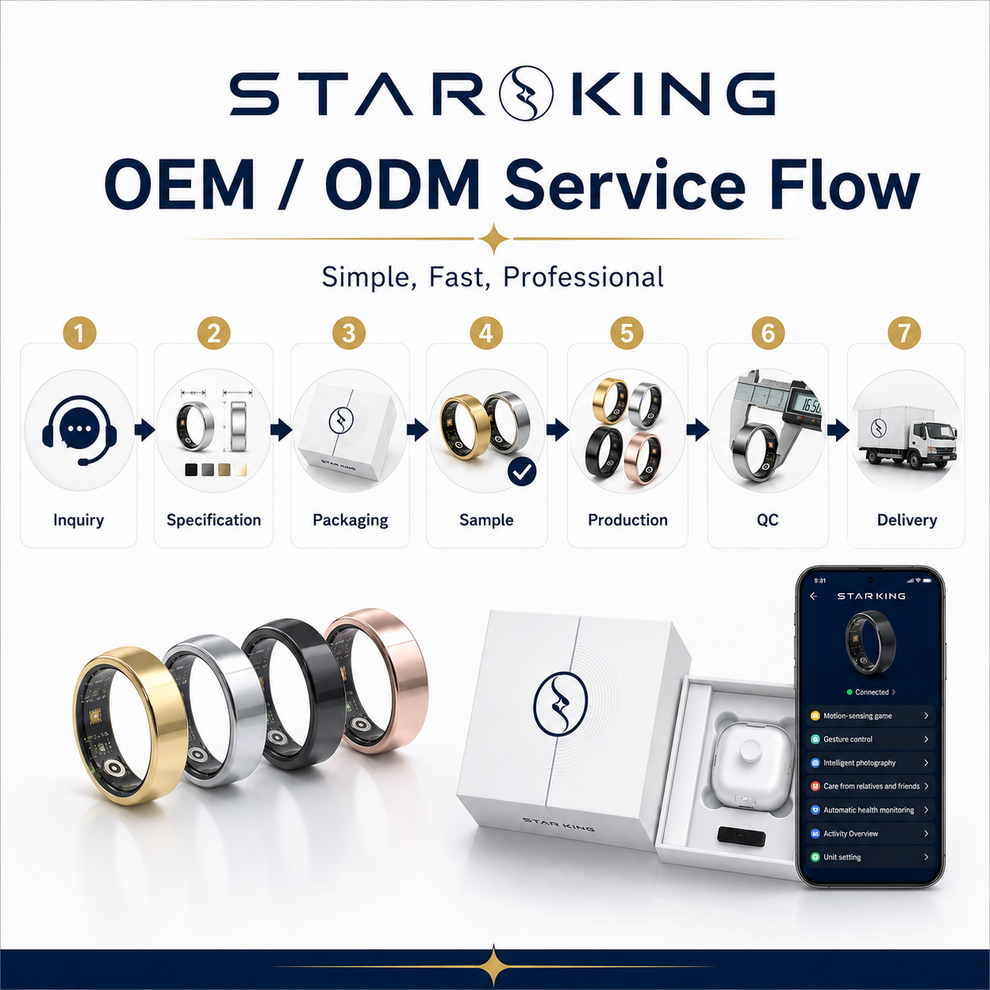
Retail chains often want their brand on the device, packaging, and app. OEM customization may include logo printing, custom boot animation, branded packaging, and user manual localization. ODM customization can extend to enclosure changes or feature adjustments, but it typically requires higher MOQ and longer lead time. Ask the supplier to separate standard private label from full ODM in the quotation.
Packaging is not a minor detail in retail. Store shelves and e-commerce listings require barcodes, country-of-origin labels, and language variants. Confirm whether the supplier can handle retail-ready packaging, including anti-theft tags if your stores use them. For more on this process, see the private label OEM/ODM solution page.
Check 7: After-Sales, Warranty, and Spare Parts
After-sales support is often the weakest link in cross-border sourcing. For a retail chain, a failed device in a store can mean a customer complaint at the counter. Ask the supplier about warranty terms, DOA policy, spare parts availability, and repair or replacement turnaround. If you operate in several countries, clarify whether support is centralized or handled by a local distributor.
Also ask how firmware updates are delivered after the warranty period. A device that cannot receive updates may become incompatible with app updates. The supplier should provide a lifecycle statement, even if it is an estimate.
Key Facts for Buyers
| Evaluation Area | What to Verify | Why It Matters for Retail Chains |
|---|---|---|
| Language coverage | Written list of offline and cloud languages; SEA language pairs tested | Customer-facing performance in multilingual stores |
| Firmware and app | Update schedule, app platform support, customization options | Long product lifecycle and brand consistency |
| Battery and shipping | UN38.3 summary, MSDS, packaging compliance | Air freight acceptance and store safety |
| MOQ and cost | Standard vs. customized MOQ, landed cost components | Budget planning and pilot launch feasibility |
| Certification | Per-model certificate matrix, local labeling requirements | Market entry and customs clearance |
| Customization | Logo, packaging, app branding, manual localization | Retail brand presentation and shelf readiness |
| After-sales | Warranty, spare parts, update policy | Reduced downtime and customer satisfaction |
Common Mistakes and Buyer Red Flags
Retail buyers evaluating AI translator suppliers should watch for these warning signs:
- Claims without documents: A supplier that says “all certifications are available” but cannot provide a certificate list per model is a risk.
- No sample testing policy: Suppliers that discourage field testing or charge excessive sample fees may not support real retail conditions.
- Vague firmware support: If the supplier cannot explain how updates are delivered, the product may be orphaned after launch.
- Understated shipping requirements: Lithium battery shipments need proper documentation; a supplier that downplays this may cause delays.
- One-size-fits-all MOQ: A supplier that offers the same MOQ for standard and customized orders may not have real customization capability.
- No local support plan: For multi-country retail chains, after-sales support should be discussed before the order, not after.
Practical Buyer Checklist
Use this checklist during supplier conversations and sample evaluation.
- ☐ Request a written language list with offline/cloud modes for each SEA market.
- ☐ Order samples and test in a noisy retail environment.
- ☐ Ask for firmware update history and future update commitment.
- ☐ Obtain UN38.3 summary and MSDS for each battery configuration.
- ☐ Confirm MOQ for standard, private-label, and ODM versions.
- ☐ Request a landed cost estimate including duties and freight.
- ☐ Verify certification status per model and destination country.
- ☐ Request samples of retail packaging with your branding concept.
- ☐ Review warranty, DOA policy, and spare parts availability.
- ☐ Confirm data processing and privacy practices.
For a related comparison of wearable devices for retail channels, see our smart watches product page.
FAQ
What is the typical MOQ for AI translators from Chinese suppliers?
MOQ varies by model and customization. Standard products may start at a few hundred units, while private-label or ODM orders typically require higher volumes. Buyers should request MOQ tiers for standard, logo-customized, and full-ODM configurations.
Can AI translators work offline in Southeast Asia?
Some models support offline translation for selected languages; others rely on cloud connectivity. Because support varies by language pair, buyers should test offline performance for each required language before committing.
Which certifications are needed for AI translators in Southeast Asia?
Requirements differ by country and product configuration. CE and FCC are common baselines, but local type approval, labeling, and telecom rules may apply. Buyers should verify with local authorities or a compliance consultant and request a per-model certificate matrix from the supplier.
How long does shipping take from China to Southeast Asia?
Air freight typically takes days to a few weeks depending on destination and customs; sea freight takes longer. Lithium battery documentation may affect carrier acceptance. Buyers should plan lead time with their forwarder and confirm documents before shipment.
Can we customize the app and packaging for our retail chain?
Many suppliers offer app branding and packaging customization, but scope and MOQ depend on the supplier’s capabilities. Ask for a written customization scope and separate quotations for standard private label and deeper ODM work.
What should we test in samples before placing a bulk order?
Test translation accuracy in noisy environments, battery life during continuous use, app stability, firmware update process, packaging durability, and after-sales responsiveness. Field testing in actual store conditions provides the most reliable signal.
Conclusion
Selecting AI translator suppliers for Southeast Asian retail chains requires more than comparing unit prices. Buyers should evaluate language coverage, firmware and app support, battery and transport compliance, MOQ and landed cost, certification per market, customization capability, and after-sales service. A structured sample-testing process and a documented supplier checklist reduce launch risk across multiple countries. STAR KING supports retail buyers with AI translator hardware, private-label options, and configuration discussions; contact our team to confirm specifications and certification documents for your target markets.
STAR KING CTA
Ready to evaluate AI translators for your retail chain? Contact our sales team to request samples, discuss OEM/ODM options, and confirm certification requirements for Southeast Asia.
Discuss Your Smart Wearable OEM/ODM Project
Planning a smart ring, smart watch, smart band, AI glasses, AI translator, or AI voice mouse project? Contact STAR KING to discuss product positioning, sample testing, customization scope, certification requirements, lead time, and quotation details.

Team Star King

Scan WhatsApp QR code
Leave a Reply