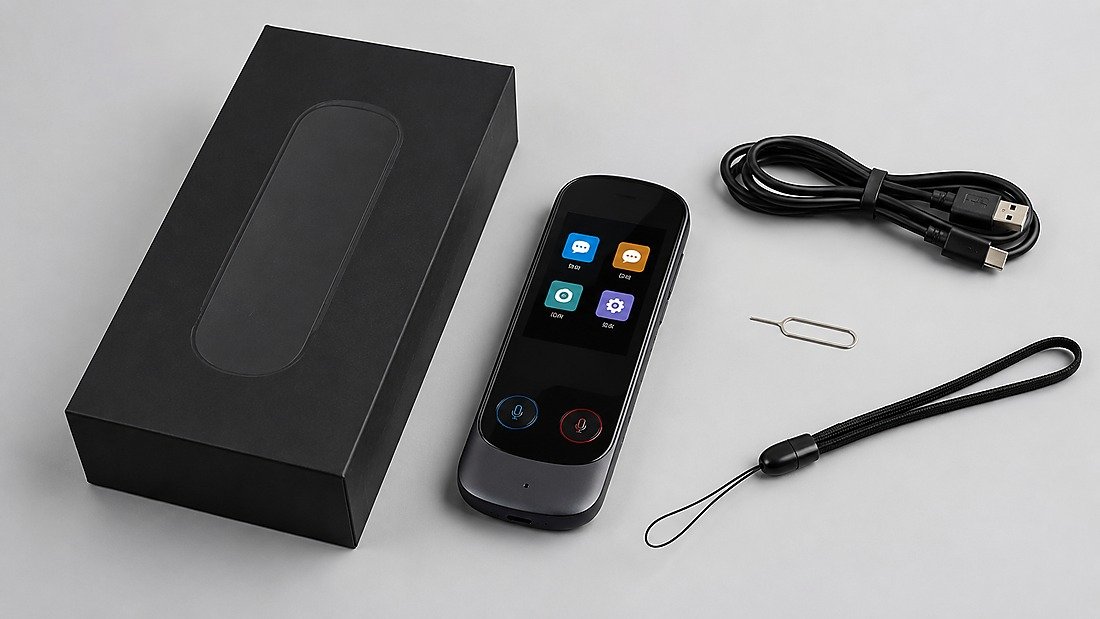
AI translator suppliers: AI Translators for Southeast Asia Distributors: 7-Step 2026 Sourcing Guide
AI translator suppliers buyers need a supplier evaluation process that checks product fit, OEM/ODM capability, compliance documents, quality control, pricing, lead time, and after-sales support before placing a bulk order.
Table of Contents
Table of Contents
AI Translators for Southeast Asia Distributors: 7-Step 2026 Sourcing Guide
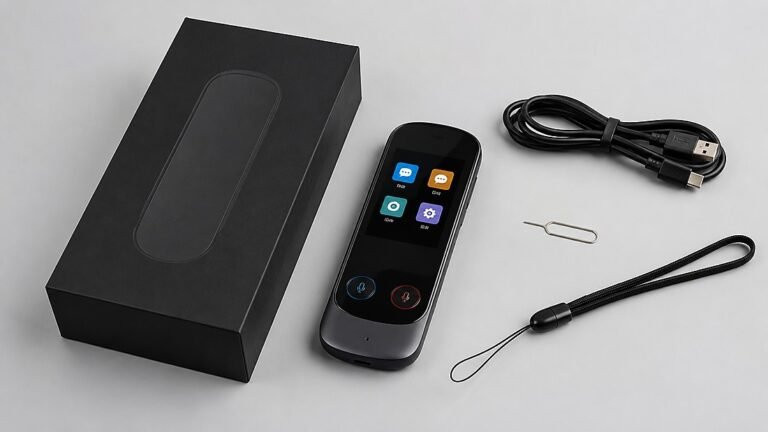
Direct Answer: AI translators for Southeast Asia distributors are handheld or wearable translation devices that convert speech between languages in near real time, typically combining an SoC, dual microphones, speaker, and cloud or on-device translation engine. For distributors in Indonesia, Vietnam, Thailand, the Philippines, and Malaysia, the buying decision in 2026 depends on four practical factors: regional language coverage, offline capability, OEM/ODM flexibility, and compliance for cross-border electronics. A 7-step evaluation framework—from target language mapping to landed cost modeling—helps distributors select suppliers who can support long-term retail and enterprise demand without creating avoidable compliance or inventory risk.
AI translator suppliers: Table of Contents
- Short Answer
- Key Takeaways
- Key Facts for Buyers
- What Is an AI Translator?
- Why Southeast Asia Is a Strategic Market for AI Translators
- Language Coverage: The First Filter
- Online vs. Offline Translation: A Buyer’s Trade-off Table
- OEM vs. ODM vs. Private Label: Which Model Fits Distributors?
- Certification and Import Requirements by Country
- MOQ, Pricing, and Landed Cost Modeling
- 7-Step Evaluation Framework for Distributors
- Common Mistakes and Buyer Red Flags
- Practical Buyer Checklist
- FAQ
- Conclusion

Short Answer
AI translators for Southeast Asia distributors are typically handheld two-way translation devices priced at wholesale tiers, with the strongest distributor value coming from models that combine broad Asian language support, offline fallback modes, and OEM/ODM flexibility. Buyers should validate supported languages against their retail channel, confirm wireless and electrical compliance for each destination country, and model landed cost after duties, VAT, and after-sales reserve before committing to MOQ. STAR KING positions its AI translators product line around OEM and private-label programs for international buyers.

Key Takeaways
- Language coverage is the primary differentiator. A device that performs well in Mandarin-English may underperform in Bahasa Indonesia, Vietnamese, or Thai if the translation engine is not tuned for those languages.
- Offline mode protects your brand in low-connectivity areas. Rural Indonesia, parts of the Philippines, and cross-border logistics corridors often have limited data coverage.
- OEM/ODM and private label programs let distributors differentiate. Logo, packaging, app skin, and language packs are common customization layers.
- Compliance is country-specific. Wireless modules, battery shipping rules (UN38.3, MSDS), and electrical safety requirements vary across Southeast Asia.
- MOQ and lead time should be negotiated together. A low MOQ with a 90-day lead time can be more expensive than a higher MOQ with a 30-day cycle for fast-moving channels.
- After-sales support determines repeat business. Distributors should confirm spare parts, firmware update cadence, and RMA process before launch.

Key Facts for Buyers
| Factor | Typical Range / Consideration | Why It Matters for SEA Distributors |
|---|---|---|
| Supported languages | Often 40–140+ depending on model and engine | Must include Bahasa Indonesia, Vietnamese, Thai, Filipino, and ideally Khmer/Lao/Burmese |
| Translation mode | Online cloud, offline on-device, or hybrid | Hybrid is safest for archipelago and rural markets |
| Connectivity | Wi-Fi, 4G (optional), Bluetooth pairing to phone | SIM-based options may raise compliance and cost |
| Battery | Approx. 1,000–2,500 mAh; 4–10 hours active use | Air shipping requires UN38.3 and MSDS documentation |
| Wholesale pricing | Tiered by MOQ; typically [STAR KING TO CONFIRM] | Distributor margin depends on tier and channel |
| MOQ | Usually 500–3,000 units for private label [STAR KING TO CONFIRM] | Startup brands may prefer lower trial MOQ |
| Certifications | CE, FCC, RoHS commonly cited; local wireless approval may be required | Buyers must verify per destination country |
| Warranty | Typically 12 months [STAR KING TO CONFIRM] | Affects RMA cost and retail trust |
What Is an AI Translator?
Definition for Distributors
An AI translator is a portable electronic device that captures spoken or typed input in one language and outputs the equivalent meaning in another language using automatic speech recognition (ASR), machine translation (MT), and text-to-speech (TTS) technologies. In B2B terms, it is a consumer and prosumer hardware category that sits between smartphone translation apps and professional interpreting services.
For distributors, the practical definition matters because it determines what you are actually buying: a hardware product (microphones, SoC, display, speaker, battery), a software service (translation engine, cloud API, app), or a bundled platform. Suppliers vary widely in which layers they own versus outsource, and that directly affects your ability to customize, your unit economics, and your long-term support obligations.
How Buyers Should Evaluate an AI Translator
- Hardware quality: microphone array sensitivity, speaker loudness, screen readability in sunlight.
- Translation accuracy: test with real Southeast Asian language pairs, not just English-Mandarin.
- Latency: near-real-time conversation flow (typically under 1–2 seconds per turn) is a usability threshold.
- Software ecosystem: mobile app, OTA updates, account system, language pack management.
- Supply chain: MOQ, lead time, packaging, and compliance documentation readiness.
If you are building a broader AI hardware portfolio, reviewing the AI office productivity solution stack can help you plan how translators sit alongside voice input and smart office devices in your catalog.
Why Southeast Asia Is a Strategic Market for AI Translators
Southeast Asia is one of the most linguistically diverse regions in the world. Indonesia alone has over 700 local languages, with Bahasa Indonesia as the national lingua franca. Vietnam, Thailand, the Philippines, Malaysia, and Singapore each operate in distinct language environments, and cross-border trade within ASEAN continues to expand under frameworks such as the ASEAN Economic Community.
For distributors, this creates three durable demand pockets:
- Tourism and hospitality: hotels, tour operators, and retail counters in Bangkok, Bali, Ho Chi Minh City, and Manila.
- Business travel and trade: procurement teams, sourcing agents, and SME exporters.
- Education and healthcare: international schools, clinics serving foreign patients, and multilingual service desks.
Each pocket has different requirements. A tourism-focused SKU may prioritize compact size and loudspeaker performance, while an enterprise SKU may prioritize accuracy in technical vocabulary and data privacy. Buying one SKU and marketing it to every pocket is a common distributor mistake.
Language Coverage: The First Filter
Core Southeast Asian Languages to Verify
Before reviewing price, distributors should test the supplier’s device against the languages that matter to their channel:
- Bahasa Indonesia and Bahasa Malaysia
- Vietnamese
- Thai
- Filipino / Tagalog
- Mandarin Chinese, Cantonese, and English (trade corridor languages)
- Khmer, Lao, Burmese (optional, for frontier markets)
Ask the supplier to provide sample recordings or live demos for each language pair you intend to sell. Marketing sheets often list optimistic totals (for example, “supports 100+ languages”) without clarifying whether those languages work in both directions, online only, or with reduced accuracy.
Questions to Ask About Language Quality
- Is translation bidirectional for each listed language?
- Which languages work offline, and how does offline accuracy compare to cloud?
- Can language packs be updated via OTA after purchase?
- Are regional dialects (for example, Javanese or Sundanese) supported, or only the standard register?
Language support is also a compliance-adjacent issue in some verticals, where inaccurate translation in medical or legal contexts can create liability. If you plan to sell into healthcare or legal channels, document the intended use clearly and avoid implying certified interpretation capability.
Online vs. Offline Translation: A Buyer’s Trade-off Table
| Mode | Strengths | Weaknesses | Best Fit |
|---|---|---|---|
| Cloud-only | Highest accuracy, largest language set, frequent updates | Requires stable connectivity, ongoing data cost, privacy considerations | Urban business travel, enterprise pilot deployments |
| Offline-only | Works without network, predictable data privacy | Smaller language set, slower updates, lower accuracy on rare pairs | Rural tourism, field logistics, defense-adjacent use |
| Hybrid | Balanced performance, graceful fallback | Slightly higher BOM and firmware complexity | General retail and distributor mass-market SKUs |
For most Southeast Asian distributors, hybrid devices offer the best balance for retail channels. Pure cloud models can be positioned for premium business users, while offline-capable SKUs can serve archipelago regions where data coverage is inconsistent.
OEM vs. ODM vs. Private Label: Which Model Fits Distributors?
Definitions in Practice
- OEM: You provide specifications or a reference design; the factory manufactures to your requirements, often with your branding and packaging.
- ODM: You select from the factory’s existing designs and customize defined elements such as logo, packaging, app skin, and language packs.
- Private label: You apply your brand to a largely standard product with light customization.
Most first-time distributor programs start at ODM or private label and evolve into deeper OEM collaboration once volume and market data justify it. STAR KING supports private label and OEM/ODM engagement models through its private label OEM/ODM program, with customization scope depending on the specific product and order volume.
Customization Layers to Discuss with Suppliers
| Layer | Typical Effort | Distributor Value |
|---|---|---|
| Logo printing | Low | Brand recognition at retail |
| Packaging design | Low–medium | Retail shelf differentiation, localized copy |
| App skin and onboarding | Medium | Better user retention, brand consistency |
| Language packs and default languages | Medium | Faster adoption in target market |
| Firmware feature toggles | Medium–high | Channel-specific SKUs (retail vs. enterprise) |
| Industrial design changes | High | Long-term differentiation, tooling investment |
Before committing, clarify who owns the tooling, app code, and brand assets. For distributors, a common pitfall is paying for customization without securing written rights to the mold or software assets used in their SKU.
Certification and Import Requirements by Country
Regulatory requirements for AI translators vary by destination country and product configuration. Distributors should treat certification as a per-market checklist rather than a single global status.
Common Certification Categories
- Electrical safety and EMC: CE marking is relevant for markets aligning with EU-style frameworks; Indonesia, Vietnam, and other ASEAN markets may require local equivalents or acceptance of international test reports.
- Wireless: Bluetooth and Wi-Fi modules typically require type approval or registration with national telecom authorities. Bluetooth SIG membership and declaration is often expected for Bluetooth-enabled devices.
- Battery shipping: Lithium batteries require UN38.3 test reports and, for some carriers, an MSDS and proper packaging.
- Materials: RoHS or similar restrictions on hazardous substances may apply depending on the market and channel.
Official Reference Points
- The Bluetooth SIG provides specifications and qualification resources for Bluetooth-enabled products.
- The International Electrotechnical Commission (IEC) publishes many of the international standards that feed into national certification schemes.
- National telecom and standards bodies in each SEA market should be consulted directly for the latest wireless and electrical approval requirements.
For a deeper buyer-oriented view of testing and compliance workflows, see STAR KING’s resources blog. Certification status depends on the specific product configuration; request test reports and declarations of conformity before finalizing your purchase order.
MOQ, Pricing, and Landed Cost Modeling
Typical Cost Structure
Wholesale pricing for AI translators is usually tiered by quantity and customization depth. A realistic distributor cost model should include:
- FOB unit price (tiered by MOQ)
- Tooling or customization fee (if applicable)
- Freight (air, sea, or express)
- Import duties and VAT in the destination country
- Certification or local approval costs
- Marketing and channel margin
- After-sales reserve (typically a percentage of unit cost)
For many distributors, the landed cost is 20–40% above FOB once freight, duty, and reserve are included, depending on the market and Incoterms. Buyers should build their own model with current rates rather than relying on supplier estimates.
Negotiating MOQ and Lead Time Together
MOQ and lead time are linked. Lower MOQs often come with higher per-unit costs or longer lead times because the factory cannot batch production efficiently. Distributors should ask:
- What is the MOQ per SKU, per color, and per language-pack configuration?
- What is the standard lead time for a repeat order versus a first order?
- Can we stage the order across two shipments to reduce inventory risk?
- Are there seasonal capacity constraints around Chinese New Year or regional holidays?
STAR KING’s specific MOQ and lead time thresholds for AI translators are [STAR KING TO CONFIRM] and should be verified against your target SKU.
7-Step Evaluation Framework for Distributors
Step 1: Map Target Languages and Use Cases
Define the top three language pairs for your channel and the top three use cases (tourism, business, education). This informs device selection more than any spec sheet.
Step 2: Shortlist Suppliers and Request Live Demos
Use a structured demo script in your target languages. Score accuracy, latency, and background-noise performance. Consider following a formal sourcing guide approach to compare suppliers on the same rubric.
Step 3: Verify Factory and Quality Systems
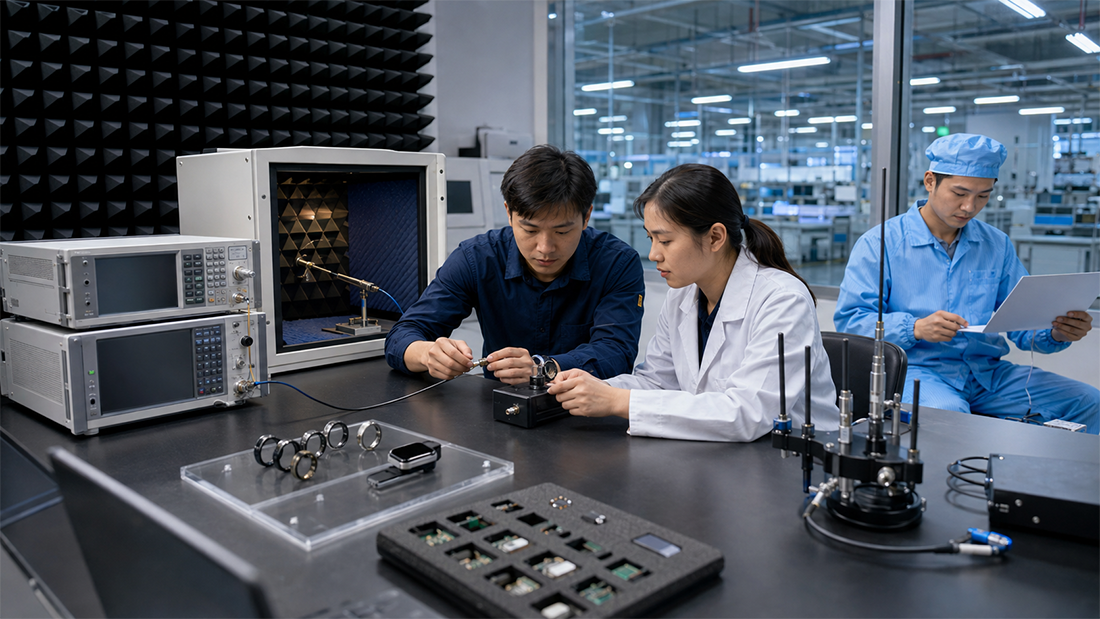
Request factory profile, quality management documentation, and recent test reports. If possible, arrange a third-party inspection or audit before first shipment.
Step 4: Clarify Customization Scope and IP Ownership
Decide which layers (logo, packaging, app, firmware) you need and confirm written ownership of tooling and code.
Step 5: Confirm Certification and Shipping Documentation
Collect UN38.3, MSDS, and relevant declarations. Confirm wireless approval steps for each destination country.
Step 6: Sample Testing and Pilot Order
Place a small pilot order to validate packaging, firmware stability, and after-sales workflow before scaling.
Step 7: Model Landed Cost and Channel Margin
Finalize pricing using actual freight and duty rates, then stress-test the margin against retail price assumptions in your market.
Common Mistakes and Buyer Red Flags
Common Mistakes
- Relying on supplier language lists without testing SEA language pairs.
- Choosing cloud-only devices for archipelago markets with weak connectivity.
- Ignoring per-country wireless and battery shipping requirements.
- Underestimating after-sales reserve in the margin calculation.
- Accepting verbal promises about certification without documentation.
Buyer Red Flags
- Supplier cannot provide test reports for requested certifications.
- No clear answer on who owns app code or industrial design molds.
- MOQ and lead time change repeatedly during negotiation.
- No spare parts or firmware update policy documented.
- Pressure to place a large order before sample validation.
Practical Buyer Checklist
- ☐ Language list verified with live demo per target pair
- ☐ Offline capability confirmed and tested
- ☐ OTA update policy documented
- ☐ Customization scope defined in writing (logo, packaging, app, firmware)
- ☐ IP ownership of tooling and software clarified
- ☐ Certifications and test reports reviewed for destination markets
- ☐ UN38.3 and MSDS available for air shipping
- ☐ MOQ, lead time, and payment terms agreed in writing
- ☐ Pilot order and sample evaluation completed
- ☐ After-sales, warranty, and spare parts process confirmed
- ☐ Landed cost model reviewed with realistic freight and duty inputs
- ☐ Channel margin tested against local retail pricing
FAQ
1. Which Southeast Asian languages should distributors prioritize in an AI translator?
Start with Bahasa Indonesia, Vietnamese, Thai, and Filipino, plus English and Mandarin for trade corridors. Khmer, Lao, and Burmese can be added for frontier markets, but verify bidirectional accuracy before committing to inventory.
2. Is offline translation necessary for Southeast Asia?
It depends on your channel. Urban business users may accept cloud-only devices, but rural tourism, logistics, and field service use cases in archipelago markets typically benefit from hybrid devices with offline fallback.
3. What MOQ should a distributor expect for private label AI translators?
MOQ varies by supplier, customization depth, and SKU. Typical private label programs fall in the 500–3,000 unit range, but the exact threshold for STAR KING AI translators is [STAR KING TO CONFIRM] and should be discussed against your SKU plan.
4. Which certifications are required to import AI translators into Southeast Asia?
Requirements vary by country and product configuration. Common categories include electrical safety, EMC, wireless type approval, RoHS-style material restrictions, and battery shipping documentation such as UN38.3 and MSDS. Buyers should verify with local authorities or a compliance consultant.
5. Can distributors get their own logo, packaging, and app branding?
Yes, in most ODM and private label programs. Logo, packaging, and app skin are common customization layers. Deeper changes such as firmware toggles or industrial design require higher volume and clearer IP agreements.
6. How should distributors evaluate translation accuracy during sourcing?
Run a structured demo with real conversations in each target language, ideally in both quiet and noisy environments. Compare latency, error rate, and recovery behavior across suppliers using the same script.
7. What lead time is realistic for a first AI translator order?
First orders typically take longer than repeat orders due to tooling, packaging, and certification steps. Distributors should plan for a first-order window that accounts for sample approval, production, and shipping, and confirm the exact schedule with the supplier.
Conclusion
For Southeast Asia distributors, AI translators are a category where language coverage, offline capability, and supply chain flexibility determine long-term profitability. The 7-step framework in this guide—from language mapping to landed cost modeling—gives buyers a structured way to compare suppliers without relying on marketing claims alone.
Because certification, MOQ, and customization terms vary by product configuration and destination market, the strongest distributor strategies pair regional market knowledge with a supplier who can document compliance and support after-sales at scale. STAR KING works with international distributors on AI translator sourcing, private label, and OEM/ODM programs.
Next Step for Distributors
Ready to evaluate AI translators for your Southeast Asia channel? Request product samples to test language performance, build quality, and packaging against your market requirements. You can also request a quotation or discuss an OEM/ODM project directly with the STAR KING team.
Discuss Your Smart Wearable OEM/ODM Project
Planning a smart ring, smart watch, smart band, AI glasses, AI translator, or AI voice mouse project? Contact STAR KING to discuss product positioning, sample testing, customization scope, certification requirements, lead time, and quotation details.

Team Star King

Scan WhatsApp QR code