
AI smart glasses suppliers: AI Smart Glasses for UK System Integrators: 7 Essential OEM/Private Label Sourcing Questions Answered
October 12, 2026 · Team Star King

AI smart glasses suppliers buyers need a supplier evaluation process that checks product fit, OEM/ODM capability, compliance documents, quality control, pricing, lead time, and after-sales support before placing a bulk order.
Table of Contents
Table of Contents
AI Smart Glasses for UK System Integrators: 7 Essential OEM/Private Label Sourcing Questions Answered
If you are a UK system integrator evaluating AI smart glasses for a client deployment, the fastest way to reduce project risk is to answer seven sourcing questions before you shortlist a supplier: which use case the glasses serve, whether an OEM or private-label model creates the right fit, how the device integrates with your existing infrastructure, what MOQ and tooling costs apply, how the device is tested, how certification and data handling are managed for the UK, and how lead time and after-sales support are structured. AI smart glasses for UK system integrators are rarely bought as off-the-shelf consumer gadgets; they are specified as components of a delivery project, so the evaluation criteria should mirror those of any enterprise hardware procurement.
AI smart glasses suppliers: Short Answer
For a UK system integration project, AI smart glasses should be evaluated as an integrated hardware, firmware, and software component rather than a standalone product. Buyers should confirm the enterprise use case, choose between OEM and private-label supply, verify SDK/API and integration options, understand MOQ and tooling costs, review quality-control and certification evidence, and lock down lead time, warranty, and data-handling terms in writing. Compliance scope typically depends on the specific configuration and, in most cases, buyers should verify UKCA/CE and radio requirements before committing to volume.
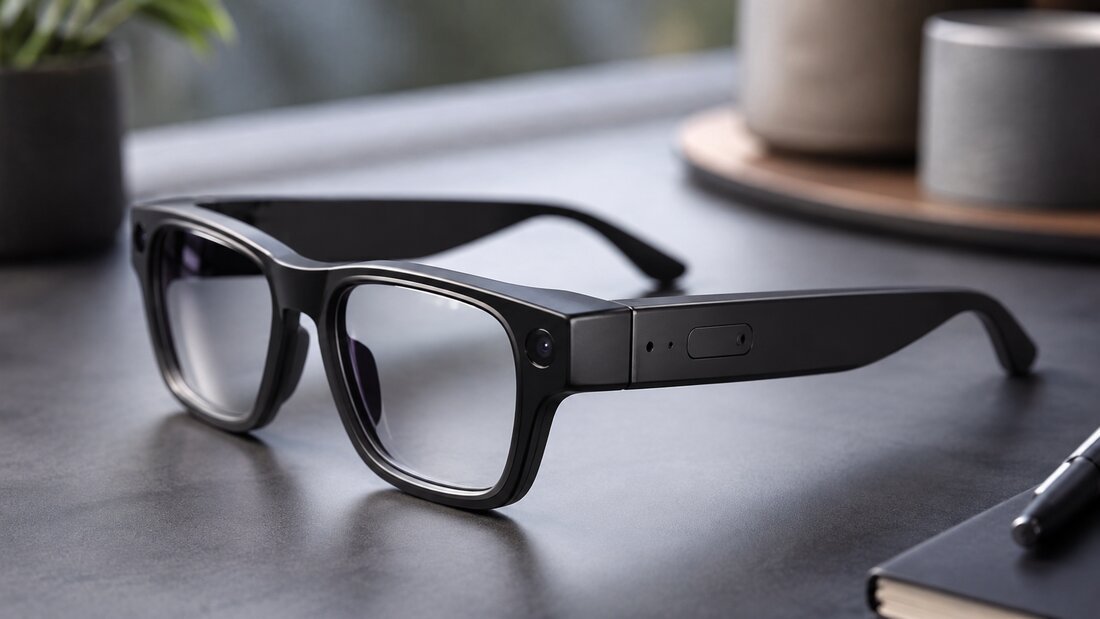
Table of Contents
- What Are AI Smart Glasses in a UK System Integration Context?
- Key Takeaways
- Key Facts for Buyers
- 1. Which Enterprise Use Case Are the Glasses For?
- 2. OEM, ODM, or Private Label: What Fit Do You Need?
- 3. How Do the Glasses Integrate With Your Existing Stack?
- 4. Which Specifications Actually Change the Project Outcome?
- 5. What MOQ, Tooling, and Cost Drivers Apply?
- 6. How Should Quality Control and Compliance Be Verified?
- 7. What Lead Time, Warranty, and Support Terms Should Be Agreed?
- Decision Table: OEM vs ODM vs Private Label
- Common Mistakes and Buyer Red Flags
- Practical Buyer Checklist
- FAQ
- Conclusion

Key Takeaways
- AI smart glasses for UK system integrators should be scoped by deployment use case first, then by hardware and software specification.
- OEM, ODM, and private-label models carry different responsibilities for industrial design, firmware, and app development.
- Integration depth (SDK, API, companion app, MDM) is often a bigger differentiator than camera or display specification.
- MOQ and tooling costs typically depend on customization depth, not just order quantity.
- In the UK, certification scope usually involves UKCA and CE, plus radio and battery requirements; buyers should verify exact scope per configuration.
- Lead time, warranty, spare parts, and firmware update policy should be agreed contractually before volume orders.

Key Facts for Buyers
| Buyer Question | Typical Answer | What to Verify |
|---|---|---|
| How are AI smart glasses usually supplied to integrators? | OEM, ODM, or private label, depending on how much design and software control the project requires. | Which layers the supplier controls: hardware, firmware, app, cloud. |
| What MOQ should a UK integrator expect? | MOQ depends on customization depth and component lead time; it is not a single fixed number. | MOQ for standard model vs. custom logo, custom firmware, custom packaging. |
| Which certifications may apply? | UKCA and CE are commonly referenced, plus radio and battery safety requirements. | Certification scope per SKU, test reports, and whether scope matches your configuration. |
| What drives cost? | Optics, processor, battery, memory, camera module, and software development hours. | Bill of materials transparency and NRE/tooling charges. |
| How long does production take? | Sample lead time and mass production lead time are usually separate. | Sample window, tooling window, mass production window, shipping terms. |
| What happens after deployment? | Warranty, spare parts, and firmware support shape total cost of ownership. | Warranty length, RMA process, firmware update policy. |

What Are AI Smart Glasses in a UK System Integration Context?
In a consumer context, AI smart glasses are often described as wearable cameras or audio devices with voice assistance. In a system integration context, the definition is narrower and more operational: they are connected endpoints that capture data, deliver contextual information to a worker, and integrate with backend systems such as workforce platforms, field-service software, or workflow tools. That means the specification conversation should start with data flow and endpoint management, not with frame design.
For UK integrators, three operational questions usually shape the definition:
- Where does the data go? On-device processing, phone relay, or cloud processing each create different privacy, latency, and network requirements.
- Who manages the device fleet? Enterprise deployments typically need enrolment, policy, and update mechanisms.
- What is the service model? Whether the integrator resells, leases, or bundles the glasses into a managed service affects warranty and support terms.
You can review typical hardware formats and options on the STAR KING AI smart glasses product page to benchmark what is currently available for B2B supply.
1. Which Enterprise Use Case Are the Glasses For?
The first sourcing question is not technical; it is operational. A device specified for remote expert assistance has different requirements from one specified for translation, hands-free documentation, or guided workflow. This matters because specification choices made early often become expensive to change later.
Common integrator use cases
- Remote expert assistance: camera quality, low-latency video, and stable connectivity dominate.
- Multilingual frontline communication: audio quality and real-time translation features dominate.
- Hands-free documentation: battery life and capture workflow dominate.
- Guided task execution: display readability and software integration dominate.
If your project leans toward workplace productivity and voice-driven workflows, the STAR KING AI office productivity solution page describes how these devices are commonly positioned in enterprise environments.
Procurement implication: ask the supplier which use cases their current platform was designed around. A supplier that lists every possible use case equally is often a supplier that has not optimized for any of them.
2. OEM, ODM, or Private Label: What Fit Do You Need?
This decision determines how much of the product you own and how much you outsource. It also determines where cost, risk, and time concentrate.
ODM (Original Design Manufacturer)
You select from an existing platform and adapt branding, packaging, and limited software. Time to market is typically fastest, and NRE costs are usually lowest, but differentiation is limited to what the platform allows.
OEM (Original Equipment Manufacturer)
You influence industrial design, firmware behavior, or app layer. This usually requires more development effort, higher tooling investment, and a longer validation cycle, but produces a product that fits your client’s environment more precisely.
Private label
You apply your brand and configuration to an established device, often with custom packaging and preloaded settings. This is common for integrators who want a branded endpoint without owning the full design.
Before choosing, clarify which layers you want to control: industrial design, firmware, companion app, cloud backend, or packaging. STAR KING’s private label OEM/ODM solution page outlines how these layers are typically structured in a supply agreement.
Verify with the supplier: who owns the tooling, the firmware source, and the app codebase if the relationship ends. Ownership terms should be written, not assumed.
3. How Do the Glasses Integrate With Your Existing Stack?
For system integrators, integration depth is frequently the deciding factor between two otherwise similar devices. A slightly better camera matters less than whether the device can report into your management platform.
Integration questions to ask
- Is there an SDK or documented API for accessing sensors, camera, audio, and device status?
- Can firmware be configured or updated remotely, and through what mechanism?
- Does the companion app support enterprise enrolment or device management policies?
- What data formats and transport protocols are supported?
- Are there restrictions on third-party cloud services?
If your deployment includes health or biometric features, treat those strictly as wellness indicators unless a medical claim is supported by the appropriate regulatory pathway. For general workplace use, the STAR KING corporate wellness application page illustrates how wearable data is typically framed in employer-facing programs.
[STAR KING TO CONFIRM: availability and scope of SDK/API, supported enrolment mechanisms, and remote firmware update capability for the AI smart glasses platform.]
The practical test: request a technical documentation pack and, if possible, a sandbox or evaluation unit. Integration promises made in a sales meeting should be validated against documentation before contract signature.
4. Which Specifications Actually Change the Project Outcome?
Specification debates can consume weeks if there is no prioritization framework. For most integration projects, a short list of attributes drives the outcome.
| Specification | Why It Matters to an Integrator | Typical Trade-off |
|---|---|---|
| Battery life and capacity | Determines shift coverage and charging logistics | Higher capacity often increases weight |
| Processor and memory | Affects on-device processing and responsiveness | Higher performance may increase power draw and cost |
| Camera and optics | Affects remote assistance and documentation quality | Higher resolution increases data and power demand |
| Audio and microphone array | Affects translation and voice command reliability | Noise handling adds complexity |
| Display (if present) | Affects guided task readability | Brighter displays consume more power |
| Connectivity | Affects real-time features and network design | More radios can increase certification scope |
| Weight and fit | Affects adoption and shift duration | Battery and optics add weight |
[STAR KING TO CONFIRM: AI smart glasses processor, memory options, battery capacity, camera specification, supported connectivity standards, and translation language coverage.]
How to use this table: rank each row as must-have, nice-to-have, or flexible. Suppliers can usually meet a must-have list more accurately when the flexible items are clearly identified.
5. What MOQ, Tooling, and Cost Drivers Apply?
MOQ is often treated as a single number, but in practice it is a set of numbers that correspond to customization level. A standard model, a custom-logo run, and a fully customized firmware build typically carry different minimums.
Cost layers to separate in a quotation
- Unit cost: driven by components, assembly, and test time.
- Tooling and NRE: applies when industrial design or custom enclosures are involved.
- Software development: applies to firmware, app, or integration work.
- Packaging: custom retail or enterprise packaging usually carries its own minimum.
- Certification: testing and documentation costs, which depend on configuration and target market.
- Logistics: freight, duties, and lithium battery shipping requirements.
[STAR KING TO CONFIRM: standard and custom MOQ tiers, tooling cost ranges, sample fees, and whether sample costs are credited against volume orders.]
When comparing suppliers, ask for a cost breakdown rather than a single landed figure. A transparent breakdown makes it possible to see where a lower quotation is achieved through reduced testing, reduced warranty, or lower-grade components. For broader guidance on comparing hardware suppliers, the STAR KING resources blog covers sourcing and evaluation topics in more depth.
6. How Should Quality Control and Compliance Be Verified?
Quality and compliance are where integrator projects most often encounter delay. The device may work perfectly in a demo and still fail delivery because documentation is incomplete.
Quality control points to confirm
- Incoming component inspection process.
- In-line assembly checks and functional testing.
- Aging or burn-in testing where applicable.
- Pre-shipment inspection, including sampling plan.
- Packaging and accessories verification.
- Documented handling of non-conforming units.
Compliance points to verify for the UK market
- UKCA marking requirements and whether CE recognition applies to your product category and placing-on-market date.
- Radio equipment requirements if the device transmits wirelessly.
- Battery safety and transport documentation, including UN38.3 test summaries and safety data sheets where applicable.
- Electrical safety and EMC test evidence.
- Materials restrictions relevant to the product and packaging.
Certification scope typically depends on the exact configuration, radio modules used, and the market where the product is placed. Buyers should verify which certificates apply to the specific SKU being purchased, and should request test reports rather than relying on general marketing statements. Relevant reference points include the UK government guidance on UKCA marking and the European Commission CE marking overview. For wireless products, the Bluetooth SIG qualification and listing process is also relevant when Bluetooth is used.
[STAR KING TO CONFIRM: current certification status, test report availability, and whether UKCA documentation is provided for AI smart glasses configurations intended for the UK market.]
Because these devices may include cameras, microphones, and personal data processing, data protection obligations also come into scope for the deployment. System integrators should confirm how data is stored and transmitted, and whether a data processing agreement is required. The UK Information Commissioner’s Office guidance on UK GDPR is a practical reference for assessing those obligations.
7. What Lead Time, Warranty, and Support Terms Should Be Agreed?
Lead time in hardware projects is rarely a single figure. It is a sequence: sample development, sample approval, tooling or configuration lock, component procurement, mass production, testing, and shipping. Each stage has its own duration, and each can become a project dependency.
Terms to agree in writing
- Sample lead time and the criteria for sample approval.
- Mass production lead time measured from confirmed purchase order.
- Component shortage or change-notification process.
- Warranty length and what it covers, including battery degradation.
- Spare parts and replacement policy.
- Firmware update policy and duration of support.
- Shipping terms, including Incoterms and lithium battery documentation.
A pilot order of 50–100 units, followed by a phased rollout of 500–5,000 units, is a common risk-reduction pattern for system integrators, though MOQ and pricing thresholds should be confirmed with the supplier.
Soft CTA: If your project is at the specification stage, it is often more efficient to review configuration options and sample availability with a supplier directly, so that MOQ, tooling, and lead time can be discussed against your actual deployment scope rather than a generic catalogue.
Decision Table: OEM vs ODM vs Private Label
| Factor | OEM | ODM | Private Label |
|---|---|---|---|
| Design control | High | Low | Low |
| Time to market | Longer | Shortest | Short to medium |
| Tooling investment | Typically higher | Usually minimal | Minimal |
| Differentiation | Highest | Limited | Branding-level |
| MOQ sensitivity | Higher due to tooling | Lower | Depends on packaging |
| Best fit for integrators who | Own a niche solution | Need a fast proof of concept | Need a branded endpoint |
Common Mistakes and Buyer Red Flags
Common mistakes
- Selecting a device before defining the deployment use case.
- Assuming certification applies to every configuration automatically.
- Leaving SDK and integration questions until after the order is placed.
- Comparing quotations without normalizing warranty, testing, and shipping terms.
- Failing to clarify tooling and intellectual property ownership.
Buyer red flags
- Unwillingness to provide test reports or certificate documentation.
- Inability to explain who owns tooling and firmware.
- Vague answers on mass production lead time.
- No documented process for firmware updates or security fixes.
- Resistance to pre-shipment inspection or third-party verification.
Practical Buyer Checklist
- Deployment use case documented and prioritized.
- Supply model selected: OEM, ODM, or private label.
- Integration requirements confirmed against SDK/API documentation.
- Specification matrix ranked as must-have, nice-to-have, or flexible.
- MOQ, tooling, NRE, and packaging minimums confirmed in writing.
- Quality control process and pre-shipment inspection plan reviewed.
- Certification scope verified per SKU for the UK market.
- Data protection and processing responsibilities clarified.
- Lead time, warranty, spare parts, and firmware update policy agreed.
- Sample ordered and evaluated before volume commitment.
FAQ
What is the typical MOQ for AI smart glasses from an OEM supplier?
MOQ depends on customization level. Standard or private-label configurations usually carry lower minimums than custom enclosure or custom firmware projects. Buyers should request MOQ separately for each customization tier rather than assuming one number applies to all.
Do AI smart glasses supplied to the UK need UKCA marking?
UKCA is typically required for many product categories placed on the Great Britain market, but the exact requirement depends on the product type, applicable regulations, and placing-on-market date. Buyers should verify the current scope with the supplier and, where necessary, a compliance specialist.
Can AI smart glasses integrate with existing enterprise systems?
Integration depends on whether the supplier provides an SDK, API, or documented device management interface. Buyers should request technical documentation and validate integration with an evaluation unit before committing to volume.
How long does sample development take?
Sample timelines vary with configuration complexity and whether tooling is required. Simple private-label samples are usually faster than custom industrial design projects. Buyers should agree a sample schedule and approval criteria at the start of the project.
What drives unit cost in AI smart glasses?
The main drivers are optics, processor, memory, battery, camera module, wireless components, and the amount of software development required. Packaging, certification, and logistics add separate cost layers.
How should integrators handle data protection for camera and microphone devices?
Deployments that capture images, audio, or personal data should be assessed against UK GDPR obligations. Integrators should confirm data flows, retention, and processing responsibilities, and put appropriate agreements in place with the supplier and the end client.
What warranty terms are typical?
Warranty terms vary by supplier and product. Buyers should confirm warranty length, what is covered, battery degradation treatment, RMA process, and spare parts availability. These terms should be documented before mass production begins.
Conclusion
Sourcing AI smart glasses for UK system integration projects is a specification exercise as much as a purchasing exercise. The suppliers who perform best in enterprise deployments are usually those who can answer clearly on integration, customization, testing, and documentation, not those with the longest feature list. By working through the seven questions above, integrators can move from general awareness of the product category to a defensible shortlist and a procurement plan that holds up under client scrutiny.
STAR KING CTA
If you are preparing an AI smart glasses deployment for a UK client and want to compare configuration options, sample availability, and OEM/ODM scope, you can request product samples and discuss your project requirements with the STAR KING team. Sharing your use case, target volumes, and integration needs early usually shortens the path from specification to a workable supply plan.
Discuss Your Smart Wearable OEM/ODM Project
Planning a smart ring, smart watch, smart band, AI glasses, AI translator, or AI voice mouse project? Contact STAR KING to discuss product positioning, sample testing, customization scope, certification requirements, lead time, and quotation details.

Team Star King

Scan WhatsApp QR code
Leave a Reply