
AI smart glasses suppliers: AI Smart Glasses for UK Importers: The 8-Point Supplier Evaluation Checklist
November 21, 2026 · Team Star King

AI Smart Glasses for UK Importers: The 8-Point Supplier Evaluation Checklist
If you are comparing AI smart glasses for UK importers, the fastest way to separate real suppliers from trading intermediaries is an 8-point evaluation checklist covering hardware specs, app and firmware control, MOQ, UKCA/CE compliance, battery shipping documentation, sample validation, packaging and after-sales support. This guide explains each check, what evidence to request, and how to score suppliers before you commit to a sample order or an OEM/ODM project.
Table of Contents
Table of Contents
AI smart glasses suppliers: Short Answer
UK importers should evaluate AI smart glasses suppliers on eight verifiable criteria: product specifications and audio/display trade-offs; ownership and flexibility of the companion app and firmware; MOQ and price break structure; UKCA and CE conformity evidence where applicable; UN38.3 and battery transport documentation; sample testing before mass production; packaging and private-label customization; and warranty, spare parts and after-sales response. Request documents for each point and score suppliers against them rather than relying on brochures.

Table of Contents
- What Are AI Smart Glasses and Why UK Importers Are Evaluating Them
- Key Takeaways
- Key Facts for Buyers
- The 8-Point Supplier Evaluation Checklist
- Comparison Table: Low vs. Evaluated Supplier
- Common Mistakes and Buyer Red Flags
- Practical Buyer Checklist
- FAQ
- Conclusion

Image suggestion placement: after the Table of Contents, before the definition section.

What Are AI Smart Glasses and Why UK Importers Are Evaluating Them
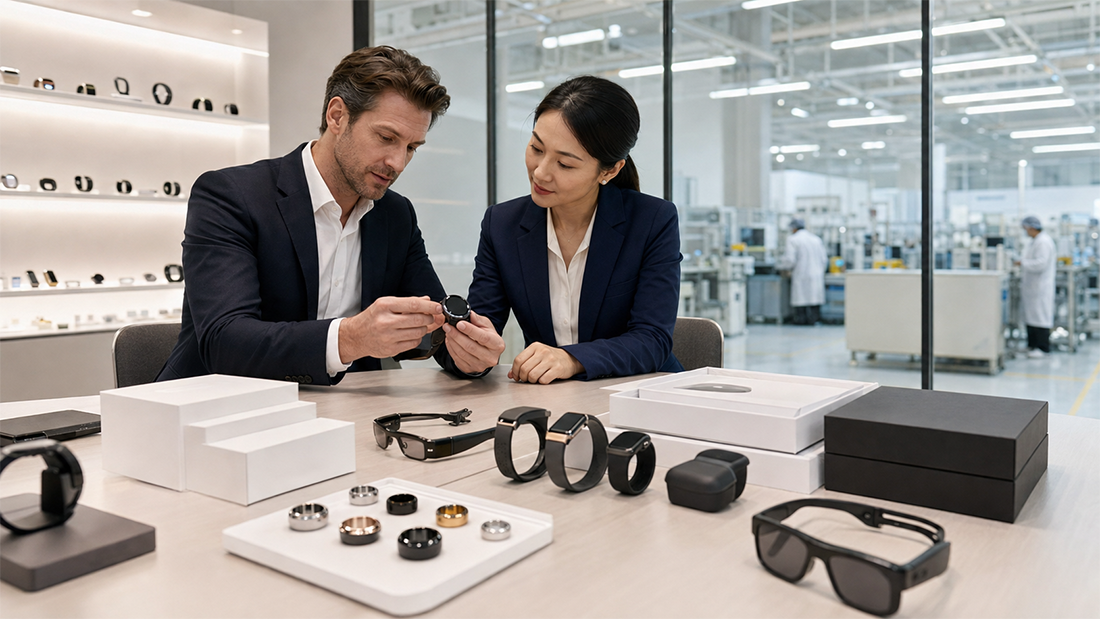
AI smart glasses are wearable devices that combine a glasses frame with audio, camera, or limited heads-up display functions and embedded AI features such as voice assistance, real-time translation, or on-device processing. For UK importers, the category is relevant because it sits at the intersection of consumer electronics, fashion accessories and software services, which means the buyer decision includes hardware sourcing, app support, battery shipping and market compliance at the same time.
The evaluation stage is where most importers lose margin. A supplier that looks strong on a product page can still fail on UK conformity documentation, battery transport paperwork, app update commitments, or minimum order quantities that do not match your channel. The checklist below is designed to surface these issues before you pay for tooling or mass production.
Key Takeaways
- Evaluate suppliers on evidence, not brochures: request specification sheets, test reports, app documentation and sample units.
- UKCA and CE conformity depend on the exact product configuration and intended use; confirm which directives apply to your model.
- Lithium batteries in AI glasses typically require UN38.3 test summaries and supporting transport documents before air or sea shipment.
- App and firmware control is a commercial risk, not just a technical detail: clarify who owns updates, data handling and bug fixes.
- MOQ and price breaks should be mapped against your UK channel plan, including Amazon, retail and distributor volumes.
Key Facts for Buyers
| Evaluation Point | What to Request | Why It Matters for UK Importers |
|---|---|---|
| Specifications | Datasheet, battery capacity, audio/display specs, operating temperature | Confirms fit with your target use case and retail claims |
| App & firmware | App feature list, update policy, data handling statement | Affects UK GDPR obligations and long-term product support |
| MOQ & pricing | Price breaks, tooling costs, sample fees, payment terms | Aligns with distributor, retail or e-commerce volume plans |
| Compliance | UKCA/CE declaration where applicable, test reports, labeling plan | Required for placing products on the UK market |
| Battery shipping | UN38.3 summary, MSDS, transport classification | Needed for air/sea freight and customs clearance |
| Samples | Sample lead time, test protocol, pre-shipment inspection option | Reduces mass-production risk and returns |
| Packaging | Artwork templates, logo options, manual localization | Supports private label and UK retail readiness |
| After-sales | Warranty terms, spare parts availability, RMA process | Protects margin and channel relationships |
The 8-Point Supplier Evaluation Checklist
1. Specifications and Feature Trade-offs
Start with the specification sheet, but read it as a set of trade-offs. AI smart glasses typically balance weight, battery life, audio output, camera capability, display brightness and frame design. Heavier frames may support longer battery life but reduce comfort for all-day wear. Brighter displays increase power draw. Higher-resolution cameras raise data processing requirements and may change how much on-device AI is practical.
For UK importers, map specifications to the sales channel. A retail chain may prioritize comfort, build quality and packaging, while an e-commerce seller may prioritize clear feature differentiation and review-friendly performance. Ask the supplier to confirm which specifications are fixed across production batches and which may vary. If a feature depends on a companion app or cloud service, treat it as a software commitment, not a hardware specification.
Practical evidence to request: a current datasheet, battery capacity and charge time, supported Bluetooth version and profiles, operating and storage temperature ranges, and a statement of which features work without a smartphone connection.
2. App, Firmware and Update Control
The companion app is where many AI glasses projects fail after launch. Buyers should clarify who develops the app, who owns the code, how firmware updates are distributed, and what happens if the supplier changes platforms or stops supporting the model. If you plan a private-label app under your brand, ask whether the supplier supports app rebranding and whether you hold or share the developer accounts.
Data handling matters in the UK. If the app collects voice, image or usage data, you may have obligations under UK GDPR and the Data Protection Act 2018. Ask suppliers for a data flow description: what is processed on-device, what is sent to the cloud, where servers are located, and what retention policy applies. You do not need a legal opinion at the evaluation stage, but you do need to know whether the supplier can support your compliance review.
Firmware customization is often available on OEM/ODM projects, but scope and cost vary. A supplier that can document its firmware release process and provide test builds is easier to validate than one that only offers a final binary.
3. MOQ, Pricing and Volume Planning
MOQ and price breaks should be evaluated against your UK launch plan, not in isolation. A low MOQ can be useful for a pilot with a distributor or a first Amazon listing, but the per-unit cost may be higher. Higher volumes usually improve unit price but increase inventory risk if the product needs revision after launch.
Ask for a price table with at least three volume tiers, sample fees and whether sample costs are credited against a bulk order. Clarify tooling, mold and setup costs, especially for custom frames or private-label housings. Confirm payment terms, Incoterms, and whether the quoted price includes packaging, manuals and labeling for the UK market.
MOQ and lead time for AI smart glasses depend on the chosen configuration. [STAR KING TO CONFIRM] should be used for specific MOQ figures, lead times and tooling costs until confirmed in writing.
4. UK Market Compliance
Placing AI smart glasses on the UK market usually involves conformity assessment against applicable regulations. Depending on the product’s functions, this may include electrical safety, electromagnetic compatibility, radio equipment requirements and restrictions on hazardous substances. UKCA marking is the UK’s own marking framework; CE marking remains relevant for goods placed on the EU market. The exact requirements typically depend on the product configuration and intended use, so buyers should verify the applicable regulations with a qualified compliance advisor.
Request the supplier’s declaration of conformity for the specific model, test reports from recognized laboratories, and a labeling plan that shows the marking, importer details and instructions for use. Do not accept a generic certificate that names a different product family without checking that it covers your configuration.
For radio equipment, the UK regulatory framework is described by the UK government’s UKCA marking guidance. For electrical safety and EMC test standards, the IEC Webstore is a useful reference for standard numbers. If the glasses include Bluetooth, confirm the Bluetooth SIG qualification status of the module or design.
STAR KING certification status for specific AI smart glasses models should be confirmed per SKU: [STAR KING TO CONFIRM].
5. Battery Documentation and Lithium Shipping
AI smart glasses contain lithium batteries, which are regulated for transport. Air and sea carriers typically require a UN38.3 test summary for the battery, and may request an MSDS or safety data sheet. The supplier should be able to provide these documents for the exact cell and pack used in your model. Confirm whether the battery is built into the glasses or shipped separately, because this affects transport classification and packaging.
For UK importers, customs clearance is smoother when the commercial invoice, packing list and battery documentation are consistent. Ask the supplier to confirm which UN number and packing instruction apply, and whether they have shipped comparable products to the UK before. The IATA Dangerous Goods Regulations are a standard reference for air transport requirements.
6. Sample Testing and Validation
Sample testing is the most reliable way to reduce mass-production risk. Order samples in the exact configuration you intend to sell, including frame color, lens type and app version. Test battery life under realistic conditions, audio quality for calls and media, translation accuracy if applicable, Bluetooth pairing stability, comfort over extended wear, and charging behavior.
Ask whether pre-shipment inspection is available and what the inspection checklist covers. A supplier that can share an inspection report template before production is easier to hold accountable. For a structured comparison, keep a scoring sheet for each sample and compare suppliers against the same criteria.
If you need support reviewing sample units or customization options, the AI smart glasses product page lists current configurations and can be used as a starting point for a sample discussion.
7. Packaging and Private Label
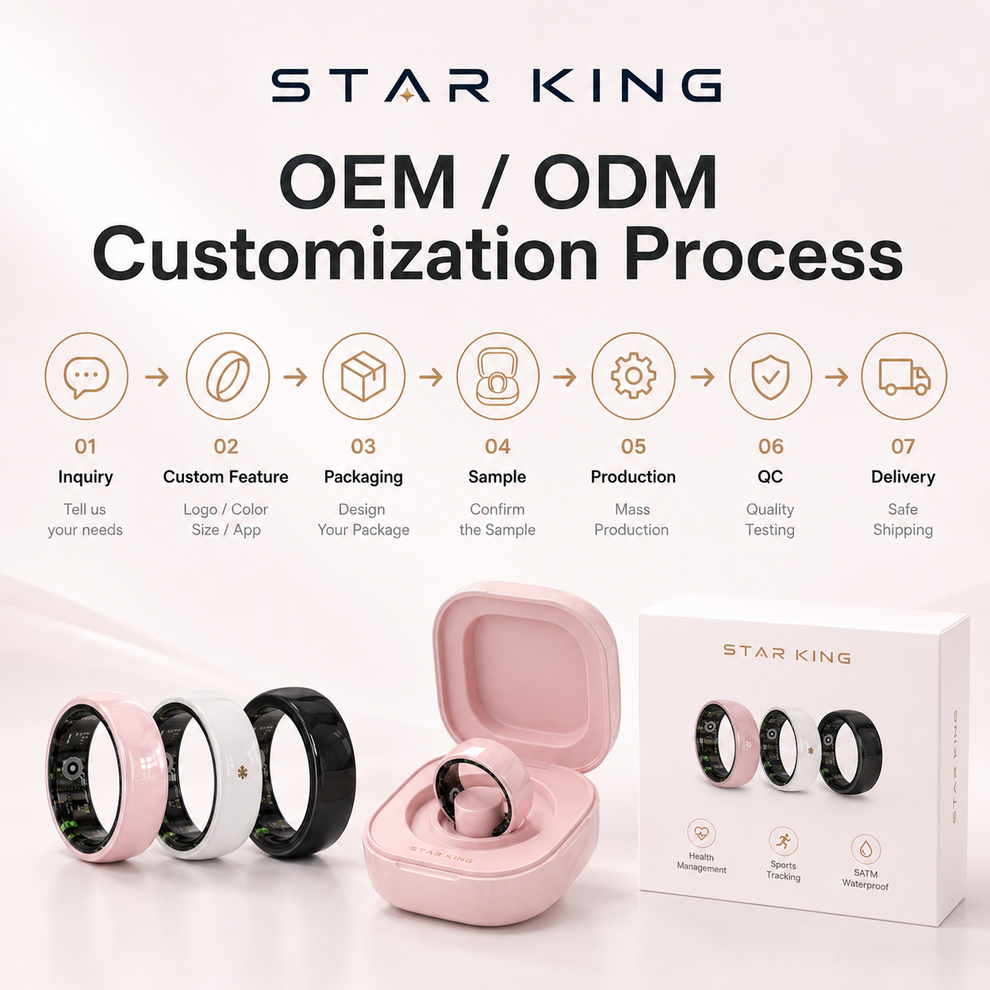
Packaging is part of the product in the UK retail and e-commerce channels. Ask about artwork templates, printing methods, minimum packaging quantities, manual localization for English, and whether the supplier can print importer details and UK-specific safety information. Private label programs often include logo customization on the frame, case and packaging; confirm which options are available at your target MOQ.
For importers building a brand, the private label OEM/ODM solution page explains the general customization workflow. Packaging and branding details for AI smart glasses should be confirmed against your project brief: [STAR KING TO CONFIRM].
8. After-Sales, Warranty and Spare Parts
After-sales terms affect your return rate and channel reputation. Ask for the warranty period, what is covered, how RMA cases are handled, and whether spare parts such as charging cables, nose pads or batteries are available. For Amazon and retail sellers, a clear DOA policy and a defined replacement process are practical requirements.
Confirm how firmware or app issues are supported after launch and whether the supplier provides technical documentation for your support team. A supplier that treats after-sales as part of the commercial agreement is usually easier to scale with.
Comparison Table: Low-Evidence vs. Evaluated Supplier
| Evaluation Area | Low-Evidence Supplier | Evaluated Supplier |
|---|---|---|
| Specifications | Generic marketing page only | Current datasheet with battery, radio and environmental specs |
| App & firmware | Vague references to an app | Documented update process and data flow |
| MOQ & pricing | Single price without volume tiers | Price table with sample and tooling costs |
| Compliance | Certificate for a different model | Model-specific declaration and test reports |
| Battery shipping | Promises to handle it later | UN38.3 summary and MSDS available |
| Samples | Long or unclear sample lead time | Defined sample process and inspection option |
| Packaging | Stock packaging only | Artwork templates and localization support |
| After-sales | No written warranty terms | Written warranty, RMA and spare parts plan |

Image suggestion placement: alongside the comparison table section.
Common Mistakes and Buyer Red Flags
Mistake 1: Treating a certificate as product-specific. A certificate that covers a different model or a different factory does not automatically cover your configuration. Check model numbers and factory names.
Mistake 2: Ignoring the app lifecycle. If the app is not maintained, features may degrade after launch. Ask who is responsible for updates and for how long.
Mistake 3: Skipping battery documentation. Lithium battery shipments can be delayed or rejected without the right documents. Confirm UN38.3 and MSDS before booking freight.
Mistake 4: Choosing MOQ without a channel plan. A low MOQ without a clear sales plan can still create dead stock, while a high MOQ can block a pilot.
Mistake 5: No sample scoring sheet. Comparing samples without consistent criteria leads to subjective decisions and missed defects.
Red flags to watch: refusal to share test reports; pressure to pay tooling before specifications are agreed; no written warranty terms; unclear data handling; and a supplier that cannot explain which party holds the app developer account.
Practical Buyer Checklist
- Receive and review a model-specific datasheet.
- Confirm app features, update policy and data flow in writing.
- Request a price table with at least three volume tiers and sample costs.
- Verify UKCA/CE applicability and request the declaration of conformity for your model.
- Obtain UN38.3 summary and MSDS for the battery configuration.
- Order samples in the final configuration and test for at least one week.
- Confirm packaging artwork, manual localization and importer labeling.
- Review warranty, RMA and spare parts terms before placing a bulk order.
FAQ
What is the most important check when evaluating AI smart glasses suppliers?
Model-specific compliance evidence and sample performance are usually the most important. A supplier that can provide a declaration of conformity for your exact configuration and a sample that passes your test protocol is easier to validate than one that only shares general certificates.
Do AI smart glasses for UK importers always require UKCA marking?
UKCA marking applies to many products within its scope, but the exact requirement depends on the product’s functions and the regulations that apply. Importers should verify the applicable rules for their specific model and intended use with a qualified compliance advisor.
How should I plan MOQ for a first UK order?
Align MOQ with a realistic channel plan. A pilot order through a distributor or a limited e-commerce listing can validate demand before a larger commitment. Ask for price breaks and sample credit terms so the pilot cost is visible.
What battery documents are needed to ship AI smart glasses to the UK?
Lithium batteries typically require a UN38.3 test summary and an MSDS, and the carrier may request additional transport documentation. Confirm the battery configuration and shipping method with the supplier before booking freight.
Can I private-label the app as well as the hardware?
App rebranding may be available on OEM/ODM projects, but scope varies. Clarify whether the supplier supports app labeling, who holds the developer accounts, and how updates will be delivered.
How long should sample testing take?
A practical sample test usually runs at least one week to cover battery cycles, pairing stability, comfort and real-world audio or translation use. Longer testing is advisable for retail or distributor channels.
What after-sales terms should I request?
Request written warranty coverage, a DOA policy, RMA process, spare parts availability and technical documentation for your support team. These terms protect margin and channel relationships after launch.
Conclusion
Evaluating AI smart glasses for UK importers is a document-and-sample exercise. Score suppliers on specifications, app and firmware control, MOQ and pricing, UK compliance evidence, battery shipping documentation, sample validation, packaging readiness and after-sales terms. A supplier that can answer all eight points with written evidence is better positioned to support a UK launch than one that relies on brochures alone. For a broader view of sourcing considerations, the STAR KING resources blog covers related procurement topics.
Next Step
Ready to compare configurations? Request AI smart glasses samples and confirm the specifications, customization options and compliance documents your UK project requires.

Image suggestion placement: near the final CTA section.
Discuss Your Smart Wearable OEM/ODM Project
Planning a smart ring, smart watch, smart band, AI glasses, AI translator, or AI voice mouse project? Contact STAR KING to discuss product positioning, sample testing, customization scope, certification requirements, lead time, and quotation details.

Team Star King

Scan WhatsApp QR code
Leave a Reply