
AI Smart Glasses for Amazon UK Sellers: 7 Critical Checks Before You Import in 2026
October 26, 2026 · Team Star King

AI Smart Glasses for Amazon UK Sellers: 7 Critical Checks Before You Import in 2026
If you are an Amazon UK seller considering AI smart glasses, the first question is not which model looks best—it is whether the product can legally and profitably reach your customers. AI smart glasses combine wearable hardware, embedded software, and often a companion app, so sourcing them requires checks that go beyond standard electronics. This guide walks you through seven critical checks, from UK compliance and supplier verification to MOQ planning and sample testing, so you can make a confident purchase decision.
Table of Contents
Table of Contents
Short Answer
Amazon UK sellers should verify supplier credibility, confirm product compliance with UKCA and relevant UK regulations, test samples for performance and quality, understand MOQ and lead times, and factor in landed costs and after-sales support. Prioritize suppliers who provide transparent documentation and are willing to customize firmware or packaging for your brand.

Key Takeaways
- UK compliance (UKCA marking, battery regulations, data protection) is non-negotiable for Amazon UK sales.
- Always test samples for real-time translation accuracy, battery life, and build quality before placing bulk orders.
- MOQ, lead times, and customization options vary widely; clarify these early to avoid costly delays.
- Choose suppliers that offer OEM/ODM services and can support your brand with firmware and packaging customization.
- Plan for after-sales support and spare parts to maintain Amazon performance metrics.
Table of Contents
- 1. Why AI Smart Glasses Are a Promising Category for Amazon UK
- 2. Check 1: Supplier Credibility and Experience
- 3. Check 2: UK Compliance and Certification
- 4. Check 3: Sample Testing and Quality Validation
- 5. Check 4: MOQ, Pricing, and Landed Cost
- 6. Check 5: Customization and Branding Options
- 7. Check 6: Lead Times and Supply Chain Reliability
- 8. Check 7: After-Sales Support and Warranty
- 9. Common Mistakes and Buyer Red Flags
- 10. Practical Buyer Checklist
- 11. FAQ
- 12. Conclusion

Key Facts for Buyers
| Consideration | What to Verify | Why It Matters |
|---|---|---|
| UK Compliance | UKCA mark, battery safety (UN38.3), data protection (UK GDPR) | Legal requirement for sale in UK; avoids customs delays and penalties |
| Supplier Credibility | Years in business, OEM/ODM experience, client references | Reduces risk of fraud or poor quality |
| Sample Testing | Functionality, battery life, translation accuracy, comfort | Ensures product meets customer expectations |
| MOQ | Minimum order quantity, price breaks | Affects cash flow and inventory planning |
| Customization | Logo, packaging, firmware, app | Builds brand differentiation and customer loyalty |
| Lead Times | Production and shipping times | Impacts stock availability and Amazon rankings |
| After-Sales | Warranty, spare parts, technical support | Maintains customer satisfaction and seller ratings |
1. Why AI Smart Glasses Are a Promising Category for Amazon UK
AI smart glasses are gaining traction among UK consumers for hands-free translation, AR experiences, and productivity. For Amazon sellers, this category offers differentiation from standard earbuds and smartwatches, but it also carries higher complexity. Unlike simple accessories, AI smart glasses require careful attention to software integration, battery safety, and privacy regulations. Success depends on choosing a reliable manufacturing partner that understands these nuances and can support your brand through the entire product lifecycle.
2. Check 1: Supplier Credibility and Experience
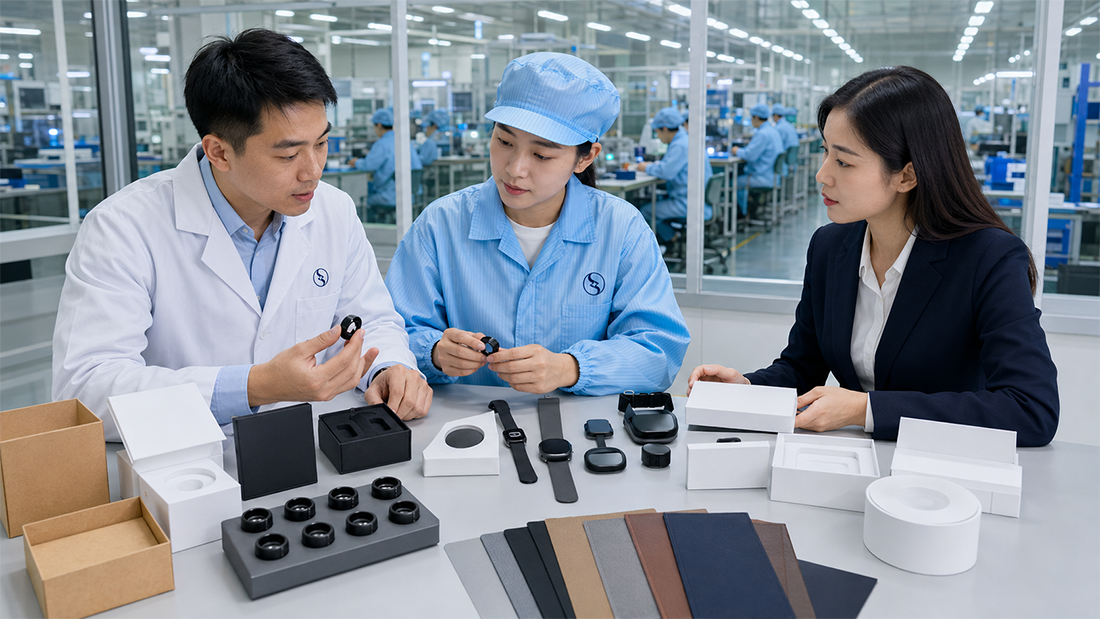
Before you discuss specifications, verify that your potential supplier has a track record in AI hardware. Ask for their years in business, OEM/ODM experience, and whether they have worked with clients in regulated markets like the UK. A credible supplier will be transparent about their capabilities and provide references or case studies. Avoid suppliers who are vague about their production facilities or cannot explain their quality control processes.
What to Look For
- Manufacturing background: Do they specialize in smart wearables and AI devices, or are they a trading company?
- Certifications: Do they hold ISO 9001 or other quality management certifications? (Note: specific product certifications are separate.)
- Client portfolio: Have they supplied to Amazon sellers or UK brands? Ask for anonymized examples.
- Communication: Responsiveness and clear documentation are signs of a professional partner.
STAR KING, for example, focuses on smart wearables and AI hardware, offering OEM/ODM services. You can review their private label OEM/ODM solutions to understand their approach.
3. Check 2: UK Compliance and Certification
Selling electronics on Amazon UK requires compliance with UK regulations. For AI smart glasses, key areas include electrical safety, battery safety, radio equipment (if Bluetooth/Wi-Fi), and data protection. As of 2026, UKCA marking is required for most electrical products, though CE marking may be accepted in some cases. Always confirm with your supplier which certifications the product holds and whether they cover the specific model you intend to import.
Essential Compliance Areas
- UKCA/CE marking: Required for electrical equipment. Verify the certificate covers your product variant.
- Battery safety: Lithium batteries must meet UN38.3 for transport. Ask for the UN38.3 test report.
- Radio equipment: If the glasses have wireless connectivity, they must comply with the Radio Equipment Regulations 2017.
- Data protection: If the glasses collect or process personal data (e.g., camera, voice), you must comply with UK GDPR. Ensure the supplier can provide a data processing agreement.
- WEEE and RoHS: Electronic waste and hazardous substances regulations apply.
For official guidance, refer to UK government UKCA marking guidance and the Radio Equipment Regulations 2017. Note that certification requirements typically depend on the exact product configuration; buyers should verify with a compliance specialist.
4. Check 3: Sample Testing and Quality Validation
Never place a bulk order without testing samples. AI smart glasses have multiple components—display, camera, microphone, battery, and software—that must work together seamlessly. Order samples from at least two suppliers and evaluate them against your target use cases.
What to Test
- Translation accuracy: Test real-time translation in realistic environments (noisy, quiet, different accents).
- Battery life: Measure actual usage time against claimed specs.
- Build quality: Check frame durability, hinge mechanism, and comfort for extended wear.
- App integration: Assess the companion app’s stability, user interface, and features.
- Audio and display: Verify speaker/microphone clarity and display legibility.
Consider third-party lab testing for critical parameters if you lack in-house capabilities. Document your test results and share them with the supplier for continuous improvement.
Need to compare AI smart glasses samples from different suppliers? Request a sample and specification sheet from STAR KING to start your evaluation.
5. Check 4: MOQ, Pricing, and Landed Cost
MOQ and pricing directly affect your cash flow and profitability. AI smart glasses typically have higher MOQs than basic accessories due to complex components. Ask for a clear quotation that breaks down unit price, tooling costs (if custom), packaging, and shipping. Factor in import duties (typically 0-4% for electronics), VAT (20% in the UK), and freight to calculate landed cost.
Typical Cost Factors
| Cost Component | Considerations |
|---|---|
| Unit price | Decreases with volume; confirm what is included (e.g., accessories, packaging) |
| Tooling | One-time cost for custom molds or PCBs; clarify ownership |
| Packaging | Standard vs. custom; affects unit cost and brand perception |
| Shipping | Air vs. sea; lithium batteries require special handling |
| Duties & VAT | Based on declared value and HS code; consult a customs broker |
For OEM projects, ask about price breaks at different quantities. Some suppliers offer flexible MOQs for first orders. STAR KING’s AI smart glasses page may provide initial specifications; confirm MOQ directly with their team.
6. Check 5: Customization and Branding Options
To stand out on Amazon, you need a product that reflects your brand. Many suppliers offer logo printing, custom packaging, and even firmware modifications. Discuss your requirements early—some customizations may extend lead times or increase MOQ.
Common Customizations
- Logo: On the frame, temple, or carrying case.
- Packaging: Custom box design, inserts, and manuals.
- Firmware/App: White-label app or custom features (may require development fees).
- Language support: Pre-installed languages and translation pairs.
Ensure the supplier provides a clear customization agreement, including intellectual property ownership. For software, clarify whether you own the custom code or have a license.
7. Check 6: Lead Times and Supply Chain Reliability
Amazon sellers know that stockouts hurt rankings. Get realistic lead times for production and shipping, and add buffer for potential delays. Ask about the supplier’s production capacity and their experience with UK-bound shipments, especially for lithium battery products.
Questions to Ask
- What is the typical production lead time for a repeat order?
- How do you handle shipping lithium batteries (air/sea)?
- What is your on-time delivery rate?
- Do you have a dedicated export team familiar with UK customs?
Request a production schedule and track record. A reliable supplier will be transparent about their capabilities and potential bottlenecks.
8. Check 7: After-Sales Support and Warranty
Even well-made electronics can have defects. A solid after-sales policy protects your Amazon ratings. Confirm the warranty period (typically 12 months), the process for returns and replacements, and whether spare parts are available. Also ask about technical support for software issues.
What to Agree On
- Warranty terms: Duration, coverage, and who bears shipping costs.
- Defect rate: Supplier’s acceptable quality level (AQL) and remedy for excess defects.
- Spare parts: Availability of batteries, chargers, and frames.
- Technical support: Response time for firmware updates or app issues.
Document these terms in your purchase agreement. For STAR KING’s policies, contact their team directly.
9. Common Mistakes and Buyer Red Flags
Avoid these pitfalls when sourcing AI smart glasses:
- Ignoring compliance: Selling without UKCA/CE can lead to removal from Amazon and legal penalties.
- Skipping sample testing: Relying on spec sheets alone often leads to disappointment.
- Choosing the lowest price: Extremely low quotes may indicate poor quality or hidden costs.
- Overlooking software support: AI glasses depend on apps; ensure ongoing updates.
- Not clarifying IP ownership: Protect your brand assets and custom designs.
Red flags include suppliers who cannot provide test reports, are evasive about their factory, or demand full payment upfront without a contract.
10. Practical Buyer Checklist
| Area | Check | Done |
|---|---|---|
| Supplier | Verified company background and references | ☐ |
| Compliance | Received UKCA/CE certificates and UN38.3 report | ☐ |
| Sample | Tested functionality, battery, comfort, and app | ☐ |
| Pricing | Calculated landed cost including duties and VAT | ☐ |
| Customization | Agreed on logo, packaging, and firmware changes | ☐ |
| Lead Time | Confirmed production and shipping schedule | ☐ |
| After-Sales | Reviewed warranty and support terms | ☐ |
11. FAQ
What certifications are required for AI smart glasses in the UK?
UKCA marking (or CE in some cases), UN38.3 for batteries, and compliance with the Radio Equipment Regulations if wireless. Data protection (UK GDPR) also applies if the device processes personal data. Verify with a compliance specialist.
How many samples should I order?
Order at least two samples from different suppliers or different models to compare performance and build quality.
What is a typical MOQ for AI smart glasses?
MOQs vary by supplier and customization. For standard models, MOQs may range from 500 to 1,000 units; custom firmware or design may require higher volumes. Confirm with your supplier.
Can I customize the software and app?
Many OEM suppliers offer firmware and app customization, but terms vary. Discuss your needs and clarify development costs and IP ownership.
How long does shipping to the UK take?
Air freight typically takes 5-10 days; sea freight 25-35 days. Lithium batteries require special handling and may add time.
What after-sales support should I expect?
Look for at least a 12-month warranty, a clear returns process, and technical support for software issues.
12. Conclusion
Sourcing AI smart glasses for Amazon UK requires diligence, but the category offers real growth potential. By following these seven checks—supplier credibility, compliance, sample testing, cost analysis, customization, lead times, and after-sales—you can reduce risk and build a product that meets UK customer expectations. Start with a thorough evaluation and partner with a manufacturer who supports your brand’s journey.
Ready to Source AI Smart Glasses for Your Amazon UK Business?
STAR KING offers OEM/ODM services for AI smart glasses, including customization and compliance documentation. Request a quotation and discuss your project with our team today.
Discuss Your Smart Wearable OEM/ODM Project
Planning a smart ring, smart watch, smart band, AI glasses, AI translator, or AI voice mouse project? Contact STAR KING to discuss product positioning, sample testing, customization scope, certification requirements, lead time, and quotation details.

Team Star King

Scan WhatsApp QR code
Leave a Reply