
Smart Bands for System Integrators: 7 Proven Steps to EU Market Success in 2026
November 26, 2026 · Team Star King

Smart Bands for System Integrators: 7 Proven Steps to EU Market Success in 2026
Smart bands for system integrators are wearable devices that combine fitness tracking, health monitoring, and connectivity to support integrated solutions for end clients. To succeed in the EU market in 2026, integrators must navigate compliance, supplier selection, and technical integration. This guide outlines seven proven steps, from understanding EU regulations to scaling deployments, helping you mitigate risks and build reliable wearable solutions.
Table of Contents
Table of Contents
smart bands for system integrators: Table of Contents
- Step 1: Understand the EU Regulatory Landscape for Smart Bands
- Step 2: Define Your Integration Requirements and Use Cases
- Step 3: Evaluate Smart Band Suppliers for OEM/ODM Capabilities
- Step 4: Navigate MOQs, Pricing, and Lead Times
- Step 5: Validate Samples and Prototypes for Integration Readiness
- Step 6: Ensure Quality Control and Compliance Documentation
- Step 7: Plan Logistics, After-Sales, and Scalability
- FAQ

Short Answer
Smart bands for system integrators require careful selection of OEM/ODM partners who can provide EU-compliant devices with robust app integration and customization. Key steps include verifying CE marking, assessing firmware flexibility, and planning for scalability. By following a structured approach, integrators can deploy reliable wearable solutions that meet client demands.

Key Takeaways
- EU market entry demands compliance with CE, RoHS, and GDPR; verify supplier certifications.
- Define integration needs early to select smart bands with appropriate sensors and APIs.
- OEM/ODM partnerships offer customization but require clear MOQs and lead time planning.
- Sample testing and quality control are critical to avoid deployment failures.
- Plan logistics and after-sales support to ensure long-term success.
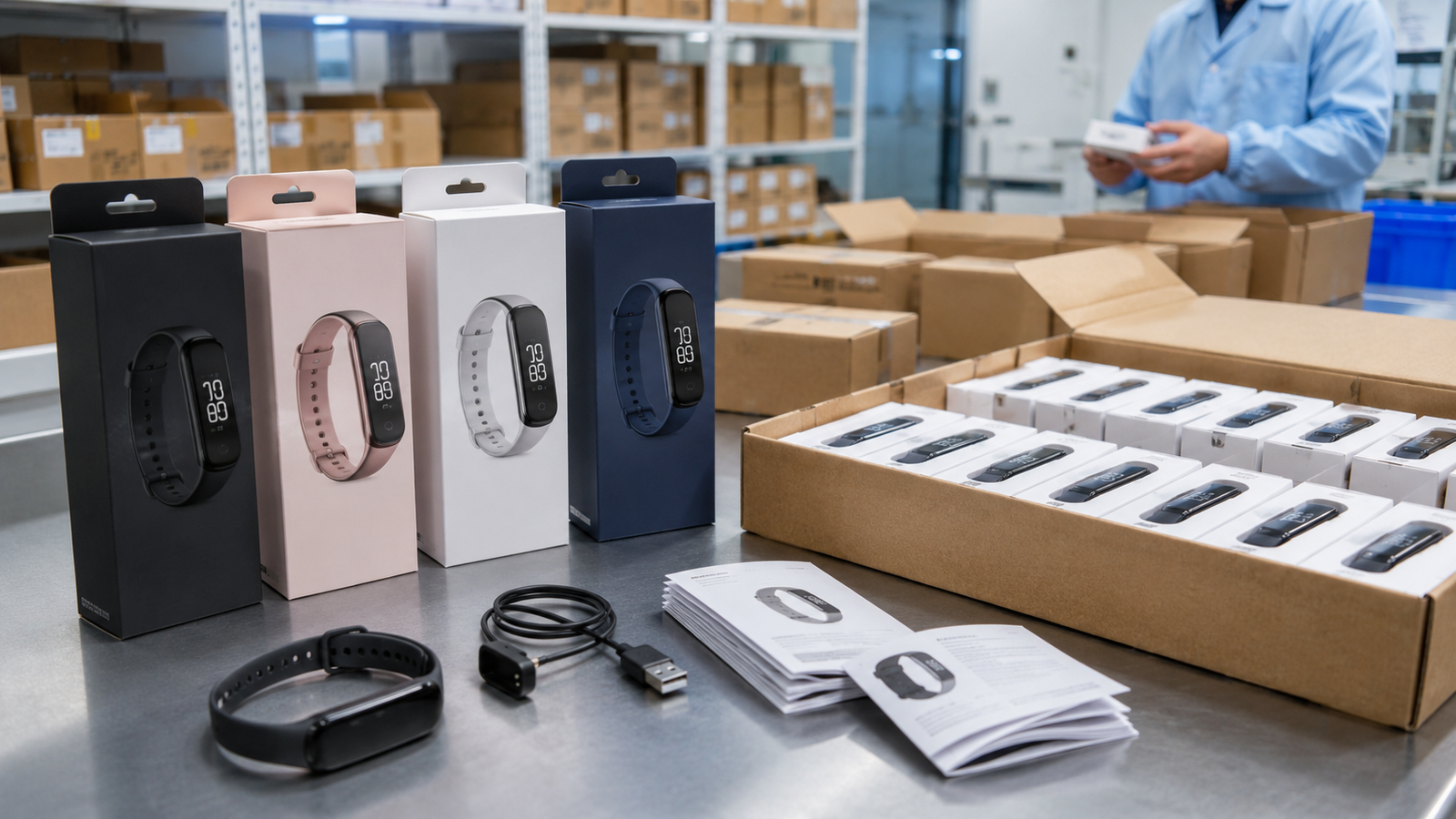
Key Facts for Buyers
| Factor | Consideration |
|---|---|
| Compliance | CE marking, RoHS, REACH, GDPR for data |
| MOQ | Typically 500-1,000 units for OEM; varies by supplier |
| Lead Time | 30-60 days for production; sample 7-15 days |
| Integration | SDK/API availability, firmware customization |
| Battery | UN38.3 certification for shipping |
| Warranty | 12-24 months standard; negotiate terms |

Step 1: Understand the EU Regulatory Landscape for Smart Bands
Before sourcing smart bands, system integrators must understand the regulatory requirements for placing wearables on the EU market. Smart bands are subject to the Radio Equipment Directive (RED) 2014/53/EU, which mandates CE marking. Additionally, RoHS restricts hazardous substances, and the General Data Protection Regulation (GDPR) governs data privacy. For health monitoring features, ensure devices are not marketed as medical devices unless they carry appropriate certifications (e.g., MDR). Buyers should verify that suppliers provide valid CE declarations and test reports.
Step 2: Define Your Integration Requirements and Use Cases
System integrators often deploy smart bands as part of larger solutions, such as corporate wellness programs or remote patient monitoring. Define the required sensors (e.g., heart rate, SpO2), connectivity (BLE, NFC), battery life, and compatibility with existing platforms. Consider whether you need open APIs or SDKs for custom app development. For example, if integrating with a healthcare platform, ensure data accuracy and secure transmission. Document these requirements to evaluate suppliers effectively.
For insights on health-focused applications, explore our Health & Fitness Wearables solutions.
Step 3: Evaluate Smart Band Suppliers for OEM/ODM Capabilities
Choosing the right supplier is critical. Look for manufacturers with experience in OEM/ODM services, customization options (logo, packaging, firmware), and a track record of serving EU clients. Request samples and audit reports. Verify their quality management systems (e.g., ISO 9001). Assess their ability to support firmware updates and app integration. For a reliable partner, consider STAR KING’s smart bands, which offer customization and compliance support.
Supplier Evaluation Criteria
- Certifications: CE, RoHS, UN38.3
- Experience with EU clients
- Customization capabilities
- Technical support and documentation
- Production capacity and scalability
Step 4: Navigate MOQs, Pricing, and Lead Times
Minimum order quantities (MOQs) for smart bands typically range from 500 to 1,000 units for OEM projects, though this varies by supplier and customization level. Pricing is influenced by features, materials, and order volume. Lead times for mass production are usually 30-60 days after sample approval. Plan your inventory and deployment schedule accordingly. For large-scale integrations, negotiate volume discounts and staggered deliveries.
Step 5: Validate Samples and Prototypes for Integration Readiness
Always test samples thoroughly before committing to bulk orders. Evaluate battery life, sensor accuracy, connectivity stability, and app integration. Check for ease of firmware updates and compatibility with your systems. Request pre-production prototypes if customization is needed. Document test results and address any issues with the supplier early.
Need to test smart bands for your integration project? Request samples to evaluate performance and compatibility.
Step 6: Ensure Quality Control and Compliance Documentation
Implement a quality control plan that includes pre-shipment inspections and testing. Ensure the supplier provides compliance documents such as CE declaration of conformity, RoHS test reports, and UN38.3 for battery shipping. For data security, confirm GDPR compliance and data encryption. Regular audits and clear communication help maintain quality.
Step 7: Plan Logistics, After-Sales, and Scalability
Smart bands contain lithium batteries, so shipping requires UN38.3 certification and proper packaging. Choose logistics partners experienced in dangerous goods. Plan for after-sales support, including warranty terms (typically 12-24 months) and spare parts availability. For scalability, ensure the supplier can ramp up production and provide consistent quality. Consider localization of app and packaging for EU markets.
Common Mistakes and Buyer Red Flags
- Ignoring compliance: Missing CE marks or invalid certificates.
- Underestimating integration complexity: Lack of SDK/API support.
- Choosing suppliers based solely on price: Overlooking quality and reliability.
- Inadequate sample testing: Skipping validation leads to deployment issues.
- Poor contract terms: Unclear MOQs, lead times, and warranty.
Buyer Checklist
- Verify CE, RoHS, and UN38.3 certifications.
- Confirm SDK/API availability and documentation.
- Request samples and test for integration.
- Clarify MOQ, pricing, and lead times.
- Review warranty and after-sales terms.
- Assess supplier’s EU experience and references.
FAQ
What certifications are required for smart bands in the EU?
Smart bands require CE marking under the Radio Equipment Directive, RoHS compliance, and UN38.3 for battery shipping. GDPR applies to data handling.
How do I integrate smart bands with my existing systems?
Choose suppliers offering SDKs or APIs. Define data formats and connectivity protocols (e.g., BLE) to ensure compatibility.
What is the typical MOQ for OEM smart bands?
MOQs often range from 500 to 1,000 units, but can be higher for custom designs. Negotiate based on your project scale.
How long does it take to receive samples?
Sample lead times are typically 7-15 days, depending on customization.
Can smart bands be customized with our branding?
Yes, many suppliers offer logo, packaging, and app customization. Confirm details and costs upfront.
What is the warranty period for smart bands?
Standard warranties are 12-24 months. Clarify terms and spare parts availability.
How to ensure data security for health data?
Ensure devices and apps comply with GDPR, use encryption, and undergo security audits.
Conclusion
Sourcing smart bands for EU system integration projects requires a structured approach. By following these seven steps, you can select reliable suppliers, ensure compliance, and deliver successful wearable solutions. Start with clear requirements, thorough evaluation, and rigorous testing to mitigate risks and achieve market success.
Ready to discuss your smart band integration project? Request samples or contact us to explore OEM/ODM options.
Useful Official References for Buyers
- FCC equipment authorization guidance
- European Commission CE marking information
- Bluetooth SIG specifications
Discuss Your Smart Wearable OEM/ODM Project
Planning a smart ring, smart watch, smart band, AI glasses, AI translator, or AI voice mouse project? Contact STAR KING to discuss product positioning, sample testing, customization scope, certification requirements, lead time, and quotation details.

Team Star King

Scan WhatsApp QR code
Leave a Reply