
Corporate Smart Watch Procurement in the US: 9 Checks Before You Place a Bulk Order
November 26, 2026 · Team Star King
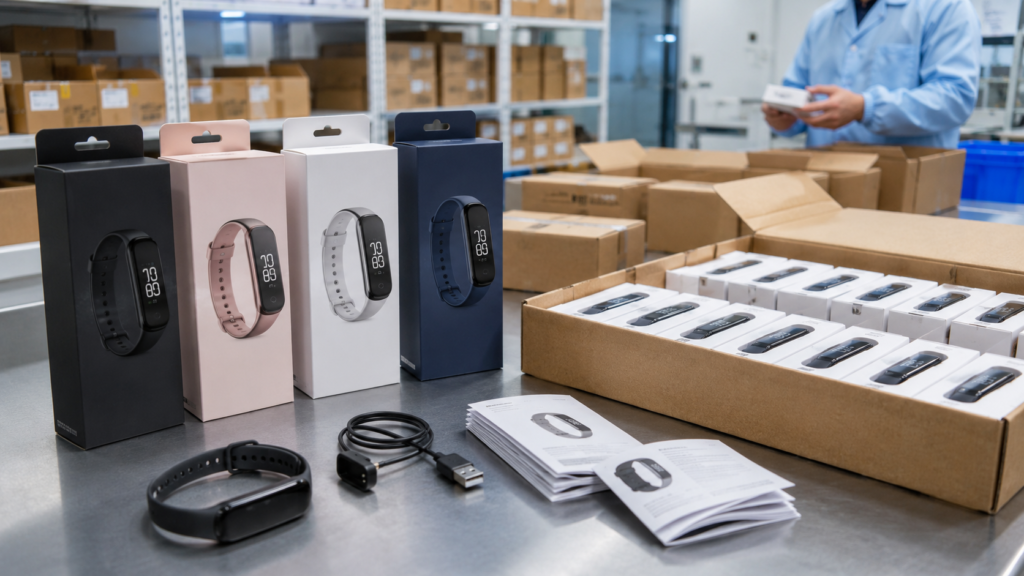
Corporate Smart Watch Procurement: 9 Checks Before You Place a Bulk Order
Corporate smart watch procurement is the process a US organization uses to select, validate and buy smart watches in volume for employee wellness programs, field teams, safety initiatives or client gifting. The decision hinges on nine checks: program fit, sensor and spec trade-offs, MOQ and pricing logic, sample validation, quality control, FCC and battery compliance, software and data governance, branding and packaging, and lead time with after-sales support.
Table of Contents
Table of Contents
This guide is written for procurement and benefits teams evaluating suppliers rather than for end consumers. Each check below explains what to verify, why it matters to a US program, and how to test it before you commit budget.
corporate smart watch procurement: Table of Contents
- Direct Answer: What Should Corporate Buyers Verify First?
- Key Takeaways
- Key Facts for Buyers
- Check 1: Program Fit and Use-Case Definition
- Check 2: Spec and Sensor Trade-Offs
- Check 3: MOQ, Pricing and Landed Cost
- Check 4: Sample Validation
- Check 5: Quality Control and Inspection
- Check 6: FCC, Battery and Import Compliance
- Check 7: App, Firmware and Data Governance
- Check 8: Branding, Packaging and Private Label
- Check 9: Lead Time, Warranty and Spare Parts
- Comparison Table: Procurement Paths
- Common Mistakes and Buyer Red Flags
- Practical Buyer Checklist
- FAQ
- Conclusion

Direct Answer: What Should Corporate Buyers Verify First?
Start with compliance and program fit, not price. Confirm that the supplier can document FCC equipment authorization for the wireless module and UN38.3 test summaries for the battery, then confirm the app’s data handling model. Only after those two gates are cleared should you compare sensor specifications, MOQ tiers and packaging options. A cheap unit that cannot be deployed under your IT and legal review costs more than a compliant one.

Key Takeaways
- Compliance documentation (FCC, UN38.3, safety data) should be requested before commercial negotiation begins.
- Sensor accuracy claims matter less than consistency across the batch you actually receive; test a production-representative sample.
- MOQ tiers usually drive unit price more than any single component; plan quantity by deployment wave, not by annual total.
- App and firmware governance is often the longest review item for US enterprises, so involve IT early.
- Landed cost includes duties, freight, battery shipping surcharges and spare-unit reserve, not just FOB price.
- Consumable-grade wearables need a defined RMA and spare-part ratio in the contract.

Key Facts for Buyers
| Item | What US Corporate Buyers Typically Need to Confirm | Evidence to Request |
|---|---|---|
| Wireless compliance | FCC equipment authorization for Bluetooth/Wi-Fi modules used in the configuration you order | FCC ID and grantee record; buyers should verify the ID in the FCC ID database |
| Battery transport | UN38.3 test summary and lithium battery shipping documentation | UN38.3 test summary, MSDS, packing instructions per IATA dangerous goods rules |
| RF exposure | SAR or RF exposure statement where applicable to the device class | Test report or supplier declaration [STAR KING TO CONFIRM] |
| Software | App availability, update policy, data residency and account model | App privacy documentation, SDK details, firmware update commitment |
| Customization | Logo, packaging, app skin and language options | Mockups, artwork files, packaging dielines |
| Commercials | MOQ tiers, tooling or setup fees, payment terms | Quotation with Incoterms and validity period |
| After-sales | Warranty period, DOA rate policy, spare-part ratio | Warranty terms and RMA workflow in writing |
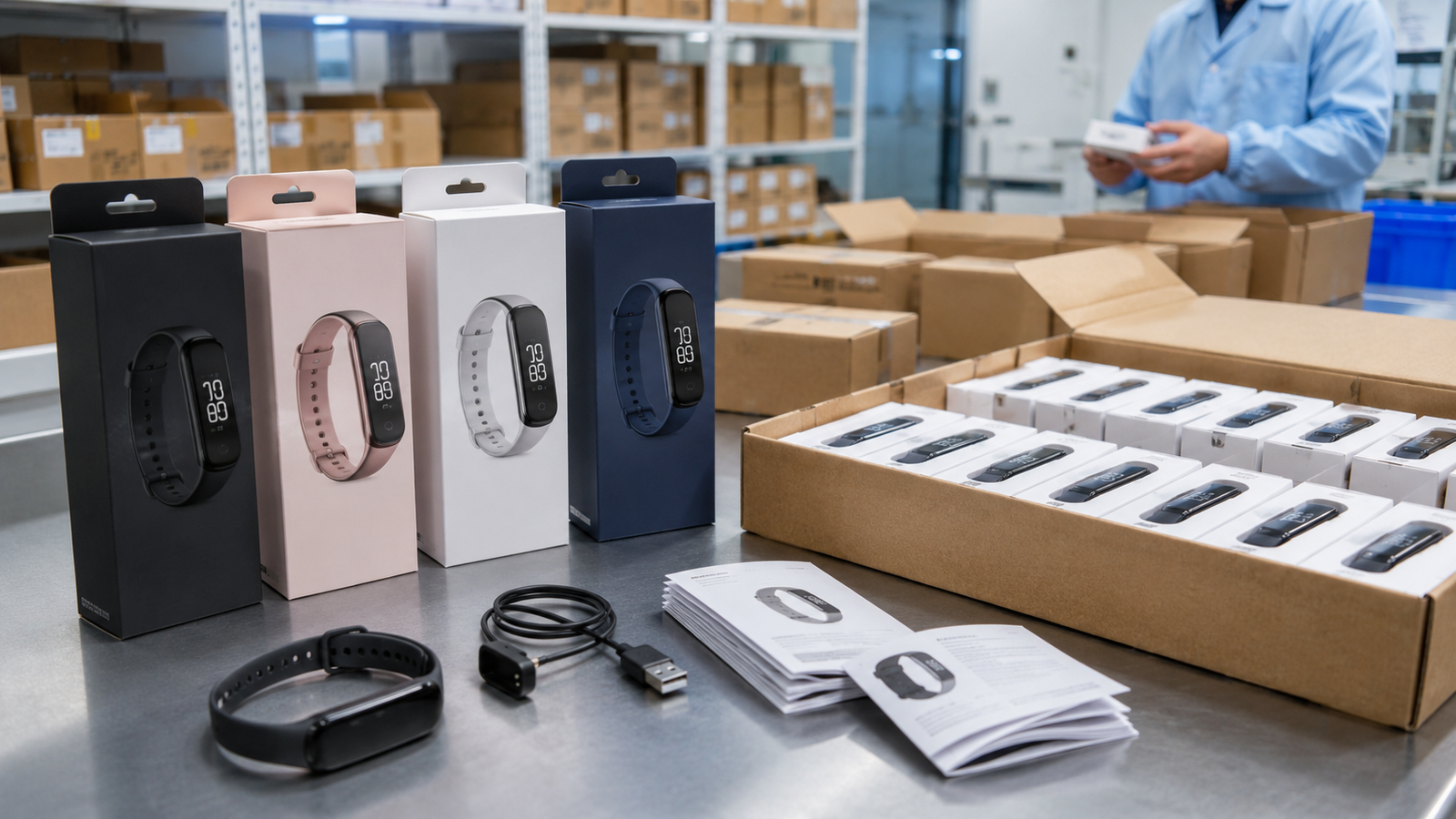
Check 1: Program Fit and Use-Case Definition
Corporate smart watch procurement fails most often at the requirements stage, not at the factory. Before contacting suppliers, define three things: who receives the device, what data the program will actually use, and what happens to the device when the program ends.
Define the deployment model
An employee wellness incentive program, a field-service safety rollout and an executive gifting order look similar on a purchase order but require different hardware. Wellness programs usually prioritize step, heart-rate and sleep continuity plus app onboarding. Field teams often need longer battery life, higher water resistance and rugged straps. Gifting orders weight packaging and brand presentation over sensor depth.
Write a one-page requirement brief
List battery life target, water resistance rating, display type, required sensors, app platform (iOS/Android), language support, packaging format and quantity per wave. Suppliers quote faster and more accurately against a written brief, and you can compare quotations line by line instead of guessing.
Check 2: Spec and Sensor Trade-Offs
Consumer wearable specs are full of trade-offs. For corporate buyers, the goal is a configuration that is stable across thousands of units, not the highest peak specification on a datasheet.
Battery life versus display and sensors
Always-on displays, continuous heart-rate sampling and GPS shorten runtime. If your program depends on daily wear compliance, choose a configuration with headroom and confirm the runtime figure was measured under a stated test condition. Ask what the battery cycle life is and whether the cell is replaceable.
Sensor depth versus data usefulness
More sensor channels do not automatically produce better program outcomes. Confirm which metrics are computed on-device and which rely on the app, and whether the vendor exposes an export or API path. Non-medical wellness devices should be described as general wellness tools; buyers should not assume diagnostic accuracy. For context on how consumer health features are positioned, see the FDA device classification resources and verify your own regulatory position with counsel.
STAR KING’s smart watch product line is a starting point for specification discussion; final configuration depends on your program brief.
Check 3: MOQ, Pricing and Landed Cost
Unit price is a function of quantity tier, configuration, packaging and payment terms. Corporate buyers should model landed cost, not FOB price, before comparing suppliers.
| Cost Element | What to Confirm | Why It Matters |
|---|---|---|
| Unit price (FOB/EXW) | Tier breakpoints and quotation validity | Prices move with component and currency changes |
| Tooling or setup | One-time fees for logo, packaging or app skin | Small orders can be dominated by setup cost |
| Freight | Air versus sea, battery surcharges | Lithium cells add handling requirements |
| Duties and fees | HTS classification and entry fees | Classification errors cause delays |
| Spares and RMA reserve | Spare ratio and return handling | Replacement cost is a real budget line |
If your quantity is below a quoted MOQ, ask whether the supplier offers a mixed-model order or a smaller pilot batch. A pilot of a few hundred units is a legitimate way to validate fit before an annual commitment. Discussing quantity waves early usually produces better terms than negotiating at the end.
Check 4: Sample Validation
Samples should represent the production configuration, not a demo unit built for trade shows. Ask the supplier to confirm in writing that the sample shares the same module, sensor set and firmware branch as the mass-production order.
What to test on a sample
- Pairing and reconnection stability on both iOS and Android with your own test accounts.
- Battery runtime under a realistic daily-use pattern for five to seven days.
- Charging behavior, including cable and dock durability.
- Strap fit across a range of wrist sizes represented in your workforce.
- Water resistance behavior consistent with the stated rating—without exceeding it.
Record results in a shared scorecard so multiple stakeholders (HR, IT, facilities) can compare candidates on the same criteria.
Check 5: Quality Control and Inspection
Ask how quality is controlled at incoming material, in-process assembly and final test. A credible supplier can describe its inspection points and will accept a pre-shipment inspection arranged by your own third party.
Evidence worth requesting
- Final test criteria, including any aging or burn-in step.
- Drop and waterproof test methods used for the model you order.
- Defect classification and AQL level applied to pre-shipment inspection.
- Traceability of battery lot and module lot to the shipment.
Quality processes should also cover packaging integrity, because damaged retail boxes in a corporate gifting order become a visible problem for the receiving HR team. Buyers evaluating fabrication depth can review STAR KING’s private label OEM/ODM solutions for how customization and production stages are typically structured.
Check 6: FCC, Battery and Import Compliance
For the US market, wireless devices generally require FCC equipment authorization, and lithium battery shipments require UN38.3 test documentation plus compliant packing. Requirements typically depend on the exact configuration—radio module, battery capacity and accessories—so verify against the documents for the model you order, not a similar one.
Practical verification steps
- Request the FCC ID and look it up in the official database.
- Confirm the grantee name matches the manufacturer or module maker.
- Request UN38.3 test summaries and confirm the battery supplier is named.
- Check whether the shipping method and packaging match the battery packing instruction.
- Confirm labeling requirements for the destination and sales channel.
Do not accept a certificate image alone. Ask for the underlying report reference and confirm the model number on the document matches your purchase order.
Check 7: App, Firmware and Data Governance
For corporate deployments, the app is part of the product. Procurement teams should involve IT and legal to review data flows: what is collected, where it is stored, whether accounts are individually owned or managed by the employer, and how data is deleted at program exit.
Questions to put to the supplier
- Is the app the supplier’s own, a white-label build, or a third-party app?
- Can the app be skinned and pre-configured for a corporate onboarding flow?
- How are firmware updates delivered, and for how long after purchase?
- Is there an admin or export function, and does it require an API integration?
If employee health data will be visible to the employer, define the consent and aggregation model with counsel before the pilot. Wellness data is often treated differently from clinical data, but the employer’s obligations depend on the state and program design.
Check 8: Branding, Packaging and Private Label
Corporate orders often combine two goals: a usable device and a presentable package. Confirm the customization options and their minimums in writing.
Customization tiers to compare
| Tier | Typical Scope | Effect on MOQ and Lead Time |
|---|---|---|
| Logo only | Laser or print on case, standard packaging | Lowest minimum, fastest |
| Semi-custom | Logo, custom box, insert card, quick-start guide | Moderate setup, artwork approval needed |
| Full private label | Custom case color, packaging system, app skin, manual | Higher minimum and longer schedule |
Ask who owns the artwork and tooling, and confirm in writing that molds or custom tooling paid for by your organization remain your property. For packaging, request a physical pre-production sample before the full run.
Check 9: Lead Time, Warranty and Spare Parts
Corporate programs run on fixed dates—open enrollment, annual events, quarterly rollouts. Build the schedule backward from the delivery date and add buffer for sample approval, artwork rounds and customs clearance.
Schedule elements to lock down
- Sample lead time and revision rounds.
- Artwork and packaging approval cycle.
- Production lead time after deposit and approval.
- Shipping transit time and customs clearance buffer.
- Warranty term, DOA handling and spare-unit ratio.
Ask how returns are processed: replacement unit, repair, or credit. A defined RMA workflow with a named contact prevents problems from escalating after employees have already received devices.
Comparison Table: Procurement Paths for Corporate Smart Watches
| Path | Best For | Trade-Off |
|---|---|---|
| Off-the-shelf brand purchase | Small, urgent orders | Limited branding; higher unit cost; less control |
| Stock model with logo | Mid-size wellness rollouts | Minimal spec flexibility |
| OEM/ODM with configuration | Multi-year programs with defined data needs | Longer development and approval cycle |
| Full private label | Channel brands and large employers | Highest minimums and setup investment |
Common Mistakes and Buyer Red Flags
- Choosing on unit price alone. Landed cost and replacement cost usually change the ranking.
- Accepting a certificate image without the model match. Always verify the FCC ID and model number.
- Testing a demo unit, not a production-representative sample. Batch consistency matters more than a single showcase device.
- Involving IT and legal after the order. Data governance review is the longest lead item.
- Ignoring battery shipping rules. Freight quotes that omit lithium handling surcharges create late budget surprises.
- No spare-unit reserve. A small percentage of DOA or lost units is normal and should be planned.
- Ambiguous tooling ownership. Get written confirmation of who owns custom molds and artwork.
Practical Buyer Checklist
- Written requirements brief with quantity waves and delivery dates.
- Supplier questionnaire covering manufacturing scope, QC process and warranty terms.
- FCC ID verified in the official database for the exact model.
- UN38.3 test summary and MSDS on file.
- Production-representative sample tested on iOS and Android.
- Pre-shipment inspection arranged or agreed.
- App privacy and data-flow review completed by IT and legal.
- Packaging mockup and physical pre-production sample approved.
- Landed cost model including freight, duties and spares.
- Contract clause on tooling ownership, RMA and spare ratio.
FAQ
How long does corporate smart watch procurement usually take?
For a stock model with logo customization, a pilot order can move from brief to delivery in a few weeks, depending on sample approval and shipping method. A configured or private label program with custom packaging and app changes typically takes considerably longer because of development and approval rounds. Plan backward from your rollout date and add buffer for customs.
What FCC documents should a supplier provide?
Request the FCC ID and confirm the grantee record in the FCC database. The model number on the authorization should match the model you are ordering. If the radio module carries its own authorization, confirm how the finished device is covered.
Is a smart watch battery a shipping problem?
Lithium cells are regulated for transport. Expect to provide or receive UN38.3 test summaries and to use packaging and carriers that comply with dangerous goods rules. The exact requirement depends on cell capacity, configuration and mode of transport.
Can the app be customized for our wellness program?
Customization depth varies by supplier and platform. Ask specifically about app skinning, onboarding flow, admin or export functions and firmware update policy. Confirm whether an API is available and who maintains it.
What MOQ should a corporate buyer expect?
MOQ depends on the level of customization: logo-only orders have the lowest minimums, while custom tooling, new packaging systems or app development raise the threshold. Many suppliers accept a smaller pilot batch before an annual commitment—ask directly rather than assuming.
Should we describe the watch as a medical device?
Consumer wearables are generally positioned as general wellness products, not diagnostic devices. Marketing language and program communications should be reviewed with legal counsel, because claims can affect regulatory classification and your own liability position.
Conclusion
Corporate smart watch procurement rewards a structured process. Clear the compliance gates first, validate a production-representative sample, model landed cost instead of unit price, and settle the app and data questions with IT before signing. Those steps protect the rollout date and reduce the chance that a promising pilot becomes an operational problem in the field.
If you are comparing suppliers for a US wellness or gifting program, prepare your requirement brief and compliance checklist, then request a quotation with tiered pricing and lead times so the comparison is like for like.
Work With STAR KING
STAR KING supports international B2B buyers with smart watch OEM/ODM and private label programs, from sample development through mass production and packaging customization. Share your quantity, target launch date and customization scope to request a corporate smart watch quotation, or review the resources blog for further sourcing guidance.
Discuss Your Smart Wearable OEM/ODM Project
Planning a smart ring, smart watch, smart band, AI glasses, AI translator, or AI voice mouse project? Contact STAR KING to discuss product positioning, sample testing, customization scope, certification requirements, lead time, and quotation details.

Team Star King

Scan WhatsApp QR code
Leave a Reply