
AI smart glasses suppliers: AI Smart Glasses for UK Healthcare Providers: 7 Essential Checks Before You Buy in 2026
November 26, 2026 · Team Star King

AI smart glasses suppliers buyers need a supplier evaluation process that checks product fit, OEM/ODM capability, compliance documents, quality control, pricing, lead time, and after-sales support before placing a bulk order.
Table of Contents
Table of Contents
AI Smart Glasses for UK Healthcare Providers: 7 Essential Checks Before You Buy in 2026
If you are a UK healthcare solution provider evaluating AI smart glasses for clinical or remote care use, you need to confirm seven critical areas before committing to a supplier: regulatory compliance (UKCA, CE, UK GDPR), data security and encryption, hardware specifications for clinical environments, software integration and API access, OEM/ODM customization options, pilot testing and validation, and total cost of ownership. This guide breaks down each check with practical procurement questions, so you can choose AI smart glasses that meet UK healthcare standards and deliver real value.
AI smart glasses suppliers: Table of Contents
- Short Answer
- Key Takeaways
- 1. Regulatory Compliance and Certification for UK Healthcare
- 2. Data Security, Privacy, and UK GDPR
- 3. Hardware Specifications for Clinical Environments
- 4. Software Integration and API Access
- 5. OEM/ODM Customization for Healthcare Workflows
- 6. Pilot Testing and Clinical Validation
- 7. Total Cost of Ownership and Supply Chain
- Comparison Table: Key Specifications
- Common Mistakes
- Buyer Checklist
- FAQ
- Conclusion

Short Answer
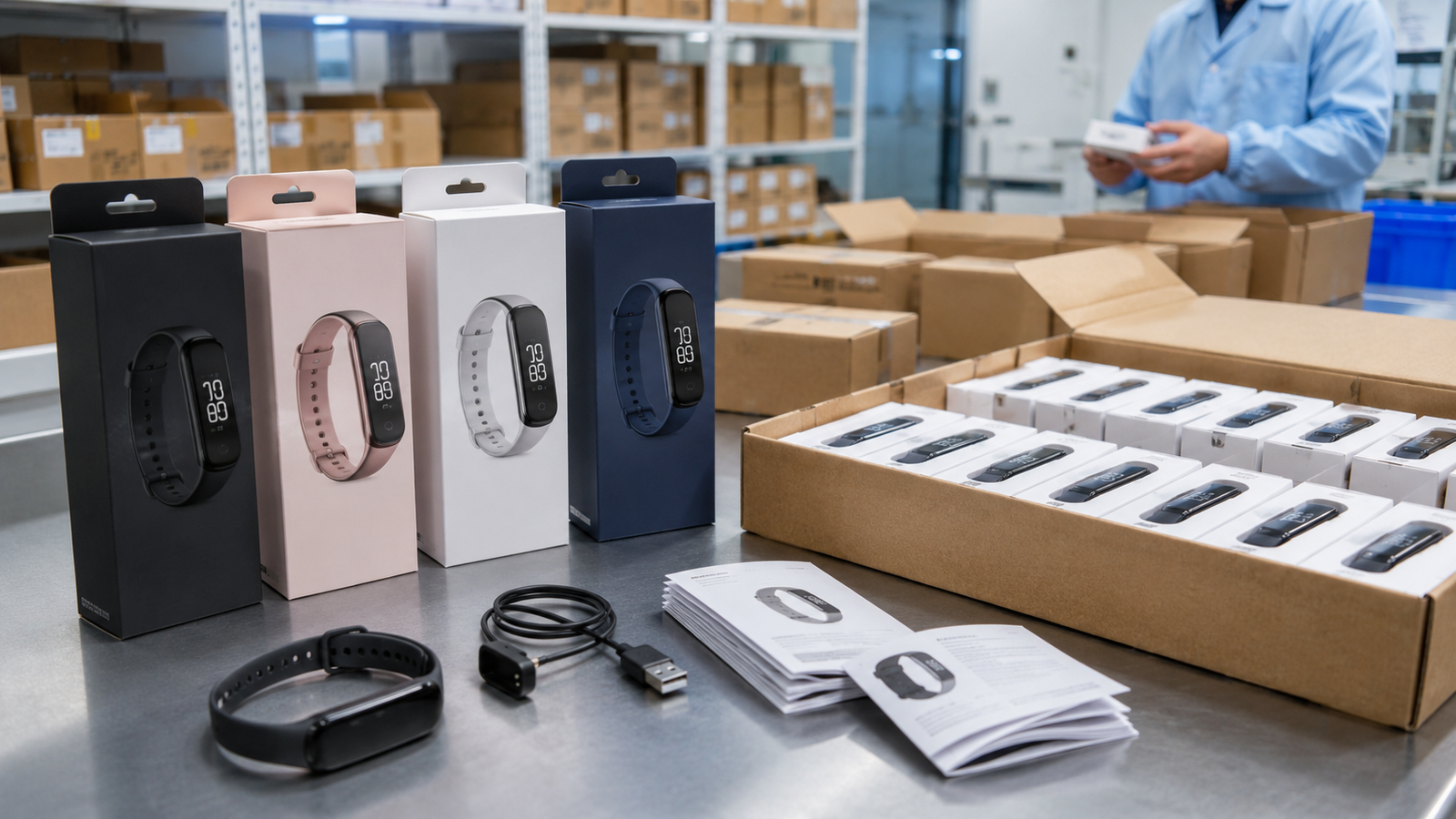
UK healthcare solution providers should select AI smart glasses that carry UKCA or CE marking, comply with UK GDPR and NHS data security standards, offer robust APIs for EHR integration, and support pilot testing in real clinical settings. Prioritize suppliers that provide transparent certification documentation, customizable hardware and firmware, and clear OEM/ODM terms. Expect a typical lead time of 8–12 weeks for custom orders and plan for a phased rollout to manage risks.
Key Takeaways
- Regulatory compliance (UKCA, CE, UK GDPR) is non-negotiable for UK healthcare deployments.
- Data encryption and secure data storage must meet NHS Digital standards.
- Hardware should be lightweight, disinfectable, and have sufficient battery life for clinical shifts.
- Software integration via API and SDK is essential for connecting to electronic health records (EHR).
- OEM/ODM partners should offer customization of firmware, app, and packaging to align with your brand and workflow.
- Conduct a pilot with a small group of clinicians to validate usability and clinical outcomes.
- Evaluate total cost of ownership, including logistics, import duties, and after-sales support.

1. Regulatory Compliance and Certification for UK Healthcare
For AI smart glasses used in healthcare, compliance is the first gate. In the UK, medical devices are regulated by the MHRA and require UKCA marking. If your device makes medical claims (e.g., monitoring vital signs), it may be classified as a medical device. Even for general wellness or communication devices, electrical safety and electromagnetic compatibility (EMC) are mandatory. Ask your supplier for:
- UKCA or CE certification for electrical safety and EMC (typically to BS EN 62368-1 and BS EN 55032).
- RoHS compliance for hazardous substances.
- UN38.3 and MSDS for lithium batteries.
- If applicable, medical device certification (e.g., UKCA Class I or IIa) and a quality management system (ISO 13485).
Buyers should verify certificates directly with the issuing body and ensure they cover the exact model and configuration you plan to purchase. Certification requirements typically depend on the intended use and target market; always confirm with your regulatory advisor.
For official guidance, refer to the MHRA guidance on regulating medical devices in the UK and the EU Medical Device Regulation (MDR) 2017/745 for comparative requirements.
2. Data Security, Privacy, and UK GDPR
AI smart glasses often capture audio, video, and sensor data, which may include personal health information (PHI). Under the UK GDPR and the Data Protection Act 2018, you must ensure data is encrypted in transit and at rest, access is controlled, and data processing agreements are in place with suppliers. Ask potential vendors:
- What encryption standards are used (e.g., AES-256 for data at rest, TLS 1.3 for transit)?
- Where is data stored? Is there an option for on-premise or UK-based cloud storage?
- Can the device operate in a offline mode to minimize data transfer?
- Are there audit logs for data access?
- Does the supplier sign a Data Processing Agreement (DPA) and comply with NHS Digital data security and protection toolkit?
For healthcare providers, integrating with NHS systems may require additional assurances. Refer to the NHS Digital cyber and data security guidance for baseline requirements.
3. Hardware Specifications for Clinical Environments
Clinical environments demand durable, hygienic, and comfortable devices. Key specifications to evaluate:
- Weight and ergonomics: Should be lightweight (under 80g) and adjustable for different head sizes.
- Battery life: At least 8 hours to cover a typical shift; consider swappable batteries or fast charging.
- Display: High brightness (over 1000 nits) for readability in various lighting; anti-glare coating.
- Camera: Resolution adequate for telemedicine (e.g., 8MP) with autofocus and low-light performance.
- Microphone and speaker: Noise-cancelling for clear communication.
- Durability: IP54 or higher for dust and water resistance; chemical-resistant housing for disinfectants.
- Connectivity: Wi-Fi 6 and Bluetooth 5.2 for reliable connections.
Request datasheets and sample units to test in your environment. Consider a private label AI smart glasses that can be customized to your specifications.
4. Software Integration and API Access
AI smart glasses must integrate with your existing healthcare IT infrastructure. Look for:
- Open API: RESTful API for data exchange with EHR, remote monitoring platforms, and analytics tools.
- SDK: For custom app development if you need specific functionality.
- Compatibility: Support for HL7 FHIR standards for healthcare data interoperability.
- Firmware updates: Over-the-air (OTA) update capability with rollback options.
- Device management: Enterprise mobility management (EMM) support for remote configuration and security policies.
If you are developing a remote patient monitoring solution, explore our remote health wearables application page for integration insights.
5. OEM/ODM Customization for Healthcare Workflows
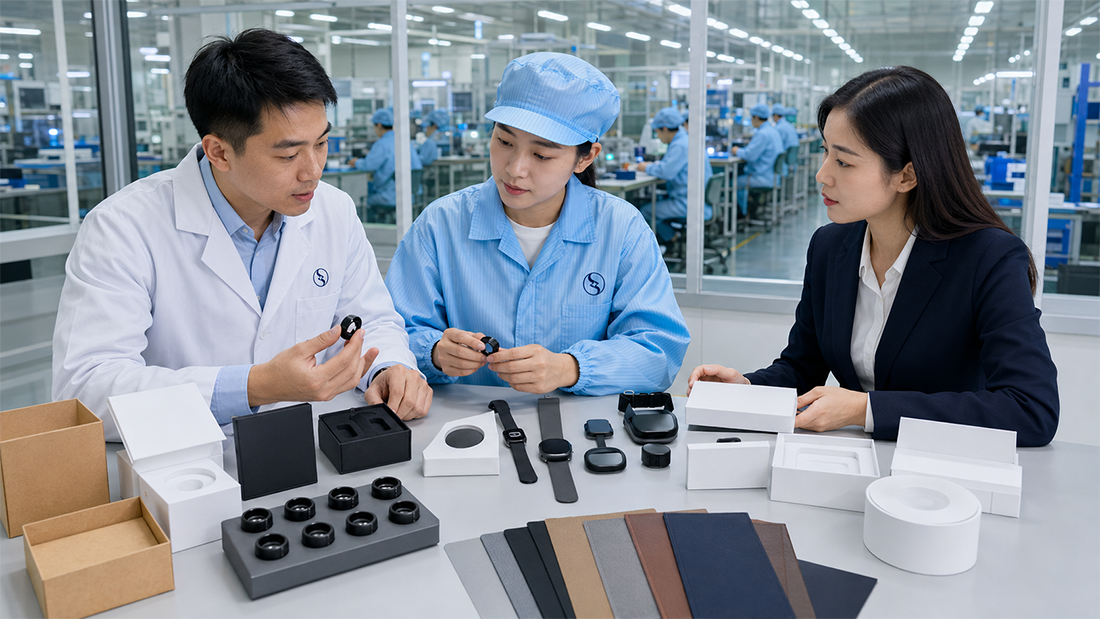
Off-the-shelf devices rarely fit clinical workflows perfectly. Evaluate the supplier’s OEM/ODM capabilities:
- Firmware customization: Ability to modify AI algorithms, UI, and data capture parameters.
- App customization: White-label mobile app with your branding and workflow logic.
- Hardware modifications: Optional accessories (e.g., head straps, prescription lens inserts), color, and logo placement.
- Packaging: Custom packaging that meets NHS procurement standards and includes necessary documentation.
- MOQ: Understand minimum order quantities for customizations; typical MOQs for custom AI glasses range from 500 to 1,000 units, but confirm with the supplier.
- Lead times: Plan for 8–12 weeks for custom production, plus shipping.
STAR KING offers flexible private label OEM/ODM solutions for AI smart glasses, including firmware and app customization. [STAR KING TO CONFIRM] specific MOQs and lead times for healthcare projects.
6. Pilot Testing and Clinical Validation
Before full deployment, conduct a pilot with a small group of clinicians (e.g., 10–20 users) to test usability, battery life, connectivity, and integration. Define success metrics such as:
- Reduction in documentation time.
- Improvement in remote consultation quality.
- User satisfaction scores.
- Technical incident rates.
Ensure the supplier provides test units and technical support during the pilot. Document findings to support a business case for wider rollout. Remember that AI smart glasses are not medical devices unless certified; avoid making clinical claims during the pilot without regulatory clearance.
7. Total Cost of Ownership and Supply Chain
Beyond unit price, consider:
- Shipping and logistics: Lithium batteries require special handling; confirm UN38.3 and MSDS documentation for air freight.
- Import duties and VAT: UK import duties for wearables typically range from 0% to 4%, depending on classification; VAT is 20%. Verify with a customs broker.
- Warranty and support: Standard warranty is 12 months; negotiate extended support and spare parts availability.
- After-sales: Local repair or replacement options in the UK can reduce downtime.
- Scalability: Ensure the supplier can ramp up production to meet your growth.
Request a detailed quotation that includes all landed costs. Use our sample request form to evaluate quality before committing.
Comparison Table: Key Specifications for AI Smart Glasses in Healthcare
| Feature | Minimum Requirement | Recommended | Why It Matters |
|---|---|---|---|
| Certification | UKCA/CE for EMC & safety | UKCA/CE + ISO 13485 if medical claims | Legal compliance and tender eligibility |
| Data Encryption | AES-256 at rest, TLS 1.2+ | AES-256, TLS 1.3, on-device anonymization | UK GDPR and NHS DSPT compliance |
| Battery Life | 6 hours | 8+ hours or swappable | Covers clinical shifts |
| Weight | <100g | <80g | Comfort for prolonged use |
| Durability | IP54 | IP67, chemical-resistant | Withstands cleaning protocols |
| API/SDK | REST API | FHIR support, SDK, EMM | Integration with EHR and IT systems |
| MOQ for Custom | 1,000 units | 500 units | Affects upfront investment |
Common Mistakes
- Overlooking data protection: Failing to assess UK GDPR compliance can lead to fines and reputational damage.
- Underestimating integration complexity: Assuming plug-and-play compatibility with existing systems without API validation.
- Ignoring staff training: Even the best hardware fails without proper onboarding.
- Choosing a supplier without healthcare experience: Work with manufacturers who understand clinical workflows and regulatory nuances.
- Skipping pilot testing: Deploying at scale without a pilot increases risk of user rejection.
- Not verifying certifications: Accepting photocopies without checking with issuing bodies.
Practical Buyer Checklist
- ☐ Confirm UKCA/CE certification for electrical safety and EMC.
- ☐ Verify UK GDPR compliance and data processing agreement.
- ☐ Request datasheet and sample units for testing.
- ☐ Assess API documentation and integration capabilities.
- ☐ Clarify OEM/ODM customization options and MOQs.
- ☐ Obtain landed cost quotation including shipping and duties.
- ☐ Plan a pilot with defined success metrics.
- ☐ Check supplier references in healthcare or similar regulated sectors.
- ☐ Review warranty and after-sales support terms.
- ☐ Confirm lead times and production capacity.
FAQ
1. Do AI smart glasses need to be UKCA marked for healthcare use?
If the device is a medical device or makes medical claims, UKCA marking is required. Even for general use, electrical safety and EMC compliance are mandatory. Always verify with the MHRA guidelines.
2. How can I ensure data from AI smart glasses is secure?
Look for end-to-end encryption (AES-256, TLS 1.3), on-device data processing, and a supplier willing to sign a DPA. Compliance with NHS DSPT is a good benchmark.
3. What is a typical MOQ for custom AI smart glasses?
MOQs vary by supplier; typical ranges are 500–1,000 units for custom firmware and branding. STAR KING can confirm specific MOQs for your project.
4. How long does it take to receive samples and production orders?
Samples are usually available in 2–3 weeks. Production lead time for custom orders is typically 8–12 weeks after sample approval, plus shipping.
5. Can AI smart glasses integrate with our existing EHR system?
Yes, if the supplier provides an open API or SDK. Check for HL7 FHIR support to simplify integration.
6. Are there restrictions on shipping lithium batteries to the UK?
Yes, lithium batteries require UN38.3 test summaries and MSDS for air transport. Ensure the supplier provides these documents.
7. What support is available after purchase?
Standard warranty is 12 months; negotiate extended support and spare parts availability. Local repair options in the UK can be beneficial.
Conclusion
Selecting AI smart glasses for UK healthcare requires careful evaluation of compliance, data security, hardware, software, customization, pilot testing, and total cost. By following these seven checks, you can mitigate risks and choose a solution that enhances patient care and operational efficiency. Partner with a manufacturer that understands the healthcare landscape and offers transparent documentation and flexible OEM/ODM terms.
Ready to evaluate AI smart glasses for your healthcare solution? Request product samples today and test the hardware in your clinical environment. Our team can also discuss customization options tailored to your workflow.
Discuss Your Smart Wearable OEM/ODM Project
Planning a smart ring, smart watch, smart band, AI glasses, AI translator, or AI voice mouse project? Contact STAR KING to discuss product positioning, sample testing, customization scope, certification requirements, lead time, and quotation details.

Team Star King

Scan WhatsApp QR code
Leave a Reply