
AI Smart Glasses for Amazon UK Sellers: 7 Critical Steps to a Profitable Launch
November 6, 2026 · Team Star King

AI Smart Glasses for Amazon UK Sellers: 7 Critical Steps to a Profitable Launch
Launching AI smart glasses on Amazon UK requires a sourcing partner who understands UK product regulations, Amazon’s compliance requirements, and the unique features of AI hardware. AI smart glasses combine a camera, microphone, and often an onboard AI processor or cloud integration, making supplier due diligence more complex than for standard accessories. This guide provides a 7-step procurement framework for Amazon sellers to evaluate suppliers, plan MOQs, navigate UK certification, and build a profitable product line. You will learn how to verify manufacturers, estimate costs, and avoid common pitfalls that lead to listing suspensions or returns.
Table of Contents
Table of Contents
Table of Contents
- Short Answer
- Key Takeaways
- Key Facts for Buyers
- Step 1: Define Your Target Use Case and Product Specs
- Step 2: Source and Vet AI Smart Glasses Suppliers
- Step 3: Evaluate OEM, ODM, and Private Label Options
- Step 4: Plan MOQ, Costs, and Landed Price
- Step 5: Verify UK Certification and Compliance
- Step 6: Test Samples Rigorously
- Step 7: Manage Logistics, Battery Shipping, and After-Sales
- Common Mistakes and Buyer Red Flags
- Practical Buyer Checklist
- FAQ
- Conclusion

Short Answer
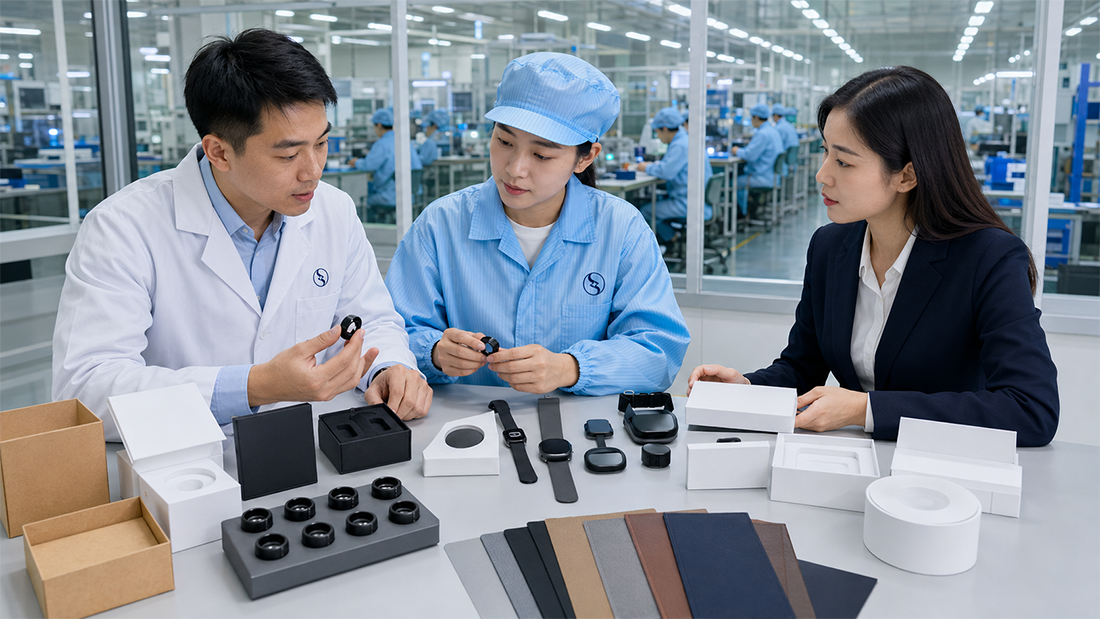
To launch AI smart glasses on Amazon UK, sellers should start by defining a clear use case, then vet suppliers for UK compliance (UKCA/CE, RoHS, WEEE, battery regulations), request samples for rigorous testing, and plan MOQs and logistics with battery shipping in mind. Expect a 3–6 month timeline from supplier selection to Amazon listing, with initial MOQs typically ranging from 500 to 1,000 units depending on customization level.
Key Takeaways
- Use-case clarity drives all decisions: Define whether your AI smart glasses are for productivity, translation, or fitness to select the right specifications and supplier.
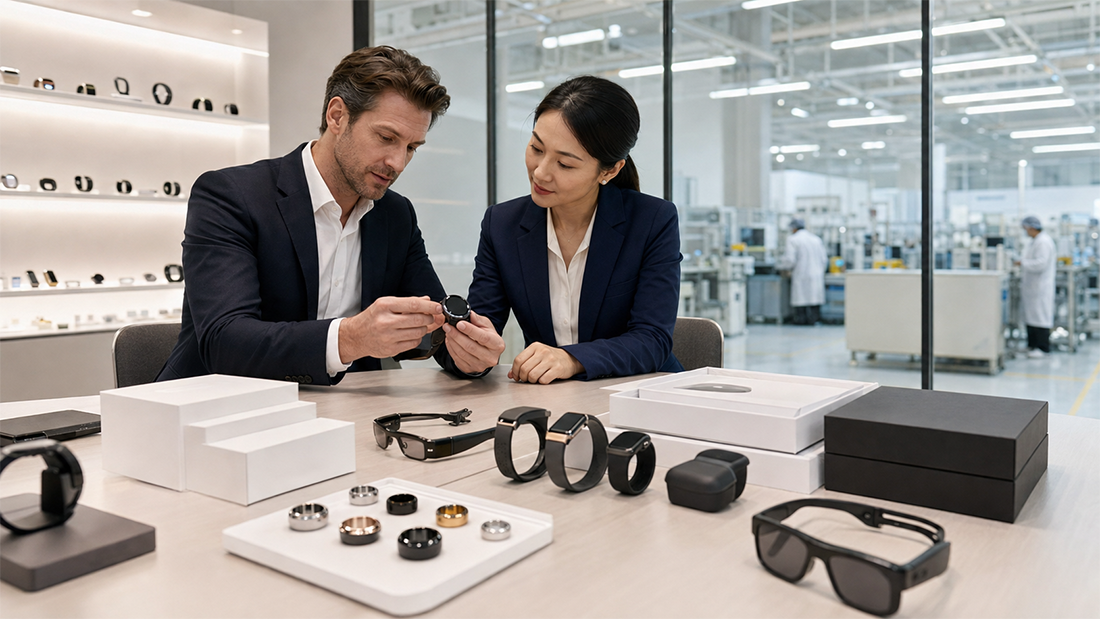
- Supplier verification is non-negotiable: Check factory audits, certifications, and past export experience, especially for AI hardware with complex firmware.
- UK compliance requires specific documentation: AI smart glasses typically need UKCA or CE marking, RoHS compliance, WEEE registration, and UN38.3 for the lithium battery.
- MOQs vary widely: Standard ODM models may start at 500 units; full custom OEM projects often require 1,000+ units and tooling investment.
- Sample testing should cover all critical aspects: Test battery life, AI accuracy, build quality, app integration, and UK plug/charger compatibility.
Key Facts for Buyers
| Consideration | Typical Range / Requirement | Buyer Action |
|---|---|---|
| Minimum Order Quantity (MOQ) | 500–1,000 units for ODM; 1,000+ for OEM | Confirm MOQ per model and customization |
| Sample Lead Time | 7–15 days for stock samples; 20–30 days for customized | Request samples early |
| Production Lead Time | 30–60 days after sample approval and deposit | Plan inventory buffer |
| UK Compliance | UKCA/CE, RoHS, WEEE, UN38.3 (battery), MSDS | Request test reports and declarations |
| Battery Shipping | Lithium-ion or lithium-polymer; must comply with IATA/IMDG | Use supplier with battery shipping experience |
| Warranty | 12 months standard; extended terms negotiable | Clarify warranty and spare parts policy |
Step 1: Define Your Target Use Case and Product Specs
Before approaching suppliers, clarify what problem your AI smart glasses solve for UK consumers. Common use cases include hands-free productivity (e.g., voice-controlled note-taking), real-time translation for travelers, and fitness coaching with heads-up display. Your use case determines key specifications: camera resolution, AI processing (on-device vs. cloud), battery life, connectivity (Bluetooth/Wi-Fi), and form factor (sunglasses vs. optical frame).
For Amazon UK, consider that consumers value practicality and style. A bulky design may face higher return rates. Also, check Amazon’s product category requirements: AI smart glasses may fall under “Electronics” or “Camera & Photo,” each with specific documentation needs. Define your target price point early; this guides supplier selection and feature trade-offs.
Step 2: Source and Vet AI Smart Glasses Suppliers
Finding a reliable supplier for AI smart glasses requires more than a web search. Start with trade shows (e.g., CES, IFA), B2B platforms, or referrals. Then vet each candidate:
- Factory audit: Request a video tour or third-party audit report (e.g., ISO 9001). For AI hardware, check if they have in-house firmware and app development teams.
- Certification check: Ask for copies of UKCA/CE, RoHS, and FCC certificates (if exporting to US). Verify the certificate scope covers the specific model.
- Experience with AI: Evaluate their expertise in voice recognition, translation accuracy, and app integration. Request references from other Amazon sellers if possible.
- Communication: Responsiveness and English proficiency are indicators of long-term support quality.
For a deeper dive into supplier evaluation, see our private label OEM/ODM solutions page.
Step 3: Evaluate OEM, ODM, and Private Label Options
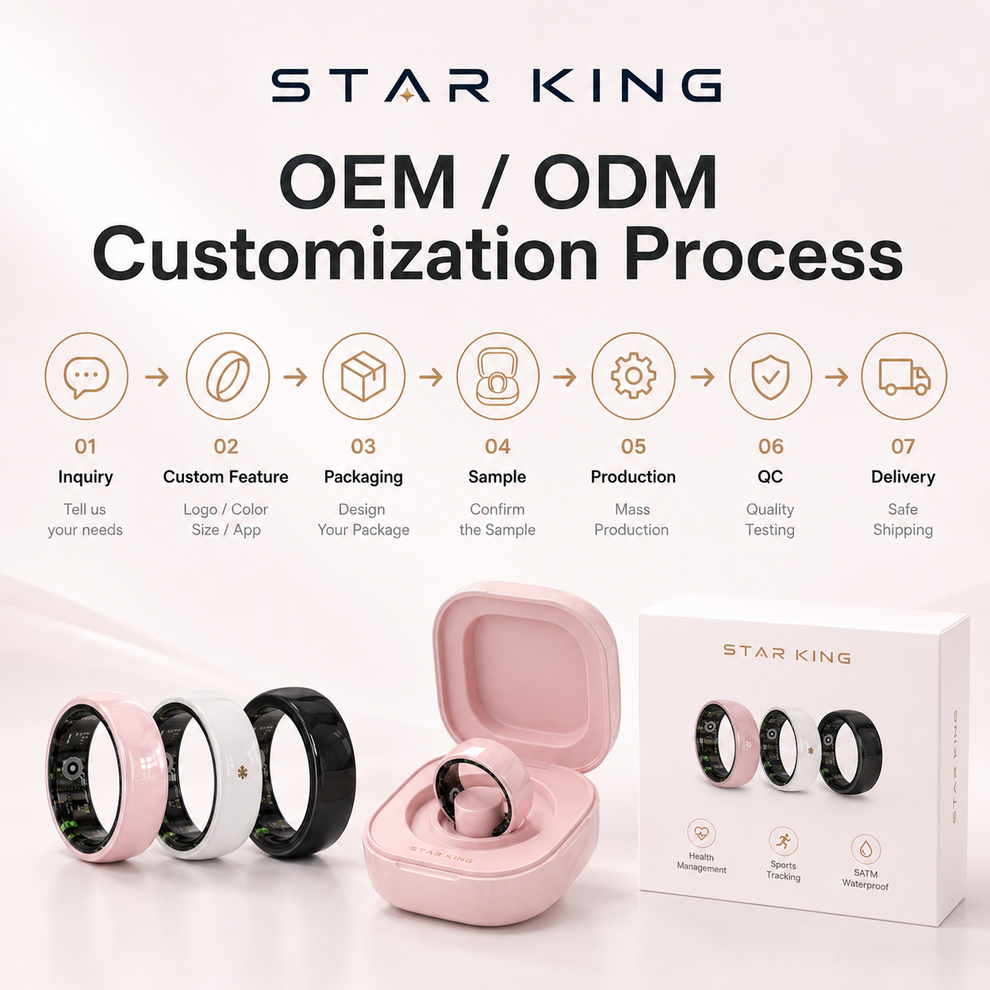
Decide how much customization you need. ODM (Original Design Manufacturer) offers ready-made designs with your logo and packaging—faster and cheaper, ideal for testing the market. OEM (Original Equipment Manufacturer) involves custom design, firmware, and tooling—higher investment but unique product. Private label is a subset of ODM where you brand an existing product.
For Amazon UK sellers new to AI smart glasses, starting with ODM or private label reduces risk and time-to-market. For example, STAR KING’s AI smart glasses offer ODM options with customizable logo, packaging, and basic firmware settings. Full OEM may require 1,000+ units and tooling costs of $10,000–$50,000 depending on complexity.
Step 4: Plan MOQ, Costs, and Landed Price
MOQs for AI smart glasses vary by supplier and customization. Typical ranges:
- Stock ODM model: 500–1,000 units.
- Private label with logo/packaging: 1,000 units.
- Full OEM custom: 1,000–3,000 units.
Unit cost depends on features, components (e.g., AI chip, camera), and order volume. Request a detailed quotation including tooling, certification, and packaging costs. Calculate landed cost: product cost + freight + import duties (UK Global Tariff) + VAT + Amazon fees. Use a landed cost calculator to ensure profitability.
Our guide on MOQ and lead time planning provides more insights.
Step 5: Verify UK Certification and Compliance
AI smart glasses sold in the UK must meet specific regulations. Key requirements:
- UKCA or CE marking: Electrical products require UKCA (or CE for Northern Ireland). Confirm the supplier provides a Declaration of Conformity.
- RoHS: Restricts hazardous substances; request test reports.
- WEEE: You must register with a WEEE compliance scheme as an importer.
- Battery regulations: Lithium batteries require UN38.3 test summary, MSDS, and possibly UK Battery Regulations compliance.
- Wireless: If the glasses use Bluetooth/Wi-Fi, they must comply with UK radio equipment regulations (UKCA).
Certification requirements typically depend on the exact product configuration and target market. Always verify with a UK-based compliance consultant. For official references, see UKCA marking guidance and WEEE regulations.
Step 6: Test Samples Rigorously
Never skip sample testing. Order samples from 2–3 shortlisted suppliers and test:
- AI functionality: Accuracy of voice commands, translation quality, app stability.
- Battery life: Real-world usage vs. claimed.
- Build quality: Comfort, durability, lens quality.
- Compatibility: Works with UK plug (Type G) and common smartphones.
- Packaging: Retail-ready with proper labeling (UK importer details, warnings).
Also, consider third-party lab testing for drop, waterproof, and aging if your marketing claims require it. See our quality control process for more.
Step 7: Manage Logistics, Battery Shipping, and After-Sales
AI smart glasses contain lithium batteries, which are classified as dangerous goods. Shipping options:
- Air freight: Possible with UN38.3 and MSDS; use a forwarder experienced in battery shipping.
- Sea freight: Longer lead time but often cheaper for larger volumes.
Ensure the supplier provides proper battery packaging and documentation. For after-sales, agree on warranty terms (typically 12 months), spare parts availability, and a return process for defective units. Amazon UK requires sellers to handle returns; a reliable supplier can provide replacement parts or credit.
Common Mistakes and Buyer Red Flags
- Choosing supplier solely on price: Low-cost AI smart glasses may lack certifications or use inferior components, leading to high returns.
- Ignoring UK certification: Selling non-compliant products can result in Amazon listing removal and legal penalties.
- Underestimating battery shipping complexity: Improper shipping can cause delays or fines.
- No sample testing: Relying on supplier photos or specs often leads to disappointment.
- Unclear MOQ and lead time: Miscommunication can cause stockouts during peak season.
- Red flags: Supplier reluctant to share certificate copies, no factory audit, pressure to pay full amount upfront, or no warranty policy.
Practical Buyer Checklist
| Task | Completed? | Notes |
|---|---|---|
| Define use case and target price | ☐ | |
| Shortlist 3+ suppliers with verified certifications | ☐ | |
| Request samples and test for 2+ weeks | ☐ | |
| Confirm MOQ, lead time, and payment terms | ☐ | |
| Obtain UKCA/CE, RoHS, WEEE, UN38.3 documents | ☐ | |
| Calculate landed cost and profit margin | ☐ | |
| Plan shipping (battery-compliant) | ☐ | |
| Agree warranty and after-sales process | ☐ |
FAQ
What is the typical MOQ for AI smart glasses from Chinese suppliers?
MOQs usually range from 500 to 1,000 units for ODM models, and 1,000+ for full OEM customization. Some suppliers may accept lower MOQs for stock models without customization.
Do I need UKCA certification to sell AI smart glasses on Amazon UK?
Yes, most electrical products require UKCA marking. You also need RoHS compliance and WEEE registration. Confirm with a compliance consultant as requirements may vary.
How long does shipping AI smart glasses to the UK take?
Air freight typically takes 5–10 days; sea freight 25–35 days. Battery shipping may add a few days for documentation and special handling.
Can I customize the packaging and logo for my Amazon brand?
Yes, most ODM suppliers offer private label options including logo printing and custom packaging. MOQs may apply.
What are the common pitfalls when sourcing AI smart glasses?
Common pitfalls include choosing suppliers without proper certifications, skipping sample testing, and underestimating battery shipping complexity. Always verify documents and test samples.
Conclusion
Sourcing AI smart glasses for Amazon UK involves careful planning and due diligence. By following these seven steps—defining your use case, vetting suppliers, choosing the right manufacturing model, planning costs, ensuring compliance, testing samples, and managing logistics—you can avoid costly mistakes and build a successful product line. Remember to verify all certifications and test thoroughly before committing to a large order.
Ready to take the next step? Request samples of AI smart glasses from STAR KING to evaluate quality and discuss customization options for your Amazon business. Request product samples today.
Discuss Your Smart Wearable OEM/ODM Project
Planning a smart ring, smart watch, smart band, AI glasses, AI translator, or AI voice mouse project? Contact STAR KING to discuss product positioning, sample testing, customization scope, certification requirements, lead time, and quotation details.

Team Star King

Scan WhatsApp QR code
Leave a Reply