
AI smart glasses suppliers: AI Smart Glasses for UK Retail Chains: 7 Critical Buying Decisions for 2026
October 28, 2026 · Team Star King

AI smart glasses suppliers buyers need a supplier evaluation process that checks product fit, OEM/ODM capability, compliance documents, quality control, pricing, lead time, and after-sales support before placing a bulk order.
Table of Contents
Table of Contents
AI Smart Glasses for UK Retail Chains: 7 Critical Buying Decisions for 2026
If you are evaluating AI smart glasses for UK retail chains, the key is to focus on seven critical areas: product fit for retail use cases, MOQ and pricing, compliance with UK regulations (UKCA, UK GDPR), battery life for extended shifts, software integration with retail systems, total landed cost, and after-sales support. This guide breaks down each decision with actionable checklists and tables to help you make an informed procurement choice in 2026.
As retail chains across the UK look to enhance customer experience, streamline operations, and equip staff with hands-free AI assistance, AI smart glasses have moved from novelty to practical tool. But for B2B buyers, the evaluation process is complex. You need to consider not just the technology, but the entire supply chain, compliance landscape, and long-term partnership potential. This article provides a structured framework to navigate those decisions, ensuring you select a product that meets your business goals and regulatory obligations.
AI smart glasses suppliers: Table of Contents
- Short Answer
- Key Takeaways
- Key Facts for Buyers
- 1. Define the Retail Use Case: What Will Your Staff Actually Do?
- 2. MOQ and Pricing: What Volumes Make Sense for a Retail Chain?
- 3. Compliance and Certification: Navigating UKCA, UK GDPR, and More
- 4. Battery Life and Charging: Can the Glasses Last a Full Shift?
- 5. Software and Integration: Will They Work with Your Existing Systems?
- 6. Total Landed Cost: Beyond the Unit Price
- 7. After-Sales Support and Warranty: What Happens When Something Breaks?
- Common Mistakes and Buyer Red Flags
- Practical Buyer Checklist
- FAQ
- Conclusion
Short Answer
To successfully procure AI smart glasses for UK retail chains, prioritize seven areas: a clear retail use case (e.g., inventory management or remote assistance), MOQ and pricing that align with your budget, full compliance with UKCA and UK GDPR, all-day battery life, seamless software integration, accurate total landed cost calculation, and robust after-sales support. Evaluate suppliers on these criteria to ensure a smooth deployment and long-term value.

Key Takeaways
- Start with a defined retail use case to avoid over-specifying or under-specifying your smart glasses.
- MOQ and pricing are negotiable based on volume, customization, and partnership potential.
- Compliance is non-negotiable: ensure UKCA marking, UK GDPR adherence, and relevant safety certifications.
- Battery life must cover a full shift, and charging infrastructure should be planned.
- Software integration—especially with POS, inventory, and CRM systems—is critical for ROI.
- Total landed cost includes duties, VAT, shipping, and ongoing support, not just unit price.
- After-sales support and warranty terms protect your investment and minimize downtime.

Key Facts for Buyers
| Factor | Typical Range / Consideration | Why It Matters |
|---|---|---|
| MOQ (Minimum Order Quantity) | 500–1,000 units for OEM; lower for private label | Affects upfront investment and inventory risk |
| Unit Price | £150–£400 depending on specs and customization | Determines budget and ROI |
| Battery Life | 6–12 hours of active use | Must cover typical retail shift |
| Compliance | UKCA, UK GDPR, CE (if applicable), RoHS | Legal requirement for UK market |
| Lead Time | 45–90 days from order confirmation | Impacts launch timeline and stock planning |
| Warranty | 12–24 months | Protects against defects and downtime |

1. Define the Retail Use Case: What Will Your Staff Actually Do?
Before you compare specifications or request quotes, you must define the specific retail use case. AI smart glasses for UK retail chains can serve multiple purposes, and your choice will dictate the required features, software, and even the supplier you select. Common use cases include:
- Inventory management: Hands-free scanning and real-time stock updates.
- Remote assistance: Live video support from central experts for troubleshooting.
- Customer engagement: AI-powered product information and translation for international customers.
- Training and onboarding: Step-by-step AR guidance for new hires.
- Compliance and auditing: Recording and documenting processes hands-free.
Each use case demands different priorities. For inventory management, you need robust barcode scanning and Wi-Fi connectivity. For remote assistance, high-quality camera and microphone are essential. For customer engagement, real-time translation and comfortable all-day wear matter. By clarifying your primary use case, you can avoid paying for unnecessary features and ensure the glasses integrate smoothly with your existing workflows.
Image suggestion: A retail staff member wearing AI smart glasses while scanning inventory.
Alt text: AI smart glasses for UK retail chains used for inventory management.
2. MOQ and Pricing: What Volumes Make Sense for a Retail Chain?
Minimum order quantity (MOQ) and pricing are often the first commercial hurdles in any hardware procurement. For AI smart glasses, MOQs typically range from 500 to 1,000 units for full OEM projects, while private label orders may start lower, sometimes around 200–300 units. However, these numbers are indicative and depend on the supplier’s capabilities and the level of customization.
When evaluating MOQ and pricing, consider the following:
- Volume commitments: Suppliers may offer lower unit prices for higher volumes or multi-year agreements.
- Customization depth: Logo printing is cheaper than custom firmware or app development, which can increase MOQ.
- Payment terms: Negotiate deposits and milestone payments to align with your cash flow.
- Sampling costs: Sample fees are usually credited against bulk orders, but clarify this upfront.
To get accurate pricing, provide your supplier with your projected annual volume and customization requirements. A reputable manufacturer will work with you to find a balance between their production efficiency and your budget. Remember that the cheapest unit price may not offer the best total value if it comes with hidden costs or poor quality.
Image suggestion: A comparison table of MOQ and pricing tiers.
Alt text: MOQ and pricing tiers for AI smart glasses procurement.
3. Compliance and Certification: Navigating UKCA, UK GDPR, and More
Compliance is a critical and non-negotiable aspect of importing AI smart glasses into the UK. The UKCA (UK Conformity Assessed) marking is required for most electronic products placed on the UK market, replacing the CE mark for Great Britain. You must also ensure compliance with UK GDPR for any data collection and processing, especially if the glasses capture video or audio of customers or staff.
Key compliance areas to verify with your supplier:
- UKCA marking: The product must meet applicable UK regulations, such as the Electrical Equipment (Safety) Regulations 2016 and the Radio Equipment Regulations 2017.
- UK GDPR: If the glasses collect personal data, you need a Data Protection Impact Assessment (DPIA) and ensure data is stored and processed lawfully.
- Battery safety: Lithium-ion batteries must comply with UN38.3 for transport and may require MSDS documentation.
- RoHS: Restricts hazardous substances in electronic equipment.
- Other certifications: Depending on features, additional certifications like CE (for EU) or FCC (for US) may be relevant if you plan to sell cross-border.
Always request copies of test reports and certificates from your supplier. Don’t accept claims without documentation. For authoritative information, refer to UK government guidance on UKCA marking and the Information Commissioner’s Office (ICO) for UK GDPR.
4. Battery Life and Charging: Can the Glasses Last a Full Shift?
Battery life is a common pain point for wearable technology in retail. Staff cannot afford to have glasses die mid-shift. Evaluate the claimed battery life under realistic conditions: continuous video streaming, AI processing, and wireless connectivity will drain the battery faster than standby mode. Aim for a minimum of 6–8 hours of active use, and consider swappable batteries or quick-charge solutions to cover extended shifts or multi-shift operations.
Ask your supplier for detailed battery specifications, including capacity (mAh), charging time, and charging method (USB-C, pogo pins, or docking station). Also consider the logistics of charging multiple devices: will you need a charging cart or case? Factor these accessories into your total cost. For more insights on wearable battery technology, see our health and fitness wearables solution.
5. Software and Integration: Will They Work with Your Existing Systems?
AI smart glasses are only as useful as the software that powers them. For retail chains, integration with existing systems—such as point-of-sale (POS), inventory management, CRM, and workforce management tools—is essential. Evaluate the supplier’s software capabilities:
- App availability: Is there a companion app for iOS and Android? Can it be customized?
- SDK/API: Does the supplier offer an SDK or API for custom integrations? This is crucial if you need to connect to proprietary systems.
- Firmware updates: Will the supplier provide regular security and feature updates?
- Data security: How is data transmitted and stored? Ensure it aligns with UK GDPR.
Request a demo or trial of the software with your use case in mind. A supplier that understands retail workflows and offers flexible integration options will save you significant time and development cost. For more on AI hardware integration, explore our AI office productivity solutions.
Image suggestion: A diagram showing software integration points between smart glasses and retail systems.
Alt text: Software integration of AI smart glasses with retail POS and inventory systems.
6. Total Landed Cost: Beyond the Unit Price
The unit price you negotiate is just one component of the total landed cost. For UK retail chains, you must account for:
- Shipping and freight: From the manufacturer to your warehouse.
- Import duties and VAT: Applicable on the declared value.
- Customs clearance fees: Brokerage and handling.
- Compliance testing: If not already covered by the supplier, you may need to arrange UKCA testing.
- Warranty and support: Costs for spare parts, repairs, or extended warranty.
- Training and deployment: Staff training and integration costs.
Create a spreadsheet to calculate the total landed cost per unit. This will give you a realistic picture of your investment and help you compare quotes accurately. A lower unit price from one supplier may become more expensive once all costs are factored in.
7. After-Sales Support and Warranty: What Happens When Something Breaks?
Even the best hardware can fail. A clear after-sales support and warranty policy is essential to minimize downtime and protect your investment. Key questions to ask:
- What is the warranty period? (Typically 12–24 months.)
- What does the warranty cover? (Defects in materials or workmanship, not accidental damage.)
- How are repairs handled? Is there a local service center in the UK or Europe?
- What is the turnaround time for repairs or replacements?
- Are spare parts available for purchase?
Additionally, consider the supplier’s track record. Ask for references from other retail clients (if available) and check their responsiveness during the pre-sales phase. A supplier that is slow to respond now will likely be slow to support you after the sale.
Common Mistakes and Buyer Red Flags
When evaluating AI smart glasses for UK retail chains, avoid these common pitfalls:
- Ignoring compliance early: Waiting until after ordering to check UKCA and UK GDPR can delay your launch and add costs.
- Over-specifying: Buying features you don’t need (e.g., high-resolution cameras for simple barcode scanning) inflates costs.
- Underestimating battery needs: Testing battery life in a lab is different from a busy retail floor.
- Skipping software demos: Assume integration will be easy at your peril; always test the software with your systems.
- Choosing on price alone: The cheapest option may lack certifications, support, or longevity.
Red flags with suppliers include:
- Unwillingness to provide test reports or certificates.
- Vague answers about MOQ, lead times, or warranty.
- No clear software roadmap or API documentation.
- Pressure to order large volumes without samples.
Practical Buyer Checklist
Use this checklist to evaluate potential suppliers and products:
| Category | Checkpoint | Complete? |
|---|---|---|
| Use Case | Defined primary retail use case and required features. | ☐ |
| MOQ & Pricing | Received quotes for target volumes; clarified customization costs. | ☐ |
| Compliance | Verified UKCA, UK GDPR, RoHS, UN38.3 documentation. | ☐ |
| Battery | Confirmed battery life meets shift requirements; charging plan in place. | ☐ |
| Software | Tested app/SDK; confirmed integration with POS/inventory systems. | ☐ |
| Total Cost | Calculated total landed cost including duties, shipping, support. | ☐ |
| After-Sales | Reviewed warranty terms, repair process, and spare parts availability. | ☐ |
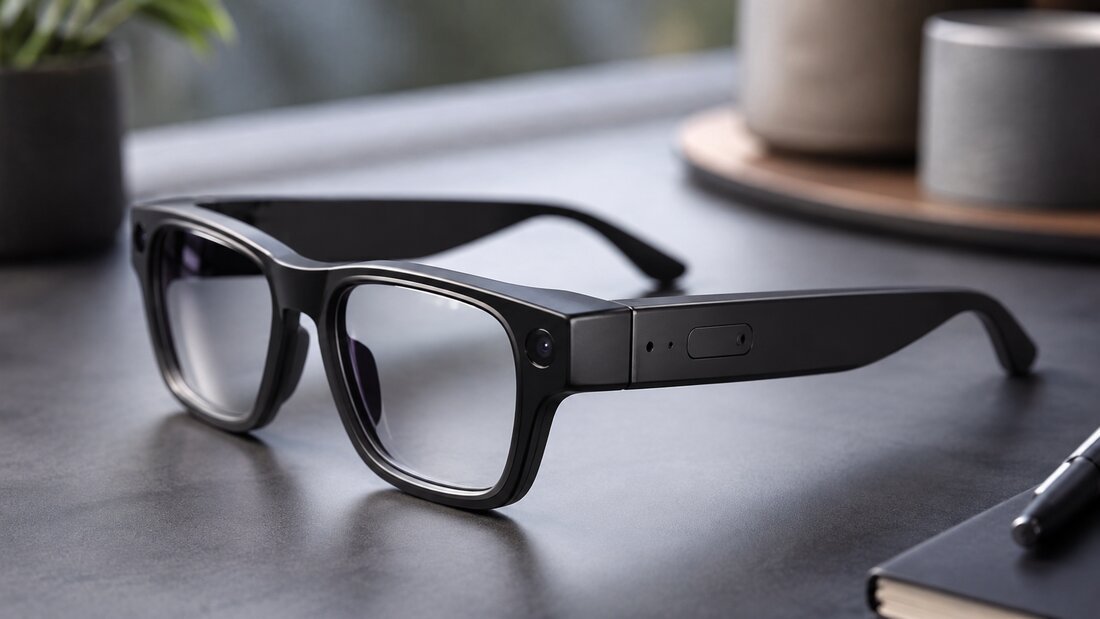
Buyers can also review STAR KING AI Smart Glasses OEM/ODM options to compare product positioning, customization scope, and sample planning.
FAQ
What is the typical MOQ for AI smart glasses from Chinese manufacturers?
MOQs vary by supplier and customization level. For OEM projects, 500–1,000 units is common, while private label orders may start at 200–300 units. Always negotiate based on your long-term volume potential.
Do AI smart glasses for UK retail chains require UKCA marking?
Yes, most electronic products placed on the UK market require UKCA marking. Ensure your supplier provides the necessary test reports and declarations. Verify with a compliance specialist for your specific product.
How long does shipping from China to the UK take for smart glasses?
Shipping time depends on the method: express (3–7 days), air freight (7–14 days), and sea freight (30–45 days). Factor this into your lead time planning.
Can I customize the software of AI smart glasses for my retail chain?
Many suppliers offer SDKs or APIs for custom app development. Discuss your integration needs early to ensure the supplier can support your requirements.
What is the warranty period for AI smart glasses?
Warranty terms vary, but 12–24 months is standard. Clarify what is covered and the repair/replacement process before ordering.
Are there any restrictions on importing AI smart glasses with cameras into the UK?
Yes, products with cameras must comply with UK GDPR and data protection laws. You may need to conduct a DPIA and ensure transparent signage if recording in public areas. Consult legal experts for guidance.
How can I verify the quality of AI smart glasses before placing a bulk order?
Always request samples for hands-on testing. Evaluate build quality, battery life, software performance, and comfort. Also ask for third-party test reports and consider a pre-shipment inspection.
Conclusion
Procuring AI smart glasses for UK retail chains is a strategic decision that requires careful evaluation across multiple dimensions. By focusing on the seven critical decisions outlined in this guide—use case, MOQ and pricing, compliance, battery life, software integration, total landed cost, and after-sales support—you can select a product and partner that deliver long-term value. Remember to request samples, verify certifications, and calculate the full cost of ownership. With the right approach, AI smart glasses can transform your retail operations, enhancing efficiency and customer experience.
Ready to Evaluate AI Smart Glasses for Your Retail Chain?
STAR KING specializes in OEM/ODM AI smart glasses for retail and enterprise clients. We support private label customization, compliance documentation, and flexible MOQs. Request product samples to test performance and integration with your systems. Our team is ready to discuss your specific retail use case and provide a tailored quote.
Discuss Your Smart Wearable OEM/ODM Project
Planning a smart ring, smart watch, smart band, AI glasses, AI translator, or AI voice mouse project? Contact STAR KING to discuss product positioning, sample testing, customization scope, certification requirements, lead time, and quotation details.

Team Star King

Scan WhatsApp QR code
Leave a Reply