
smart watches RFQ: Smart Watches for System Integrators: 7 Critical RFQ Checks for US Projects in 2026
October 26, 2026 · Team Star King

Smart Watches for System Integrators: 7 Critical RFQ Checks for US Projects in 2026
A smart watches RFQ from a US system integrator should specify the exact hardware configuration, firmware and API access model, target-market compliance (FCC, and possibly CE/RoHS depending on deployment), battery and UN38.3 documentation, MOQ and lead-time assumptions, and the acceptance test plan. These seven items determine whether a quoted smart watch can actually be deployed into your enterprise, healthcare, field-service, or education project without integration surprises or customs delays.
Table of Contents
Table of Contents
Short Answer
The best smart watches RFQ is not a shopping list; it is a deployment specification. System integrators should require written confirmation of hardware BOM, firmware customization scope and data access, FCC and battery documentation, sample validation milestones, MOQ tiers, and post-launch spare-parts support before comparing landed cost. Requesting these items early removes most late-stage integration and compliance risk.
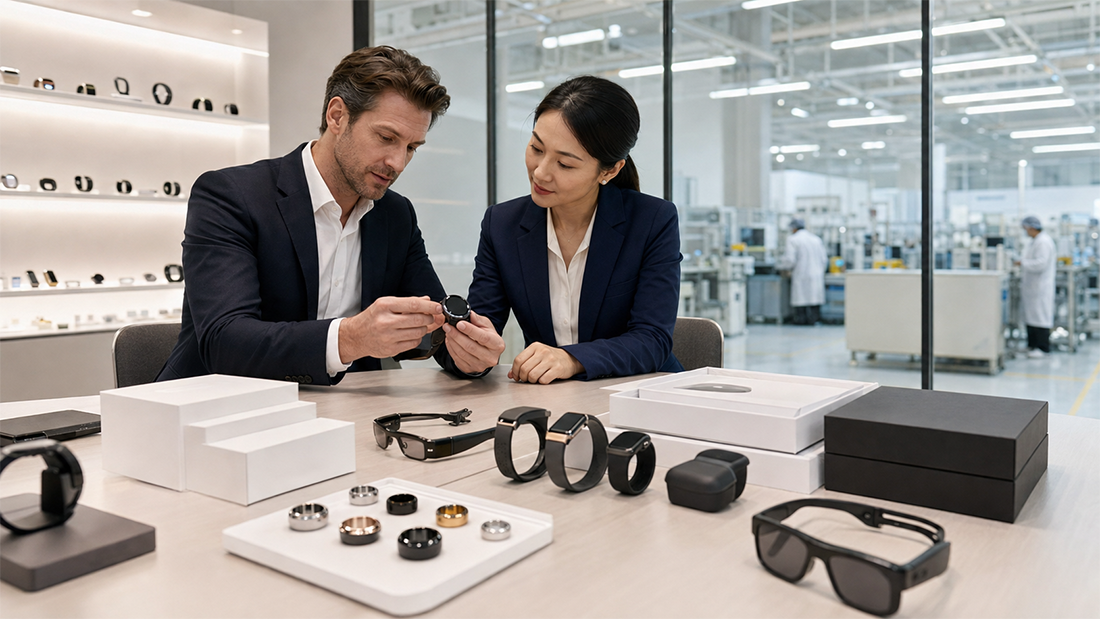
Table of Contents
- Why the Smart Watches RFQ Decides Integration Success
- 1. Define the Hardware and Firmware Scope Before You Ask for Price
- 2. Confirm API, SDK, and Data Access for System Integration
- 3. Qualify FCC and Battery Compliance for US Deployment
- 4. Validate Samples Against Your Real Use Case
- 5. Understand MOQ, Cost Drivers, and Landed Cost
- 6. Lock Down Lead Time and Production Planning
- 7. Plan Customization, Packaging, and Post-Launch Support
- Key Facts for Buyers
- RFQ Comparison Table: Vague vs. Deployment-Ready
- Common Mistakes and Buyer Red Flags
- Practical Buyer Checklist
- FAQ
- Conclusion
Key Takeaways
- A smart watches RFQ should read like an integration specification, not a product wish list.
- Firmware, API, and data access terms are usually more important than the base hardware price.
- FCC and UN38.3 documentation should be confirmed in writing per model and per configuration.
- Sample validation against your real deployment scenario prevents late-stage rework.
- MOQ tiers, tooling ownership, and lead time assumptions must be agreed before the PO.
Why the Smart Watches RFQ Decides Integration Success
System integrators rarely buy smart watches as standalone consumer products. They buy them as a component inside a larger solution: a workforce wellness program, a field-service tracking platform, a patient-engagement pilot, a campus safety deployment, or an education device fleet. That changes the RFQ. The questions you ask at quotation stage determine whether the watch can be provisioned at scale, whether its data can move into your platform, and whether it can clear US import and deployment requirements.
For a broader view of how wearables fit into program deployments, see STAR KING’s health and fitness wearables solutions. Smart watches are one option; smart bands and smart rings may fit other projects. You can compare form factors on the smart watches product page.
1. Define the Hardware and Firmware Scope Before You Ask for Price
A quotation is only meaningful when the hardware BOM and firmware scope are both defined. If your RFQ only says “smart watch with heart rate and GPS,” suppliers will quote different sensors, different display panels, different batteries, and different firmware baselines. The result is not comparable pricing.
What to specify in the hardware scope
- Display size and type, casing material, and strap material.
- Required sensors: heart rate, SpO2, accelerometer, GPS, or others.
- Connectivity: Bluetooth version and whether LTE or Wi-Fi is required.
- Battery capacity target and expected runtime under your use case.
- Water-resistance target and whether it is a marketing claim or a tested rating.
- Required certifications for the US market and any additional markets.
What to specify in the firmware scope
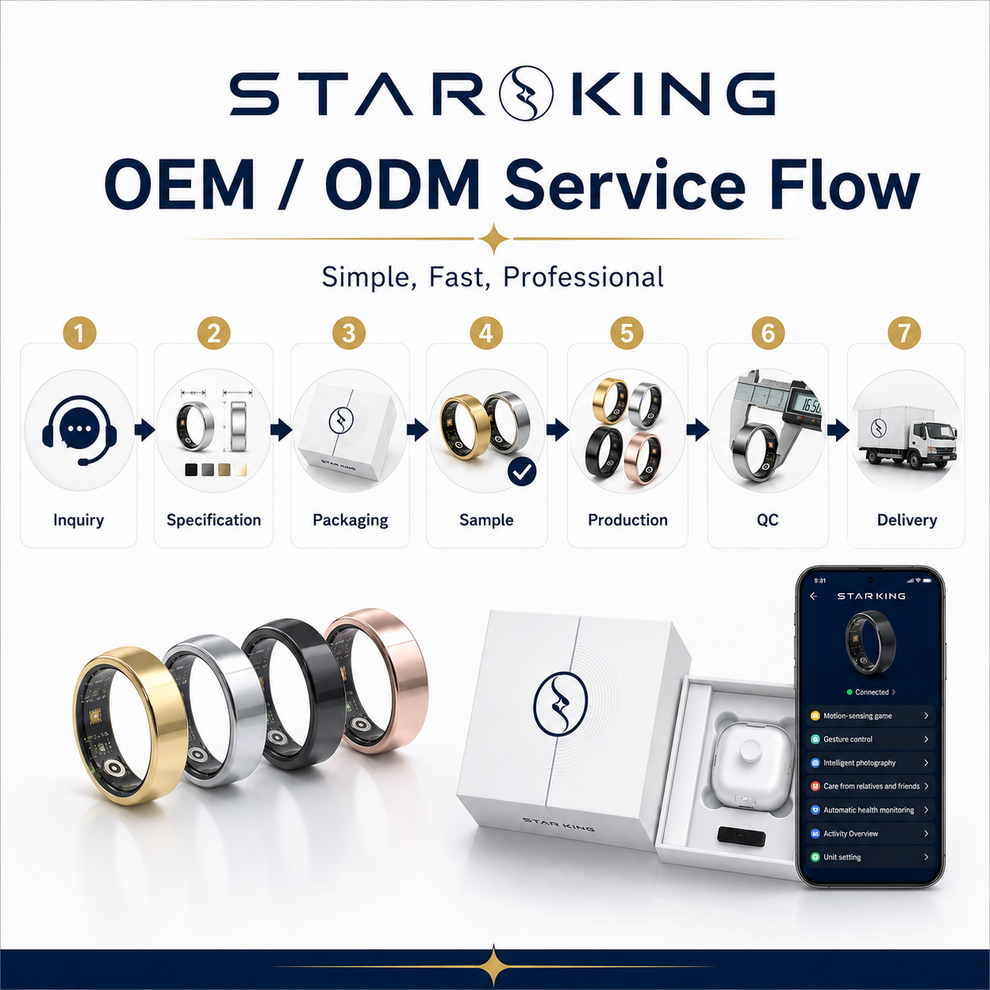
Firmware is where integration projects succeed or fail. Ask whether the supplier can support custom boot behavior, device provisioning, OTA update control, data export formats, and white-label app delivery. STAR KING’s private label and OEM/ODM program covers firmware and app customization, but the exact scope and feasibility depend on the model and must be confirmed per project [STAR KING TO CONFIRM].
For buyers evaluating firmware customization in more detail, STAR KING also publishes related guidance on the resources blog.
2. Confirm API, SDK, and Data Access for System Integration
This is the most common gap in smart watches RFQ documents from system integrators. A watch that works well as a consumer product may not expose the data or provisioning controls your platform needs. Before you request a quote, define the integration model.
Integration models to evaluate
| Integration Model | What the Supplier Provides | Best For | Questions to Ask |
|---|---|---|---|
| White-label companion app | Supplier app rebranded to your brand | Fast pilots, branded retail programs | Can the app name, icon, and onboarding be customized? |
| SDK integration | Software development kit for your app | Enterprise platforms, healthcare programs | Which data fields and device controls are exposed? |
| Cloud/API data export | Server-side API or data export | Dashboards, analytics, remote monitoring | What latency, data format, and access controls apply? |
| Firmware-level customization | Modified device behavior | Specialized deployments | What is the development timeline and cost? |
If your program involves remote patient monitoring or senior health monitoring, see remote health wearables for application context. Note that consumer smart watches are not medical devices, and health monitoring features should not be described as diagnostic unless the product is cleared or approved for that use. Buyers should verify any medical claims against FDA medical device guidance.
3. Qualify FCC and Battery Compliance for US Deployment
Any Bluetooth-enabled smart watch sold or deployed in the United States typically requires FCC equipment authorization. The requirement depends on the radio configuration, so buyers should verify the exact model and frequency bands. The FCC equipment authorization process is the reference point.
What to request in writing
- FCC ID or certification documentation for the exact model and configuration.
- UN38.3 test summary for the lithium battery, since air shipments typically require it. See the IATA Dangerous Goods Regulations for shipping context.
- MSDS for the battery and RoHS documentation if your procurement policy requires it.
- Confirmation of whether accessories, chargers, or packaging inserts introduce additional compliance requirements.
STAR KING can share current certification status per model on request [STAR KING TO CONFIRM]. Do not assume that a certification listed for one model applies to a different configuration; certification scope is model-specific.
4. Validate Samples Against Your Real Use Case
Samples are not a formality. They are the only reliable way to confirm that a smart watch will work in your deployment. Build a sample validation plan before you request the RFQ.
Sample validation plan
- Test battery runtime under your expected usage profile, not the supplier’s marketing scenario.
- Test pairing, provisioning, and OTA update behavior on your target devices and networks.
- Test data export or API integration into a staging version of your platform.
- Test water resistance and drop resistance under conditions that reflect your users.
- Document any firmware bugs and agree on a resolution timeline before mass production.
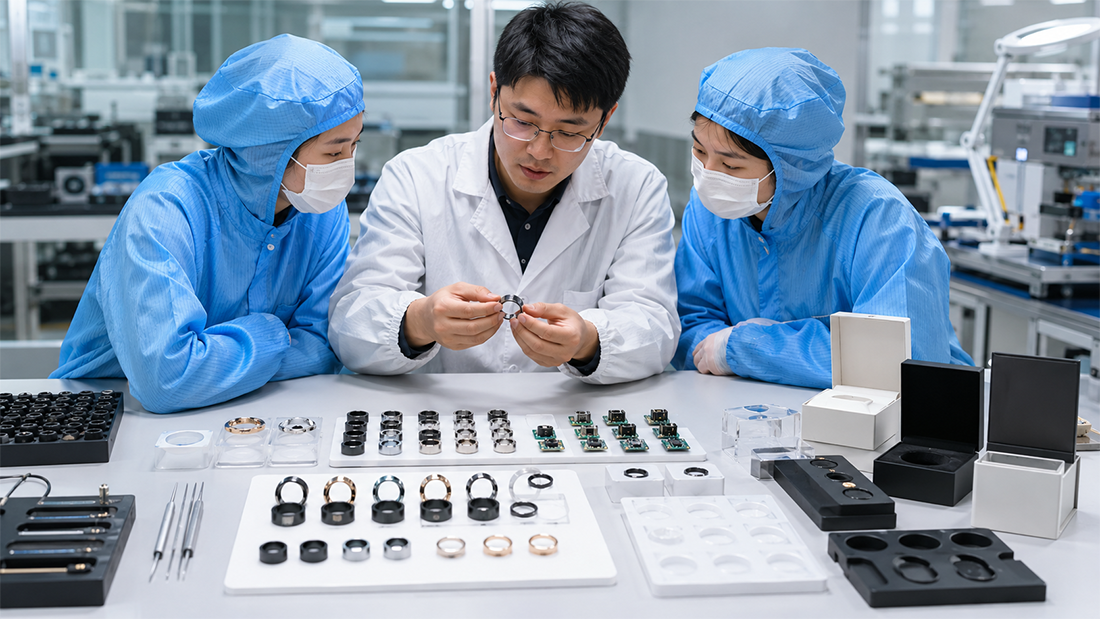
STAR KING’s smart bands and smart watches can be sampled together if your project needs multiple form factors. During sample evaluation, a soft next step is to compare the sample findings against the quotation assumptions so that any spec changes are priced before the PO.
5. Understand MOQ, Cost Drivers, and Landed Cost
For system integrators, MOQ is usually driven by project rollout size, not retail sell-through. That is why MOQ should be discussed as tiers rather than a single number. STAR KING’s specific MOQ per model and per customization level is [STAR KING TO CONFIRM].
Cost drivers to clarify in the RFQ
| Cost Driver | Why It Matters | What to Ask |
|---|---|---|
| Hardware configuration | Sensor, display, and battery choices change unit cost | Which BOM options are fixed vs. optional? |
| Firmware/app customization | Development effort is often one-time and project-specific | Is the NRE cost included or separate? |
| Tooling | Custom casings or straps may require molds | Who owns the tooling and what is the amortization model? |
| Packaging and branding | Retail and enterprise packaging differ | What is the MOQ for custom packaging? |
| Logistics and duties | Landed cost often differs from FOB price | What Incoterm and shipping mode are quoted? |
For a broader cost framing, refer to STAR KING’s smart retail and e-commerce solutions if your project includes retail distribution.
6. Lock Down Lead Time and Production Planning
Lead time in a system integration project has two parts: sample and approval time, and mass production time. Both should be written into the RFQ response. Ask for a milestone schedule covering sample delivery, sample approval, firmware freeze, pre-production approval, mass production, and shipping. Request that the supplier state assumptions about component availability and any Chinese New Year or holiday impact. STAR KING’s typical lead time for smart watch projects is [STAR KING TO CONFIRM].
If your deployment involves vehicle, logistics, or field-service use cases, see vehicle and logistics safety solutions for application-specific planning notes.
7. Plan Customization, Packaging, and Post-Launch Support
System integrators often need logo customization, custom packaging, and a defined spare-parts and warranty process. These should be in the RFQ, not added after the PO.
Customization and support items
- Logo placement on the device, strap, and packaging.
- Packaging artwork, inserts, and language requirements.
- Accessory kit contents such as chargers and cables.
- Warranty terms and RMA process.
- Spare-parts availability and reorder lead time.
- Ownership of tooling and custom firmware.
Discussing these items early is not a hard sell; it is how a pilot becomes a deployable program. STAR KING can review customization options against your project scope [STAR KING TO CONFIRM].
Key Facts for Buyers
| RFQ Item | Why It Matters for US System Integrators | Evidence to Request |
|---|---|---|
| Hardware BOM | Comparable quotes require comparable specs | Written BOM per model |
| Firmware/API access | Determines whether data moves into your platform | SDK/API documentation or written scope |
| FCC and battery compliance | Required for US deployment and shipping | FCC ID, UN38.3 summary, MSDS |
| Sample validation | Confirms real-world performance | Sample test plan and results |
| MOQ and cost drivers | Aligns quotation to rollout plan | Tiered pricing and NRE breakdown |
| Lead time | Protects deployment schedule | Milestone schedule |
| Post-launch support | Reduces program risk | Warranty, RMA, spare-parts terms |
RFQ Comparison Table: Vague vs. Deployment-Ready
| RFQ Element | Vague RFQ | Deployment-Ready RFQ |
|---|---|---|
| Product definition | “Smart watch with health sensors” | Specific BOM, sensor list, display, battery, connectivity |
| Software | “Can we get an app?” | Defined SDK/API model, data fields, provisioning method |
| Compliance | “Is it certified?” | FCC ID per model, UN38.3 summary, MSDS, RoHS if required |
| Samples | “Send one sample” | Sample test plan with acceptance criteria |
| Pricing | “What is the unit price?” | Tiered pricing, NRE, tooling, packaging, Incoterm |
| Schedule | “How long?” | Milestone schedule with assumptions |
Common Mistakes and Buyer Red Flags
- No written firmware scope. If the supplier cannot describe API or firmware customization in writing, plan for integration risk.
- Assuming one certification covers all models. Certifications are model-specific; verify the exact configuration.
- Comparing FOB prices only. Landed cost includes freight, duties, and compliance costs.
- Skipping sample validation. Pilots fail when samples are not tested against real user scenarios.
- No spare-parts plan. Long deployments need replacement units and accessories.
- Unclear tooling ownership. Custom molds and firmware should be owned or licensed explicitly.
- Health claims that exceed the product. Consumer wearables should not be presented as diagnostic tools unless cleared or approved for that use.
Practical Buyer Checklist
- Have I written a hardware BOM with sensors, display, battery, and connectivity?
- Have I defined the firmware, SDK, or API model my platform needs?
- Have I requested FCC ID, UN38.3, MSDS, and RoHS documentation per model?
- Have I built a sample validation plan with acceptance criteria?
- Have I asked for MOQ tiers and an NRE/tooling breakdown?
- Have I requested a milestone schedule with production assumptions?
- Have I confirmed warranty, RMA, and spare-parts terms?
- Have I clarified packaging, logo, and accessory customization?
FAQ
What should a smart watches RFQ include for a US system integration project?
Include a hardware BOM, firmware/API scope, FCC and battery documentation requirements, sample validation plan, MOQ tiers, lead-time assumptions, and post-launch support terms. This lets suppliers quote comparable, deployable configurations.
Do smart watches need FCC certification for US deployment?
Bluetooth-enabled smart watches typically require FCC equipment authorization in the United States. The exact requirement depends on the radio configuration, so buyers should verify the model and request the FCC ID or certification documentation.
Can I integrate smart watches with my own platform?
Integration depends on the supplier’s firmware and software model. Options include white-label apps, SDKs, cloud APIs, or firmware-level customization. Confirm data fields, latency, and provisioning behavior before the PO.
What MOQ should a system integrator expect for smart watches?
MOQ depends on the model, customization level, and packaging. Ask for tiered pricing rather than a single number, and separate NRE or tooling costs from unit price. STAR KING’s MOQ for specific models is [STAR KING TO CONFIRM].
What documentation is needed for lithium battery shipping?
Air shipments of lithium battery devices typically require a UN38.3 test summary and MSDS. Buyers should confirm documentation with the supplier and with their freight forwarder before booking.
How long does sample approval and mass production take?
Timelines vary by model and customization scope. Request a milestone schedule covering sample delivery, approval, firmware freeze, pre-production approval, mass production, and shipping. STAR KING’s typical schedule is [STAR KING TO CONFIRM].
Conclusion
A smart watches RFQ is a deployment specification. For US system integrators, the difference between a smooth rollout and a delayed project usually comes down to firmware access, compliance documentation, sample validation, and clear commercial terms. Build these into the RFQ, compare suppliers against the same checklist, and keep written records of every assumption. That is how a wearable pilot becomes a reliable program.
STAR KING CTA
Ready to move from RFQ to a deployable smart watch program? Request a quotation from STAR KING and share your hardware, firmware, compliance, and rollout requirements. Our team can help you compare configurations, confirm certification documentation per model, and plan samples for your US project.
Discuss Your Smart Wearable OEM/ODM Project
Planning a smart ring, smart watch, smart band, AI glasses, AI translator, or AI voice mouse project? Contact STAR KING to discuss product positioning, sample testing, customization scope, certification requirements, lead time, and quotation details.

Team Star King

Scan WhatsApp QR code
Leave a Reply