
AI voice mouse sourcing: 7 Critical Checks for Sourcing an AI Voice Mouse for Middle East Startup Brands in 2026
October 26, 2026 · Team Star King
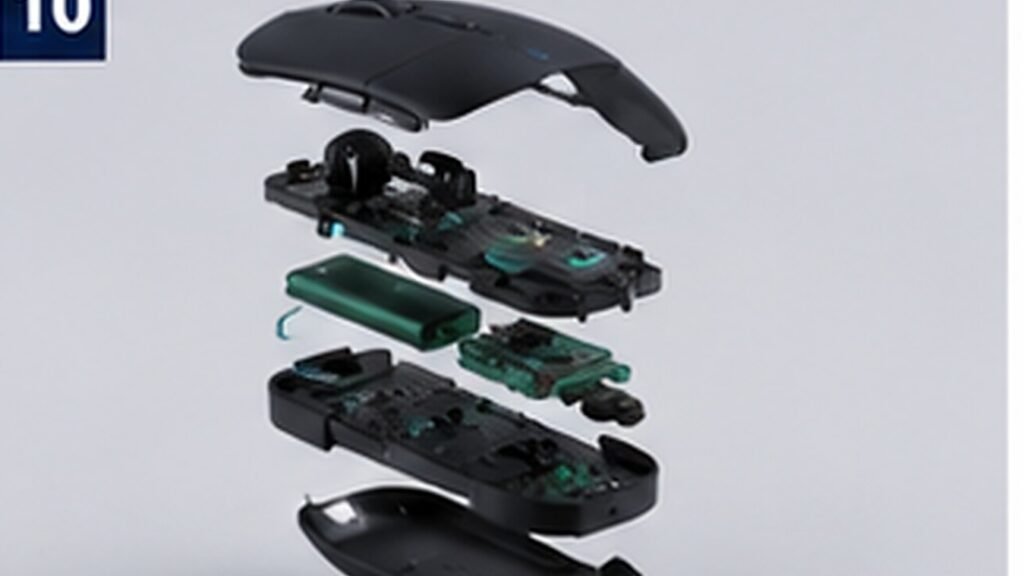
7 Critical Checks for Sourcing an AI Voice Mouse for Middle East Startup Brands in 2026
AI voice mouse sourcing for Middle East startup brands comes down to seven checks: Arabic voice accuracy, offline versus cloud processing, OEM/ODM flexibility, MOQ and tooling cost, testable quality control, GCC-targeted compliance documents, and true landed cost. Get these right and you can launch a differentiated smart office accessory without overcommitting capital. Skip them and you risk returns, certification delays, and a product that fails in real Gulf office environments.
Table of Contents
Table of Contents
Table of Contents
- Short Answer
- Key Takeaways
- Key Facts for Buyers
- What Is an AI Voice Mouse and Why It Matters in the Gulf
- Check 1: Arabic and Multilingual Voice Accuracy
- Check 2: Offline vs Cloud Voice Processing
- Check 3: OEM, ODM or Private Label Readiness
- Check 4: MOQ, Tooling Cost and Lead Time
- Check 5: Quality Control and Sample Testing
- Check 6: Compliance for GCC Target Markets
- Check 7: Landed Cost, Warranty and After-Sales
- Comparison Table: Supplier Types
- Common Mistakes and Buyer Red Flags
- Practical Buyer Checklist
- FAQ
- Conclusion

Short Answer
For a Middle East startup brand, the best AI voice mouse supplier is one that can demonstrate working Arabic speech recognition, offers flexible OEM or private label options at startup-friendly MOQs, and can supply the compliance documents your target GCC market requires. Evaluate suppliers on testable performance and paperwork, not on brochure claims.
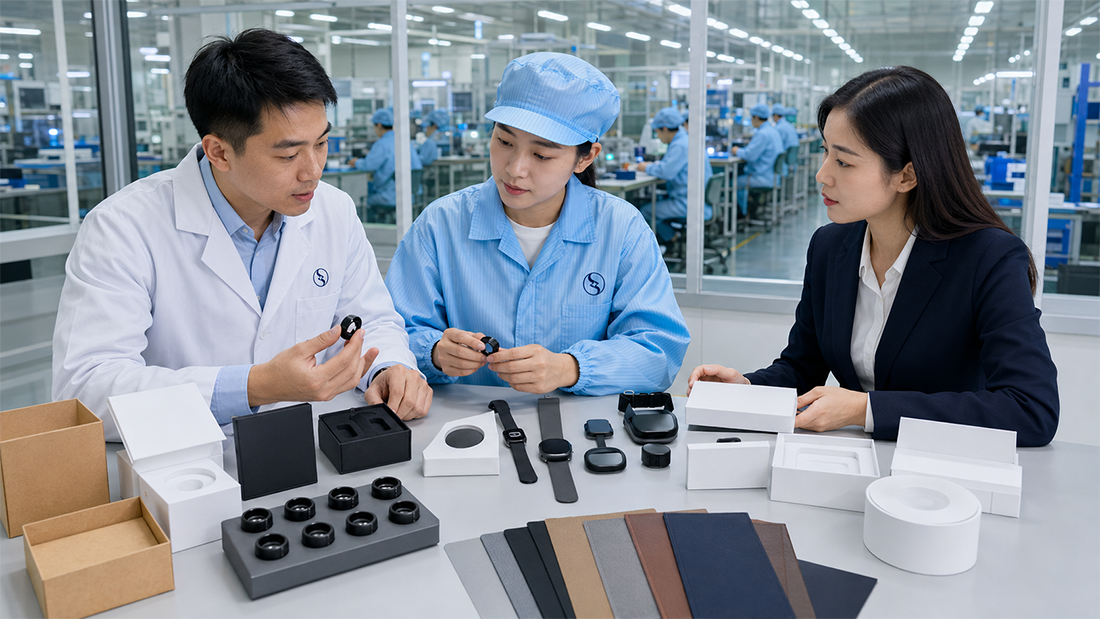
Key Takeaways
- Arabic voice accuracy is the single most important performance factor for Gulf markets; demand a live demo, not a spec sheet.
- Decide early whether offline voice processing or cloud-based processing fits your privacy, connectivity, and cost model.
- Startup brands should look for ODM base models with logo, packaging, and app-level customization rather than full custom tooling.
- MOQ, tooling fees, and lead time are negotiable but depend on customization depth; plan 8–14 weeks end to end for many projects.
- Compliance requirements differ by GCC country; confirm with your importer or authority which certificates apply.
- Build a total landed cost model that includes freight, duties, VAT, and warranty reserves before setting retail price.
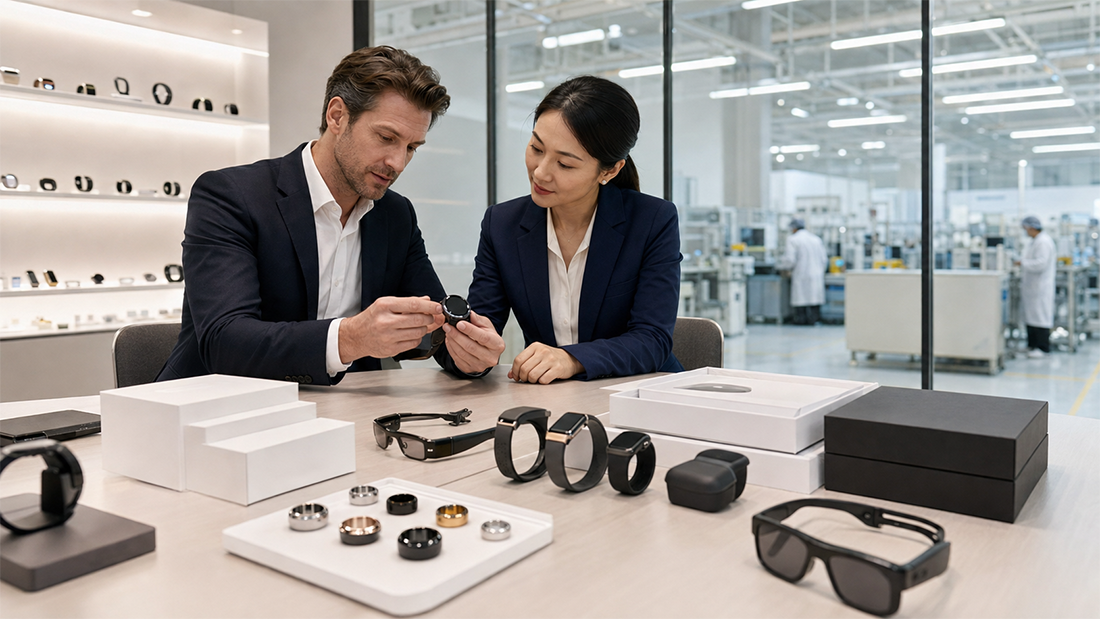
Key Facts for Buyers
| Item | Typical Range or Consideration | Why It Matters |
|---|---|---|
| Supported languages | Varies by model; Arabic support must be verified | Determines usability in UAE, Saudi Arabia, and wider GCC |
| Voice processing | Offline, cloud, or hybrid | Affects privacy, latency, and data cost |
| MOQ (private label) | Typically depends on model and customization; ask for exact figures | Defines startup cash exposure |
| Tooling cost (custom housing) | Quoted per project | Only justified for proven volume |
| Sample lead time | Often 1–3 weeks for standard samples | Enables real user testing before commitment |
| Mass production lead time | Often 4–8 weeks after sample approval | Affects launch timing |
| Compliance documents | CE, FCC, RoHS, UN38.3, MSDS may apply depending on configuration and market | Required for customs and retail listing |
| Warranty | Negotiable; typically 12 months | Protects brand reputation |
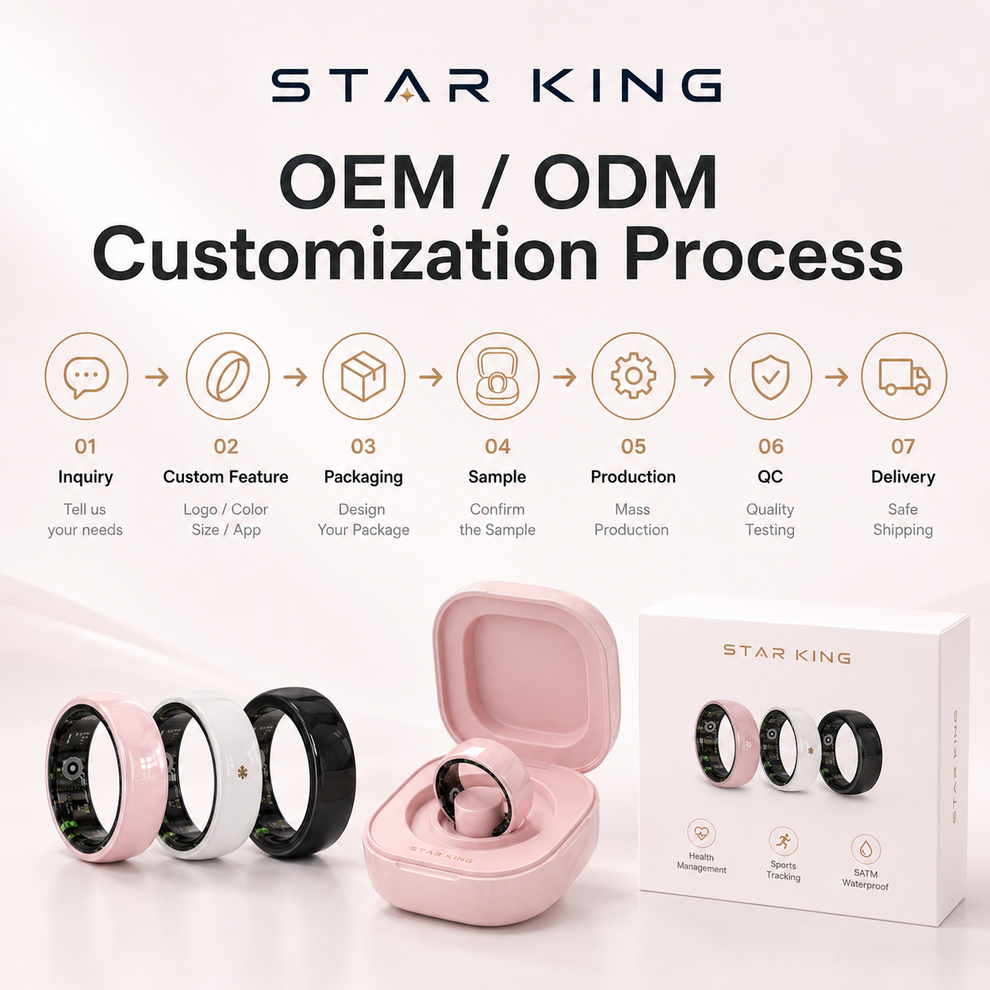
What Is an AI Voice Mouse and Why It Matters in the Gulf
An AI voice mouse is a computer mouse with an integrated microphone and voice-processing firmware or software that converts speech into text, commands, or translated output. Buyers should evaluate it as two products in one: a reliable pointing device and a voice input system whose accuracy, language coverage, and privacy model determine real-world value.
In Middle East office environments, the value proposition is practical. Professionals work across Arabic and English daily, often switching languages mid-sentence. A voice mouse that handles code-switching, dictation, and translation can reduce typing time for reports, emails, and meeting notes. Government and enterprise digitization programs across the GCC have pushed smart office adoption, and startup brands that position a bilingual productivity device well can capture demand from corporate procurement teams and e-commerce buyers alike.
For a startup brand, the product also fits a clean go-to-market story: a compact, giftable, tech-forward accessory for corporate wellness and productivity programs, education technology bundles, and Amazon-style retail listings. The sourcing decision therefore is not just about a component; it is about whether a manufacturer can support your brand story, your language requirements, and your compliance path.
Check 1: Arabic and Multilingual Voice Accuracy
Voice accuracy is the first filter. Ask the supplier for a live demonstration using Gulf Arabic and Modern Standard Arabic, plus English, in a normal office environment with background noise. A pre-recorded demo is not enough.
What to test
- Dictation of a 100-word Arabic paragraph; measure word error rate informally.
- Code-switching, for example an Arabic sentence containing English technical terms.
- Command recognition for common actions like opening apps or sending messages.
- Performance with different accents, including Egyptian, Levantine, and Gulf speakers.
Ask which speech engine the device uses and whether Arabic is officially supported or added through third-party software. If the supplier cannot explain the language architecture, treat that as a warning sign. For context on global voice and language standards, the W3C speech synthesis guidance is a useful reference for how voice interfaces are specified.
Check 2: Offline vs Cloud Voice Processing
Whether the AI voice mouse processes speech on-device or in the cloud changes privacy, latency, cost, and usability. Buyers should evaluate the trade-off against their target customers.
| Model | Advantages | Limitations | Best Fit |
|---|---|---|---|
| Offline (on-device) | Works without internet; stronger privacy story; no per-use cloud cost | Limited vocabulary and language packs; larger firmware | Government, education, privacy-sensitive offices |
| Cloud-based | Higher accuracy; frequent language updates; advanced translation | Requires connectivity; data residency questions; subscription risk | General office and consumer retail |
| Hybrid | Balances privacy and accuracy | More complex app integration and testing | Brands targeting multiple segments |
For Gulf buyers, data residency and privacy expectations are rising, especially in government and healthcare-adjacent procurement. If your voice mouse sends audio to a cloud service, clarify where data is stored and whether an enterprise tier can keep data in-region. For secure device design principles, the NIST Cybersecurity Framework offers a recognized reference for risk thinking.
Check 3: OEM, ODM or Private Label Readiness
Most startup brands should begin with ODM or private label rather than full custom development. The question is how deep the customization goes and whether the manufacturer can support it without long tooling cycles.
Customization levels to compare
- Logo and packaging: Lowest cost, fastest to market, suitable for first launch.
- App and firmware customization: Custom onboarding screens, language defaults, and branding in the companion app; requires software resources from the supplier.
- Hardware modification: Button layout, colorways, or housing changes; may require tooling and higher MOQ.
- Full custom design: Industrial design and tooling from scratch; typically justified only with confirmed volume.
Ask whether the supplier offers private label OEM/ODM support with documented deliverables at each level. A manufacturer that can show an existing AI voice mouse platform and a clear customization menu is easier to evaluate than one promising everything.
If you are comparing shortlisted suppliers, request the same sample configuration from each and test them side by side before negotiating volume pricing.
Check 4: MOQ, Tooling Cost and Lead Time
MOQ is where many startup plans break. Suppliers set MOQ based on component sourcing, production line setup, and customization depth. A private label run with only logo and packaging changes typically has a lower MOQ than a project with custom housing and firmware.
How to plan
- Ask for MOQ per SKU and per customization level in writing.
- Clarify whether tooling fees are one-time, refundable against volume, or shared.
- Confirm sample lead time, production lead time, and shipping lead time separately.
- Plan a buffer for Chinese New Year and major holiday periods.
For a startup brand, a phased approach works well: launch with a standard ODM model in branded packaging, validate sell-through, then invest in deeper customization. This keeps initial capital low while preserving the option to scale.
Check 5: Quality Control and Sample Testing
Quality control for a voice mouse covers more than appearance. Buyers should ask how the supplier tests microphone sensitivity, button life, wireless stability, battery safety, and voice recognition under noise.
Tests to request or verify
- Aging and burn-in testing for electronics.
- Button and scroll wheel cycle testing.
- Drop testing for retail packaging and device durability.
- Battery safety testing appropriate to the cell chemistry.
- Functional voice tests in Arabic and English.
- Pre-shipment inspection with a written report.
Ask for a sample inspection report and, if possible, a third-party test report. For battery-powered devices, the IATA Dangerous Goods Regulations are relevant when shipping lithium batteries internationally.
Check 6: Compliance for GCC Target Markets
Compliance requirements for an AI voice mouse depend on its configuration and the country of sale. Buyers should verify requirements with their importer, retailer, or local authority rather than assuming a single certificate covers the GCC.
Documents commonly discussed
- CE and RoHS for EU-origin expectations and many retail listings.
- FCC for US market references, often requested by marketplace sellers.
- UN38.3 and MSDS for lithium battery shipping.
- Local registration or labeling requirements in the target GCC country.
Ask the supplier which certificates exist for the exact model and configuration you are buying, and request copies with matching model numbers. If a supplier claims broad certification without model-level documentation, treat the claim cautiously. For radio and wireless products, the FCC wireless device guidance is a useful reference for how equipment authorization works in the US, even if your primary market is the Middle East.
Check 7: Landed Cost, Warranty and After-Sales
Startup brands often underprice because they compare factory unit price to retail price and ignore freight, duties, VAT, payment fees, and returns. Build a landed cost model before committing.
Cost lines to include
- Unit price at agreed MOQ.
- Tooling and sample amortization.
- Freight and insurance.
- Import duties and VAT in the destination country.
- Marketplace or distributor margin.
- Warranty reserve and spare parts.
Warranty terms should be in writing: duration, what is covered, who pays return freight, and how replacements are handled. Ask whether spare units or parts can be included in the first order. A supplier that supports a straightforward RMA process reduces the operational load on a small team.
Comparison Table: Supplier Types for AI Voice Mouse Sourcing
| Supplier Type | Strengths | Risks | Best For |
|---|---|---|---|
| Trading company | Wide catalog, easy communication | Less control over production and customization | Small trial orders |
| ODM manufacturer | Existing platforms, customization options, engineering support | Customization menu may be limited to certain models | Startup brands launching a branded product |
| Full OEM factory | Deep customization and tooling | Higher MOQ and cost; longer development | Brands with confirmed volume |
Common Mistakes and Buyer Red Flags
Common mistakes
- Choosing on unit price alone and ignoring freight, duties, and returns.
- Accepting a recorded demo instead of testing Arabic voice accuracy live.
- Ordering custom tooling before validating sell-through.
- Assuming one certificate covers all GCC markets.
- Ignoring app and firmware support requirements for language updates.
Red flags
- Supplier cannot name the speech engine or explain language support.
- Certificates are offered without matching model numbers.
- MOQ and lead time answers change between conversations.
- No clear warranty or spare parts policy.
- Pressure to pay in full before samples are approved.
Practical Buyer Checklist
- Live Arabic and English voice demo completed.
- Offline/cloud architecture and data location confirmed.
- Customization level and deliverables documented.
- MOQ, tooling, and lead times in writing.
- Sample tested by real users in the target market.
- Quality control and inspection process reviewed.
- Certificates requested for the exact model.
- Landed cost model built with duties and VAT.
- Warranty and RMA terms agreed.
- Payment terms protect the sample approval stage.
Buyers can also review STAR KING AI Voice Mouse OEM/ODM options to compare product positioning, customization scope, and sample planning.
FAQ
What is a realistic MOQ for a private label AI voice mouse?
It typically depends on the model and customization level. Logo and packaging changes usually have a lower MOQ than firmware or housing changes. Ask for MOQ per configuration in writing.
Does the AI voice mouse support Arabic out of the box?
Support varies by model and firmware. Confirm with a live demo and ask whether Arabic is native or added through software. Do not rely on brochure language lists alone.
Which certifications do I need for GCC markets?
Requirements depend on the country and product configuration. CE, RoHS, UN38.3, and MSDS are commonly requested for documentation and shipping, while local market requirements should be verified with your importer or authority.
Can I customize the companion app?
Many ODM suppliers offer app-level customization such as branding, onboarding screens, and default language. Scope and cost depend on the supplier’s software resources.
How long does production take after sample approval?
Mass production often takes several weeks after sample approval, with additional time for shipping. Plan a buffer and confirm lead times separately for samples, production, and freight.
Should a startup brand choose OEM or ODM?
ODM is usually the lower-risk path for a first launch because it uses an existing platform. Full OEM makes sense once volume and product differentiation are proven.
Conclusion
AI voice mouse sourcing for Middle East startup brands succeeds when the evaluation is structured. Test Arabic voice accuracy, understand the processing model, choose a customization level that matches your capital, confirm MOQ and lead times, verify quality control, request model-level compliance documents, and build a realistic landed cost model. Each check reduces a specific risk, and together they turn a broad supplier search into a defensible procurement decision.
Next Step
Ready to evaluate a sample? Request product samples and test Arabic and English voice performance against your own use case, or contact STAR KING to discuss an OEM/ODM project for your market.
Discuss Your Smart Wearable OEM/ODM Project
Planning a smart ring, smart watch, smart band, AI glasses, AI translator, or AI voice mouse project? Contact STAR KING to discuss product positioning, sample testing, customization scope, certification requirements, lead time, and quotation details.

Team Star King

Scan WhatsApp QR code
Leave a Reply