
Smart Watches for Startup Brands: 7 Critical Checks Before You Place a Private Label Order
October 22, 2026 · Team Star King
Smart Watches for Startup Brands: 7 Critical Checks Before You Place a Private Label Order
Smart watches for startup brands usually succeed or fail on seven procurement checks: MOQ flexibility, sample validation, firmware and app ownership, FCC and battery compliance, packaging customization, lead-time planning, and landed cost. For a US launch, buyers should confirm each item in writing before paying a tooling deposit or issuing a purchase order. This guide explains how startup brands can evaluate an OEM/ODM partner, what to test in samples, and which red flags should stop a deal.
Table of Contents
Table of Contents
smart watches for startup brands: Table of Contents
- Short Answer
- Key Takeaways
- Key Facts for Buyers
- 1. Define the Product Before Talking Price
- 2. Choose OEM, ODM, or Private Label
- 3. Validate Samples and Firmware
- 4. Plan MOQ, Cost, and Landed Price
- 5. Confirm Certification and Battery Compliance
- 6. Lock Packaging, Branding, and Tooling Ownership
- 7. Verify Lead Times, Inspection, and After-Sales
- Comparison Table: OEM vs ODM vs Private Label
- Common Mistakes and Buyer Red Flags
- Practical Buyer Checklist
- FAQ
- Conclusion

Short Answer
Startup brands buying smart watches for the US market should validate samples, confirm MOQ and landed cost, verify FCC and lithium-battery documentation, and secure written terms for firmware, app, packaging, and tooling ownership. A structured seven-check process reduces launch risk and keeps the first purchase order within budget.
Key Takeaways
- Define use case, sensors, display, and battery life before requesting quotes.
- ODM platforms shorten development; OEM projects offer more differentiation but need higher budgets and longer timelines.
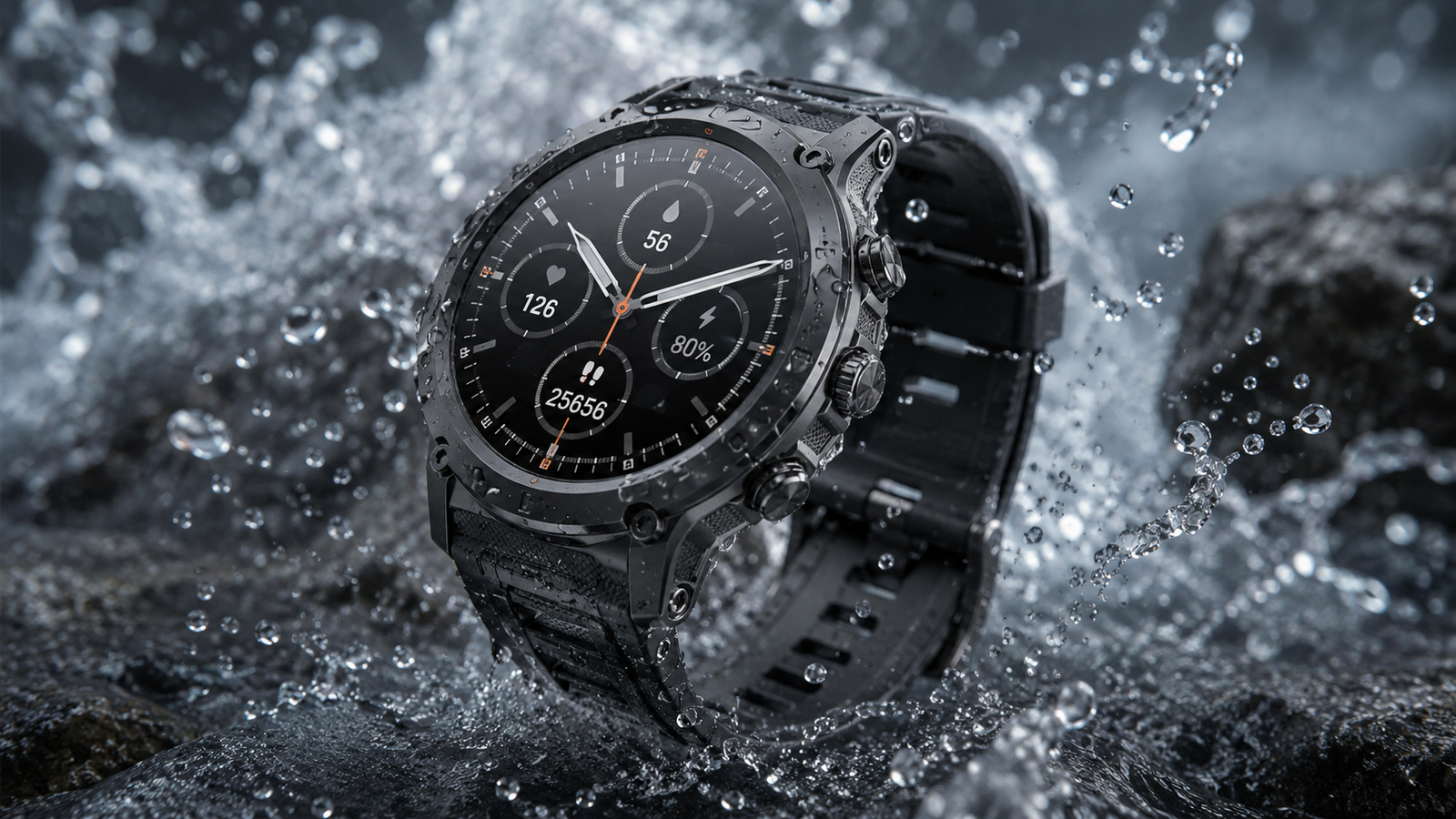
- Test at least two sample units across battery, sensors, Bluetooth pairing, app stability, and water resistance.
- MOQ, tooling, packaging, and certification drive landed cost more than unit price alone.
- FCC, CE, RoHS, UN38.3, and MSDS requirements depend on product configuration and destination market; buyers should verify.
- Written terms for firmware, app customization, mold ownership, and spare parts protect the brand long term.

Key Facts for Buyers
| Item | Typical Startup Consideration | What to Confirm |
|---|---|---|
| MOQ | Often tiered by model and customization level | MOQ per color, per SKU, and for logo/packaging changes [STAR KING TO CONFIRM] |
| Sample lead time | Stock samples faster than customized samples | Sample fee, courier cost, and refund policy [STAR KING TO CONFIRM] |
| Production lead time | Depends on components, customization, and order volume | Written schedule with milestones [STAR KING TO CONFIRM] |
| Certification | Market- and configuration-specific | FCC, CE, RoHS, UN38.3, MSDS status by model [STAR KING TO CONFIRM] |
| Software | ODM app or custom app | Data ownership, API access, update responsibility |
| Packaging | Private label retail box | Artwork files, proofing, and packaging MOQ |
| Warranty | Typically 12 months, varies by contract | Defect rate, RMA process, spare parts |
1. Define the Product Before Talking Price
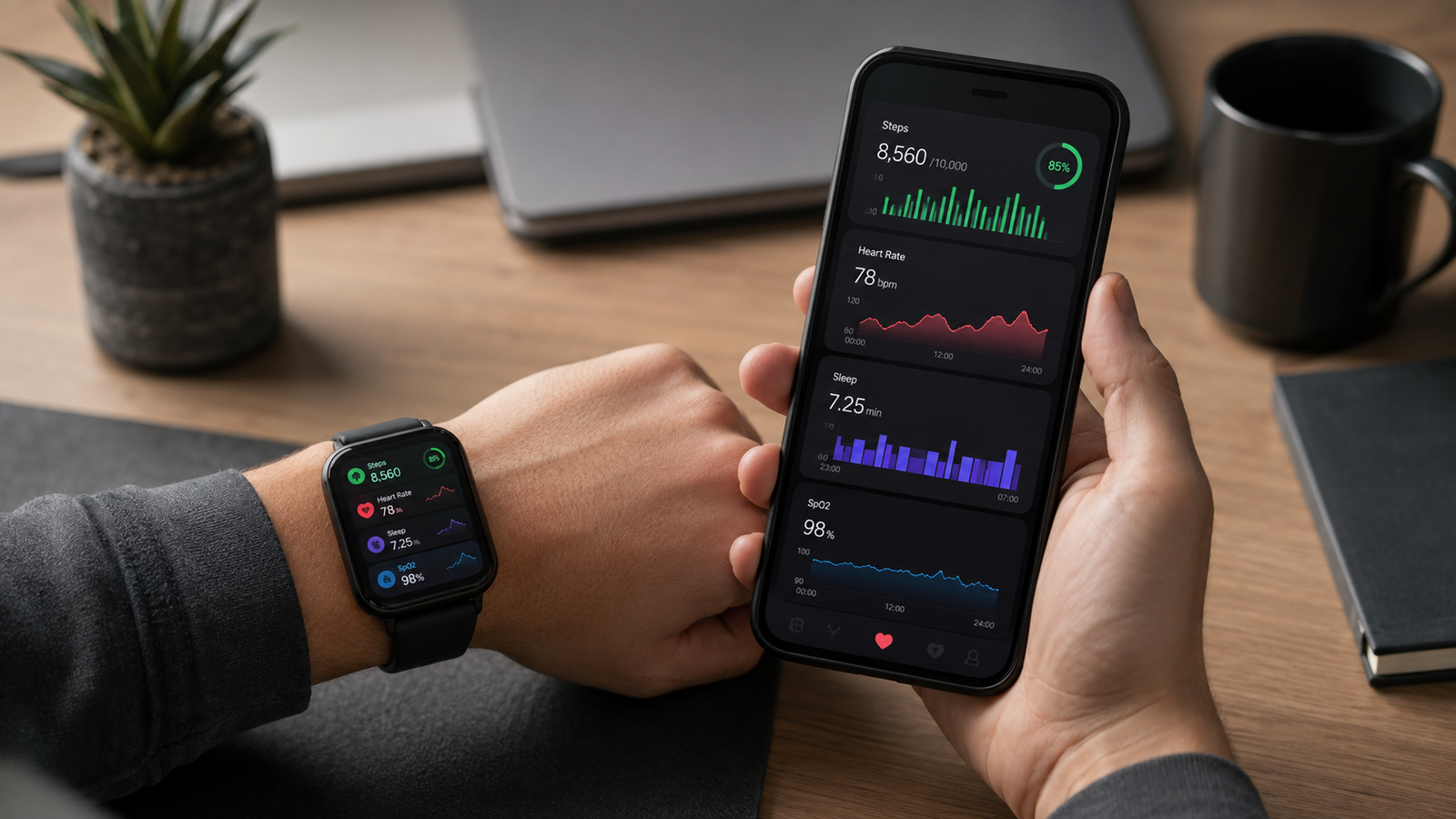
Smart watches for startup brands are often sold on a clear use case: fitness tracking, sleep insights, notifications, or a specific audience such as corporate wellness or senior monitoring. Before requesting quotes, write a short specification covering display size and type, case material, battery target, sensors, Bluetooth version, app platform, water resistance, and language support. Include target retail price and expected first-order volume. Suppliers can quote faster and more accurately when these inputs are fixed.
Buyers should also decide which features are mandatory and which are negotiable. Heart rate and blood oxygen monitoring are common consumer features, but they are not medical diagnostics and should not be marketed as such. If the product will be positioned for health use, confirm the regulatory boundaries with a compliance advisor. For broader wearable options, review the smart watches product range and compare form factors before shortlisting models.
2. Choose OEM, ODM, or Private Label
Startup brands typically choose among three sourcing models. Private label uses an existing product with logo, packaging, and app skin changes. ODM uses a supplier platform with selected hardware and firmware modifications. OEM involves custom industrial design, tooling, and firmware development. Each model changes MOQ, cost, timeline, and risk.
When ODM Fits a Startup
ODM is usually the fastest path for a first launch. The supplier already has tested hardware, firmware, and an app. Customization focuses on branding, packaging, language, and selected features. This reduces tooling cost and shortens validation.
When OEM Makes Sense
OEM suits brands with a clear differentiation strategy and a budget for industrial design, tooling, and firmware development. Expect longer timelines and higher upfront cost. Confirm who owns the tooling and design files. For a structured comparison, see the private label OEM/ODM solution.
A soft conversion step here: if you already have a target retail price and volume estimate, sharing them with a supplier early helps narrow the model and customization scope.
3. Validate Samples and Firmware
Sample testing is the most important purchase-stage activity. Request at least two units and test them over several days. Check battery drain during normal use and standby, sensor accuracy against a known reference, Bluetooth pairing stability, app onboarding, notification reliability, touch responsiveness, and water resistance claims. Photograph and log results.
Firmware and app quality often decide review scores after launch. Ask how firmware updates are delivered, who maintains the app, whether an API is available, and how user data is handled. If the app is supplier-owned, confirm branding options and long-term support terms. Testing guidance for wearable electronics should align with recognized standards such as IEC safety and testing frameworks.
4. Plan MOQ, Cost, and Landed Price
Unit price is only one part of landed cost. Startup brands should model product cost, logo and packaging customization, tooling, certification testing, freight, duties, payment fees, and expected defect allowance. Ask for quotations to be broken down by component and service so you can compare suppliers fairly.
MOQ is often negotiable by combining colors or SKUs within one production run. Confirm whether MOQ applies per model, per color, or per packaging version. Also confirm sampling fees and whether they are credited against the first bulk order. For cost planning, compare quotes using a simple landed-cost sheet rather than unit price alone.
5. Confirm Certification and Battery Compliance
US-market smart watches typically require attention to FCC rules for intentional and unintentional radiators, and lithium-battery shipping rules. Other requirements may apply depending on product configuration and claims. Buyers should verify certification status by model and request documents before shipment.
Key documents include FCC test reports and equipment authorization where applicable, UN38.3 test summaries for lithium batteries, MSDS for battery cells, and RoHS declarations. If the product includes health or fitness claims, review whether separate regulatory advice is needed. Official references include the FCC equipment authorization pages and the FDA guidance on general wellness products. Certification requirements depend on the final product and target market, so buyers should verify with a qualified compliance partner.
6. Lock Packaging, Branding, and Tooling Ownership
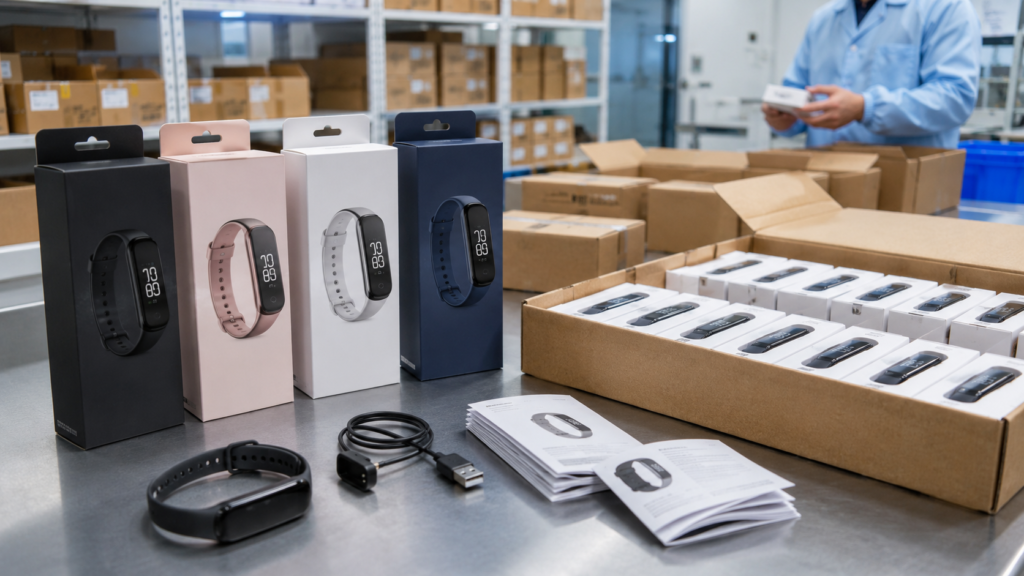
Private label packaging shapes perceived value and retail readiness. Confirm artwork specifications, proofing rounds, retail box MOQ, manual languages, and accessory content. Ask who owns packaging artwork files and whether they are released to you after production.
For tooling and molds, the contract should state ownership, transfer conditions, maintenance responsibility, and what happens if the relationship ends. Startup brands should also confirm ownership of custom firmware, app assets, and brand-specific user data. Vague answers on ownership are a common source of later disputes.
7. Verify Lead Times, Inspection, and After-Sales
Request a written production schedule with milestones for component arrival, assembly, testing, packaging, and shipment. Plan for Chinese New Year and other holiday periods. Confirm pre-shipment inspection terms, defect acceptance criteria, and who pays for re-inspection if issues are found.
After-sales terms should cover warranty length, RMA process, spare-parts availability, and response times. For a first order, ask for a small spare-parts allocation and a clear defect-reporting workflow. These details protect launch reviews and reduce support costs.
Comparison Table: OEM vs ODM vs Private Label
| Factor | Private Label | ODM | OEM |
|---|---|---|---|
| Customization | Logo, packaging, app skin | Hardware selection, firmware, packaging | Industrial design, tooling, firmware, packaging |
| MOQ | Usually lowest | Moderate | Highest |
| Development time | Shortest | Moderate | Longest |
| Upfront cost | Lowest | Moderate | Highest |
| Differentiation | Limited | Moderate | High |
| Best for | Fast launch, testing demand | Brand with selected features | Brand with proprietary design |
Common Mistakes and Buyer Red Flags
- Choosing a supplier on unit price alone without landed-cost modeling.
- Accepting verbal certification claims without model-specific documents.
- Skipping multi-day battery and app testing on samples.
- Not confirming tooling, firmware, or artwork ownership in writing.
- Ignoring lithium-battery shipping requirements and carrier restrictions.
- Underestimating packaging MOQ and manual translation time.
- Failing to plan spare parts and RMA handling before launch.
Red flags include refusal to share test reports, unclear MOQ tiers, pressure to pay large deposits before sampling, and no written warranty terms.
Practical Buyer Checklist
- Written product specification with mandatory features.
- At least two tested samples with logged results.
- Landed-cost sheet including freight, duties, and certification.
- Model-specific FCC, UN38.3, MSDS, and RoHS documents where applicable.
- Packaging artwork proof and manual language confirmation.
- Written terms for tooling, firmware, app, and data ownership.
- Production schedule with milestones and inspection terms.
- Warranty, RMA, and spare-parts plan.
FAQ
What is a realistic MOQ for private label smart watches?
MOQ varies by model, customization, and packaging. Startup brands should ask for tiered MOQ by color and SKU, and confirm whether logo and packaging changes raise the minimum [STAR KING TO CONFIRM].
How long does sampling take?
Stock samples are usually faster than customized samples. Confirm sample lead time, courier cost, and whether sample fees are credited toward bulk orders [STAR KING TO CONFIRM].
Do smart watches need FCC certification for the US?
Smart watches with Bluetooth or other radio functions typically require FCC equipment authorization and labeling. Requirements depend on the product configuration; buyers should verify with the supplier and a compliance lab.
What battery documents should I request?
Request UN38.3 test summaries and MSDS for the lithium battery, plus confirmation of carrier acceptance for air and sea freight.
Can I customize the app and firmware?
Many ODM projects allow app branding, language changes, and selected firmware features. Scope, cost, and ownership should be defined in writing.
Who owns the mold and tooling?
Ownership depends on the contract. Startup brands should confirm mold ownership, transfer conditions, and maintenance responsibility before paying tooling deposits.
How do I compare supplier quotations fairly?
Request itemized quotes covering product, customization, tooling, certification, packaging, and freight, then compare total landed cost and terms rather than unit price alone.
Conclusion
Smart watches for startup brands can be a strong first wearable category when the purchase process is structured. Define the product, choose the right sourcing model, test samples thoroughly, model landed cost, verify certification, lock ownership terms, and plan lead times and after-sales. These seven checks reduce launch risk and give the brand room to scale.
STAR KING CTA
Ready to move from shortlist to sample? Request a smart watch quotation or ask to discuss an OEM/ODM project with STAR KING. Share your target retail price, volume, and customization needs to receive a structured proposal and sample plan.
Discuss Your Smart Wearable OEM/ODM Project
Planning a smart ring, smart watch, smart band, AI glasses, AI translator, or AI voice mouse project? Contact STAR KING to discuss product positioning, sample testing, customization scope, certification requirements, lead time, and quotation details.

Team Star King

Scan WhatsApp QR code
Leave a Reply