
smart bands for corporate wellness: How to Source Smart Bands for Corporate Wellness in the EU: 7 Critical Steps for Procurement Teams
October 23, 2026 · Team Star King

How to Source Smart Bands for Corporate Wellness in the EU: 7 Critical Steps for Procurement Teams
If you are a corporate procurement team in the European Union planning to source smart bands for a corporate wellness program, you need a supplier who can deliver compliant, reliable devices that integrate with your health initiatives—without creating legal or operational headaches. This guide walks you through seven critical steps, from defining program goals to negotiating a contract, so you can make an informed decision and avoid costly mistakes.
Table of Contents
Table of Contents
smart bands for corporate wellness: Table of Contents
- Step 1: Define Your Corporate Wellness Goals and Smart Band Requirements
- Step 2: Navigate EU Compliance and Certification for Smart Bands
- Step 3: Address Data Privacy and GDPR for Wearable Health Data
- Step 4: Evaluate Smart Band Suppliers and Manufacturers
- Step 5: Understand MOQs, Pricing, and Lead Times
- Step 6: Plan a Pilot Program and Sample Testing
- Step 7: Finalize Contracts, Logistics, and After-Sales Support

Short Answer
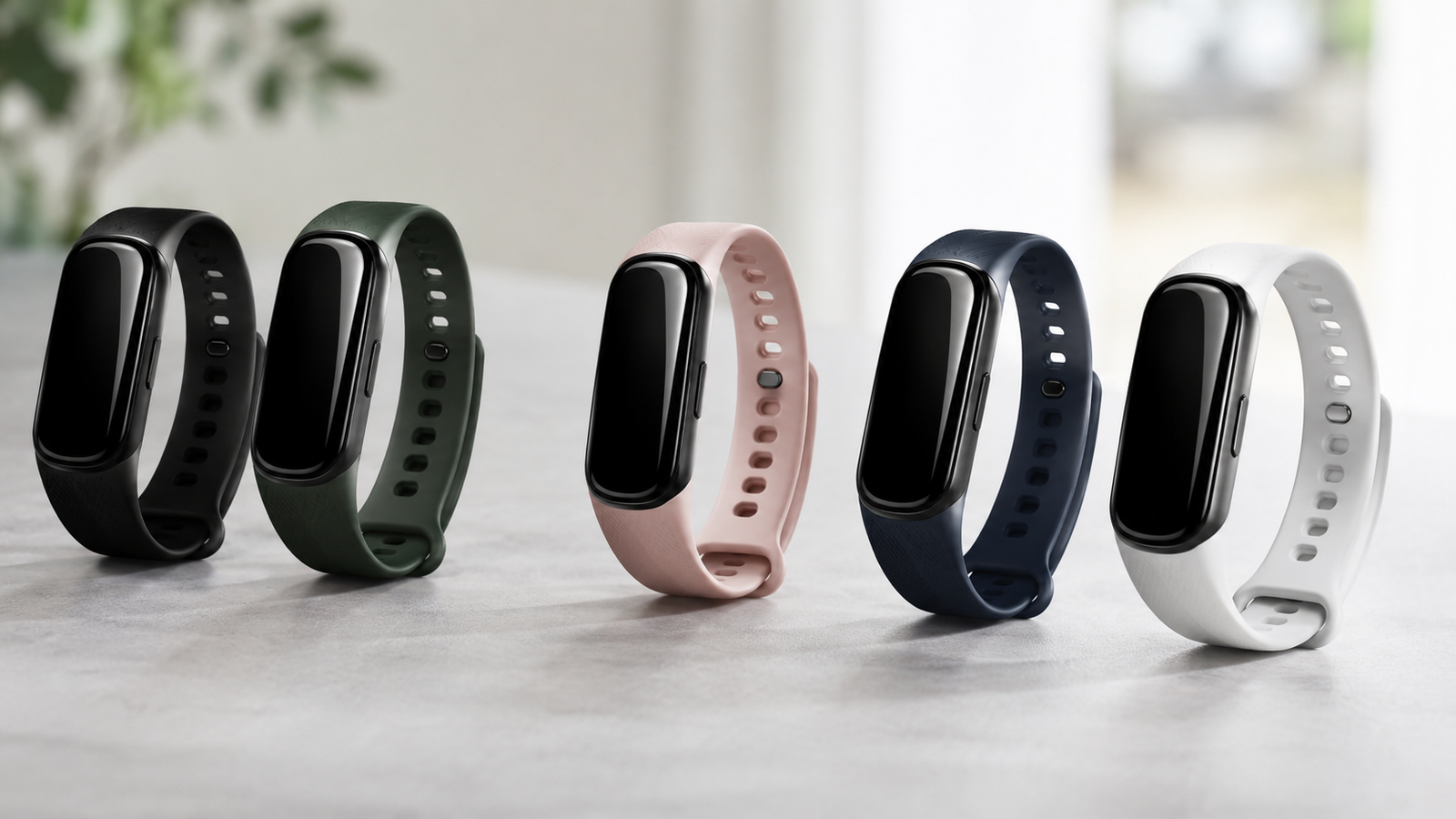
Sourcing smart bands for corporate wellness in the EU requires a supplier who offers CE-marked devices, GDPR-compliant data handling, and flexible OEM/private label options. Procurement teams should prioritize vendors with transparent compliance documentation and proven experience in wearable manufacturing. Expect MOQs from 500 to 1,000 units, lead times of 4–8 weeks after sample approval, and unit costs ranging from €30 to €80 depending on features and customization.
Key Takeaways
- Define clear wellness objectives before selecting smart band features; this guides your supplier conversations and budget.
- Verify EU compliance (CE, RoHS, REACH, WEEE) and data protection (GDPR) early—non-compliance can derail your program.
- Evaluate suppliers on manufacturing capability, quality control, and willingness to customize for your brand.
- Plan a pilot with a small order to test device performance, app integration, and employee adoption.
- Negotiate MOQs, pricing, and lead times based on realistic forecasts and EU import requirements.

Step 1: Define Your Corporate Wellness Goals and Smart Band Requirements
Before contacting suppliers, clarify what you want your corporate wellness program to achieve. Are you targeting stress reduction, fitness tracking, sleep improvement, or general health awareness? The answer determines the features your smart bands need, such as heart rate monitoring, blood oxygen tracking, sleep analysis, or step counting. For example, a program focused on employee fitness might prioritize accurate step and heart rate sensors, while a sleep-focused initiative would require reliable sleep staging algorithms.
Also consider how the data will be used. Will employees self-monitor only, or will anonymized data feed into company-wide health reports? This affects the software and app requirements, as well as data privacy considerations (see Step 3). Document your must-have features, nice-to-have features, and budget per unit. This requirements brief will be the foundation for supplier discussions and sample evaluations.
Step 2: Navigate EU Compliance and Certification for Smart Bands
Smart bands are electronic devices with radio equipment and batteries, so they fall under several EU directives and regulations. At a minimum, your supplier must provide CE marking, which indicates conformity with applicable directives such as the Radio Equipment Directive (RED), the Electromagnetic Compatibility Directive (EMC), and the Low Voltage Directive (LVD). Additionally, RoHS restricts hazardous substances, REACH covers chemical safety, and WEEE governs electronic waste disposal. For devices with lithium batteries, UN38.3 certification is required for transport.
Always request copies of test reports and declarations of conformity from your supplier. Be wary of vendors who cannot provide these documents or who claim compliance without evidence. Also note that compliance is product-specific: a smart band model certified for one configuration may not be compliant if you change the battery or add features. The European Commission provides official information on CE marking, and you can check the NANDO database for notified bodies.
If your wellness program includes health monitoring features, be careful not to make medical claims. Consumer smart bands are not medical devices unless they carry the appropriate certification (e.g., MDR). For general wellness, you can describe features as “health and fitness tracking” rather than diagnostic tools.
Step 3: Address Data Privacy and GDPR for Wearable Health Data
Employee health data is sensitive personal data under the EU General Data Protection Regulation (GDPR). You must ensure that any smart band solution you procure allows for lawful data processing, including obtaining explicit consent from employees, minimizing data collection, and ensuring data security. Work with suppliers who can provide clear documentation on where data is stored (on-device, in the cloud, or both), how it is encrypted, and who has access.
If the smart band comes with a companion app, check whether the app complies with GDPR. The app should have a privacy policy, allow users to export or delete their data, and avoid transferring data to countries without adequate protection unless safeguards are in place. The GDPR portal offers official resources. For corporate wellness, consider opting for solutions that allow anonymous or aggregated data reporting to protect employee privacy.
Step 4: Evaluate Smart Band Suppliers and Manufacturers
When shortlisting suppliers, look beyond price. A reliable partner will have experience in wearable manufacturing, a robust quality management system (e.g., ISO 9001), and the ability to support your customization needs. Request a company profile, factory audit reports, and references from other B2B clients. If possible, visit the factory or arrange a virtual tour to assess production lines and testing facilities.
Key evaluation criteria include:
- Manufacturing capability: Does the supplier specialize in smart bands, or are they a trading company? Direct manufacturers typically offer better control over quality and lead times.
- Quality control: Ask about their QC processes, including incoming material inspection, in-process checks, and final testing. Do they perform aging tests, drop tests, and waterproof tests?
- Customization options: Can they customize the band material, logo, packaging, and firmware? Do they offer private label services?
- Compliance support: Will they provide the necessary certifications and test reports for the EU market?
- Communication: Are they responsive and transparent? Poor communication early on can signal future problems.
For a deeper dive into supplier evaluation, see our guide on private label OEM/ODM solutions.
Step 5: Understand MOQs, Pricing, and Lead Times
MOQs for smart bands typically range from 500 to 1,000 units for custom orders, though some suppliers may accept lower volumes for standard models. Pricing depends on features (e.g., GPS, heart rate sensor, display type), materials, and customization level. Basic fitness bands might cost €30–€50 per unit at 1,000 units, while advanced models with additional sensors and premium materials can reach €80–€120. Always request a detailed quotation that breaks down costs for hardware, customization, packaging, and certifications.
Lead times vary: standard products may ship in 2–4 weeks, while custom orders require 4–8 weeks after sample approval, plus shipping time to the EU (typically 3–5 weeks by sea or 3–7 days by air). Factor in potential delays for compliance testing or component shortages. Discuss production schedules and ask for a timeline with milestones.
For budgeting, consider total landed cost, including freight, import duties (smart bands generally fall under HS code 8517.62 or 8543.70, depending on function), and VAT. Use the EU TARIC database to verify duties.
Step 6: Plan a Pilot Program and Sample Testing
Before committing to a large order, run a pilot with a small group of employees (e.g., 50–100 units). This allows you to test device comfort, battery life, app functionality, and data accuracy in real-world conditions. It also helps gauge employee interest and identify any integration issues with your wellness platform.
When ordering samples, request units from the actual production line, not just engineering samples. Test the following:
- Sensor accuracy (heart rate, step count) compared to a reference device.
- Battery life under typical usage.
- Water resistance (if applicable) according to IP rating.
- App pairing and data sync reliability.
- Comfort and fit for diverse employees.
Document any issues and discuss improvements with the supplier before scaling up. A pilot also demonstrates due diligence to stakeholders.
Step 7: Finalize Contracts, Logistics, and After-Sales Support
Your contract should cover product specifications, quality standards, delivery timelines, payment terms, warranties, and intellectual property ownership (especially for custom designs). Clarify who is responsible for compliance documentation and what happens if a product fails to meet requirements. For EU imports, ensure the supplier provides a proper commercial invoice, packing list, and certificate of origin if needed.
Plan logistics: smart bands contain lithium batteries, so they are classified as dangerous goods for transport. The supplier must provide UN38.3 test reports and MSDS, and shipping must comply with IATA/IMDG regulations. Work with a freight forwarder experienced in battery shipments.
After-sales support is critical. Ask about warranty periods (typically 12 months), repair or replacement procedures, and spare parts availability. A supplier with EU-based support or a local representative can simplify communication.
Key Facts for Buyers
| Consideration | Typical Range / Requirement |
|---|---|
| MOQ | 500–1,000 units for custom orders |
| Unit Price | €30–€120 depending on features and customization |
| Lead Time | 4–8 weeks after sample approval (production) + shipping |
| Compliance | CE (RED, EMC, LVD), RoHS, REACH, WEEE, UN38.3 |
| Data Privacy | GDPR-compliant app and data handling |
| Warranty | 12 months typical |
Common Mistakes to Avoid
- Ignoring compliance early: Assuming a supplier’s CE mark covers your specific configuration can lead to customs issues or fines.
- Underestimating data privacy: Failing to address GDPR can result in legal challenges and employee distrust.
- Choosing on price alone: Low-cost suppliers may cut corners on quality or compliance, leading to higher costs later.
- Skipping the pilot: Launching a full program without testing can lead to low adoption and wasted budget.
- Poor contract terms: Not clarifying IP ownership or warranty can cause disputes.
Buyer Checklist
- Define wellness goals and smart band requirements.
- Request compliance documentation (CE, RoHS, REACH, WEEE, UN38.3).
- Verify GDPR compliance of app and data handling.
- Shortlist suppliers with wearable manufacturing experience.
- Request samples and run a pilot with employees.
- Negotiate MOQ, price, and lead time.
- Clarify warranty, after-sales support, and IP ownership.
- Plan logistics for lithium battery shipments.
Buyers can also review STAR KING Smart Bands OEM/ODM options to compare product positioning, customization scope, and sample planning.
FAQ
What is the typical MOQ for custom smart bands?
Most manufacturers require a minimum order quantity of 500 to 1,000 units for custom smart bands, including logo and packaging customization. Some suppliers may accept lower volumes for standard models, but customization typically increases MOQ.
How long does it take to receive smart band samples?
Sample lead time is usually 1–2 weeks for standard models and 2–4 weeks for custom samples. Shipping to the EU can take an additional 3–7 days by express courier.
What certifications are required for smart bands in the EU?
Smart bands require CE marking, which covers the Radio Equipment Directive (RED), EMC, and LVD. Additionally, RoHS and REACH apply for hazardous substances, WEEE for disposal, and UN38.3 for battery transport. Always verify that the specific product configuration is covered.
How should we handle employee health data under GDPR?
Obtain explicit consent from employees, minimize data collection, ensure data is encrypted and stored securely, and choose suppliers who provide GDPR-compliant apps with clear privacy policies. Consider anonymizing data for corporate reporting.
Can smart bands be integrated with our existing wellness platform?
Many suppliers offer API or SDK access for data integration. Discuss your platform requirements early and request documentation on data export formats and compatibility.
What is the warranty period for smart bands?
Warranty periods vary by supplier but are typically 12 months from delivery. Clarify what is covered (e.g., manufacturing defects) and the process for repairs or replacements.
How do we ensure quality and reliability?
Request pre-shipment inspection reports, ask about QC processes, and run a pilot with a small group before full rollout. A supplier with ISO 9001 certification indicates a robust quality management system.
Conclusion
Sourcing smart bands for corporate wellness in the EU involves careful planning and due diligence. By following these seven steps, you can select a reliable supplier, ensure compliance, and launch a successful program that benefits your employees and your organization. Remember to prioritize data privacy and quality, and always verify compliance documentation. With the right partner, your corporate wellness initiative can drive engagement and well-being.
Ready to Source Smart Bands for Your Corporate Wellness Program?
STAR KING specializes in OEM/ODM smart wearables for corporate and B2B clients. We support private label customization, provide necessary certifications for the EU market, and offer flexible MOQs. To discuss your requirements and request samples, visit our sample request page or contact our team directly.
Discuss Your Smart Wearable OEM/ODM Project
Planning a smart ring, smart watch, smart band, AI glasses, AI translator, or AI voice mouse project? Contact STAR KING to discuss product positioning, sample testing, customization scope, certification requirements, lead time, and quotation details.

Team Star King

Scan WhatsApp QR code
Leave a Reply