
AI smart glasses suppliers: 7-Point UK Retail Buyer’s Guide to AI Smart Glasses: 2026 Sourcing & Private Label Checklist
October 17, 2026 · Team Star King
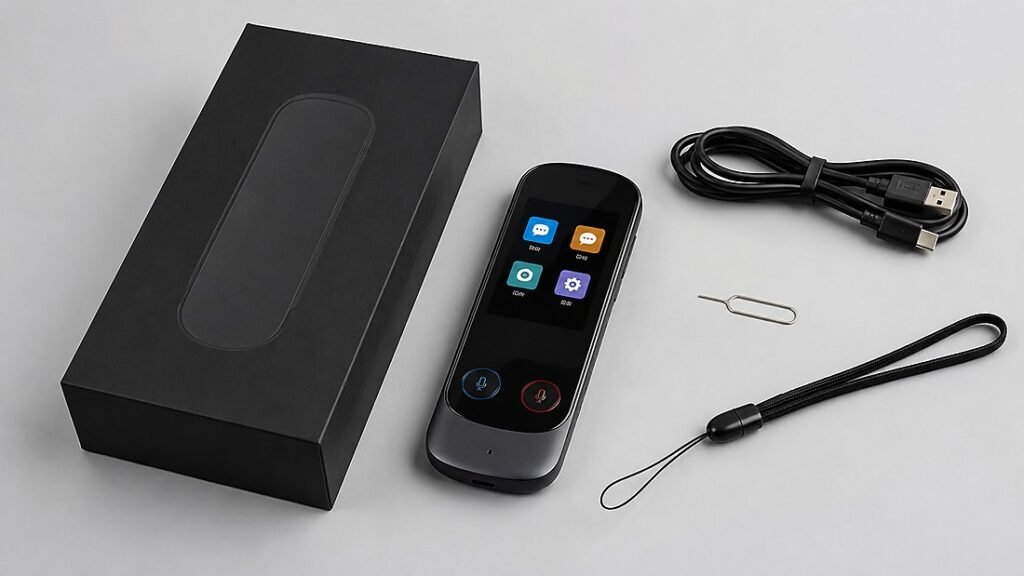
AI smart glasses suppliers buyers need a supplier evaluation process that checks product fit, OEM/ODM capability, compliance documents, quality control, pricing, lead time, and after-sales support before placing a bulk order.
Table of Contents
Table of Contents
7-Point UK Retail Buyer’s Guide to AI Smart Glasses: 2026 Sourcing & Private Label Checklist
Direct answer: Sourcing AI smart glasses for UK retail in 2026 means choosing a supplier who can supply UKCA/CE‑ready hardware, documented battery compliance, stable firmware, and predictable lead times. For retail chains, the practical focus is certification documentation, sample validation, healthy landed cost, and private‑label options that fit your shelf strategy. This guide gives a 7‑point checklist to evaluate suppliers before you commit.
The UK smart eyewear market is moving from novelty to mainstream. Multiple research houses including Grand View Research and Statista project continued double‑digit CAGR for smart glasses through the late 2020s, driven by AI assistants, translation, audio, and hands‑free camera use. For UK retail chains, the challenge is not whether the category will grow, but whether the products you place on shelf will pass compliance, delight customers, and protect your brand if a defect batch appears. That is a sourcing and risk‑management question more than a gadget question.
AI smart glasses suppliers: Table of Contents
- What are AI smart glasses?
- Key Takeaways
- Key Facts for Buyers
- 1. Product specification and use‑case fit
- 2. AI features and ecosystem (translation, voice, camera)
- 3. Compliance for the UK: UKCA, CE, RoHS, WEEE, battery rules
- 4. OEM/ODM and private‑label options
- 5. MOQ, lead time, and sample validation
- 6. Quality control, testing, and after‑sales
- 7. Landed cost, retail pricing, and sell‑through
- AI Smart Glasses for UK Retail: Supplier Comparison Table
- Common Mistakes UK Buyers Make
- Buyer Checklist
- FAQ
- Conclusion
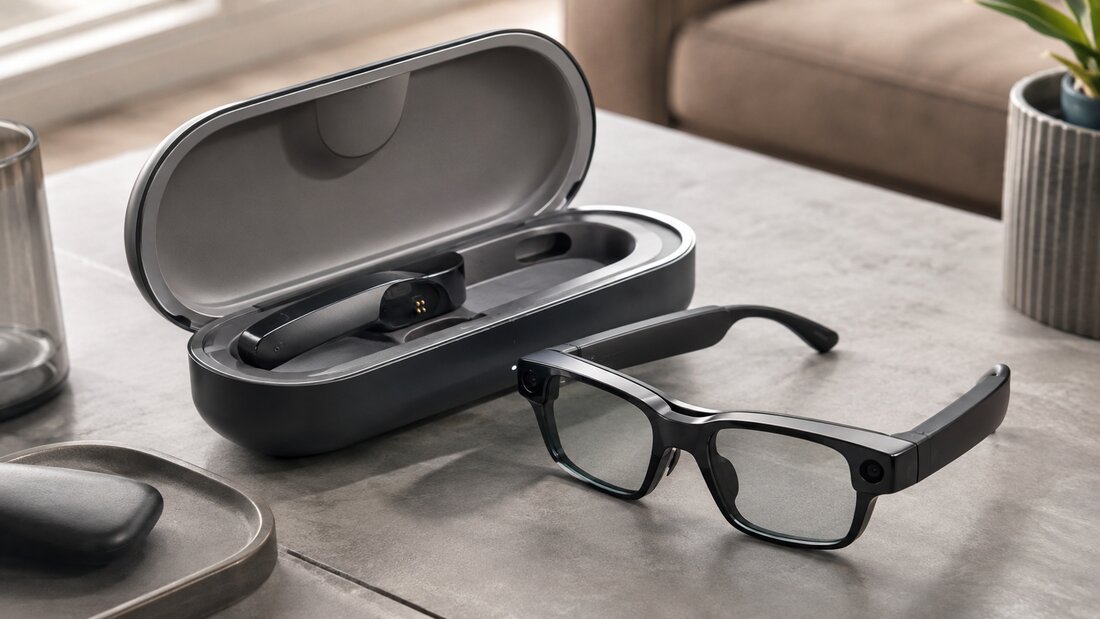
Key Takeaways
- UK retail chains should treat AI smart glasses as a regulated electronics category, not a fashion accessory: UKCA, CE, RoHS, WEEE, and battery documentation are baseline.
- Focus feature evaluation on translation quality, voice pickup, battery life, and camera/audio modules that match your in‑store demos.
- Private‑label AI glasses projects usually require tooling or cosmetic customization; confirm MOQ, tooling ownership, and lead time before signing.
- Sample testing is the highest‑leverage step: test on actual UK networks, indoors, outdoors, and with your staff’s accents.
- Plan landed cost with freight, VAT, and duty: the retail price you set must survive real exchange rates and returns.
- Align electronic‑waste and after‑sales obligations before launch: UK retailers and importers share responsibility.

Key Facts for Buyers
| Item | Typical UK retail expectation (2026) |
|---|---|
| Certification | UKCA and/or CE marking; RoHS; WEEE registration; battery documentation (UN 38.3 / MSDS) |
| MOQ | Usually 500–1,000 pcs for OEM; samples 1–5 pcs [STAR KING TO CONFIRM] |
| Lead time | Sample 7–15 days; mass production 25–45 days [STAR KING TO CONFIRM] |
| Battery | Rechargeable Li‑ion, typically 4–8 hours mixed use depending on configuration |
| Customization | Logo, packaging, app UI, voice prompts, language packs [STAR KING TO CONFIRM] |
| Warranty | 12 months standard, negotiable by volume [STAR KING TO CONFIRM] |
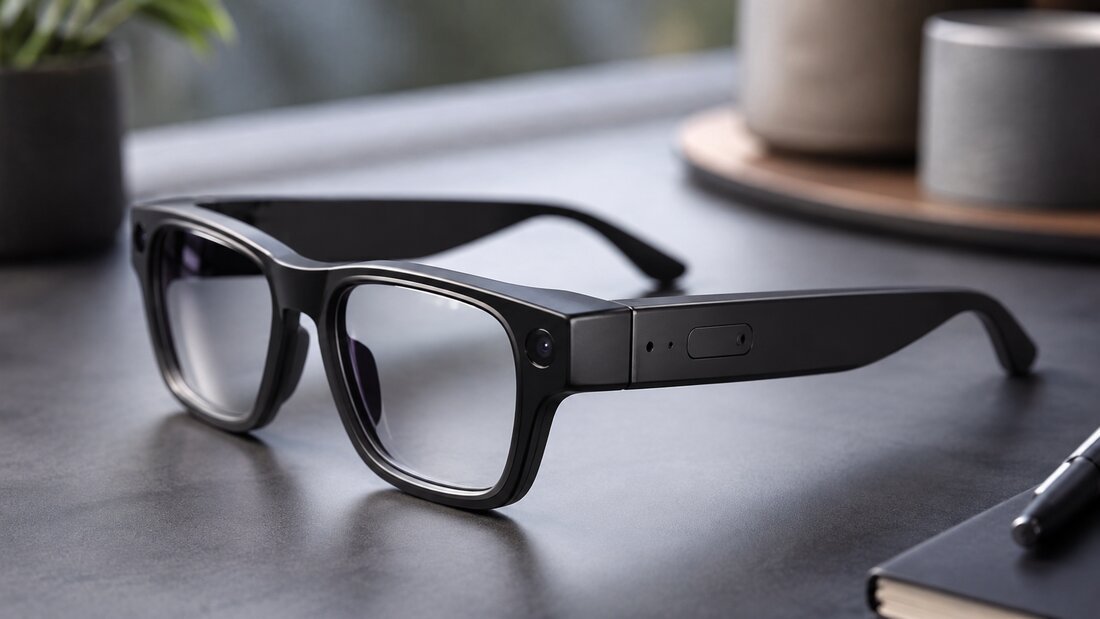
What Are AI Smart Glasses? (Definition for Buyers)
AI smart glasses are wearable devices that combine eyewear with an onboard or paired AI service. They usually include a microphone array, small speakers or bone‑conduction audio, and increasingly a camera. Through Bluetooth or Wi‑Fi they connect to a smartphone app and cloud services to deliver real‑time translation, voice assistant access, audio playback, photo capture, and productivity features. In the UK retail context, the category splits into three commercial segments: audio‑first models (voice and music), translation‑focused models for international travel and multilingual workers, and camera‑enabled productivity models.
For retail chains, the sourcing question is not “is this cool?” but “can I put this on shelf in the UK, at a price point and feature set my customers will accept, with documentation that protects me if something goes wrong?” That is where a structured sourcing approach matters.
If you are still evaluating suppliers, it helps to compare real hardware in hand. Request samples and specification sheets so you can test translation accuracy, battery life, and comfort before committing to a retail program.

1. Product Specification and Use‑Case Fit
Begin with the use case, not the spec sheet. UK retail buyers are typically targeting three audiences: commuters and office workers (audio, calls, voice assistant), travellers and multilingual consumers (real‑time translation), and content creators or hybrid‑office professionals (camera and productivity).
- Audio‑first: weight under 50 g, 6+ hours of playback, open‑ear audio that lets users hear traffic.
- Translation‑first: support for major UK‑relevant languages, offline or low‑latency modes, clear microphone arrays.
- Camera/productivity: 1080p or better, privacy indicator LED, simple app workflow.
For Awareness‑stage buyers, the strategic choice is to decide which one or two segments to stock first. Many UK chains start with one flagship model and one entry model rather than a full range. AI smart glasses can be configured to match these segments, so match the supplier’s roadmap to your shelf plan.
2. AI Features and Ecosystem (Translation, Voice, Camera)
AI features are the main reason customers will buy in 2026, but they are also the main source of returns if they underperform in real UK conditions. Please test:
- Translation quality: test with your staff and recorded audio; check latency and whether the app supports UK English, plus languages your customers actually use.
- Voice pickup: test in an open‑plan office, on a train, and in a shop with background music.
- Camera: test indoor and outdoor shots; check whether the device requires a connected phone.
- App updates: ask how often firmware and app updates ship, and whether features depend on a cloud subscription.
Bluetooth profile support matters for pairing reliability; ask for the supported profiles and versions.
3. Compliance for the UK: UKCA, CE, RoHS, WEEE, and Battery Rules
Compliance is a non‑negotiable filter for UK retail chains. Details depend on your product configuration and how you import, and buyers should verify current requirements with the relevant authority, but the following are typical:
- UKCA: for many electrical products sold in Great Britain, UKCA marking applies; CE may still be accepted for certain scopes and Northern Ireland. Confirm scope with your regulatory partner. See the UK Government’s UKCA guidance.
- RED/EMC and LVD: radio and electrical safety requirements for wireless products.
- RoHS and REACH: substance restrictions for electronics.
- Battery rules: lithium battery air transport usually requires UN 38.3 test reports and MSDS; some products may fall under EU battery regulation where relevant.
- WEEE: UK WEEE obligations for distributors and importers.
- Radio equipment: spectrum and radio conformity for Bluetooth/Wi‑Fi modules.
Always request the bill of materials, test reports, declarations, and the manufacturer’s quality plan. If a supplier cannot provide documentation for the exact SKU you intend to sell, treat that as a red flag.
4. OEM/ODM and Private‑Label Options for Retail Chains
For UK chains, private label is usually the strongest long‑term play: it differentiates your assortment, controls margin, and builds brand equity. There are three models to consider:
- White‑label: existing hardware with your logo and packaging. Fastest to market.
- ODM customization: cosmetic, firmware, app, or feature changes on an existing platform.
- Full OEM: custom industrial design and tooling, highest cost and lead time.
Typical customization scopes include logo printing, custom colors, packaging, app splash screen, voice prompts, language packs, and retail accessories. Confirm ownership of tooling, firmware source, and app code, plus what happens if the supplier changes platforms. STAR KING offers private‑label AI device programs; details such as MOQ, tooling cost, and app customization scope are [STAR KING TO CONFIRM]. For more on OEM/ODM models, see our private‑label OEM/ODM solutions.
5. MOQ, Lead Time, and Sample Validation
MOQ and lead time are where many UK retail programs fail. It is common for OEM orders to start at 500–1,000 units per SKU, with samples 1–5 units. The exact MOQ for STAR KING AI smart glasses is [STAR KING TO CONFIRM]. Mass production lead time typically ranges from 25–45 days depending on configuration, battery, and packaging, and longer for full OEM tooling.
Plan a sample validation process before you commit:
- Order 1–3 samples and inspect them against a written checklist.
- Test translation, voice, battery, comfort, and app in real UK conditions.
- Ask for a pre‑production sample before mass production.
- Confirm packaging and labels, including UK responsible person details.
- Agree on an inspection plan: in‑line or pre‑shipment inspection with a defined AQL.
6. Quality Control, Testing, and After‑Sales
Quality control protects your brand. Ask for:
- Aging and drop testing procedures.
- Battery charging safety tests and temperature checks.
- Water and dust resistance where claimed (e.g., IP ratings).
- Functional testing on translation, voice, camera, and app pairing.
- Pre‑shipment inspection reports.
Define after‑sales terms before launch: warranty length, DOA policy, spare parts availability, firmware support period, and a return‑to‑base or replacement process for UK customers. If your supplier cannot provide a spare parts strategy, your returns and warranty costs will rise.
7. Landed Cost, Retail Pricing, and Sell‑Through
Landed cost includes unit price, freight, duty, VAT, inspection, and potential rework. Build a model that shows gross margin at realistic retail prices. For UK retail chains, the biggest controllable levers are often:
- Packaging efficiency to reduce freight per unit.
- Battery choice and capacity versus price positioning.
- Volume commitment to reduce unit cost and lead time risk.
- Accessory bundle strategy (case, cables, lens options).
For more market and channel planning, explore our smart retail and e‑commerce solutions.
AI Smart Glasses for UK Retail: Supplier Comparison Table
| Criteria | Strong supplier | Weak supplier |
|---|---|---|
| Certification | Provides UKCA/CE plans and test reports | Claims “CE/FCC approved” without documents |
| OEM/ODM | Clear customization scope and tooling ownership | Vague about firmware and app ownership |
| MOQ | Transparent tiers and sample policy | Hidden minimums or inconsistent quotes |
| Quality control | Written test plan and inspection options | No documentation, verbal promises only |
| After‑sales | Warranty, spares, firmware support | No spares or support plan |
| Compliance | Knows UKCA, WEEE, battery rules | Assumes EU CE covers the UK automatically |
Common Mistakes UK Buyers Make
- Assuming CE automatically covers Great Britain without checking UKCA scope.
- Choosing on price alone and skipping sample testing.
- Not defining who owns tooling, firmware, and app code.
- Underestimating translation and voice quality as return drivers.
- Ignoring WEEE and battery documentation until after import.
- Committing to a range before validating one SKU’s sell‑through.
Buyer Checklist Before You Place an Order
- Written spec sheet and BOM for the exact SKU.
- UKCA/CE, RoHS, WEEE plans and battery documentation.
- Sample validation report signed by your buyer or engineer.
- MOQ, lead time, payment terms, and incoterms in writing.
- Customization scope, tooling ownership, and app support terms.
- Pre‑shipment inspection agreement with defined AQL.
- Warranty, spare parts, and firmware update policy.
FAQ
Do AI smart glasses sold in the UK need UKCA marking?
Many electrical and radio products sold in Great Britain require UKCA marking, though the exact scope depends on product type and current rules. Buyers should verify with their regulatory advisor and the UK Government’s UKCA guidance before import.
What MOQ should a UK retail chain expect for AI smart glasses?
OEM MOQs are commonly 500–1,000 units per SKU, with samples of 1–5 units. For STAR KING, exact MOQ is [STAR KING TO CONFIRM]. Volume tiers and mixed‑color orders can affect the minimum.
Can I private label AI smart glasses with my own brand?
Yes. Private label typically covers logo, packaging, app splash screens, and voice prompts. The degree of customization depends on the platform and tooling, and may require higher MOQ.
How long does production take?
Samples usually ship in 7–15 days, with mass production around 25–45 days depending on configuration and packaging. Full OEM tooling can add several weeks. Confirm with your supplier in writing.
What lithium battery rules apply to shipping smart glasses?
Air shipment of lithium‑ion batteries commonly requires UN 38.3 test reports and an MSDS, plus compliant packaging. Rules can change, so verify with your freight forwarder and the relevant authority.
How should I test translation and voice quality?
Test with real accents and background noise, on UK networks. Record results against a written checklist covering latency, accuracy, and app stability. Repeat the test on the pre‑production sample.
What after‑sales support should be agreed?
Set warranty length, DOA policy, spare parts availability, firmware support period, and the returns process before launch. For stock‑heavy SKUs, a spare‑parts percentage is common practice.
Conclusion
Sourcing AI smart glasses for UK retail is a compliance‑, quality‑, and margin‑discipline exercise rather than a spec chasing one. Use the 7‑point checklist to filter suppliers on documentation, private‑label fit, MOQ, lead time, quality control, and landed cost. Treat sample testing as the decisive step, and verify UK‑specific requirements for marking, WEEE, and batteries before you import.
If your chain is planning a 2026 AI eyewear range, start with a structured sample and specification review so you can compare hardware, firmware, and packaging side by side. It is the fastest way to de‑risk your first order and protect your brand at shelf.
Ready to move forward? Request AI smart glasses samples for your UK retail program and we will help you compare configurations, confirm compliance documentation, and plan MOQ and lead time.
Discuss Your Smart Wearable OEM/ODM Project
Planning a smart ring, smart watch, smart band, AI glasses, AI translator, or AI voice mouse project? Contact STAR KING to discuss product positioning, sample testing, customization scope, certification requirements, lead time, and quotation details.

Team Star King

Scan WhatsApp QR code
Leave a Reply