
smart band suppliers: How to Source Smart Bands for Healthcare Solution Providers in the EU: 7 Essential Checks for a Compliant RFQ in 2026
October 16, 2026 · Team Star King

smart band suppliers buyers need a supplier evaluation process that checks product fit, OEM/ODM capability, compliance documents, quality control, pricing, lead time, and after-sales support before placing a bulk order.
Table of Contents
Table of Contents
How to Source Smart Bands for Healthcare Solution Providers in the EU: 7 Essential Checks for a Compliant RFQ in 2026
smart band suppliers: Short Answer
Sourcing smart bands for healthcare solution providers into the European Union is a supply-chain and regulatory project, not a consumer purchase. Before you issue a request for quote (RFQ), you need to confirm the product’s intended purpose (wellness vs medical), the manufacturer’s EU compliance path (CE marking, and MDR status if it claims a medical purpose), lithium-battery transport documents, GDPR-ready app architecture, and pricing that reflects MOQ, customisation and lead time. The seven checks below turn those requirements into a single RFQ checklist you can send to shortlisted suppliers.

Introduction: What EU Healthcare Buyers Should Ask Before Running a Smart Band RFQ
If you supply remote patient monitoring, senior-care packages, corporate wellness portals or clinic-based observation programmes, smart bands are one of the most economical ways to add continuous physiological data without the cost of a medical-grade monitor. But the moment you resell a wearable under your own brand into the EU, you become responsible for the claims, the labelling and the data flowing to your platform.
This guide is written for procurement, product and regulatory teams at European healthcare solution providers who are preparing a formal RFQ. It sets out seven checks that determine whether a supplier’s smart bands for healthcare solution providers are actually deployable in the EU, and it gives you the wording, documents and questions to put into your tender package. Every check is written so that a sourcing manager, a quality manager and a compliance officer can each verify it independently.
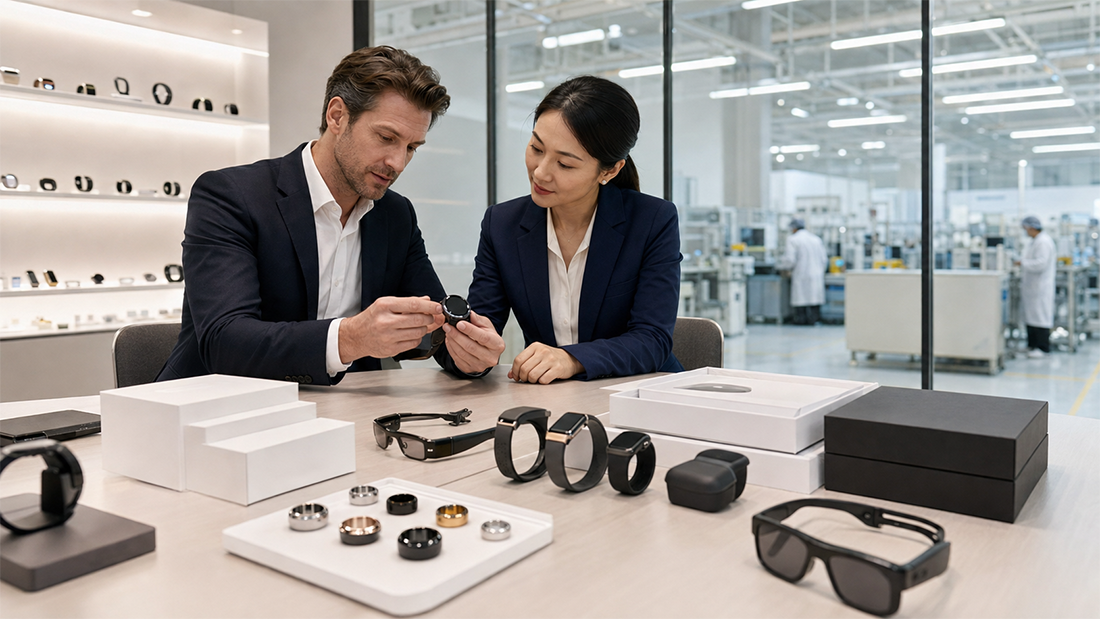
Table of Contents
- Key Takeaways
- Key Facts for Buyers (EU Smart Bands Reference Table)
- Check 1: Define Intended Purpose Before You Write the RFQ
- Check 2: Confirm the EU Compliance Path (CE, MDR, Red Directive 2014/53/EU)
- Check 3: Verify Battery Test Documentation (UN 38.3, IEC 62133)
- Check 4: Audit Data Governance and GDPR Fit
- Check 5: Assess Clinical-Grade Data Pathways Versus Wellness Data
- Check 6: Price the Real Cost of Customisation and MOQ
- Check 7: Contract the Lead Time, Warranty and Spare-Part Pipeline
- Comparison Table: Wellness Band vs Healthcare-Oriented Band vs Medical-Grade Monitor
- Common Mistakes and Buyer Red Flags
- Practical Buyer Checklist
- Frequently Asked Questions
- Conclusion
Key Takeaways
- Your RFQ must state intended purpose first; a wellness claim and a medical claim lead to completely different compliance costs.
- CE marking, EU MDR status and radio equipment obligations are separate tests. Ask for each one explicitly.
- Lithium-battery documentation (UN 38.3 and, where used, IEC 62133 battery-cell standards) should be attached to the RFQ, not promised later.
- Health data collected from employees or patients inside the EU will normally fall under GDPR; the vendor’s app architecture must map to your controller obligations.
- MOQ, tooling, packaging and per-unit customisation costs change the landed cost far more than the quoted unit price.
- Lead time, spare-part availability and firmware-support windows should be fixed in the contract, not left as “standard terms”.
Key Facts for Buyers: EU Smart Band Sourcing Reference
| Item | What to Verify | Typical Document | Why It Matters in the EU |
|---|---|---|---|
| Intended purpose | Wellness vs medical claim | Intended Purpose Statement / IFU | Determines whether MDR applies |
| CE marking | Applicable directives covered | EU Declaration of Conformity | Required to place goods on the EU market |
| Radio equipment | Bluetooth/Wi-Fi radio compliance | Test reports under Directive 2014/53/EU | Mandatory for wireless devices |
| Battery transport | Lithium cell safety | UN 38.3 test summary, MSDS | Required for air freight |
| Electromagnetic compatibility | Emissions and immunity | Test report | Supports CE technical file |
| Data protection | GDPR roles and data flow | Data Processing Agreement, DPIA support | Applies when processing EU health data |
| Traceability | Serial/batch records | Batch test records | Supports recall and warranty handling |
Check 1: Define Intended Purpose Before You Write the RFQ
The single most expensive mistake in wearable sourcing is issuing an RFQ without a written intended-purpose statement. If your product claims to detect, prevent, monitor, treat or alleviate a disease, it is generally treated as a medical device in the EU and falls under the Medical Device Regulation. If it simply describes fitness, sleep and general wellbeing, it is normally treated as a consumer wellness product.
Write two sentences that answer: who wears it, what the data is used for, and who acts on the data. For example: “The band is issued to adult patients in a remote monitoring programme; step, heart rate and sleep patterns are displayed to a clinical coordinator who schedules a follow-up call.” That sentence already tells your supplier which firmware, which labelling and which compliance route you need.
Questions to put in the RFQ
- What intended purpose does the manufacturer currently declare for this band, and in which document?
- Which features are described as wellness indicators and which are described as measurements?
- What changes if we move from wellness wording to a medical claim?
Check 2: Confirm the EU Compliance Path (CE, MDR, Radio Equipment Directive)
Buyers frequently treat CE as one certificate. In practice, a wireless smart band can touch several EU legal instruments at once: radio equipment rules, electromagnetic compatibility, electrical safety, and restrictions on hazardous substances. If the device carries a medical claim, the Medical Device Regulation adds classification, conformity assessment and, for higher-risk classes, notified-body involvement.
Ask your supplier for the EU Declaration of Conformity and the underlying test reports, then check that the declared product name and model match the exact SKU you are buying. A declaration for a similar model is not a declaration for your model. Where a medical purpose is claimed, the technical documentation, clinical evaluation and post-market surveillance obligations are typically the buyer’s or legal manufacturer’s responsibility, so clarify in writing who holds the legal manufacturer role.
Documents to request
- EU Declaration of Conformity naming the exact model
- Radio test reports for the wireless module in use
- EMC and safety test reports
- RoHS and REACH statements
- If a medical claim is intended: classification rationale and notified-body status
For official reference, buyers can review the European Commission medical devices pages and the ISO 13485 quality management standard when assessing whether a supplier’s quality system supports a healthcare programme.
Check 3: Verify Battery Test Documentation (UN 38.3, IEC 62133)
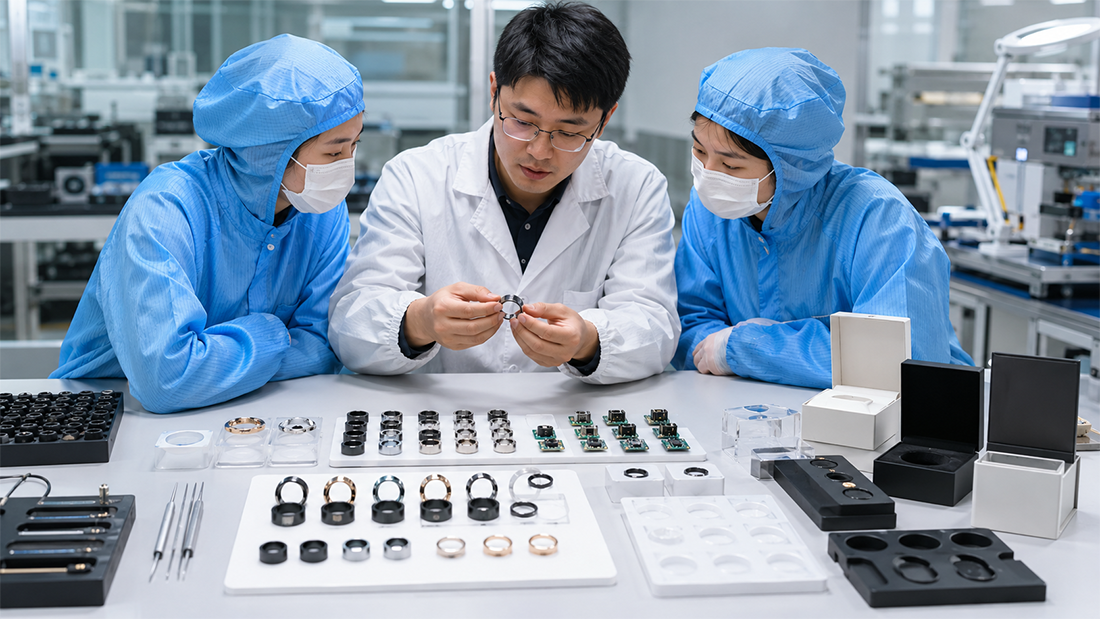
Smart bands contain lithium-based cells, which means air transport and EU market access both depend on battery documentation. UN 38.3 testing is the baseline for shipping lithium batteries by air, and many EU logistics providers will request the test summary and a safety data sheet before accepting a pallet of wearables.
Ask for the UN 38.3 test summary, the MSDS for the battery pack, and evidence of cell-level safety testing under the applicable IEC 62133 series. Confirm the cell supplier and model number. If a supplier cannot name the cell inside the band, they cannot control it either. Battery capacity, charge-management firmware and the standby drain you price into the hardware all come back to this component, so treat the battery as a specification item rather than a commodity.
If you are building an EU healthcare programme and want to compare band specifications, battery documentation and app options side by side, you can review the smart band platform and request the technical file for the exact model number you are evaluating.
Check 4: Audit Data Governance and GDPR Fit
When a smart band streams heart rate, sleep or activity data from EU residents, the organisation deciding what happens to that data is usually the data controller under GDPR. Your technology vendor is often a processor. That relationship has to be reflected in a data processing agreement, and the data flow has to be documented well enough to support a data protection impact assessment.
Ask where data is stored, how it travels, whether any default cloud service exists, and whether the app can write directly to your own backend. Many healthcare solution providers run their own HIPAA-style or national health platform and need the wearable SDK or API to push data into a system they already control. If the manufacturer’s cloud is mandatory, that becomes a commercial and compliance dependency you should price in from the start.
RFQ clauses worth including
- Data residency options for EU customers
- Availability of a data processing agreement template
- Deletion and retention controls at device and account level
- Whether the manufacturer operates as processor only, or also offers its own dashboard
Check 5: Assess Clinical-Grade Data Pathways Versus Wellness Data
Robust wellness data and clinical measurements are different products with different validation layers. Optical heart-rate and blood-oxygen sensors on consumer bands are generally described as wellness indicators, and it is important to state that accurately in your product literature. Describing them as diagnostic outputs is both a legal risk and a service risk, because clinical staff will act on those numbers.
In your RFQ, ask which algorithms are used for each metric, whether the provider publishes validation data, and whether the sampling rate and sensor configuration can be adjusted. For programmes that need clinical accuracy, the more realistic architecture is often a wellness band for engagement combined with a validated medical device for measurement. If your supplier claims a medical measurement, request the validation evidence and the regulatory route behind it.
How buyers should evaluate sensor claims
- Ask what the sensor measures directly and what the firmware derives from it.
- Request signal-processing documentation or validation summaries, not marketing charts.
- Check how the band behaves during motion, low perfusion and skin-tone variation.
- Confirm what the app displays to a clinician versus to an end user.
Check 6: Price the Real Cost of Customisation and MOQ
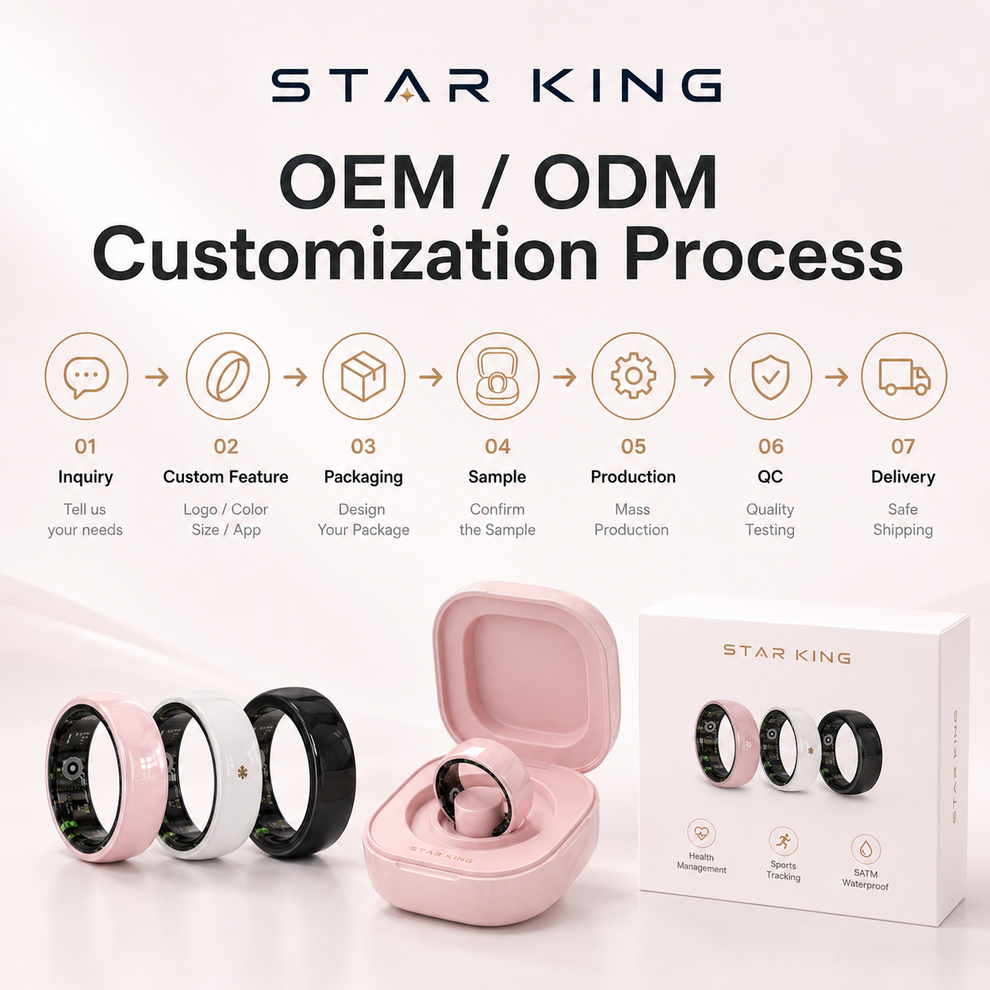
The unit price you see in an RFQ reply is not your landed cost. Customisation decisions change the bill of materials, the tooling and the certification scope. A healthcare provider branded band with custom firmware, custom silicone strap, a bespoke app dashboard and EU-authorised-representative support carries a different cost structure from a catalogue band with a new logo.
Ask for pricing in layers: base unit, tooling or mould amortisation, custom silicone or textile strap, packaging and gift-box development, firmware and app changes, certification additions, and the shipping Incoterm you intend to use. Then ask what volume band each stage maps to. MOQ is usually not a single number; it is one number for standard colours, another for custom straps, and a third for custom PCBA changes. A reliable supplier will show you that step-wise structure.
Cost drivers to request in the quotation
- Unit price at each MOQ tier
- One-time tooling and mould cost, and who owns the tool
- Packaging and artwork development charges
- Firmware, SDK or app customisation effort
- Certification scope additions and renewals
- Landed cost by Incoterm to your EU warehouse
Comparison Table: Which Smart Band Category Fits Your Programme?
| Category | Typical Use | Claim Type | Compliance Emphasis | Cost Profile |
|---|---|---|---|---|
| Wellness smart band | Corporate wellness, senior engagement, lifestyle | Wellness indicators | CE, RED, RoHS, battery | Lowest |
| Healthcare-oriented band | Remote monitoring programmes, clinic observation | Wellness wording, integration with clinical workflows | CE, RED, GDPR, robust firmware and API | Medium |
| Medical-grade monitor | Diagnosis or treatment decisions | Medical claim | MDR, notified body where applicable, ISO 13485 | Highest |
Check 7: Contract the Lead Time, Warranty and Spare-Part Pipeline
Healthcare contracts rarely tolerate stock-outs. A remote monitoring programme that issues bands to three hundred patients needs a replacement path when a strap fails or a charging cradle goes missing. Your RFQ should ask for production lead time at each MOQ tier, sample lead time, and the availability of spare straps, chargers and charging cradles for at least the warranty period.
Warranty terms should be defined by failure mode, not by a single flat duration. Straps, displays, batteries and PCBA typically carry different expectations. Ask how returns are processed, whether the supplier performs failure analysis, and whether they publish a firmware-support window. For healthcare buyers, the firmware window matters because a security update cycle that stops after twelve months will shorten the useful life of the whole deployment.
Contract points to fix in writing
- Sample lead time and mass-production lead time by quantity tier
- Warranty duration and coverage by component group
- Spare-part availability period and reorder MOQ
- Firmware and security update commitment window
- Return, repair and replacement process
- Tool ownership and transfer conditions
Common Mistakes and Buyer Red Flags
- Assuming CE implies medical compliance. CE marking does not mean the product is a medical device, and a medical claim does not come free with CE.
- Accepting a generic Declaration of Conformity. If the model number does not match your SKU, you have no declaration for your product.
- Treating the app as an afterthought. Data residency, API access and account structure should be decided before tooling, not after.
- Ignoring the EU importer role. The entity placing the device on the EU market carries legal duties; confirm whether that is you, a distributor or the manufacturer’s authorised representative.
- Skipping a pilot batch. Order a small pilot to test pairing, data export, charging reliability and end-user acceptance before committing to a full run.
- Red flags: refusal to name the battery cell supplier, no test reports, vague answers on data storage, prices that change materially between written and verbal quotes, and no documented firmware roadmap.
For a general reference on EU product rules that apply to wireless devices, buyers can consult the official European Commission CE marking portal.
Practical Buyer Checklist for an EU Smart Band RFQ
- Write the intended-purpose statement and decide wellness versus medical positioning.
- Request the EU Declaration of Conformity for the exact model number.
- Request radio, EMC and safety test reports.
- Request UN 38.3 battery test summary and MSDS.
- Confirm RoHS and REACH statements.
- Map the data flow and confirm GDPR roles, storage location and DPA availability.
- Confirm whether an SDK or API is available for your own platform.
- Ask for firmware update and security patching commitments.
- Request MOQ tiers with layered pricing for tooling, straps, packaging and app work.
- Confirm sample lead time and mass-production lead time by quantity.
- Agree warranty coverage by component and the spare-part pipeline.
- Run a pilot batch and test pairing, export, charging and comfort before scale-up.
Frequently Asked Questions
Do smart bands for healthcare solution providers need to be medical devices in the EU?
Only if the product makes a medical claim. Wellness bands that describe activity, sleep and general wellbeing are normally treated as consumer electronics. Any claim to diagnose, monitor or treat a disease generally brings the product under the Medical Device Regulation.
What documents should a supplier provide with the first sample?
At minimum, the EU Declaration of Conformity for the exact model, radio and EMC test reports, safety documentation, UN 38.3 battery summary, MSDS, and RoHS and REACH statements. If a medical claim is intended, ask for classification rationale and quality-system evidence.
How does GDPR affect a corporate wellness or remote monitoring rollout?
The organisation deciding how health data is used is usually the controller, and the technology vendor is usually a processor. You will typically need a data processing agreement and, for large-scale health processing, documentation to support a data protection impact assessment.
What MOQ should a healthcare provider expect?
MOQ depends on the customisation level. Standard catalogue bands generally carry the lowest MOQ, custom straps and packaging sit in the middle, and custom PCBA or app development usually carries the highest minimum. Request tiered pricing rather than a single figure.
Can we use our own app instead of the manufacturer’s app?
Often yes, if the supplier provides an SDK or open API. Confirm the supported protocols, the data fields available, and whether the device can operate without the vendor’s cloud. [STAR KING TO CONFIRM]
How long should an EU healthcare buyer plan for lead time?
Sampling and approval usually take longer than production itself. Plan for a sample and pilot phase before the first mass-production order, and fix lead time by quantity tier in the contract. [STAR KING TO CONFIRM]
What happens if a batch fails incoming inspection?
Agree the acceptance criteria, the inspection standard and the remedy in advance: rework, replacement or credit. Pre-shipment inspection with photo and functional records is the simplest way to reduce disputes.
Conclusion
Sourcing smart bands for healthcare solution providers in the EU rewards preparation. The seven checks in this guide – intended purpose, EU compliance path, battery documentation, GDPR fit, data quality, real cost structure and contracted lead time – turn a routine RFQ into a procurement document that protects your programme, your patients and your brand.
Start with the intended-purpose statement, build the checklist into your tender package, and require documents rather than promises. Suppliers who can answer these questions with model-specific evidence are the ones worth shortlisting.
STAR KING CTA
Ready to compare specifications, certification scope and customisation options for your EU healthcare programme? Request a quotation and share your RFQ requirements so our team can map the right smart band configuration, battery documentation and app integration to your deployment.
Discuss Your Smart Wearable OEM/ODM Project
Planning a smart ring, smart watch, smart band, AI glasses, AI translator, or AI voice mouse project? Contact STAR KING to discuss product positioning, sample testing, customization scope, certification requirements, lead time, and quotation details.

Team Star King

Scan WhatsApp QR code
Leave a Reply