
Smart Bands for EU Retail Chains: 10 Essential Sourcing Checks for 2026
October 8, 2026 · Team Star King

Smart Bands for EU Retail Chains: 10 Essential Sourcing Checks for 2026
Smart bands for EU retail require more than a competitive price. They demand verified compliance, reliable quality control, and a supplier who understands retail channel expectations. This guide outlines the ten most critical checks for retail chains sourcing smart bands in 2026. It covers regulatory requirements, OEM/ODM options, MOQ planning, quality assurance, and logistics. Whether you are expanding your wearable category or launching a private-label line, these checks will help you avoid costly mistakes and build a resilient supply chain.
Table of Contents
Table of Contents
smart bands for EU retail: Table of Contents
- Short Answer
- Key Takeaways
- 1. Regulatory Compliance and Certification for the EU Market
- 2. Quality Control and Pre-Shipment Inspection
- 3. OEM, ODM, or Private Label: Choosing the Right Sourcing Model
- 4. MOQ, Pricing, and Landed Cost
- 5. Product Specifications and Feature Trade-offs
- 6. Sample Testing and Validation
- 7. Lead Times and Production Planning
- 8. Packaging and Brand Customization
- 9. Battery Safety and International Shipping (UN38.3)
- 10. After-Sales Support, Warranty, and Spare Parts
- Sourcing Models Comparison Table
- Common Mistakes and Buyer Red Flags
- Practical Buyer Checklist
- FAQ
- Conclusion

Short Answer
Sourcing smart bands for EU retail chains requires verifying CE marking, RoHS compliance, and battery safety certifications such as UN38.3. It also involves evaluating the supplier’s quality control processes, OEM/ODM capabilities, and ability to meet retail packaging and logistic needs. Buyers should request samples, confirm MOQs, and plan for lead times that align with retail seasons.
Key Takeaways
- CE and RoHS compliance are mandatory for smart bands sold in the EU; other certifications may be required depending on features.
- Pre-shipment inspection and aging tests are critical to avoid defective units reaching retail shelves.
- OEM and private label options allow retail chains to differentiate, but MOQs and tooling investments apply.
- Battery shipping regulations (UN38.3, MSDS) must be strictly followed to prevent customs delays.
- Lead times typically range from 30 to 60 days; plan for buffer stock during peak seasons.
- After-sales support and warranty terms should be clearly defined in the supply agreement.
1. Regulatory Compliance and Certification for the EU Market
Smart bands are electronic devices that fall under several EU directives. The most relevant include the Radio Equipment Directive (RED) for wireless connectivity, the Electromagnetic Compatibility (EMC) Directive, and the Restriction of Hazardous Substances (RoHS) Directive. Compliance with these directives is demonstrated by CE marking. Without CE marking, smart bands cannot be legally placed on the EU market.
In addition to CE, smart bands with Bluetooth or other radio transmitters must meet the requirements of the Radio Equipment Directive 2014/53/EU. The manufacturer must issue an EU Declaration of Conformity and maintain technical documentation.
If the smart band includes a rechargeable lithium-ion battery, the battery must comply with the EU Battery Directive and shipping regulations. A UN38.3 test report and MSDS are typically required for transport.
Buyers should verify that the supplier can provide valid test reports from accredited laboratories. Certificates should be current and cover the specific model being sourced. Do not accept a generic certificate that does not list the exact product and factory.
Procurement Insight: Certification requirements may vary depending on product configuration (e.g., presence of GPS, heart rate sensor, or cellular connectivity). Always confirm with the supplier and, if necessary, a compliance consultant.
For more details on EU regulations, refer to the European Commission’s CE marking page.
2. Quality Control and Pre-Shipment Inspection
Retail chains cannot afford high return rates or customer complaints due to defective smart bands. A robust quality control system is essential. This starts with the supplier’s incoming material inspection, in-process checks, and final functional testing.
Pre-shipment inspection (PSI) by a third-party agency is a common practice among retail buyers. A typical PSI includes:
- Visual inspection for cosmetic defects
- Functional testing of buttons, touch screen, heart rate sensor, and charging
- Battery charging and discharging test
- Waterproof testing (if IP rating is claimed)
- Packaging and labeling verification
Some retail chains also require aging tests, where devices are run for 24-48 hours to identify early failures. Drop testing may be requested to simulate shipping and handling.
Ask the supplier for their standard QC protocol and defect rate. A reputable manufacturer should have a documented process and be willing to accommodate third-party inspections.
3. OEM, ODM, or Private Label: Choosing the Right Sourcing Model
Retail chains often want to offer smart bands under their own brand. There are three main sourcing models:
- OEM (Original Equipment Manufacturer): You provide the design and specifications; the factory manufactures to your requirements. This offers maximum differentiation but requires higher investment and longer development time.
- ODM (Original Design Manufacturer): The factory offers a ready design that you can brand. This is faster and cost-effective, but less unique.
- Private Label: A subset of ODM where you apply your brand to an existing product, often with minor customizations like logo and packaging.
For retail chains, private label is often the most practical entry point. It allows you to test the market with minimal risk. As volumes grow, you can transition to ODM with custom features or OEM for full control.
When evaluating a supplier for OEM/ODM, ask about their in-house capabilities: industrial design, firmware development, app customization, and tooling. A supplier with strong R&D can support your long-term product roadmap.
For more on private label solutions, see STAR KING’s Private Label OEM/ODM page.
4. MOQ, Pricing, and Landed Cost
MOQ (Minimum Order Quantity) is a key negotiation point. For smart bands, MOQs can range from 500 to 3,000 units for private label, depending on the level of customization. OEM projects may require higher MOQs due to tooling and development costs.
Pricing is influenced by:
- Component quality (e.g., sensor accuracy, display type, battery capacity)
- Customization (logo, packaging, firmware)
- Order volume
- Certification requirements (some certifications add cost)
- Payment terms and Incoterms
When calculating landed cost, include:
- Product unit price
- Shipping and freight
- Import duties and VAT
- Customs clearance fees
- Inspection and compliance costs
Always request a detailed quotation that breaks down these costs. Be wary of quotes that seem unusually low; they may exclude essential certifications or use inferior components.
5. Product Specifications and Feature Trade-offs
Smart bands vary widely in features. Retail chains must decide which features matter most to their target customers. Common trade-offs include:
- Battery life vs. display quality: AMOLED screens consume more power than LCD, but offer better visibility.
- Sensor accuracy vs. cost: Medical-grade sensors are more expensive; consumer-grade sensors are adequate for general fitness tracking.
- Water resistance vs. design: Higher IP ratings (e.g., 5ATM) require more robust sealing, which can affect form factor.
- App ecosystem vs. simplicity: A feature-rich app may require more development and support, but can increase user engagement.
Create a specification sheet that prioritizes must-have features and nice-to-haves. This will guide your discussions with suppliers and help you compare quotes fairly.
6. Sample Testing and Validation
Never place a bulk order without testing samples. Request samples that are representative of the final mass production units. Test them thoroughly:
- Wear the band for several days to assess comfort and battery life.
- Test heart rate and blood oxygen monitoring against a known reference device.
- Check app connectivity, data syncing, and firmware update process.
- Verify charging time and magnetic charging stability.
- Evaluate build quality and water resistance if applicable.
Document any issues and request improvements before committing to mass production. A supplier who is responsive to sample feedback is a good sign of a collaborative partner.
For a range of smart band samples, visit STAR KING’s Smart Bands page.
7. Lead Times and Production Planning
Lead times for smart bands typically consist of:
- Sample development: 7–15 days
- Mass production: 30–45 days after sample approval and deposit
- Shipping: 20–40 days by sea, 5–10 days by air
These timelines can extend during peak seasons (e.g., Q3–Q4 for holiday retail) or if customization is complex. Retail chains should plan orders at least 3–4 months before the desired in-store date.
Discuss production capacity with the supplier. Ensure they have the manpower and component supply to meet your deadline. For critical launches, consider placing a deposit early to secure production slots.
8. Packaging and Brand Customization
Retail packaging is a significant part of the product’s appeal. Smart bands are often sold in blister packs, boxes, or eco-friendly packaging. Customization options include:
- Logo printing on the band and charging cable
- Custom retail box design with your brand colors and messaging
- User manual in multiple languages (required for EU markets)
- Compliance labels (CE mark, WEEE symbol, battery disposal instructions)
Packaging customization usually requires a minimum order quantity and a one-time setup fee for printing plates. Request a packaging mock-up before mass production to avoid errors.
9. Battery Safety and International Shipping (UN38.3)
Smart bands contain lithium-ion batteries, which are classified as dangerous goods for transport. To ship them internationally, you need:
- UN38.3 test report: confirms the battery passes altitude simulation, thermal test, vibration, shock, external short circuit, impact, overcharge, and forced discharge.
- MSDS (Material Safety Data Sheet): provides safety information for handling and transport.
- Proper packaging with lithium battery mark and documentation.
Failure to comply can result in customs seizures, fines, or safety incidents. Always verify that the supplier provides valid UN38.3 and MSDS documents for the specific battery used in your smart bands.
For more information on lithium battery shipping, see the IATA Lithium Battery Guidance.
10. After-Sales Support, Warranty, and Spare Parts
Retail chains need a clear after-sales policy to handle customer returns and warranty claims. Key points to agree with the supplier:
- Warranty period (typically 12 months from delivery)
- Defect rate allowance and replacement policy
- Availability of spare parts (straps, chargers) for at least 12–24 months
- Technical support for firmware updates and app issues
- Procedure for returning defective units
A supplier with a dedicated after-sales team and a track record of supporting retail clients is preferable. This reduces the burden on your customer service department.
Sourcing Models Comparison Table
| Model | Customization Level | MOQ | Development Time | Cost | Best For |
|---|---|---|---|---|---|
| Private Label | Low (logo, packaging) | 500–1,000 | 2–4 weeks | Low | Testing market, quick launch |
| ODM | Medium (minor design changes) | 1,000–3,000 | 4–8 weeks | Medium | Differentiation without heavy investment |
| OEM | High (full custom design) | 3,000+ | 12–20 weeks | High | Unique product, long-term brand |
Common Mistakes and Buyer Red Flags
- Ignoring compliance: Assuming CE/RoHS is automatically included without verifying test reports.
- Skipping pre-shipment inspection: Trusting the supplier’s internal QC without independent verification.
- Underestimating MOQs for customization: Not accounting for higher MOQs when requesting custom colors or packaging.
- Overlooking battery shipping requirements: Failing to obtain UN38.3 and MSDS, leading to customs delays.
- Choosing solely on price: Sacrificing quality and compliance for a lower unit cost.
- Not planning for lead times: Placing orders too late for retail seasons, resulting in missed sales.
Red flags include suppliers who cannot provide valid certifications, are evasive about factory audits, or demand full payment upfront without a contract.
Practical Buyer Checklist
- Verify CE, RoHS, and other applicable certifications for the specific model.
- Request UN38.3 and MSDS for the battery.
- Confirm MOQ, unit price, and Incoterms.
- Ask for a detailed quotation including all costs.
- Order samples and test thoroughly.
- Schedule a pre-shipment inspection by a third party.
- Review packaging and labeling for EU compliance.
- Agree on lead time, payment terms, and warranty.
- Confirm after-sales support and spare parts availability.
FAQ
What certifications are required for smart bands in the EU?
Smart bands must have CE marking, which covers the Radio Equipment Directive (RED), EMC Directive, and RoHS Directive. Additional certifications like WEEE registration may apply. Always confirm with the supplier.
What is a typical MOQ for private label smart bands?
MOQs for private label smart bands typically range from 500 to 1,000 units, depending on the level of customization and packaging. Some suppliers may accept lower MOQs with higher unit prices.
How long does production take for smart bands?
Production lead time is usually 30–45 days after sample approval and deposit. Shipping adds 5–10 days by air or 20–40 days by sea. Plan for 3–4 months from order to delivery.
Do smart bands require UN38.3 certification for shipping?
Yes, any device with a lithium-ion battery, including smart bands, requires a UN38.3 test report and MSDS for international transport. This is mandatory for air and sea freight.
Can I customize the packaging for my retail chain?
Yes, most manufacturers offer custom packaging. Expect a one-time setup fee and a minimum order quantity. Provide your brand guidelines and request a mock-up before production.
What is the difference between OEM and ODM for smart bands?
OEM means you provide the design and the factory builds it. ODM means the factory has a ready design that you can brand. ODM is faster and cheaper; OEM offers full customization.
How can I ensure quality before shipment?
Schedule a pre-shipment inspection by a third-party agency. Ask the supplier for their QC protocol and defect rate. Test samples thoroughly before mass production.
Conclusion
Sourcing smart bands for EU retail chains involves navigating compliance, quality, and logistics. By following these ten checks, you can mitigate risks and build a reliable supply chain. Start with certification verification, insist on sample testing, and clarify MOQs and lead times. A well-vetted supplier becomes a strategic partner in your wearable category.
Ready to Source Smart Bands for Your Retail Chain?
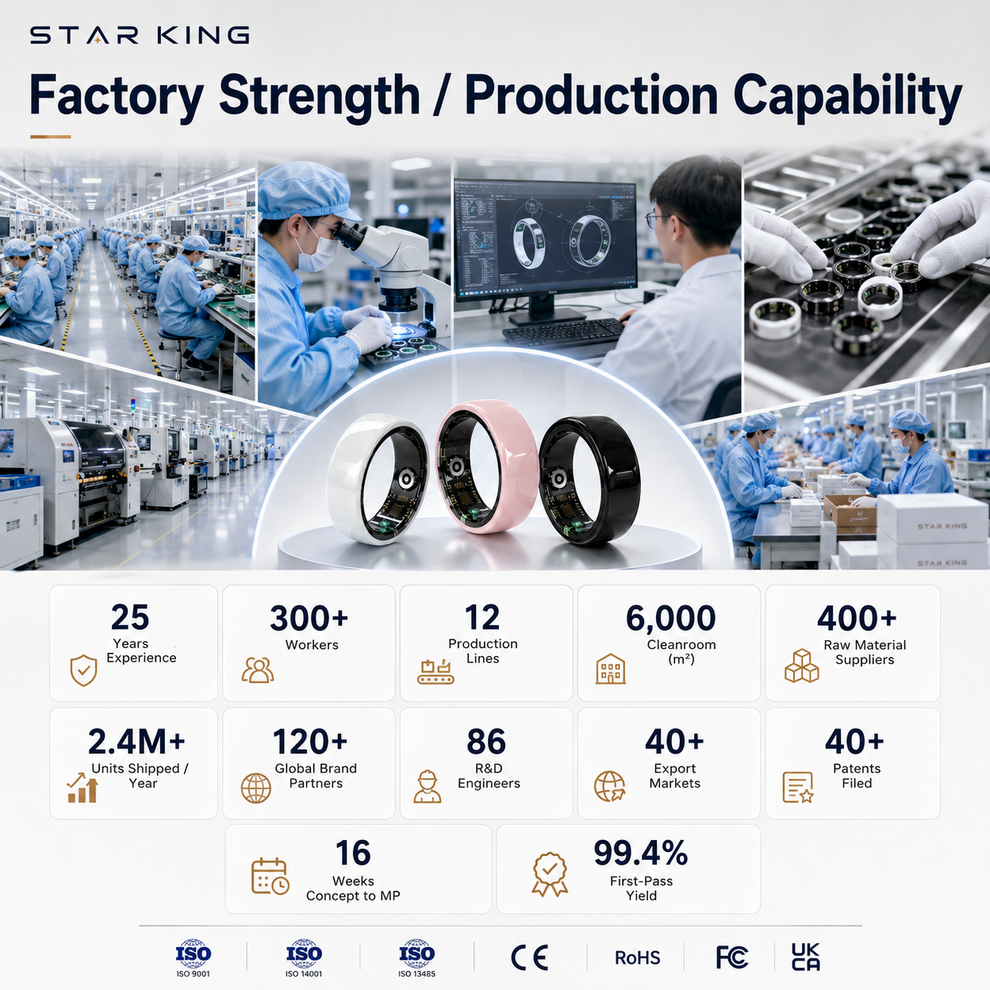
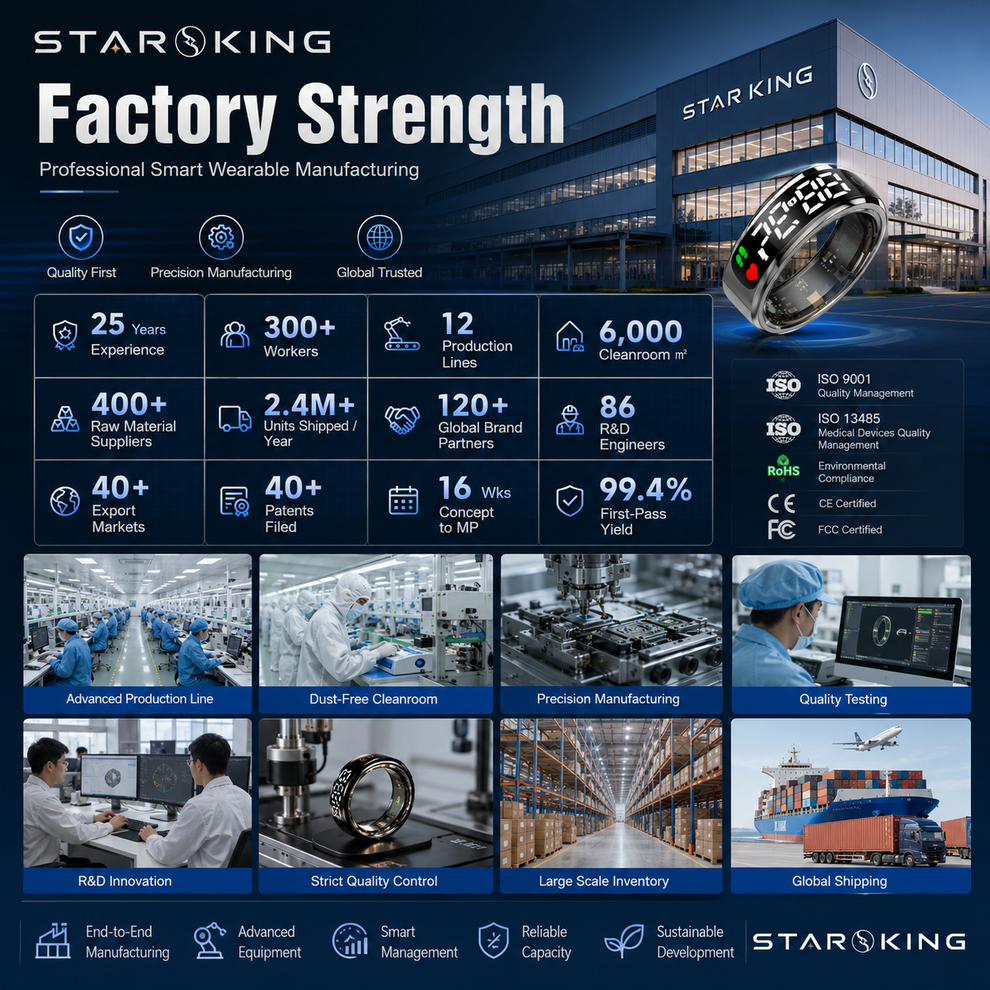
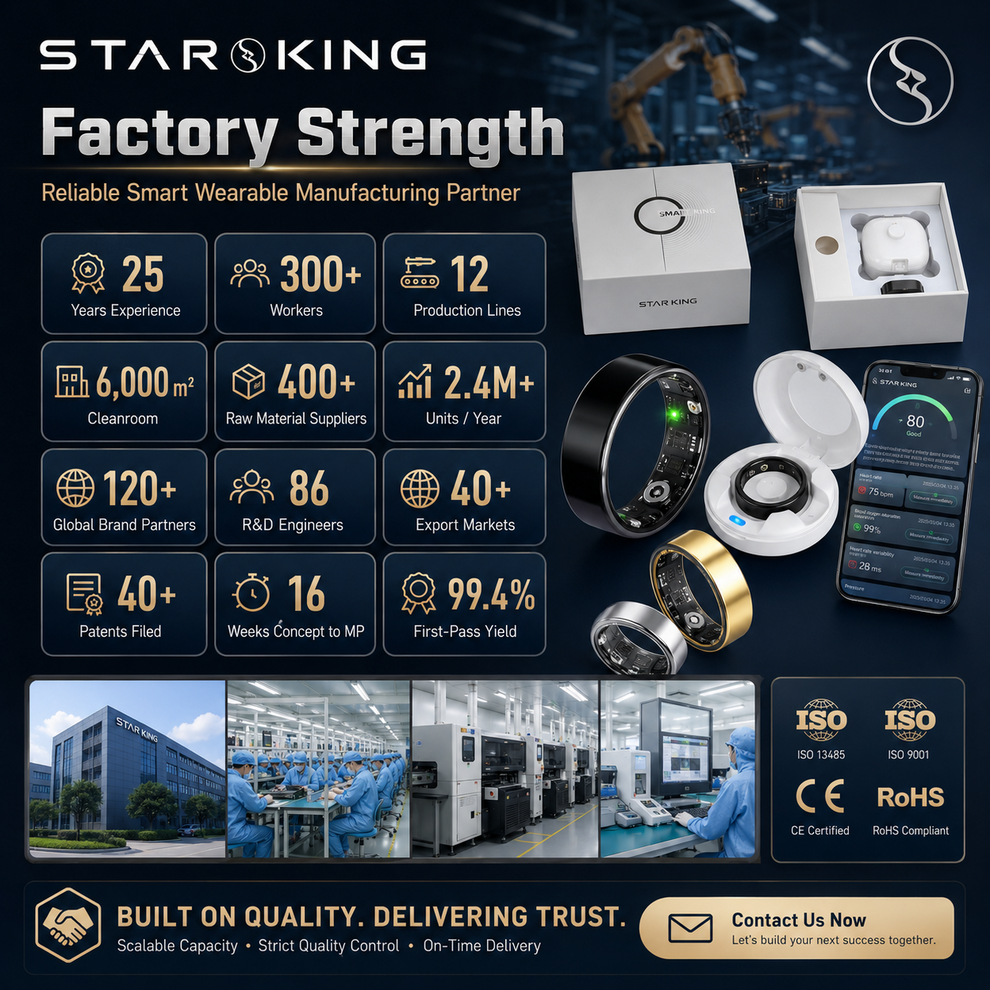
STAR KING supports retail chains with private label and OEM/ODM smart bands tailored to the EU market. We provide compliance documentation, quality control, and flexible MOQs. Request samples to evaluate our smart bands and discuss your customization needs.
Discuss Your Smart Wearable OEM/ODM Project
Planning a smart ring, smart watch, smart band, AI glasses, AI translator, or AI voice mouse project? Contact STAR KING to discuss product positioning, sample testing, customization scope, certification requirements, lead time, and quotation details.

Team Star King

Scan WhatsApp QR code
Leave a Reply