
smart watches for Amazon sellers: Amazon Smart Watch Sourcing in 2026: 7 Critical Checks for Private Label Success
October 8, 2026 · Team Star King
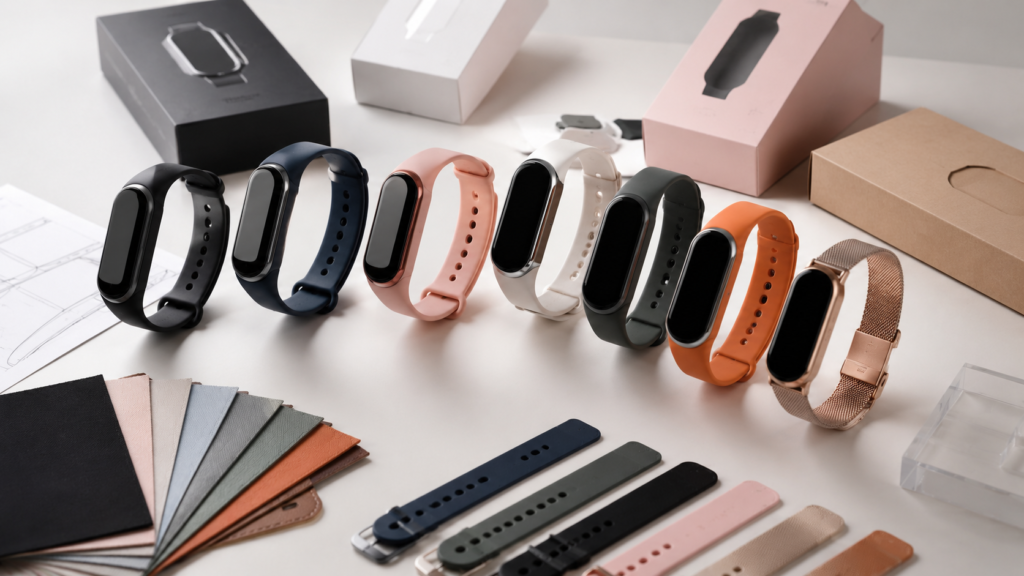
Amazon Smart Watch Sourcing in 2026: 7 Critical Checks for Private Label Success
If you are sourcing smart watches for Amazon sellers in 2026, the difference between a profitable launch and a costly recall often comes down to seven critical checks: supplier verification, MOQ and pricing, sample validation, certification compliance (FCC, CE, RoHS, UN38.3), app and firmware stability, packaging customization, and logistics planning. This guide walks you through each check with practical, procurement‑focused questions so you can negotiate with confidence and avoid common pitfalls that trip up even experienced sellers.
Table of Contents
Table of Contents
smart watches for Amazon sellers: Table of Contents
- Direct Answer
- Key Takeaways
- Key Facts for Buyers
- 1. Supplier Verification and Factory Audit
- 2. MOQ, Pricing, and Cost Breakdown
- 3. Sample Testing and Validation
- 4. Certification and Compliance for the U.S. Market
- 5. App, Firmware, and Software Stability
- 6. Packaging, Branding, and Retail Readiness
- 7. Logistics, Battery Shipping, and Lead Time
- Comparison Table: OEM vs. ODM vs. Private Label
- Common Mistakes and Buyer Red Flags
- Practical Buyer Checklist
- FAQ
- Conclusion

Direct Answer
To source smart watches for Amazon sellers successfully, verify your supplier through a third‑party audit, request samples with full testing, confirm FCC and UN38.3 compliance for the U.S., ensure the companion app is stable and customizable, negotiate MOQ and packaging, and plan for lithium‑battery shipping. Each step reduces risk and protects your brand reputation on Amazon.

Key Takeaways
- Supplier verification is non‑negotiable: request business license, audit reports, and references.
- MOQ for private‑label smart watches typically ranges from 500 to 3,000 units; pricing drops 15–30% at higher volumes.
- FCC certification is mandatory for U.S. sales; UN38.3 is required for lithium‑ion battery shipping.
- Sample testing should cover battery life, heart rate accuracy, water resistance, and app connectivity.
- Packaging customization and Amazon‑ready labeling can add $0.50–$2.00 per unit.
- Lead times average 25–45 days for production plus 7–15 days for ocean freight to the U.S.
- Always clarify IP ownership and mold exclusivity before paying tooling fees.
Key Facts for Buyers
| Factor | Typical Range / Requirement | Buyer Action |
|---|---|---|
| MOQ (private label) | 500 – 3,000 units | Negotiate tiered pricing; consider ready‑to‑brand stock for lower MOQ. |
| FCC certification | Required for U.S. import | Request FCC ID and test report; verify on FCC website. |
| UN38.3 test report | Mandatory for lithium battery shipping | Obtain report from supplier; keep for carrier. |
| Sample lead time | 7–15 days | Order pre‑production samples; test thoroughly. |
| Mass production lead time | 25–45 days after deposit | Plan for buffer; align with Amazon launch date. |
| Packaging customization | $0.50 – $2.00 per unit | Request dieline and digital proof before mass print. |
| Warranty | 12 months typical | Clarify return/repair policy and spare parts availability. |
1. Supplier Verification and Factory Audit
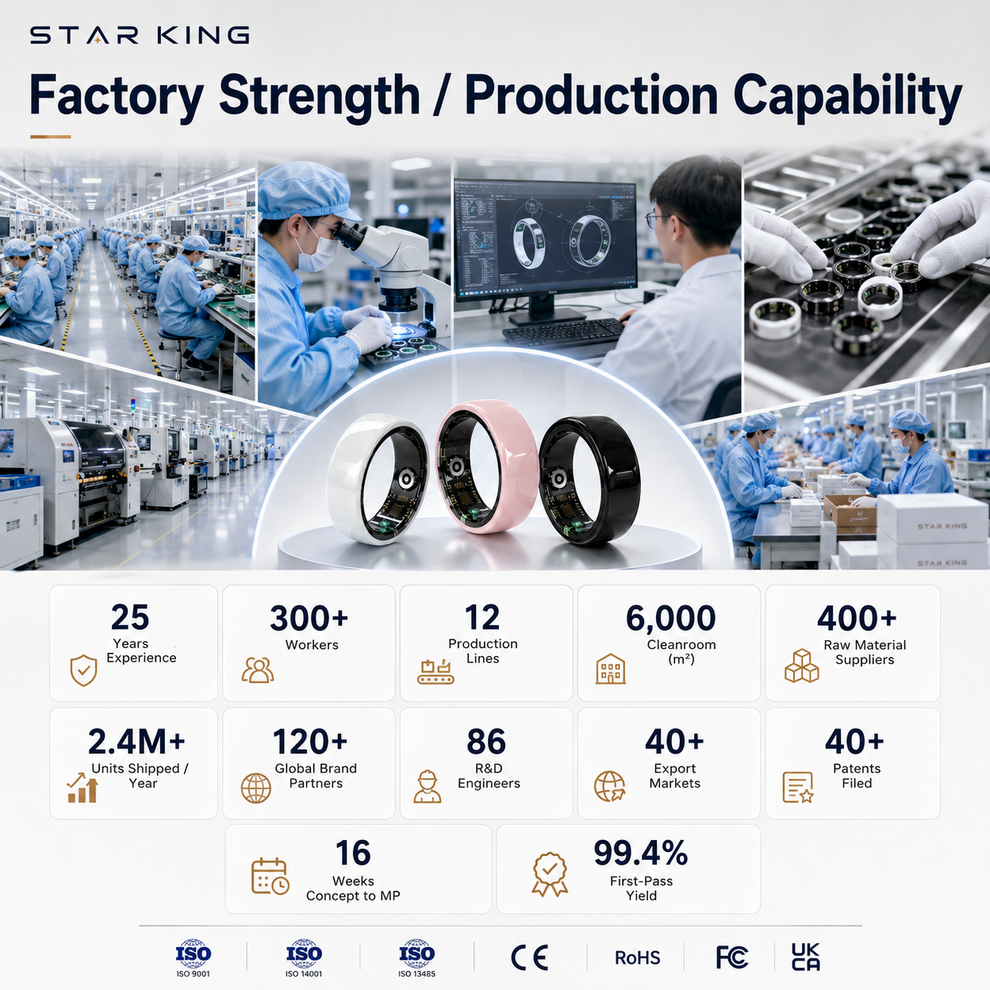
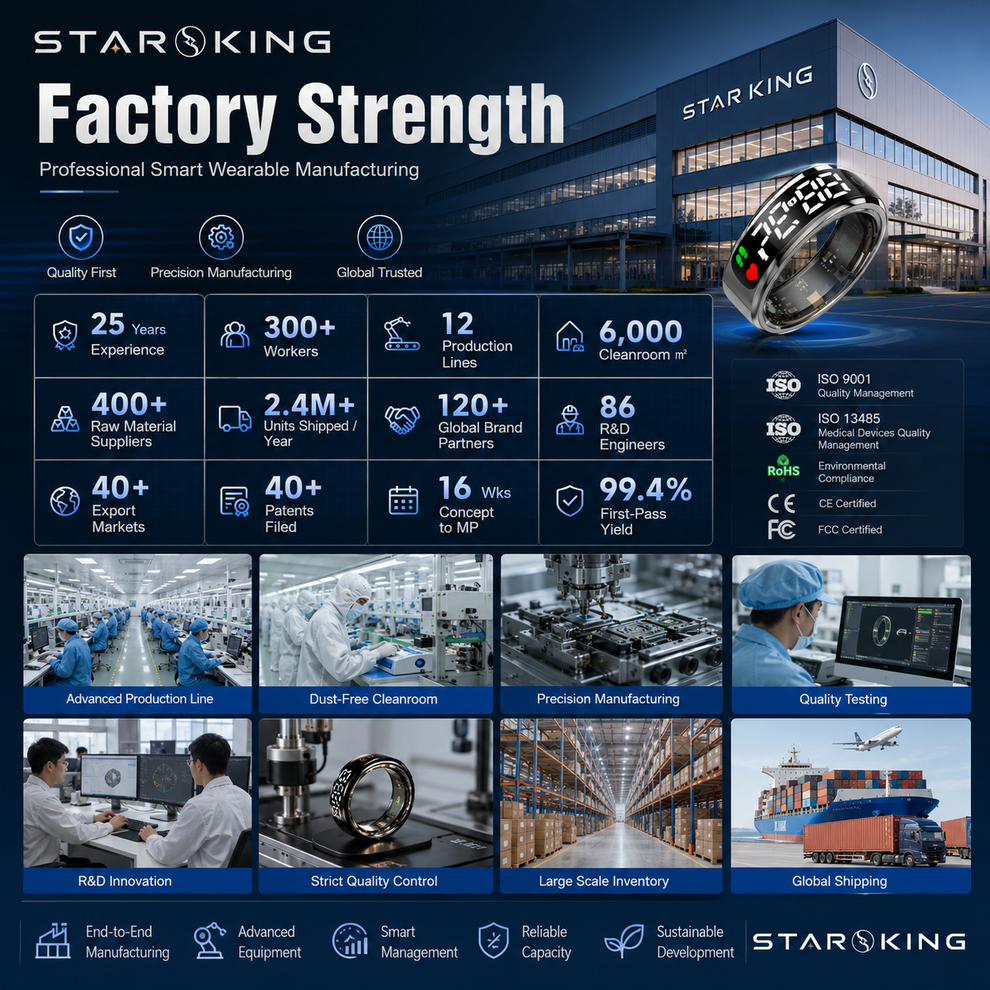
Before you discuss price, confirm the supplier is a legitimate manufacturer, not a trading company. Request a copy of the business license, ISO 9001 certificate, and recent third‑party audit reports (e.g., BSCI, Sedex). For smart watches for Amazon sellers, you also want to see evidence of FCC and UN38.3 testing. If the supplier hesitates to share these, treat it as a red flag.
A factory audit—either in‑person or via a third‑party agency—should verify production lines, quality control processes, and testing equipment. Ask how they handle incoming battery cells and whether they have an aging test area. These details separate reliable partners from resellers.
2. MOQ, Pricing, and Cost Breakdown
MOQ for private‑label smart watches varies widely. Established factories may require 1,000–3,000 units for custom tooling, while ready‑to‑brand models can start at 500 units. Understanding the cost structure helps you negotiate. Key cost drivers include:
- Display and sensor quality: AMOLED vs. LCD, heart rate sensor accuracy, SpO2.
- Battery capacity: Larger batteries increase cost but improve user experience.
- Materials: Aluminum alloy vs. plastic casing, silicone vs. leather straps.
- Certification: FCC, CE, RoHS, and UN38.3 add testing fees.
- Packaging: Custom boxes, inserts, and Amazon‑ready labeling.
Ask for a detailed quotation that separates unit price, tooling, certification, and packaging. This transparency prevents hidden costs later.
3. Sample Testing and Validation
Never skip sample testing. Order at least two pre‑production samples and evaluate them as a user would. Test battery life under real conditions, heart rate accuracy against a chest strap, water resistance (IP67 or IP68), and Bluetooth range. Also test the companion app for stability, syncing speed, and data accuracy.
For Amazon sellers, the sample should also be checked for packaging quality and included accessories (charging cable, manual). Document any issues and request fixes before mass production. A sample that fails basic tests indicates potential quality problems at scale.
4. Certification and Compliance for the U.S. Market
Selling smart watches in the United States requires compliance with FCC regulations for electronic devices. The supplier must provide an FCC ID and test report. For products with lithium‑ion batteries, UN38.3 test reports are mandatory for air and sea shipping. Additionally, RoHS compliance is often expected by retailers, and some states may have specific e‑waste regulations.
Buyers should verify certification documents directly with the issuing laboratory or on the FCC ID database. For battery shipping, refer to IATA Dangerous Goods Regulations. Always clarify which certifications are included in the quoted price and which require extra fees.
5. App, Firmware, and Software Stability
The companion app is a critical part of the smart watch experience. A poorly designed app leads to negative reviews and returns. Ask the supplier about app customization options: Can they white‑label the app? Can they modify the UI to match your brand? Is the app compatible with both iOS and Android? Are firmware updates provided over‑the‑air?
Request a demo of the app during sample evaluation. Check for data syncing issues, battery drain caused by the app, and user data privacy compliance. For Amazon sellers, a stable app reduces customer service tickets and improves ratings.
6. Packaging, Branding, and Retail Readiness
Your packaging is the first physical touchpoint for customers. Custom packaging with your logo, brand colors, and Amazon‑ready labels (FNSKU, expiration date if applicable) can elevate perceived value. Suppliers typically offer various packaging options: standard white box, custom printed box, or premium gift box. Costs range from $0.50 to $2.00 per unit.
Request a dieline and digital proof before mass printing. Ensure the packaging meets Amazon’s requirements for poly bags (suffocation warning) and box strength. Also consider including a warranty card and user manual in the box.
7. Logistics, Battery Shipping, and Lead Time
Smart watches contain lithium‑ion batteries, which are classified as dangerous goods for shipping. You must use carriers that accept UN38.3‑certified batteries and provide the necessary documentation. Sea freight is cheaper but slower (25–35 days to U.S. ports), while air freight is faster (5–10 days) but more expensive. Work with a freight forwarder experienced in battery shipments.
Lead time planning is crucial for Amazon launches. After deposit, production takes 25–45 days. Add 7–15 days for ocean freight and customs clearance. Always build in a buffer for potential delays. Discuss with your supplier whether they can expedite production for an additional fee.
Comparison Table: OEM vs. ODM vs. Private Label
| Model | Description | Customization Level | MOQ | Best For |
|---|---|---|---|---|
| OEM | You provide design and specs; factory manufactures. | High (logo, packaging, firmware, hardware) | 3,000+ | Brands with unique designs |
| ODM | Factory offers existing design; you customize branding. | Medium (logo, packaging, app skin) | 500–1,000 | Startups and small brands |
| Private Label | Ready‑to‑brand product with your logo. | Low (logo on watch and packaging) | 100–500 | Amazon sellers testing market |
Common Mistakes and Buyer Red Flags
- Choosing the lowest price without verification: Cheap often means subpar components or missing certifications.
- Ignoring app quality: A bad app ruins the user experience and generates returns.
- Skipping sample testing: Never rely on spec sheets alone.
- Failing to clarify IP ownership: Ensure you own the mold and design if you pay for tooling.
- Overlooking shipping regulations: Lithium batteries require special handling; non‑compliance can lead to fines.
Practical Buyer Checklist
- ☐ Verify supplier business license and factory audit reports.
- ☐ Request FCC ID and UN38.3 test reports.
- ☐ Order pre‑production samples and test battery, sensors, app.
- ☐ Clarify MOQ, unit price, tooling, certification, and packaging costs.
- ☐ Confirm app customization options and white‑label feasibility.
- ☐ Review packaging dieline and Amazon labeling requirements.
- ☐ Plan logistics with a freight forwarder experienced in battery shipping.
- ☐ Negotiate warranty terms and spare parts availability.
Buyers can also review STAR KING Smart Watches OEM/ODM options to compare product positioning, customization scope, and sample planning.
FAQ
What is the typical MOQ for private‑label smart watches?
MOQ varies by supplier and customization level. For ready‑to‑brand models, MOQ can be as low as 100–500 units. For full OEM with custom tooling, expect 1,000–3,000 units.
Do I need FCC certification to sell smart watches on Amazon US?
Yes, any electronic device that emits radio frequency energy must be FCC certified. Your supplier should provide an FCC ID and test report. Verify the ID on the FCC website.
How long does it take to manufacture and ship smart watches to the U.S.?
Production typically takes 25–45 days after deposit. Ocean freight to the U.S. adds 25–35 days, while air freight takes 5–10 days. Plan for a total of 6–10 weeks door‑to‑door.
Can I customize the packaging and logo on the watch?
Most suppliers offer logo printing on the watch and custom packaging. Costs depend on order quantity and design complexity. Request a digital proof before mass production.
What should I check in a smart watch sample?
Test battery life, heart rate accuracy, water resistance, Bluetooth connectivity, and app stability. Also check packaging quality and included accessories.
Are smart watches with health sensors considered medical devices?
Generally, consumer smart watches with heart rate and SpO2 sensors are not medical devices. They are intended for wellness purposes. If you make medical claims, you may need FDA clearance. Consult a regulatory expert.
Conclusion
Sourcing smart watches for Amazon sellers in 2026 requires diligence across supplier verification, sample testing, certification, app quality, packaging, and logistics. By following these seven critical checks, you minimize risk and position your brand for success. The U.S. market rewards sellers who prioritize quality and compliance.
STAR KING CTA
Ready to source smart watches for your Amazon business? Request a quotation or discuss your OEM/ODM project with STAR KING today. We help you navigate MOQ, certification, and customization to launch with confidence.
Discuss Your Smart Wearable OEM/ODM Project
Planning a smart ring, smart watch, smart band, AI glasses, AI translator, or AI voice mouse project? Contact STAR KING to discuss product positioning, sample testing, customization scope, certification requirements, lead time, and quotation details.

Team Star King

Scan WhatsApp QR code
Leave a Reply