
AI voice mouse Middle East: 7 Critical Checks for Importing AI Voice Mice to the Middle East: A 2026 Importer’s Guide
October 6, 2026 · Team Star King
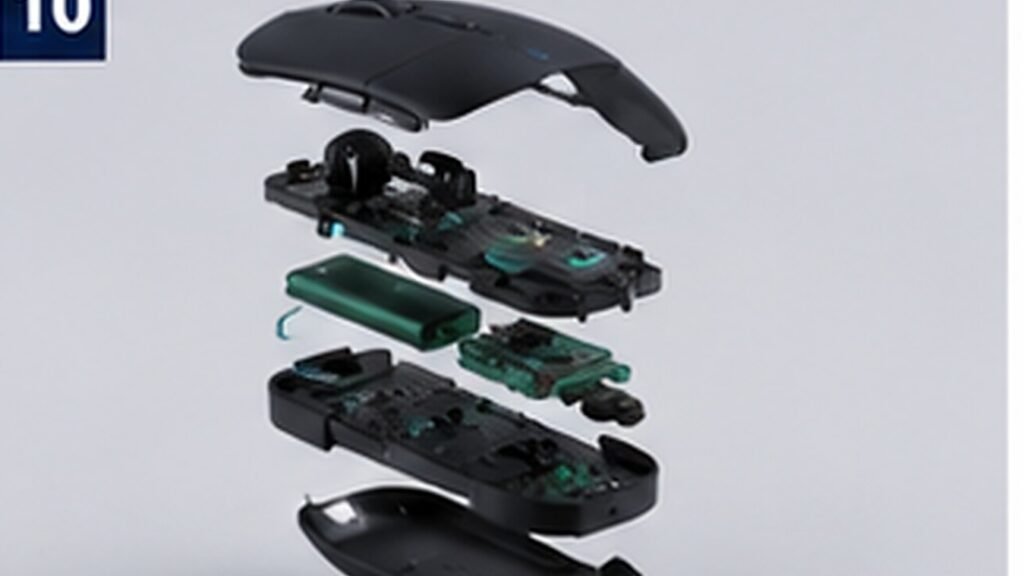
AI voice mouse Middle East buyers need a supplier evaluation process that checks product fit, OEM/ODM capability, compliance documents, quality control, pricing, lead time, and after-sales support before placing a bulk order.
Table of Contents
Table of Contents
7 Critical Checks for Importing an AI Voice Mouse to the Middle East: A 2026 Importer’s Guide
Importing an AI voice mouse to the Middle East requires seven core checks: radio and electrical certification (G-mark, CE, FCC), Arabic and multilingual voice recognition accuracy, OEM and private-label options, MOQ and lead time, battery shipping documentation, quality control, and after-sales support. Buyers who verify these before ordering avoid customs delays, returns, and margin loss in GCC markets such as Saudi Arabia, the UAE, and Qatar.
AI voice mouse Middle East: Table of Contents
- Direct Answer: Is the Middle East Ready for an AI Voice Mouse?
- Key Takeaways
- Key Facts for Buyers
- What Is an AI Voice Mouse?
- Check 1: Certification and Radio Compliance for GCC Import
- Check 2: Arabic and Multilingual Voice Accuracy
- Check 3: OEM, ODM, and Private-Label Flexibility
- Check 4: MOQ, Lead Time, and Landed Cost
- Check 5: Battery Shipping, UN38.3, and MSDS
- Check 6: Quality Control and Testing Evidence
- Check 7: Warranty, RMA, and Spare Parts
- Comparison Table: Supplier Profiles
- Common Mistakes and Buyer Red Flags
- Practical Buyer Checklist
- FAQ
- Conclusion
Direct Answer: Is the Middle East Ready for an AI Voice Mouse?
Yes, but only for importers who treat certification and language accuracy as gating items, not afterthoughts. Middle East markets have high bilingual literacy, strong government digitization programs, and rising demand for workplace productivity devices. However, an AI voice mouse sold in the GCC typically needs radio and electrical approvals, verified Arabic language support, and documented battery safety files before it can clear customs and reach retail.
Key Takeaways
- The AI voice mouse Middle East opportunity is real, but sales depend on certification and Arabic language performance, not just price.
- GCC countries may require G-mark or equivalent national approvals; buyers should verify per country before purchase orders.
- Arabic support quality varies widely; demand a dialect sample test, not a marketing screenshot.
- Private-label and OEM programs let importers build brand value instead of competing on price alone.
- MOQ, lead time, and landed cost should be modeled at the country level, not estimated loosely.
- Battery shipping requires UN38.3 test summaries and MSDS documentation for air and sea freight.
- After-sales support with regional RMA options protects margin over the life of the product.
Key Facts for Buyers
| Factor | Typical Range / Note |
|---|---|
| Target markets | UAE, Saudi Arabia, Qatar, Kuwait, Oman, Bahrain, Jordan, Egypt |
| Common approval requirements | G-mark or national telecom approvals; CE/FCC for reference |
| Voice languages that matter | Arabic (Modern Standard plus Gulf and Egyptian dialects), English, French |
| Typical MOQ | Varies by customization; confirm with supplier. [STAR KING TO CONFIRM] |
| Production lead time | Sample: weeks; mass production depends on tooling and quantity. [STAR KING TO CONFIRM] |
| Key shipping documents | UN38.3 test summary, MSDS, commercial invoice, certificate of origin |
| Warranty expectations | 12–24 months typical for B2B importers |
What Is an AI Voice Mouse?
An AI voice mouse is a computer peripheral that combines a standard pointer with a microphone and voice-processing software, allowing users to dictate text, issue commands, translate speech, and trigger AI-driven workflows. It connects over USB, Bluetooth, or a dedicated receiver and typically pairs with a desktop application.
How buyers should evaluate an AI voice mouse: treat it as two products in one. The first is a hardware peripheral, subject to electrical, radio, and battery regulations. The second is a software and language product, whose value depends on recognition accuracy in the languages your customers actually speak. Importers who evaluate only the hardware often discover the language gap after the container ships.
Check 1: Certification and Radio Compliance for GCC Import
Certification is the first gate for any AI voice mouse Middle East program. Because voice mice usually include Bluetooth or a 2.4 GHz receiver, they are regulated radio devices, not simple wired peripherals.
What GCC markets commonly require
- Saudi Arabia: G-mark through the Saudi Standards, Metrology and Quality Organization (SASO), and CITC equipment approval for radio devices.
- UAE: TDRA type approval for telecom and radio equipment, plus product safety requirements.
- Other GCC states: national telecom and standards approvals that buyers should verify individually.
Buyers should verify the exact approval list with a local customs broker or certification agent before issuing a purchase order. See the UAE Telecommunications and Digital Government Regulatory Authority (TDRA) and the Saudi Standards, Metrology and Quality Organization (SASO) for authoritative guidance. CE and FCC certification may support your documentation package but do not replace GCC approvals. Confirm which certifications a given product configuration holds before quoting delivery dates.
Check 2: Arabic and Multilingual Voice Accuracy
Language performance decides whether an AI voice mouse sells or sits in the warehouse. Marketing claims of “99% accuracy” are usually measured in one language under one accent.
How to test Arabic support properly
- Request a live or recorded demo using Modern Standard Arabic and at least one Gulf dialect.
- Test code-switching, where users move between Arabic and English in one sentence.
- Check whether the device supports offline processing or depends on a cloud service.
- Confirm the update policy: how often is the language model improved, and who pays for it?
If a supplier cannot provide a verified Arabic demo on short notice, treat that as a signal. Multilingual devices are only valuable if the specific languages in your market perform reliably.
Check 3: OEM, ODM, and Private-Label Flexibility
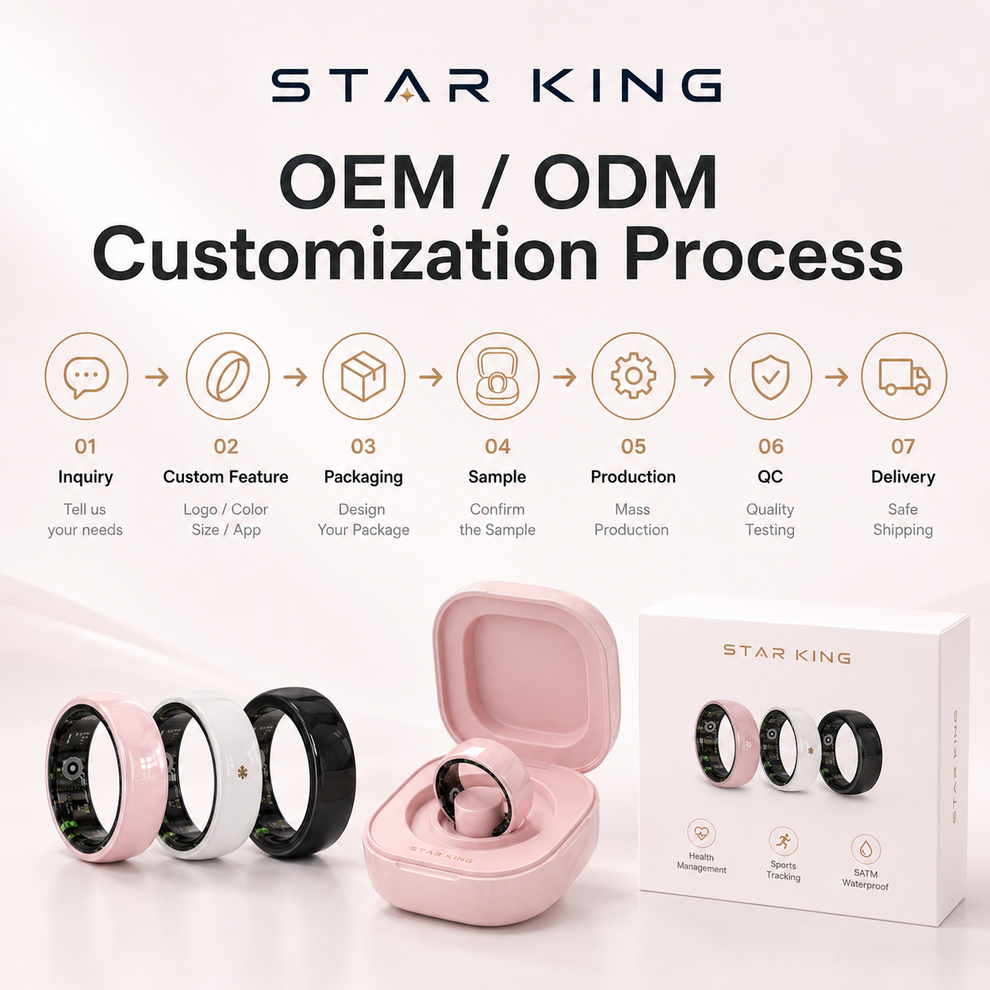
Importers rarely want the same generic device as every competitor. Ask what can actually be customized.
Customization layers to negotiate
- Logo printing or laser etching on the housing.
- Retail packaging design and localized manuals in Arabic and English.
- Firmware presets: default language, shortcut keys, command sets.
- Application branding and onboarding screens.
- Accessory selection: receiver, cables, travel case.
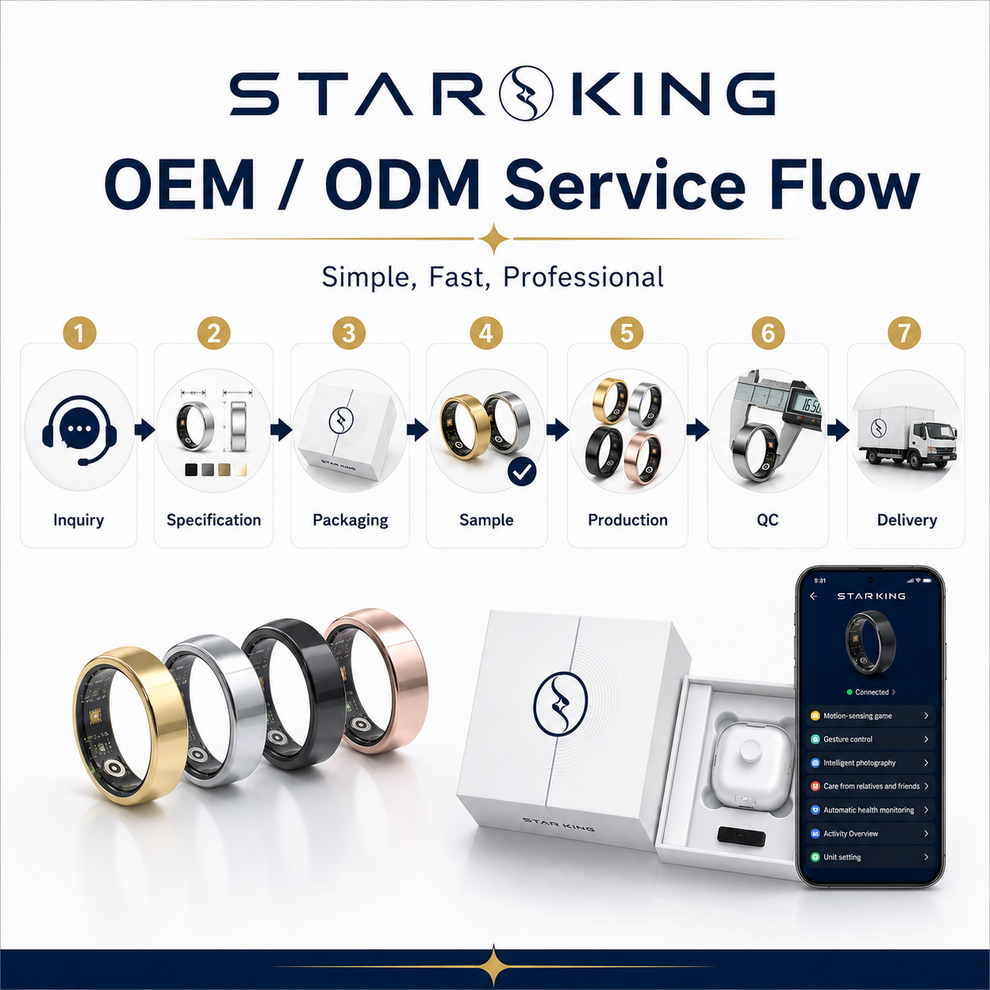
Reviewing a private-label program early keeps you from renegotiating fundamentals at the purchase-order stage. A structured private-label OEM/ODM program can align industrial design, firmware, and packaging around your brand instead of the factory’s default.
Soft CTA: If you want a clear view of which customization layers are feasible for your budget and timeline, the STAR KING team can walk your product team through typical options for an AI voice mouse.
Check 4: MOQ, Lead Time, and Landed Cost
MOQ and lead time are driven by tooling, firmware, packaging, and component availability. Model landed cost by destination country, not by FOB price alone.
Cost and schedule factors buyers usually underestimate
- Custom packaging tooling and print runs.
- Firmware changes requiring re-testing.
- Air versus sea freight for battery-containing goods.
- Duty, VAT, and customs clearance fees per GCC country.
- Warehousing and last-mile distribution inside the region.
Per-country MOQ varies, and disclosure practices differ across suppliers. Use a documented planning framework to compare quotes on a like-for-like basis; a low unit price with a high hidden MOQ often loses to a slightly higher price with flexible tiers. Discuss AI office productivity solutions with your supplier to understand realistic volume expectations for the corporate and education channels. STAR KING can confirm current MOQ and lead times for specific configurations. [STAR KING TO CONFIRM]
Check 5: Battery Shipping, UN38.3, and MSDS
Rechargeable lithium-ion batteries are regulated dangerous goods. Air and sea carriers typically require a UN38.3 test summary and an MSDS before accepting the shipment.
Documents to request before booking freight
- UN38.3 test summary for the cell and pack.
- MSDS in the format your freight forwarder expects.
- Battery safety statements consistent with your target markets.
- Labeling that shows watt-hour rating and shipping class.
For authoritative framing, review the IATA dangerous goods guidance and applicable FAA battery rules when moving devices by air. Buyers should verify current requirements with their freight forwarder because regulations update frequently.
Check 6: Quality Control and Testing Evidence
Good importers do not rely on a supplier’s assurance that “quality is guaranteed.” They ask for evidence.
What a reasonable QC package includes
- Incoming component inspection for microphones, switches, and batteries.
- In-process assembly checks and function testing.
- Aging tests for electronics and pairing stability.
- Drop and shipping-vibration tests to reduce in-transit failures.
- Pre-shipment inspection with photos and pass/fail reports.
If a supplier cannot share a sample QC report structure, that is a gap, not a nuance. Request a full QC file on the finished SKU you intend to buy.
Check 7: Warranty, RMA, and Spare Parts
An AI voice mouse lives or dies on after-sales service. For GCC importers, a broken unit with no local replacement path is a refund and a reputation problem.
After-sales elements to negotiate in writing
- Warranty term and what it covers: hardware, software, or both.
- RMA process, shipping address, and turnaround time.
- Spare parts availability: receivers, batteries, microphones.
- Firmware and app support commitments over the product’s life.
Warranty structures and regional RMA options vary by supplier and configuration. Buyers should verify these terms before finalizing a distributor or e-commerce launch. [STAR KING TO CONFIRM]
Comparison Table: Supplier Profiles
| Supplier Profile | Certification Depth | Customization | MOQ Flexibility | After-Sales | Best For |
|---|---|---|---|---|---|
| Trading intermediary | Often limited to supplier claims | Low | Small or negotiable | Unclear ownership | Fast test buys |
| Low-cost contract manufacturer | Depends on SKU | Basic logo and packaging | Usually high | Limited documentation | Price-led private-label |
| Full-service OEM/ODM partner | Documentable per configuration | Firmware, app, packaging, ID | Tiered by customization | Structured RMA and spares | Brand builders and distributors |
Buyers should match supplier profile to channel: a brand-building distributor needs deeper customization and support than a marketplace seller running a quick promotion.
Common Mistakes and Buyer Red Flags
- Quoting a retail price before certification costs are included in the landed cost.
- Accepting generic Arabic claims without testing a dialect sample.
- Choosing the lowest MOQ without checking firmware and packaging minimums.
- Overlooking UN38.3 and MSDS until the freight forwarder rejects the shipment.
- Skipping the QC file and discovering failure rates only after launch.
- Assuming one GCC approval covers the whole region.
- Ordering spare parts only after the first returns arrive.
Use these as red flags in supplier conversations. If a supplier resists documentation requests, budget the risk into your decision.
Practical Buyer Checklist
- Confirm target countries and their approval requirements.
- Collect CE, FCC, and any G-mark documentation for the exact SKU.
- Run an Arabic voice demo across at least two dialects.
- Define customization scope: logo, packaging, firmware, app.
- Get MOQ and lead time in writing, per configuration.
- Request UN38.3, MSDS, and packing declarations.
- Review QC plans, aging, drop, and pre-shipment inspection steps.
- Agree warranty, RMA, and spare-parts terms before the PO.
- Model landed cost by country, not just FOB price.
FAQ
Do AI voice mice need special approvals in GCC countries?
Because they are radio devices, they typically require telecom type approval and national standards approvals. Requirements vary per country, so verify with a local certification agent.
Is Arabic voice recognition reliable enough for business users?
Quality varies by supplier. Modern Standard Arabic is usually the baseline; Gulf and Egyptian dialect support should be tested directly with the specific device.
What MOQ should I expect for private-label AI voice mice?
MOQ depends on customization depth and packaging tooling. Ask for MOQ tiers keyed to logo, packaging, and firmware changes. Confirm specific thresholds with your supplier. [STAR KING TO CONFIRM]
Can I ship AI voice mice by air to the Middle East?
Yes, with UN38.3 and MSDS documentation and compliant packaging. Confirm current rules with your freight forwarder before booking.
How long should warranty and spare parts coverage last?
Most B2B buyers target 12–24 months of warranty with access to replacement receivers, batteries, and microphones.
What is the biggest sourcing risk in this category?
Underestimating language and certification work. These two items drive returns, delays, and margin loss more than unit price differences.
Do you offer OEM and private-label AI voice mouse programs?
Yes. STAR KING works with importers on logo, packaging, firmware presets, and app-level customization. Scope details depend on the configuration and target market. [STAR KING TO CONFIRM]
Conclusion
The AI voice mouse Middle East opportunity rewards importers who treat certification, language accuracy, and after-sales as core parts of the product, not overhead. The seven checks in this guide give you a working filter: approve suppliers who document their claims, set realistic MOQ and lead time expectations, and build spare-parts and RMA plans before the first shipment arrives.
Next Step: Request Samples or Discuss a Private-Label Program
If you are evaluating an AI voice mouse line for the GCC or wider Middle East region, the fastest way to reduce uncertainty is to test hardware and language behavior side by side. Request product samples, or discuss an OEM/ODM project so the STAR KING team can share feasible customization options, documentation availability, and sample timelines for your target markets.
Request AI Voice Mouse Samples for the Middle East
Discuss Your Smart Wearable OEM/ODM Project
Planning a smart ring, smart watch, smart band, AI glasses, AI translator, or AI voice mouse project? Contact STAR KING to discuss product positioning, sample testing, customization scope, certification requirements, lead time, and quotation details.

Team Star King

Scan WhatsApp QR code
Leave a Reply