smart watch suppliers: 7 Checks to Choose a Smart Watch Manufacturer for U.S. Importers
smart watch suppliers buyers need a supplier evaluation process that checks product fit, OEM/ODM capability, compliance documents, quality control, pricing, lead time, and after-sales support before placing a bulk order.
Table of Contents
Table of Contents
7 Checks to Choose a Smart Watch Manufacturer for U.S. Importers
When you select a smart watch manufacturer for U.S. importers, the right supplier must provide more than a catalog: documentable quality controls, U.S. market compliance (FCC, RoHS, UN38.3), transparent MOQ and lead time, sample testing, and clear ownership of tooling and IP. Start by defining your product tier, target retail channel, and budget, then verify these seven areas before you issue a PO. This guide gives importers a decision framework for comparing OEM/ODM partners, including sample tests, certification checks, and landed-cost math.
smart watch suppliers: Table of Contents
- Direct Answer
- Key Takeaways
- Key Facts for Buyers
- 1. Product Tier & Feature Fit
- 2. OEM/ODM/Private Label Model
- 3. Certification & U.S. Compliance
- 4. Quality Control & Testing
- 5. MOQ, Price & Lead Time
- 6. Software, App & Firmware
- 7. IP, Tooling & After-Sales
- Supplier Comparison Table
- Common Mistakes & Buyer Red Flags
- Buyer Checklist
- FAQ
- Conclusion

Direct Answer
To choose a smart watch manufacturer for U.S. importers, verify seven areas: product tier fit, OEM/ODM/private label capability, U.S. compliance documentation, QC and testing procedures, MOQ/price/lead time, software/app control, and IP/tooling ownership. Request samples and compliance files before committing. Certification scope and cost typically depend on the exact model, radio configuration, and target market, so buyers should verify current requirements.
Key Takeaways
- Define your product tier and channel first; supplier fit depends on use case (fitness, sleep, notifications).
- Match the sourcing model to your brand: OEM for speed, ODM for customization, private label for quick launch.
- Confirm FCC, RoHS, and UN38.3 coverage for each SKU; certification is not one-size-fits-all.
- Audit QC and testing, not just marketing images.
- Model landed cost with MOQ, shipping, duties, and returns before price negotiations.
- Check app/firmware update commitments and data privacy terms in writing.
- Clarify tooling and IP ownership to avoid supplier lock-in.
- Use our blog resources to compare specs and compliance questions.

Key Facts for Buyers
| Area | What to Verify | Why It Matters for U.S. Importers |
|---|---|---|
| Compliance | FCC ID, RoHS declaration, UN38.3 report, MSDS | Customs and retail channels may require documentation; non-compliant devices risk hold or recall. |
| QC & Testing | IQC, IPQC, OQC, functional and battery tests | Reduces defect rates and chargebacks; validates claims before mass production. |
| MOQ & Lead Time | MOQ per SKU/color, sample lead time, production lead time | Aligns inventory planning with cash flow and launch dates. |
| Software/App | App owner, update policy, data handling | App continuity affects returns and customer reviews. |
| IP/Tooling | Mold ownership, exclusivity, NDA | Protects your design investment and channel exclusivity. |
1. Product Tier & Feature Fit
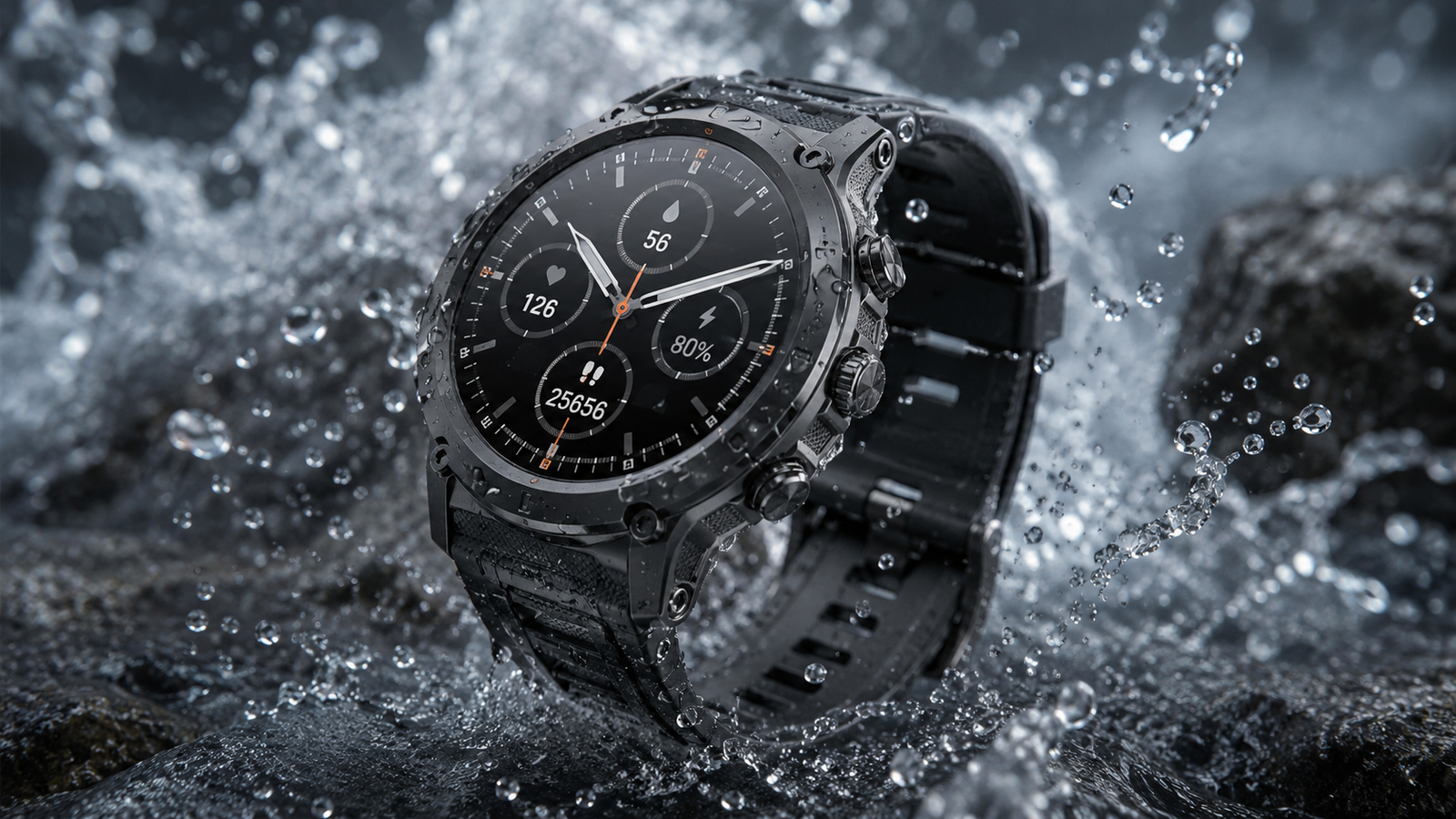
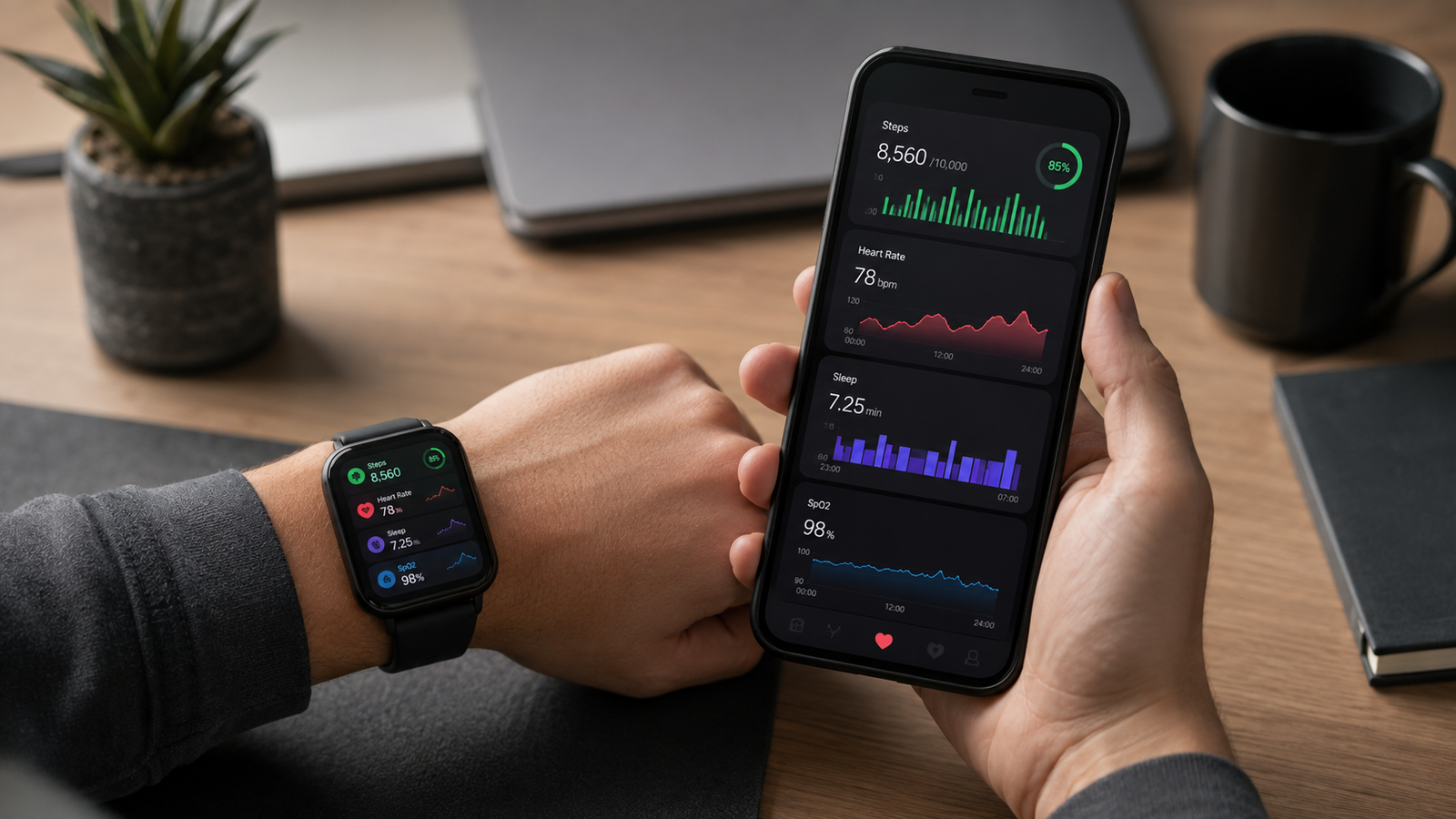
Start with the use case, not the price. A $19.99 promo watch and a $129 multi-sport model demand different suppliers. Map your target customer: fitness tracking, sleep/recovery, notifications, or basic step counting. Feature fit determines sensor type, display, battery capacity, and waterproof rating—each of which affects cost and compliance. For example, a U.S. big-box buyer may need FCC labeling and specific battery documentation; an Amazon seller may prioritize packaging and app stability for returns reduction.
How to decide
- Rank must-have vs. nice-to-have features (heart rate, SpO2, GPS).
- Confirm display size, resolution, and touch performance expectations.
- Set target battery life range and charging method (magnetic pin vs. wireless).
- Match waterproof rating to use case (IP67 vs. 5ATM).
See our smart watches product range for baseline configurations to compare against supplier quotes.
2. OEM/ODM/Private Label Model
Buyers often confuse these models. OEM typically means manufacturing to your specifications using your design or a standard platform; ODM means the factory offers a developed product you can customize; private label means branding an existing platform with your logo and packaging.
Decision guide
| Model | Best For | Typical Customization | Trade-offs |
|---|---|---|---|
| OEM | Brands with design and spec control | Housing, sensors, firmware hooks | Higher tooling cost and lead time |
| ODM | Brands that want speed with some customization | Logo, UI accents, packaging | Limited exclusivity unless negotiated |
| Private Label | E-commerce sellers launching fast | Logo, packaging, app naming | Lowest differentiation; check MOQ |
Review our private label and OEM/ODM solution to assess which model fits your roadmap. If you are testing demand, private label is usually the fastest path; if you plan channel exclusivity, negotiate ODM/OEM terms early.
3. Certification & U.S. Compliance
For U.S. importers, compliance is a gating factor. Smart watches often contain Bluetooth radios and lithium batteries, triggering specific requirements. Certification scope and cost typically depend on the exact model, radio module, and target market, so verify each SKU.
Documents to request
- FCC equipment authorization for intentional/unintentional radiators—U.S. importers commonly need an FCC ID. Reference the FCC equipment authorization database.
- RoHS compliance declaration for restricted substances; see EU directive guidance on RoHS.
- UN38.3 test summary for lithium batteries, plus MSDS.
- Battery safety and transportation documents aligned with carrier rules.
Note: FCC rules and labeling requirements can change; confirm current obligations with a compliance lab or counsel. FDA rules generally do not classify a general wellness smart watch as a medical device, but any medical claims can change that status—buyers should verify intended use claims.
4. Quality Control & Testing
Ask for the QC flow: incoming material inspection (IQC), in-process (IPQC), and outgoing (OQC). Then map testing: aging test, drop test, waterproof test, and functional checks. For a U.S. marketplace with high return rates, the OQC pass rate and defect definition matter more than a glossy catalog.
Practical tests
- Charge/discharge cycles and standby current draw.
- Touch responsiveness and screen brightness uniformity.
- Bluetooth pairing stability across iOS and Android versions.
- Water resistance spot checks per claimed rating.
Request a pre-shipment inspection option (third-party or factory QC) and define AQL levels in the PO.
5. MOQ, Price & Lead Time
MOQ is a negotiation lever tied to tooling, materials, and packaging. Ask for MOQ per SKU and per color, plus any surcharge for mixed colors. Build a simple landed-cost model:
| Cost Element | Example Input | Buyer Action |
|---|---|---|
| Unit price (FOB) | $XX | Compare quotes at same spec |
| Freight | Air vs. sea | Match to launch timing |
| Duty/tariff | HS code dependent | Verify with broker |
| Inland & warehousing | 3PL rates | Include returns buffer |
| Warranty reserve | % of units | Track early failure rates |
Lead time should be broken into sample lead time, mass production lead time, and shipping. Ask about capacity during peak season and how delays are communicated.
6. Software, App & Firmware
The app experience drives reviews. Clarify who owns the app, how updates are delivered, and what happens if the supplier changes direction. For U.S. buyers, data privacy and disclosures matter; review the supplier’s app privacy policy and data handling. If you plan corporate wellness or senior health monitoring, check integration options. Our remote health wearables application page outlines use cases, but buyers should verify app features for their specific market.
7. IP, Tooling & After-Sales
If you invest in custom molds or designs, confirm ownership in writing. Address exclusivity terms, NDA coverage, and spare parts availability. Define warranty terms, RMA process, and who pays return shipping. A supplier that avoids these topics may create long-term risk.
Supplier Comparison Table
| Criterion | Strong Signal | Weak Signal |
|---|---|---|
| Compliance | Provides FCC ID, RoHS, UN38.3, MSDS per SKU | Vague claims or no documents |
| QC | Shares test reports and AQL process | Only marketing images |
| MOQ | Clear MOQ tiers and sample policy | Vague or changing MOQ |
| App | Documented update roadmap | No app owner clarity |
| IP | Written mold ownership terms | Avoids ownership discussion |
Common Mistakes & Buyer Red Flags
- Buying on unit price alone without landed cost or warranty reserve.
- Assuming one certificate covers all SKUs and colors.
- Skipping sample testing for touch, battery, and pairing.
- Accepting verbal promises on app updates or exclusivity.
- Ignoring packaging and labeling requirements for U.S. retail.
Buyer Checklist
- Define tier, channel, and target retail price.
- Request spec sheet, certification documents, and test reports.
- Order samples and run a 7-day use test.
- Confirm MOQ, lead time, and shipping terms in the quote.
- Review app privacy and update policy.
- Negotiate tooling and IP ownership terms.
- Arrange pre-shipment inspection and define AQL.
- Model landed cost with duty, freight, and returns.
FAQ
What compliance documents do U.S. importers need for smart watches?
Typically FCC equipment authorization if the watch has a radio, a RoHS declaration, UN38.3 for the battery, and an MSDS. Requirements vary by configuration; verify with a lab.
How do I verify a smart watch manufacturer?
Request business license, factory audit reports, certificates per SKU, and reference customers. Test samples and check app stability.
What MOQ should I expect for private label smart watches?
MOQ depends on the platform and customization. Ask for per-SKU and per-color MOQ and clarify surcharges.
Can I get FCC certification support from the factory?
Many factories coordinate with labs, but responsibility varies. Buyers should confirm which party holds the FCC ID and labeling.
How long are lead times?
Sample lead time, mass production, and shipping are separate. Confirm peak-season capacity and delay communication.
What app issues should I watch for?
Update frequency, data privacy, and account management. Ask for a written update roadmap.
Who owns the mold if I pay for tooling?
Ownership depends on the contract. Put mold and design ownership in writing before payment.
Conclusion
Selecting a smart watch manufacturer for U.S. importers is a documentation and testing exercise as much as a price negotiation. By evaluating product fit, sourcing model, compliance, QC, MOQ, software, and IP, you reduce launch risk and build a supplier relationship that supports scale.
Primary CTA: Ready to compare options? Request a quotation and share your target spec, market, and volume to discuss an OEM/ODM or private label project.
Discuss Your Smart Wearable OEM/ODM Project
Planning a smart ring, smart watch, smart band, AI glasses, AI translator, or AI voice mouse project? Contact STAR KING to discuss product positioning, sample testing, customization scope, certification requirements, lead time, and quotation details.

Team Star King

Scan WhatsApp QR code