
source AI translators: How to Source AI Translators for Southeast Asia in 2026: 7 Steps for Distributors
October 9, 2026 · Team Star King
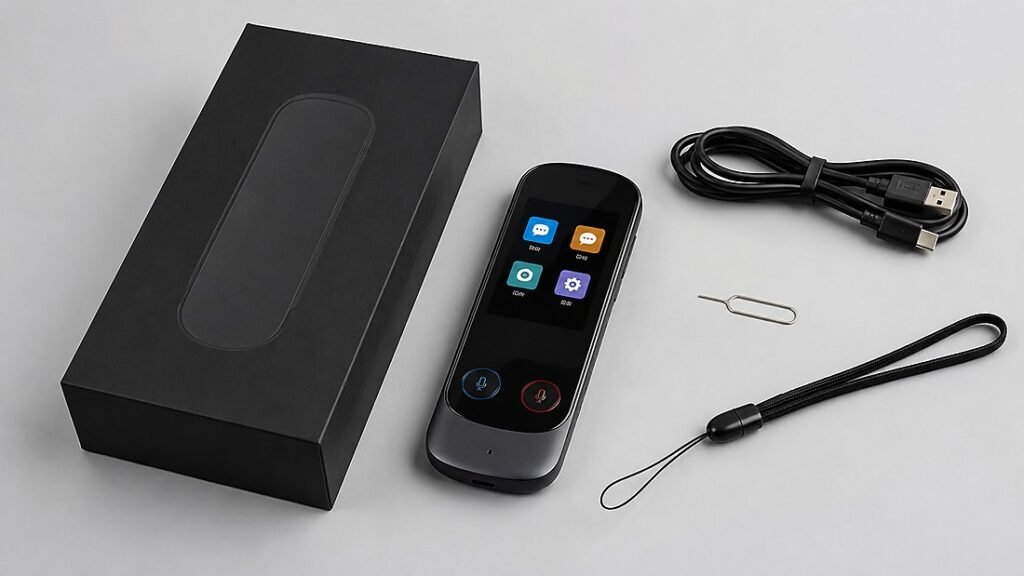
How to Source AI Translators for Southeast Asia in 2026: 7 Steps for Distributors
To source AI translators for Southeast Asia in 2026, distributors should compare offline versus online engines, confirm Southeast Asian language coverage (Indonesian, Malay, Vietnamese, Thai, Filipino), validate MOQ and price tiers, verify CE/RoHS/UN38.3 (and SIRIM, SNI, TISI where applicable), review the companion app and OTA update policy, and pilot-test five to ten units before committing to mass production. This guide turns those steps into a 7-stage RFQ workflow you can send to suppliers today.
Table of Contents
Table of Contents
source AI translators: Table of Contents
- Short Answer
- Key Takeaways
- Key Facts for Buyers
- 1. Why Southeast Asia Is a Distinct AI Translator Market
- 2. What Is an AI Translator? (Buyer-Facing Definition)
- 3. Spec Check: Offline vs Online, Chipset, Microphones, Battery
- 4. Language Coverage for SEA: The Real Test
- 5. OEM, ODM, or White-Label: Which Model Fits Your Brand?
- 6. MOQ, Pricing, and Landed Cost
- 7. Compliance: CE, RoHS, UN38.3 and SEA Registration
- 8. Comparison Table: AI Translator Configurations for SEA
- 9. Common Mistakes and Buyer Red Flags
- 10. Practical Buyer Checklist (RFQ-Ready)
- FAQ for Distributors Sourcing AI Translators
- Conclusion
Short Answer
When you source AI translators for Southeast Asia, the deciding factors are not the chipset alone but offline versus online translation, verified SEA language pairs, MOQ and price tiers, region-appropriate certification (CE/RoHS/UN38.3 plus SIRIM, SNI, TISI where required), and the long-term support of the companion app. A structured 7-step RFQ process lowers return rates and protects your brand across Indonesia, Vietnam, Thailand, the Philippines, and Malaysia.
Key Takeaways
- Southeast Asia is not one market: language priorities, certification paths, and price ceilings differ by country.
- Offline and online translation modes serve different customer segments—clarify which modes your supplier supports before quoting.
- MOQ, tooling, and lead time should be negotiated alongside pricing, not after.
- Battery-powered devices typically require UN38.3 and MSDS documentation for air freight; buyers should verify current requirements.
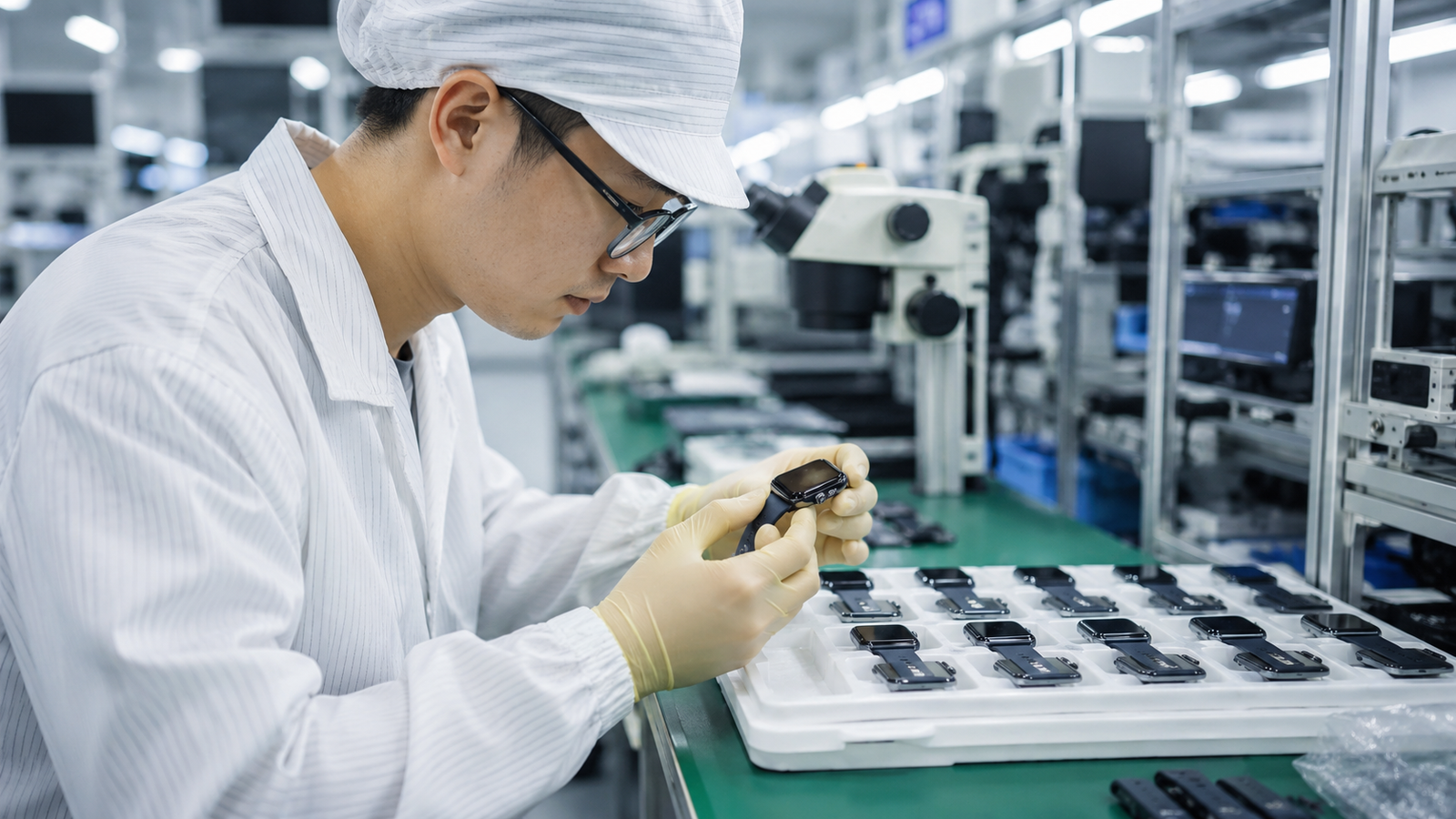
- Pilot-test five to ten units in your target market before committing to mass production.
- Confirm app ownership, data handling, and OTA update policy in writing.
Key Facts for Buyers
| Factor | Typical Range / Note | Why It Matters for SEA Distributors |
|---|---|---|
| MOQ (stock models) | Typically 100–500 units | Affects cash flow and initial market test size |
| MOQ (custom branding/tooling) | Often 1,000+ units [STAR KING TO CONFIRM] | Custom enclosures raise upfront tooling cost |
| Sample lead time | Commonly 5–15 days [STAR KING TO CONFIRM] | Lets you validate language quality early |
| Mass production lead time | Typically 20–45 days [STAR KING TO CONFIRM] | Aligns with retail launch windows |
| CE / RoHS | Common baseline for EU-bound SKUs | Often used as a general quality signal |
| UN38.3 / MSDS | Usually required for lithium battery air freight | Impacts courier acceptance for samples |
| SEA local registration | SIRIM (MY), SNI (ID), TISI (TH) may apply | Buyers should verify per country and category |
1. Why Southeast Asia Is a Distinct AI Translator Market
Southeast Asia covers more than 600 million people across Indonesia, Vietnam, Thailand, the Philippines, Malaysia, and Singapore, with markedly different language mixes, income tiers, and cross-border travel patterns. A SKU that sells well in Singapore may stall in Indonesia if it lacks Bahasa Indonesia or if the price sits above local retail expectations.
Three characteristics shape distributor buying decisions in this region:
- Travel and labor mobility. Business travel, tourism, and cross-border work create steady demand for handheld real-time translation.
- Language fragmentation. Buyers often need two or three SEA languages plus English, not just English-Chinese.
- Retail channel diversity. Modern trade, specialty electronics chains, marketplace sellers, and B2B corporate gifting all price differently.
For a broader view of how AI hardware fits office and productivity use cases, see our AI Office Productivity solutions.
2. What Is an AI Translator? (Buyer-Facing Definition)
An AI translator is a handheld or wearable device that captures spoken or typed language, processes it through on-device or cloud-based translation models, and outputs speech or text in a target language. For distributors, the practical definition is narrower: a device with a defined language set, a defined online/offline behavior, a documented app, and a support lifecycle you can rely on for twelve to twenty-four months of retail selling.
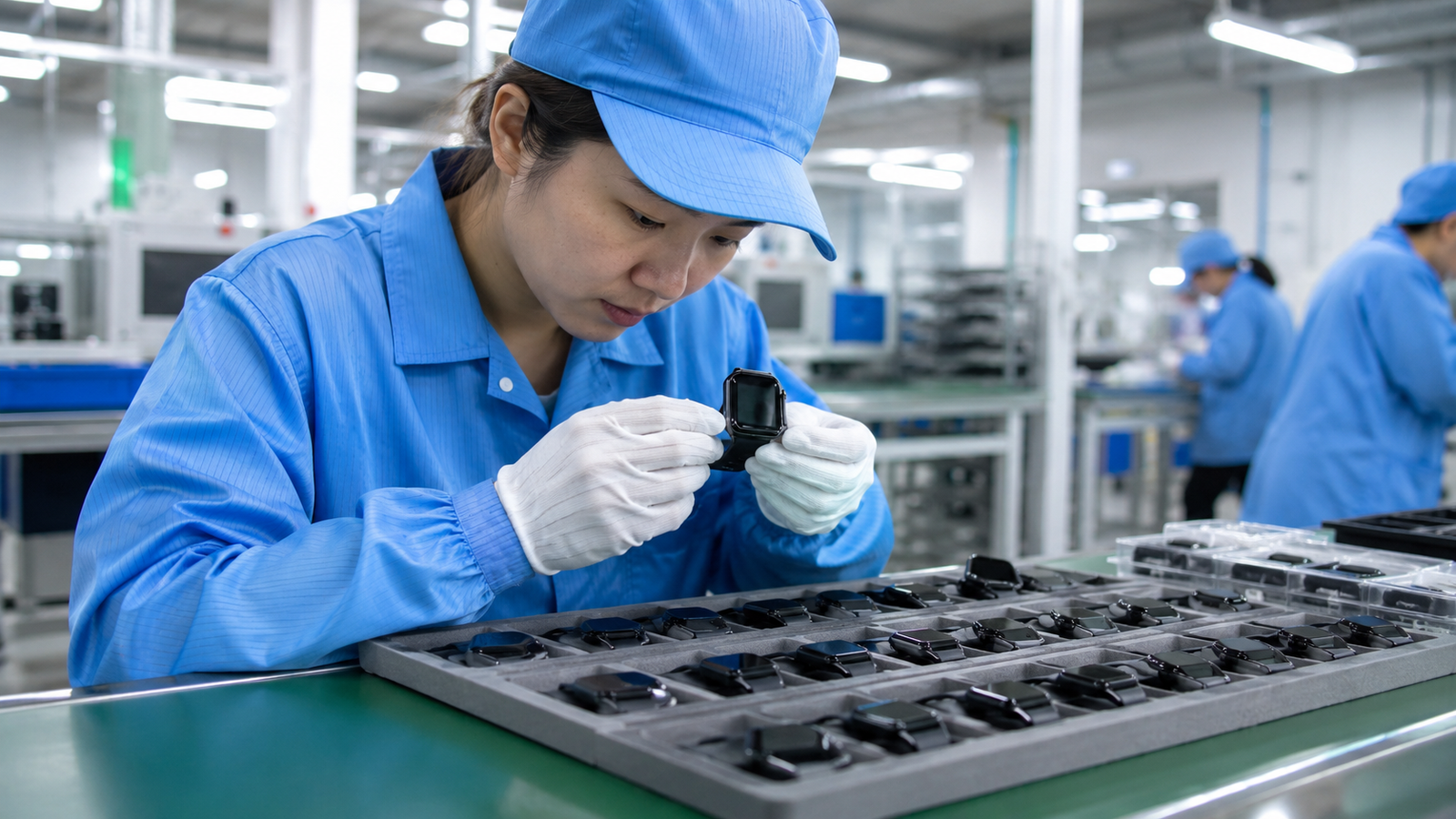
Buyers should evaluate five layers: hardware (microphones, speaker, battery), engine (offline packs vs cloud APIs), software (app, OTA updates), certification (regional approvals), and support (RMA, spare parts, firmware roadmap). Suppliers who can only describe hardware are usually not ready for distributor partnerships.
3. Spec Check: Offline vs Online, Chipset, Microphones, Battery
Offline vs Online Translation
Offline engines run on the device and keep working without a connection, which matters for travelers and remote field work; they typically cover fewer language pairs and offer shorter effective vocabulary. Online engines call cloud APIs and usually deliver better fluency but depend on stable connectivity. Clarify with your supplier which SEA languages are supported in each mode—this single question prevents most post-launch returns.
Microphones and Noise Handling
Real-world translation quality is often limited by audio capture, not the model. Ask for the microphone count, whether there is beamforming or noise suppression, and how the device performs in a market, café, or vehicle. Request a recorded demo in noisy conditions if available.
Battery and Charging
Check mAh, rated talk-time for continuous translation, standby time, and charging port type. Battery-powered devices generally require IATA Dangerous Goods Regulations awareness and UN38.3 documentation for air shipment—buyers should verify current rules with their freight forwarder.
4. Language Coverage for SEA: The Real Test
Language support is where most SEA distribution plans succeed or fail. A supplier spec sheet that lists “100+ languages” tells you little; the useful question is which language pairs are optimized for your target country and which run offline.
- Indonesia: Bahasa Indonesia plus English, with attention to regional accents.
- Vietnam: Vietnamese-English and Vietnamese-Chinese pairs, tonal accuracy matters.
- Thailand: Thai-English, with fallback to text or photo translation when speech is difficult.
- Philippines: Filipino/Tagalog-English, often alongside Cebuano for wider reach.
- Malaysia: Bahasa Malaysia, English, and often Mandarin for business users.
During sample testing, run the same ten sentences in each target language with local speakers and score accuracy, latency, and naturalness. This exercise takes an afternoon and typically influences your final SKU list more than any datasheet.
5. OEM, ODM, or White-Label: Which Model Fits Your Brand?
Distributors entering the SEA market usually choose one of three engagement models:
- White-label / Private Label: an existing product with your logo, packaging, and manual. Fastest to market; limited differentiation.
- OEM: your specifications on a supplier platform, including language set, app branding, and packaging.
- ODM: supplier-driven design with customization in firmware, app, industrial design, and tooling.
Before committing, settle these points in writing: Who owns the tooling? Who owns the app and user data? What is the OTA update policy? What are the firmware customization limits? For a structured view of customization options, review our Private Label OEM/ODM solution.
If your RFQ includes locked language packs, custom wake words, or pre-installed apps, note them early—these usually affect both MOQ and lead time.
6. MOQ, Pricing, and Landed Cost
MOQ is rarely a single number. For AI translators, it is usually a composite of enclosure tooling, PCB batch size, packaging print run, and app customization. Typical structures look like this:
- Stock model with logo printing: lower MOQ, shorter lead time.
- Custom packaging and manual: mid MOQ, adds print and kitting time.
- Custom enclosure or new tooling: highest MOQ, longest lead time, highest upfront cost.
Build a landed-cost model that includes unit price, freight, insurance, duties, local certification fees, and marketplace fees. A device that looks cheaper at FOB may cost more landed once you include certification and returns.
If you are comparing customization routes, our team can outline options—request a quote with your target market and volume.
7. Compliance: CE, RoHS, UN38.3 and SEA Registration
Compliance requirements depend on the product configuration, target country, and sales channel. Common documentation to request includes:
- CE and RoHS for EU-bound or EU-equivalent quality expectations.
- UN38.3 test summary and MSDS for lithium battery air transport. See the FCC RF compliance guidance as an example of a regulator’s public reference page; FCC marks are only relevant if you sell in the United States.
- Country-specific schemes such as SIRIM (Malaysia), SNI (Indonesia), and TISI (Thailand) may apply depending on product category—buyers should verify with local authorities or a compliance agent.
Do not assume every SKU ships with every certificate. Request the specific certificate numbers, test scope, and issuing lab for the exact model you plan to import, and confirm they match the label on the carton.
8. Comparison Table: AI Translator Configurations for SEA
| Configuration | Best For | Typical MOQ Band | Lead Time Band | Key Trade-off |
|---|---|---|---|---|
| Stock model, logo only | Fast market test, marketplace pilot | Low | Short | Low differentiation |
| Stock model, custom packaging | Retail chain launch | Mid | Mid | Print setup cost |
| OEM with custom app branding | Brand with service layer | Mid-High | Mid-High | App dev time |
| ODM with custom enclosure | Long-term brand program | High | Long | Tooling investment |
Bands are indicative. Confirm exact MOQ, lead time, and tooling terms with your supplier for your specific SKU.

9. Common Mistakes and Buyer Red Flags
Common Mistakes
- Quoting on chipset alone without testing language pairs in your market.
- Skipping app and OTA policy review, then discovering updates stop after six months.
- Assuming certification from a similar model applies to the new SKU.
- Underestimating battery shipping requirements for samples and bulk.
Buyer Red Flags
- A quote without MOQ tiers, lead time, or packaging cost breakdown.
- Claims of “full certification” without certificate numbers or scope.
- No named support contact for app or firmware issues.
- Pressure to sign deposit before samples are validated.
Note: If a supplier cannot provide documented language performance, buyers should treat that as a signal to request a fresh pilot unit before scaling.
10. Practical Buyer Checklist (RFQ-Ready)
- □ Confirm offline and online language coverage for each SEA target country.
- □ Request sample units (5–10) and test with local speakers.
- □ Document MOQ tiers, tooling cost, and lead time for each configuration.
- □ Request CE, RoHS, UN38.3, and MSDS for the exact model.
- □ Verify country-specific registration requirements (SIRIM, SNI, TISI, etc.).
- □ Review app: branding, account model, data handling, OTA policy.
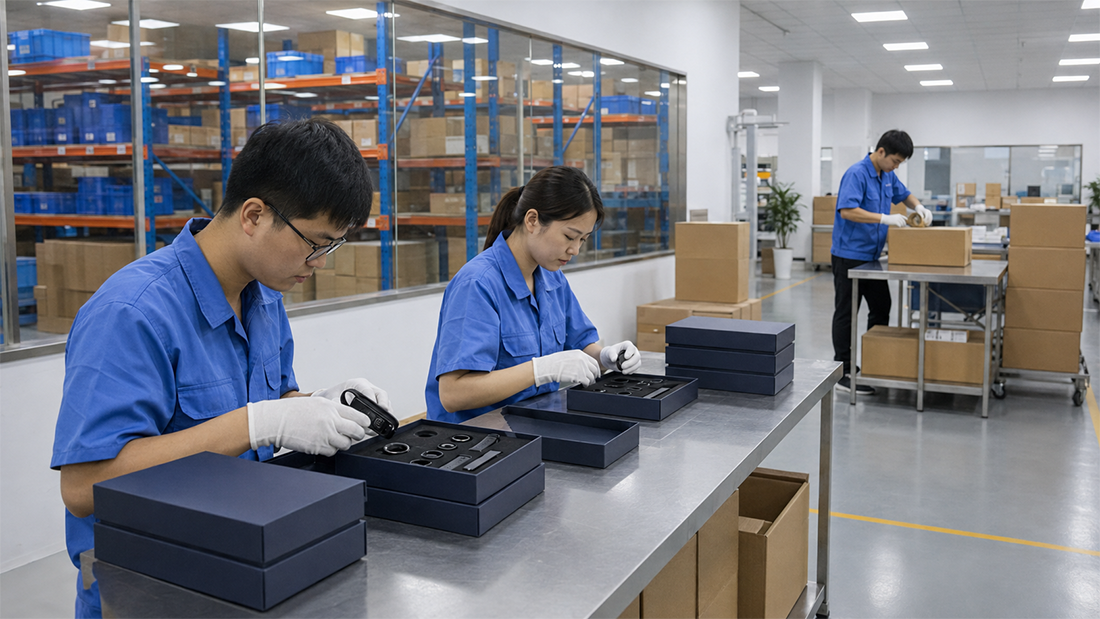
- □ Confirm packaging, manual language variants, and warranty terms.
- □ Build a landed-cost model with duties, freight, and returns.
- □ Agree on RMA process and spare-parts availability.
- □ Ensure tooling and IP ownership are defined in the contract.

Where STAR KING Fits
STAR KING supplies AI translators alongside AI smart glasses, AI voice mouse, and wearables, and supports private-label and OEM/ODM programs. Explore the AI translators product line to compare configurations, and review business and education solutions for deployment scenarios. Visit the STAR KING blog for more sourcing guides.
FAQ for Distributors Sourcing AI Translators
What MOQ should a distributor expect for AI translators?
Stock models with logo printing often start at 100–500 units; custom tooling or fully ODM projects typically require higher volumes. Confirm with your supplier for the specific configuration, as MOQ varies with the change you need.
Are CE and RoHS mandatory for Southeast Asia?
CE and RoHS originate from EU rules; they are not the SEA requirement itself but are often requested as a baseline quality signal. Each SEA country has its own schemes, so verify with local authorities or a compliance agent for your category and market.
Can AI translators work without internet in Southeast Asia?
Many models support offline packs for a limited set of languages, while others rely on cloud translation. Confirm the offline language list for your target countries and test it in low-connectivity conditions before buying in volume.
What should a sample test include?
Test five to ten units with local speakers across your priority languages; measure accuracy, latency, and naturalness in quiet and noisy environments; check battery life; and review app setup, account creation, and update prompts.
How long is typical mass production lead time?
Lead time depends on configuration, component availability, and order size. For planning, treat 20–45 days as an indicative band and confirm with your supplier, factoring in Chinese New Year and Q4 shipping peaks.
Who owns the tooling and the app when we do ODM?
Ownership should be defined in the contract. Clarify tooling ownership, app source or license, data handling, and firmware customization scope in writing before paying a deposit.
Can we add our brand to the app and packaging?
Yes, app branding and packaging customization are common private-label options. Feasibility and cost depend on the platform; confirm app changes and printing requirements during the RFQ stage.
Conclusion
Sourcing AI translators for Southeast Asia in 2026 rewards distributors who treat language coverage, offline behavior, app support, and regional certification as first-class decision factors—not afterthoughts. A disciplined 7-step RFQ process, combined with a local pilot test, reduces the risk of launching a SKU that misses its market. Start with samples, validate the language pairs your customers actually use, and negotiate MOQ and lead time alongside price.
Discuss Your Southeast Asia AI Translator Program
Send your target countries, language requirements, and expected volumes. We’ll respond with relevant configurations, sample options, and customization paths for AI translators and related AI hardware.
Request a quote for AI translators or ask us to compare configurations for your market.
Discuss Your Smart Wearable OEM/ODM Project
Planning a smart ring, smart watch, smart band, AI glasses, AI translator, or AI voice mouse project? Contact STAR KING to discuss product positioning, sample testing, customization scope, certification requirements, lead time, and quotation details.

Team Star King

Scan WhatsApp QR code
Leave a Reply