
smart watches OEM: Smart Watches for US Distributors: 7 Proven Steps to Select a Reliable OEM Supplier
October 26, 2026 · Team Star King

Smart Watches for US Distributors: 7 Proven Steps to Select a Reliable OEM Supplier
To select a reliable smart watches OEM supplier, US distributors should run a structured seven-step evaluation: confirm product specifications and target pricing, verify factory capability and references, validate compliance documentation for the US market, audit quality control processes, test samples against agreed criteria, negotiate MOQ and lead time transparently, and lock down packaging, warranty, and after-sales terms in writing. This process reduces the risk of failed launches, customs delays, and margin erosion.
Table of Contents
Table of Contents
smart watches OEM: Short Answer
The most reliable smart watches OEM partners combine verifiable factory audits, clear FCC and battery documentation, controlled sample validation, and written commercial terms. Distributors should treat supplier selection as a procurement project with defined checkpoints—not a single price comparison—because the lowest quote often hides compliance, quality, or lead-time risk.

Table of Contents
- Step 1: Define Product Specifications and Target Price
- Step 2: Verify Factory Capability and References
- Step 3: Validate US Market Compliance Documentation
- Step 4: Audit Quality Control and Testing Processes
- Step 5: Test Samples Against Agreed Criteria
- Step 6: Negotiate MOQ, Pricing, and Lead Time
- Step 7: Lock Down Packaging, Warranty, and After-Sales
- OEM Supplier Comparison Table
- Common Mistakes and Buyer Red Flags
- Practical Buyer Checklist
- FAQ
- Conclusion

Key Takeaways
- Supplier selection should follow a documented process, not a single price quote.
- US distributors must verify FCC, battery, and safety documentation before ordering.
- Sample testing against a written checklist prevents costly mass-production deviations.
- MOQ, lead time, and warranty terms should be negotiated with total landed cost in mind.
- Packaging and after-sales support are part of the product—not an afterthought.

Step 1: Define Product Specifications and Target Price
Before contacting suppliers, distributors should document the intended product: display size, battery life, sensor set, connectivity, water resistance, companion app requirements, and target retail price. A clear specification sheet forces suppliers to quote against the same baseline and exposes those who cannot meet key parameters.
For US distribution, define whether the product will be positioned for fitness, general wellness, or premium lifestyle. This decision affects sensor accuracy expectations, app features, and compliance scope. Buyers should also decide whether they need standard OEM models or private label customization for branding, packaging, and app identity.
Step 2: Verify Factory Capability and References
Request a factory profile, production capacity, main product lines, and recent export markets. A supplier that regularly ships to the US will already understand FCC labeling, battery documentation, and retailer expectations. Ask for references from distributors or brands in comparable markets, and verify whether the factory owns tooling or relies on third-party assembly.
If the supplier offers smart watches alongside other wearables, confirm whether core components are produced in-house or sourced. This affects lead time, quality consistency, and the ability to customize firmware or app features later.
Step 3: Validate US Market Compliance Documentation
US market access for smart watches typically requires FCC authorization for intentional and unintentional radiators, depending on the wireless configuration. Battery-powered devices may also require UN38.3 test summaries and safety data sheets for transport. Buyers should request draft or existing documentation and confirm which certificate applies to the exact model and wireless module.
Distributors should verify that certification is issued for the specific product configuration, not a similar model. The FCC equipment authorization procedures explain the difference between certification, declaration, and verification. For battery transport, refer to the IATA Dangerous Goods Regulations for lithium battery shipping requirements.
Step 4: Audit Quality Control and Testing Processes
Ask for the supplier’s quality control workflow: incoming component inspection, in-process checks, aging tests, waterproof testing, drop testing, and pre-shipment inspection. A supplier that cannot describe these steps in detail is unlikely to deliver consistent batches. Request sample inspection reports and confirm whether testing is performed in-house or outsourced.
Quality control should cover both hardware and software. For smart watches, firmware stability, app pairing, charging reliability, and sensor accuracy matter as much as physical assembly. Buyers can ask for a documented quality control process and review it against their own retail requirements.
Step 5: Test Samples Against Agreed Criteria
Order samples from at least two suppliers and test them against a written checklist: battery life under typical use, heart rate and blood oxygen trends, app connectivity, charging cycles, water resistance, and display readability. Document every deviation and share it with the supplier before mass production.
Sample testing is also the stage to confirm packaging, labeling, and user manual content. For US distribution, manuals should include clear safety warnings and warranty information. Distributors should treat sample approval as a formal milestone with written sign-off.
Step 6: Negotiate MOQ, Pricing, and Lead Time
MOQ and pricing depend on model complexity, customization level, and component availability. Standard OEM models typically have lower MOQs than fully customized private label programs. Ask suppliers to break down pricing by hardware, packaging, tooling (if applicable), and certification support so buyers can compare total cost rather than unit price.
Lead time should be quoted in stages: sample lead time, production lead time, and shipping time. For US buyers, ocean freight and customs clearance add variability. A realistic supplier will provide a production schedule and buffer for component shortages.
Step 7: Lock Down Packaging, Warranty, and After-Sales
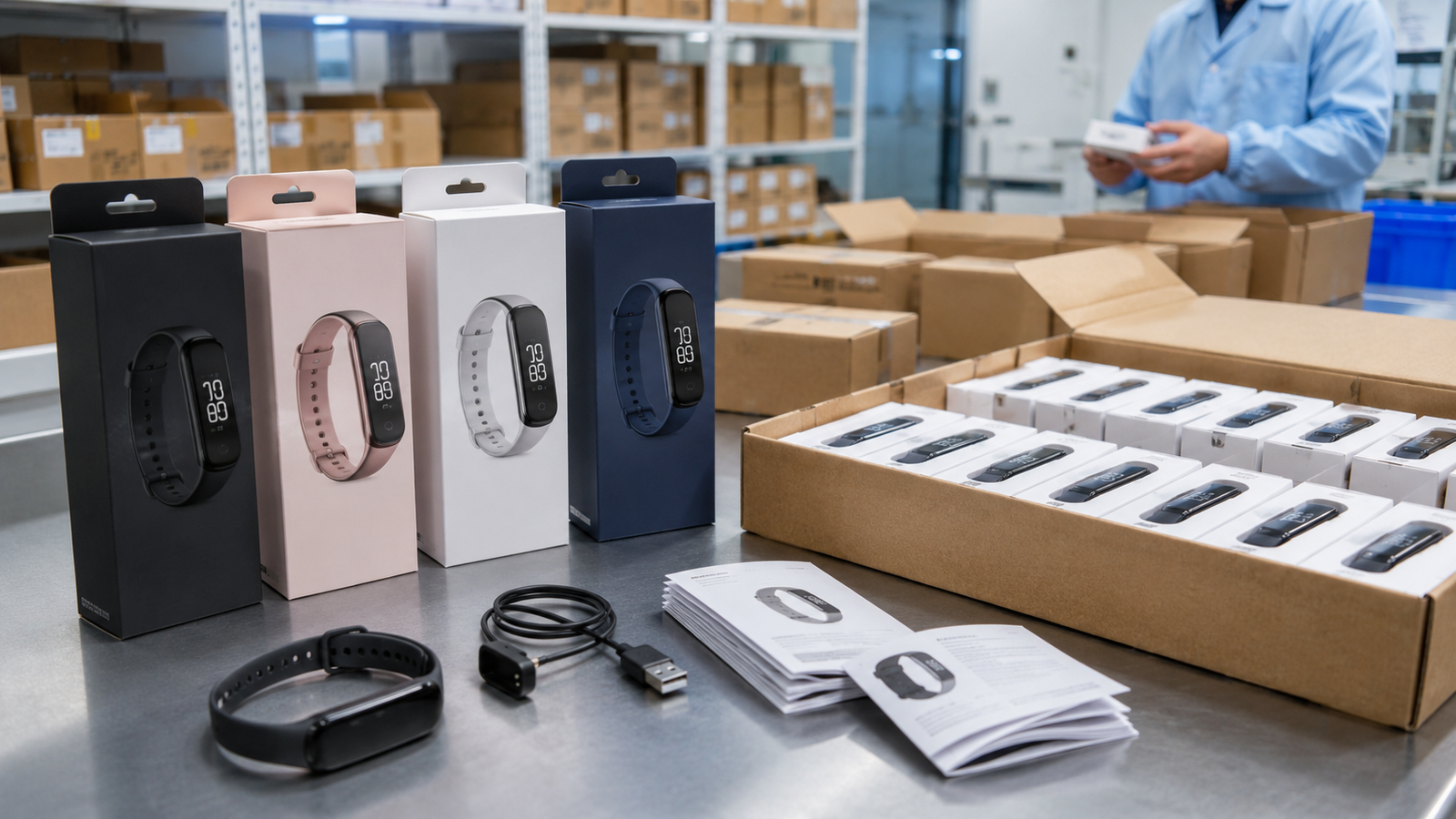
Packaging and branding affect retail readiness and perceived value. Confirm logo placement, box design, language requirements, and insert cards. Warranty terms should specify duration, coverage, and the process for replacement or repair. Distributors should also clarify spare parts availability and firmware update support.
After-sales processes—return authorization, defect rate thresholds, and replacement lead time—should be written into the supply agreement. These terms protect margins when products reach retail channels.
OEM Supplier Comparison Table
| Evaluation Area | What to Request | Red Flag |
|---|---|---|
| Factory capability | Audit report, production lines, export references | No verifiable factory address or references |
| Compliance | FCC documentation, UN38.3, MSDS for battery | Certificates for different models or vague claims |
| Quality control | Testing reports, pre-shipment inspection process | No documented testing or refusal to share reports |
| Sample testing | Written sample approval checklist | Pressure to skip sample validation |
| MOQ and pricing | Transparent cost breakdown, tiered MOQ | Unusually low price without explanation |
| Lead time | Staged schedule with buffer | Unrealistic promises for custom orders |
| After-sales | Written warranty and replacement terms | No spare parts or firmware support plan |
Common Mistakes and Buyer Red Flags
- Choosing on unit price alone — hidden costs in compliance, packaging, or replacement can erase margins.
- Accepting certificates without verification — always confirm the certificate matches the exact model and wireless module.
- Skipping sample testing — mass-production deviations are expensive to correct after shipment.
- Ignoring battery documentation — missing UN38.3 or MSDS can delay customs clearance.
- Vague warranty terms — unclear after-sales responsibilities lead to disputes.
Red flags include reluctance to share factory information, pressure to pay before sample approval, and inconsistent answers about certification scope.
Practical Buyer Checklist
- Specification sheet signed by both parties
- Factory audit or video walkthrough completed
- FCC documentation verified for exact model
- UN38.3 and MSDS available for battery
- Quality control process documented
- Samples tested against written criteria
- MOQ, pricing, and lead time confirmed in writing
- Packaging and branding approved
- Warranty and after-sales terms included in contract
- Spare parts and firmware support plan agreed
Key Facts for Buyers
| Item | Typical Consideration |
|---|---|
| FCC authorization | Required for wireless smart watches; depends on module and configuration |
| Battery documentation | UN38.3 test summary and MSDS typically needed for shipping |
| MOQ | Varies by model and customization level; standard OEM often lower than full private label |
| Lead time | Sample: weeks; mass production: typically depends on order volume and component availability |
| Warranty | Negotiable; should be written into supply agreement |
FAQ
What certifications do smart watches need for the US market?
Smart watches with wireless functionality typically require FCC authorization. Battery-powered devices may also need UN38.3 and MSDS documentation for transport. Requirements depend on the specific product configuration; buyers should verify with the supplier and, where needed, a compliance consultant.
How do I verify a smart watch supplier’s FCC certificate?
Request the FCC ID and check it in the FCC equipment authorization database. Confirm that the certificate matches the exact model and wireless module you plan to import.
What is a typical MOQ for OEM smart watches?
MOQ varies by supplier, model, and customization. Standard models may start at lower quantities, while private label programs with custom packaging, logo, and app changes often require higher volumes. Ask for tiered pricing and confirm MOQ in writing.
How long does smart watch production take?
Sample lead time is typically a few weeks. Mass production lead time depends on order volume, component availability, and customization level. Suppliers should provide a staged schedule covering production and shipping.
Can I customize the packaging and app for my brand?
Many OEM suppliers offer logo, packaging, and app customization. Confirm the scope, cost, and timeline before ordering, and request samples of packaging and app interface for approval.
What should I check during sample testing?
Test battery life, sensor performance, app connectivity, charging reliability, water resistance, and display readability. Document deviations and require corrective action before mass production.
How do I protect my brand and tooling investment?
Clarify tooling ownership, exclusivity terms, and intellectual property rights in the supply agreement. If custom tooling is involved, define who owns it and under what conditions.
Conclusion
Selecting a smart watches OEM supplier is a procurement process that rewards preparation. US distributors who define specifications, verify compliance, test samples, and negotiate clear commercial terms reduce the risk of failed launches and protect margins. A structured seven-step evaluation helps separate reliable manufacturers from those that cannot support long-term distribution.
Next Step
Ready to evaluate smart watch options for your distribution business? Request a quotation or discuss your OEM/ODM requirements with our team. We can help you compare specifications, confirm certification requirements, and plan samples.
Discuss Your Smart Wearable OEM/ODM Project
Planning a smart ring, smart watch, smart band, AI glasses, AI translator, or AI voice mouse project? Contact STAR KING to discuss product positioning, sample testing, customization scope, certification requirements, lead time, and quotation details.

Team Star King

Scan WhatsApp QR code
Leave a Reply