
smart watches for e-commerce: 7 Critical Checks Before Sourcing Smart Watches for US E-commerce in 2026
November 18, 2026 · Team Star King

7 Critical Checks Before Sourcing Smart Watches for US E-commerce in 2026
When sourcing smart watches for e-commerce in the US market, buyers should verify seven areas before placing a bulk order: product specifications and app ecosystem, supplier capability and OEM/ODM options, MOQ and landed cost, sample testing and validation, quality control and testing protocols, certification and US import compliance, and lead time and after-sales support. Each check reduces risk and helps ensure the product meets customer expectations and regulatory requirements.
Table of Contents
Table of Contents
smart watches for e-commerce: Table of Contents
- Short Answer
- Key Takeaways
- Key Facts for Buyers
- 1. Product Specifications and App Ecosystem
- 2. Supplier Capability and OEM/ODM Options
- 3. MOQ and Landed Cost
- 4. Sample Testing and Validation
- 5. Quality Control and Testing Protocols
- 6. Certification and US Import Compliance
- 7. Lead Time and After-Sales Support
- Common Mistakes and Buyer Red Flags
- Practical Buyer Checklist
- FAQ
- Conclusion

Short Answer
To source smart watches for e-commerce successfully, focus on seven critical checks: match specifications to your audience, verify supplier OEM/ODM capabilities, calculate true landed cost, test samples rigorously, confirm quality control processes, ensure FCC and other certifications, and plan lead times with after-sales support. These checks help avoid costly delays and compliance issues.
Key Takeaways
- Define clear product specifications and ensure the smart watch app is stable and user-friendly.
- Evaluate suppliers on their OEM/ODM experience, communication, and factory audits.
- Understand MOQ, tooling costs, and total landed cost to price competitively.
- Always test samples for functionality, battery life, and durability.
- Implement a quality control plan with pre-shipment inspections.
- Verify FCC, CE, RoHS, and UN38.3 compliance for US imports.
- Plan lead times and agree on warranty and spare parts terms.
Key Facts for Buyers
| Check | Key Considerations | Typical Buyer Actions |
|---|---|---|
| Product Specifications | Display, battery, sensors, app compatibility | Compare spec sheets, request app demo |
| Supplier Capability | OEM/ODM experience, factory audit, communication | Request factory video tour, check references |
| MOQ & Cost | MOQ, tooling fees, landed cost | Negotiate MOQ, calculate total cost |
| Sample Testing | Functionality, battery, durability | Order samples, conduct stress tests |
| Quality Control | Incoming, in-process, pre-shipment | Review QC reports, schedule inspection |
| Certification | FCC, CE, RoHS, UN38.3 | Verify certificates, request test reports |
| Lead Time & Support | Production time, warranty, spare parts | Agree on schedule, confirm support terms |

1. Product Specifications and App Ecosystem
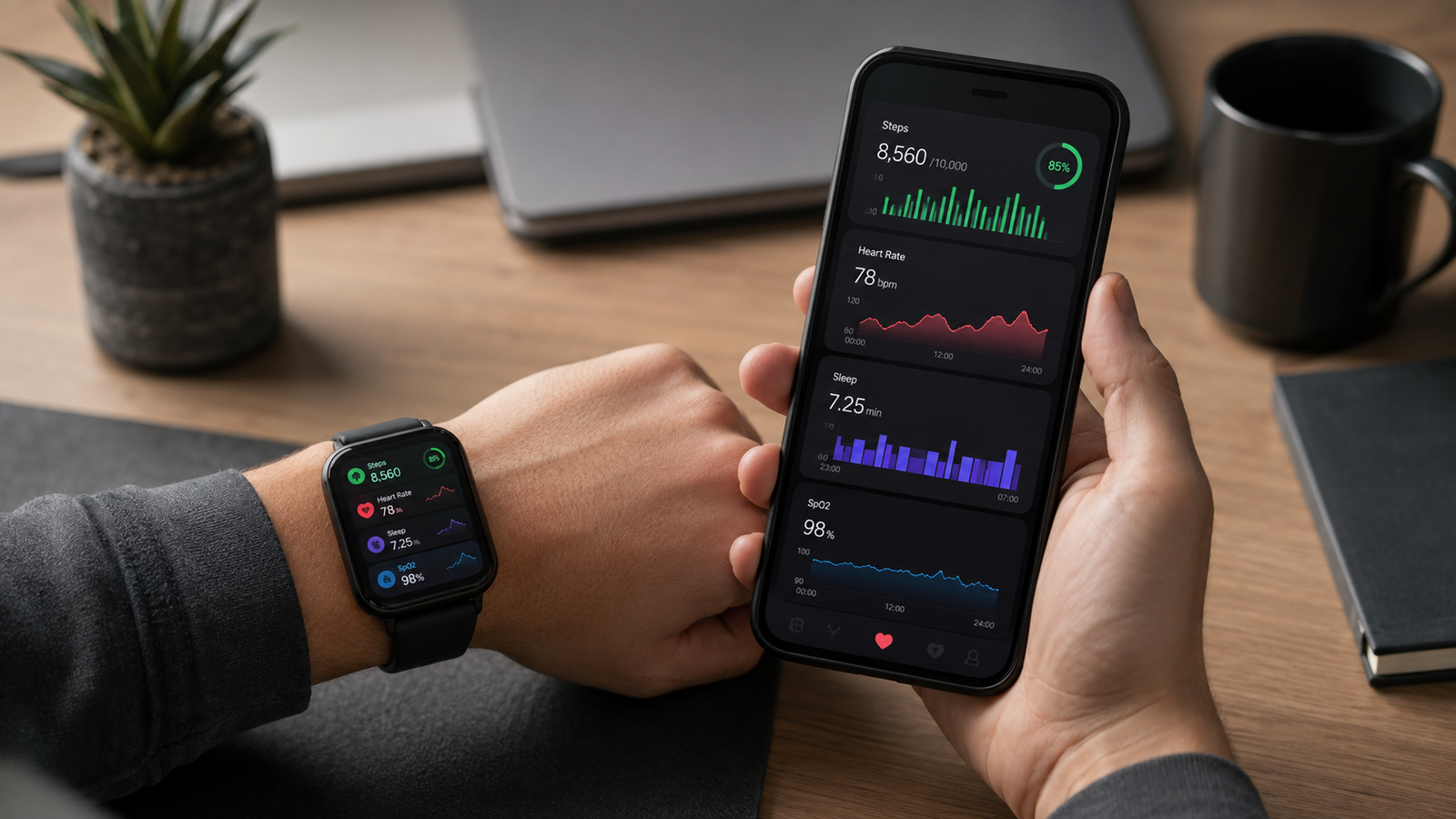
Before sourcing smart watches for e-commerce, define the specifications that matter to your target audience. Consider display type (AMOLED vs. LCD), battery life (typically 5-10 days depending on usage), health sensors (heart rate, SpO2, sleep tracking), water resistance (IP67 or IP68), and compatibility with iOS and Android. The companion app is equally important: it should be stable, offer meaningful health data, and allow customization if you plan a private label. Request a demo account or APK to test the app’s user experience and data privacy policies. For US buyers, ensure the app complies with data protection regulations and does not require unnecessary permissions. According to the Bluetooth SIG, using certified Bluetooth modules ensures interoperability and can simplify FCC certification. Bluetooth Qualification is a key step for wireless devices.
2. Supplier Capability and OEM/ODM Options
Evaluate whether the supplier can support your business model. For e-commerce sellers, flexibility in OEM/ODM is crucial: can they customize logo, packaging, firmware, and app? Ask about their experience with US clients and request references. A factory audit, either in-person or via video, helps verify production capacity and quality management. Check if they have in-house R&D or rely on third-party designs; this affects customization and intellectual property ownership. Clarify mold ownership if you invest in tooling—typically, the buyer should own the mold. For private label solutions, STAR KING offers private label OEM/ODM services that include logo and packaging customization. Ensure the supplier can provide necessary documentation for customs and compliance.
3. MOQ and Landed Cost
Understand the minimum order quantity (MOQ) and all cost components. MOQs for smart watches typically range from 500 to 1,000 units for OEM orders, but may be higher for custom tooling. Tooling fees can be $3,000-$10,000 depending on complexity. Calculate landed cost: unit price + packaging + shipping + duties + insurance + payment fees. Use a landed cost calculator to avoid margin erosion. For US imports, tariffs and Section 301 duties may apply; check the Harmonized Tariff Schedule for the correct HS code. Negotiate MOQ and payment terms based on your sales forecast. Consider starting with a smaller trial order to test market response.
4. Sample Testing and Validation
Always order samples before mass production. Test the smart watch for at least two weeks: check battery life under normal use, screen responsiveness, sensor accuracy (compare heart rate with a chest strap), water resistance (if claimed), and app connectivity. Test the charging cradle durability. For e-commerce, simulate shipping conditions: drop test from 1 meter onto concrete. Document any issues and request fixes. Sample fees are usually refundable against bulk order. Use the samples to create product listings and gather early customer feedback. Ensure the sample matches the final specification; request a golden sample for reference. For more insights on wearable testing, see our blog resources.
5. Quality Control and Testing Protocols
Ask the supplier about their quality control process. A robust plan includes incoming material inspection, in-process checks, and pre-shipment inspection (PSI). Key tests: aging test (48 hours), drop test, waterproof test, and battery safety test. Request QC reports and insist on a third-party inspection for the first order. According to the ISO 2859-1 standard, sampling plans should be based on AQL levels (e.g., AQL 2.5 for major defects). Ensure the supplier has a documented corrective action process. For smart watches, firmware stability and app updates are part of quality; ask how they handle bug fixes post-launch.
6. Certification and US Import Compliance
For US market entry, smart watches require FCC certification for wireless functionality (Bluetooth, Wi-Fi). The product must comply with FCC Part 15 rules; see FCC regulations. Additionally, RoHS compliance is often required by retailers, and UN38.3 for lithium battery shipping. CE marking is for EU, not US, but may be requested by some buyers. Verify certificates are issued by accredited labs and cover the exact model. Certificates should be traceable to the manufacturer. For private label, ensure the certificate lists your brand if required. STAR KING can provide compliance documentation for qualified orders; buyers should confirm specific requirements. Always request test reports and check the issuing lab’s accreditation.
7. Lead Time and After-Sales Support
Production lead time for smart watches is typically 30-45 days after sample approval, but can extend during peak seasons. Plan for 60-90 days from order to delivery at your warehouse. Clarify warranty terms (usually 12 months) and spare parts availability. For e-commerce, a responsive after-sales process is critical to handle returns. Ask about defect rate policy and how they handle replacements. Shipping lithium batteries requires special handling; ensure the supplier provides MSDS and UN38.3 reports. Consider using a freight forwarder experienced in battery shipping. Negotiate payment terms: 30% deposit, 70% before shipment is common. Build a buffer into your inventory planning to avoid stockouts.
Common Mistakes and Buyer Red Flags
- Ignoring app quality: A poor app leads to negative reviews and returns. Always test the app thoroughly.
- Underestimating certification costs: FCC testing can cost $1,000-$3,000; factor this into your budget.
- Choosing supplier based on price alone: Low prices may indicate cut corners in quality or compliance.
- Not verifying certificates: Fake or expired certificates are common; verify with the issuing lab.
- Overlooking MOQ negotiation: Many suppliers are flexible if you commit to future orders.
- Red flag: Supplier cannot provide a factory video tour or references.
- Red flag: Resistance to third-party inspection.
Practical Buyer Checklist
| Task | Details | Completed |
|---|---|---|
| Define specifications | Display, battery, sensors, app features | ☐ |
| Request samples | Test for 2 weeks, document issues | ☐ |
| Verify supplier | Factory audit, references, OEM/ODM capability | ☐ |
| Calculate landed cost | Include tariffs, shipping, duties | ☐ |
| Agree on QC plan | AQL levels, PSI, third-party inspection | ☐ |
| Confirm certifications | FCC, RoHS, UN38.3, MSDS | ☐ |
| Plan lead time | Production schedule, buffer stock | ☐ |
| Negotiate after-sales | Warranty, spare parts, defect policy | ☐ |
Buyers can also review STAR KING Smart Watches OEM/ODM options to compare product positioning, customization scope, and sample planning.
FAQ
What is the typical MOQ for smart watches?
MOQ usually ranges from 500 to 1,000 units for OEM orders, but may be higher for custom designs. Some suppliers offer lower MOQs for stock models.
Do I need FCC certification for smart watches sold on Amazon?
Yes, smart watches with Bluetooth or Wi-Fi require FCC certification. Amazon may ask for proof of compliance. Ensure the certificate covers your model.
How long does shipping take from China to the US?
Sea freight takes 25-35 days, air freight 5-10 days. Add production lead time of 30-45 days. Plan for 60-90 days total.
Can I customize the app for my brand?
Many suppliers offer app customization, including logo and theme. However, deep customization may require additional development fees and higher MOQ.
What tests should I request for smart watch samples?
Request battery life test, drop test, waterproof test (if claimed), and heart rate accuracy test. Also test app connectivity and firmware stability.
How to verify a supplier’s certifications?
Ask for the certificate number and issuing lab, then verify with the lab or on the FCC database. Ensure the certificate is valid and covers the exact product.
Conclusion
Sourcing smart watches for e-commerce in the US requires careful evaluation across seven critical areas. By following these checks, you can select a reliable supplier, ensure compliance, and deliver a product that meets customer expectations. Start with clear specifications, test samples thoroughly, and verify every certificate. A structured approach reduces risk and builds a foundation for long-term success.
Next Step: Request Samples
Ready to evaluate smart watches for your e-commerce business? Request samples from STAR KING to test quality, app performance, and customization options. Our team can provide spec sheets and compliance documentation to support your evaluation. Request product samples today.
Discuss Your Smart Wearable OEM/ODM Project
Planning a smart ring, smart watch, smart band, AI glasses, AI translator, or AI voice mouse project? Contact STAR KING to discuss product positioning, sample testing, customization scope, certification requirements, lead time, and quotation details.

Team Star King

Scan WhatsApp QR code
Leave a Reply