
smart watches for corporate wellness: 7 Checks for Sourcing Smart Watches for Corporate Wellness Programs in 2026
October 24, 2026 · Team Star King
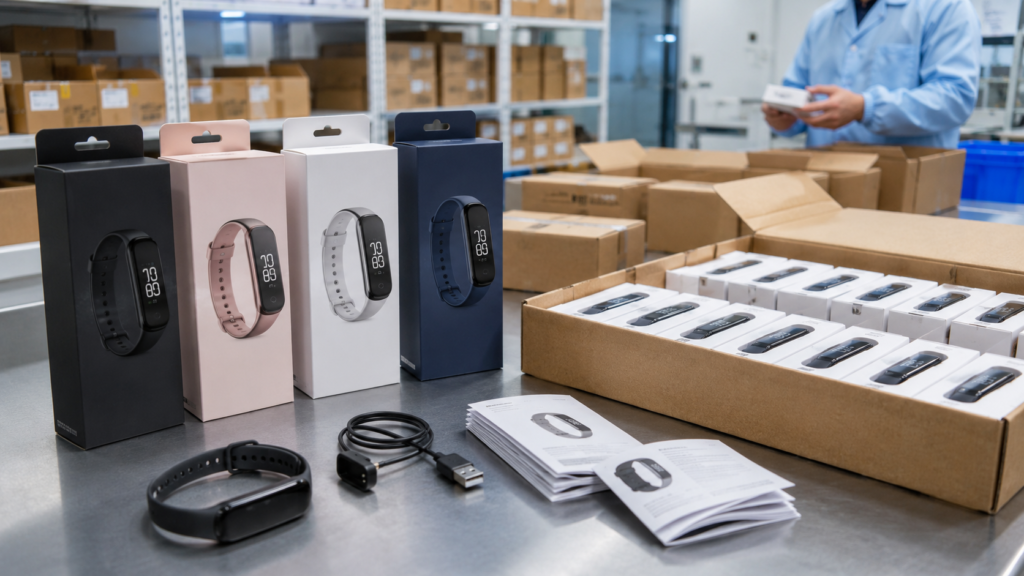
7 Checks for Sourcing Smart Watches for Corporate Wellness Programs in 2026
Smart watches for corporate wellness programs are best sourced by verifying seven things before committing budget: device specs that match the health data you plan to use, app and data-handling architecture, minimum order quantities, pilot and sample terms, battery and connectivity performance, compliance documentation for the US market, and after-sales support. Most corporate programs fail at evaluation stage not because of the watch itself, but because buyers skip these checks and discover integration, privacy, or fulfillment gaps after rollout.
Table of Contents
Table of Contents
smart watches for corporate wellness: Table of Contents
- Direct Answer: How Should Corporate Buyers Evaluate Smart Watches?
- Key Takeaways
- Key Facts for Buyers
- Check 1: Define the Health Data You Will Actually Use
- Check 2: Map the App, Firmware, and Data Architecture
- Check 3: Confirm MOQ and Pilot Order Terms
- Check 4: Test Samples Against Real Employee Conditions
- Check 5: Validate Battery, Charging, and Connectivity
- Check 6: Review Certification and Privacy Documentation
- Check 7: Plan Fulfillment, Warranty, and Spare Parts
- Comparison Table: Basic vs. Program-Ready Smart Watches
- Common Mistakes and Buyer Red Flags
- Practical Buyer Checklist
- FAQ
- Conclusion

Direct Answer: How Should Corporate Buyers Evaluate Smart Watches?
Corporate procurement teams should evaluate smart watches for corporate wellness in four steps: match device sensors to the metrics your program will report, confirm the app and data flow meets your company’s privacy requirements, secure a small pilot order before committing to full MOQ, and require certification documentation for the US market before mass production begins. This sequence reduces the risk of deploying hundreds of devices that your HR, IT, or legal teams later reject.

Key Takeaways
- Wellness programs rarely need every sensor; buying to your reporting plan controls cost and complexity.
- Consumer-grade watches report activity and wellness estimates, not medical diagnoses; frame program communications accordingly.
- Request a pilot batch to test comfort, charging behavior, and app onboarding with a representative employee group.
- Ask for a documentation pack per SKU — CE, FCC, RoHS, UN38.3, and MSDS where applicable — rather than a blanket claim.
- Clarify who owns app data, where it is stored, and how it can be exported or deleted before signing.

Key Facts for Buyers
| Item | Typical Range / Guidance | Why It Matters |
|---|---|---|
| Sensor set | Heart rate, SpO2 estimate, accelerometer; GPS varies by model | Defines which program metrics you can realistically report |
| Battery life | Several days to about two weeks depending on usage and model | Charging burden affects employee compliance |
| Pilot order size | Small batch before full program; terms vary by supplier | Reduces risk before a large PO |
| Full-program MOQ | Varies by model and customization level | Drives per-unit cost and cash commitment |
| Certification pack | FCC and UN38.3 typically relevant for US-bound battery devices; CE/RoHS often requested by procurement policy | Supports internal compliance review |
| Lead time | Depends on stock status, customization, and shipping mode | Aligns with program launch or benefit-enrollment dates |

Check 1: Define the Health Data You Will Actually Use
Start with the reporting plan, not the product catalog. Corporate wellness teams in the US typically want step counts, activity minutes, resting heart rate trends, sleep duration, and simple engagement scores. Some programs add blood oxygen or stress indicators, but these are estimates derived from optical sensors and algorithms, not clinical measurements.
What “What is a corporate wellness smart watch?” actually means
A corporate wellness smart watch is a consumer-class wearable purchased in volume for employees, paired with a management or engagement app that helps the organization run challenges, track participation, and — where legally permitted and properly disclosed — aggregate wellness trends. It is a participation and engagement tool, not a diagnostic device. Buyers should confirm with legal counsel whether any planned use brings the device or the program under health-data regulations; depending on data type and handling, HIPAA or state privacy laws may apply.
Practical consequence: if you plan to report only steps and activity, do not pay for premium sensor packages. If you plan to discuss sleep or recovery in employee communications, verify the watch’s sleep-tracking logic and export options in advance. The broader health and fitness wearable solutions overview is a useful reference when scoping which metrics belong in a program.
Check 2: Map the App, Firmware, and Data Architecture
This is the check most corporate buyers underestimate. The watch hardware is the visible part; the app, firmware, and data pipeline determine whether IT and legal will approve deployment.
Questions to put in writing
- Is the companion app a standard OEM app, a white-labeled version with your branding, or a custom build with your own backend?
- Where is user data stored, and who controls export and deletion?
- Can the app be distributed through your preferred channel, or must employees install it from a public store?
- Does the supplier support firmware updates, and how are they delivered?
- Are there documented APIs or export formats for aggregating participation data into your HR or wellness platform?
If your organization requires single sign-on, data residency in the US, or a vendor security questionnaire, confirm these requirements during evaluation, not after the PO. Suppliers that offer private-label OEM/ODM programs typically have a clearer path for branding and app customization than stock-product sellers.
Check 3: Confirm MOQ and Pilot Order Terms
Corporate orders differ from retail orders: quantities may be fixed by headcount, delivery may be staged by region or department, and branding may be limited to logo and packaging. That makes MOQ negotiation more nuanced than a simple per-unit price discussion.
Ask for the MOQ at each configuration level — stock device with logo printing, stock device with custom packaging, and customized firmware or app. Typically, each step up in customization raises the MOQ and lead time. Request the tier pricing in writing, including tooling or setup fees that are charged once rather than per unit.
Also clarify pilot terms: whether a small evaluation batch is available, whether pilot units ship from stock, and whether pilot costs are credited against the full order. A well-structured pilot of 20–50 units across departments is usually enough to test fit, charging behavior, and app onboarding before scaling. STAR KING’s MOQ thresholds and pilot credit policy are [STAR KING TO CONFIRM].
Check 4: Test Samples Against Real Employee Conditions
Sample review should go beyond unboxing. Distribute pilot units to a group that includes different wrist sizes, activity levels, and phone models (both iOS and Android), and run them for at least two to three weeks.
What to measure during the pilot
- Comfort during full workdays and workouts; strap material and fit for varied wrist sizes.
- App pairing success rate and time-to-first-sync across device types.
- Charging routine: how often employees must charge, and whether charging reminders work.
- Accuracy expectations: compare step counts and heart-rate trends against a reference device rather than expecting clinical precision.
- Notification and display usability in office lighting and outdoors.
Collect structured feedback — a short survey is more reliable than anecdotal comments — and use it to select the final SKU. If the program will scale internationally, note that additional certifications or radio-frequency approvals may be required in each destination market; buyers should verify requirements per country.
Check 5: Validate Battery, Charging, and Connectivity
Battery life drives program compliance. A watch that needs daily charging will lose participation within weeks. Ask suppliers for battery capacity, typical usage battery life, charging method, and how features like continuous heart-rate monitoring or GPS affect runtime.
Connectivity matters for both user experience and IT review: confirm Bluetooth version and compatibility, whether the device pairs with both major mobile platforms, and how data syncs when the phone is out of range. For battery-powered devices shipped to the US, air transport typically requires UN38.3 test documentation and appropriate battery declarations; buyers should verify shipping documentation requirements with their freight forwarder.
Check 6: Review Certification and Privacy Documentation
Do not accept a general statement that “all products are certified.” Request the documentation pack for the exact SKU and configuration you are buying. For US-bound electronics, the FCC equipment authorization framework is the relevant reference for radio-emitting devices, and battery shipping documentation is usually governed by UN Model Regulations as summarized by bodies such as the IATA Dangerous Goods Regulations.
Documentation checklist to request
- FCC documentation for the radio module or device, where applicable.
- UN38.3 test summary and MSDS for the battery pack.
- RoHS and REACH statements if your procurement policy requires them.
- CE documentation if the same model will also be deployed in the EU.
- A written statement of which certifications apply to which model — certification requirements depend on product configuration and target market.
On the privacy side, ask how health data is encrypted, retained, and deleted, and whether the supplier signs a data processing agreement. These are evaluation-stage questions; retrofitting them after deployment is costly. For programs focused on older employees or remote teams, review the corporate wellness application guidance alongside privacy counsel input.
Check 7: Plan Fulfillment, Warranty, and Spare Parts
Corporate programs often ship to many addresses — offices, home workers, new hires throughout the year. Confirm whether the supplier can drop-ship to individual employees, hold buffer stock, or support staged deliveries. Ask about warranty terms, defect handling, replacement unit turnaround, and availability of spare straps and chargers.
Lead time planning should account for production, customization, and ocean or air freight. Build in a buffer before your program launch or benefits enrollment window. STAR KING’s US fulfillment options and warranty structure are [STAR KING TO CONFIRM].
Comparison Table: Basic vs. Program-Ready Smart Watches
| Criteria | Basic consumer watch | Program-ready choice |
|---|---|---|
| Sensor set | Steps and basic heart rate | Matches program reporting plan; documented sensor list |
| App | Standard OEM app, no customization | White-label or custom app with defined data flow |
| Data handling | Unclear retention and export | Documented storage, export, and deletion policy |
| Pilot support | Single sample only | Structured pilot batch with feedback process |
| Compliance pack | General claim | Per-SKU FCC, UN38.3, MSDS, RoHS documents |
| Fulfillment | Single bulk shipment | Staged or drop-ship options |
| After-sales | Limited | Warranty terms and spare-part availability defined |
Common Mistakes and Buyer Red Flags
- Buying on unit price alone. A cheap watch with poor app onboarding or short battery life produces low participation and a failed program.
- Accepting verbal certification claims. Insist on documents for the exact SKU.
- Skipping the pilot. Pilot batches reveal fit, app, and charging issues that spec sheets hide.
- Ignoring data governance until IT review. Raise privacy questions in the first supplier call.
- No lead-time buffer. Customization plus freight can push delivery past a launch date.
- Unclear ownership of custom app or branding assets. Confirm in the contract who owns custom app builds and design files.
- Treating wellness metrics as medical data. Avoid language that implies diagnosis; consumer wearables are not medical devices unless specifically cleared as such.
Practical Buyer Checklist
- ☐ Reporting plan defined (metrics, frequency, audience)
- ☐ Sensor and feature list matched to reporting plan
- ☐ App model chosen (standard, white-label, custom) and data flow documented
- ☐ Written MOQ and tier pricing at each customization level
- ☐ Pilot batch terms agreed, including credit against full order if available
- ☐ Pilot feedback survey drafted
- ☐ Per-SKU certification pack received and reviewed
- ☐ Battery shipping documentation confirmed with freight forwarder
- ☐ Data processing agreement and retention/deletion terms reviewed
- ☐ Fulfillment model (bulk, staged, drop-ship) confirmed
- ☐ Warranty, defect, and spare-part terms in writing
- ☐ Lead time with buffer aligned to program launch date
Buyers can also review STAR KING Smart Watches OEM/ODM options to compare product positioning, customization scope, and sample planning.
FAQ
How many smart watches should we order for a corporate pilot?
A pilot of roughly 20–50 units across departments and device types is usually enough to test comfort, app onboarding, and charging behavior. Final pilot terms depend on the supplier and model.
Can smart watches for corporate wellness be branded with our company logo?
Yes, logo printing on the device and custom packaging are common private-label options. Fully custom apps or firmware typically require higher MOQs and longer lead times.
Do we need FCC certification documentation for employee watches?
For US-bound radio-emitting devices, FCC authorization is typically expected. Request the documentation for the exact model you are buying, since requirements vary by configuration.
Is employee health data from these watches regulated?
It depends on the data collected and how it is handled. Buyers should confirm with legal counsel whether HIPAA or state privacy laws apply to their program design.
What battery documentation is needed for shipping?
Lithium battery shipments typically require UN38.3 test summaries and, for air freight, dangerous goods documentation. Your freight forwarder can confirm the exact requirements for your route.
How long does a corporate smart watch order take?
Lead time depends on stock status, customization level, and shipping mode. Plan a buffer before your launch date and confirm timelines in writing.
Conclusion
Evaluating smart watches for corporate wellness comes down to seven disciplined checks: define the data you will use, map the app and data architecture, agree MOQ and pilot terms, test samples in real conditions, validate battery and connectivity, secure per-SKU certification and privacy documentation, and plan fulfillment and after-sales. Buyers who complete these steps before issuing a purchase order avoid the most common cause of failed wellness rollouts — discovering integration or compliance gaps after devices are in employees’ hands.
STAR KING supplies smart watches and other wearables for B2B programs with OEM/ODM and private-label support. To move from evaluation to a pilot, request product samples at https://starkingsmartring.com/contact/request-samples/ and confirm specifications, MOQ, and certification requirements for your program.
Discuss Your Smart Wearable OEM/ODM Project
Planning a smart ring, smart watch, smart band, AI glasses, AI translator, or AI voice mouse project? Contact STAR KING to discuss product positioning, sample testing, customization scope, certification requirements, lead time, and quotation details.

Team Star King

Scan WhatsApp QR code
Leave a Reply