
smart watch suppliers: 7 Technical Checks System Integrators Must Run Before Ordering Smart Watches in Bulk
smart watch suppliers buyers need a supplier evaluation process that checks product fit, OEM/ODM capability, compliance documents, quality control, pricing, lead time, and after-sales support before placing a bulk order.
Table of Contents
Table of Contents
7 Technical Checks System Integrators Must Run Before Ordering Smart Watches in Bulk
When system integrators procure bulk smart watches for enterprise deployments, the technical evaluation goes far beyond consumer features. You need devices that reliably connect to your platform, meet U.S. compliance standards, and survive long-term use. This guide explains the seven critical checks you should run on any smart watch supplier before committing to a large order, from sensor accuracy to battery safety and firmware customization.
smart watch suppliers: Table of Contents
- Short Answer
- Key Takeaways
- 1. Sensor Accuracy and Health Data Reliability
- 2. API Access and Firmware Customization
- 3. Battery Life and Safety Compliance
- 4. Water Resistance and Durability Testing
- 5. Required Certifications for U.S. Market
- 6. OEM/ODM Options and Customization
- 7. Manufacturing Quality and Auditability
- Supplier Evaluation Comparison Table
- Common Mistakes to Avoid
- Final Buyer Checklist
- FAQs
- Conclusion

Short Answer
For bulk smart watches intended for system integration in the United States, you should evaluate sensor accuracy, API documentation, battery safety compliance, water resistance ratings, FCC/CE certifications, OEM customization capabilities, and the supplier’s quality control processes. Each factor directly influences integration success, user adoption, and liability. Confirm these with technical datasheets, sample testing, and factory audits before purchase.

Key Takeaways
- Bulk smart watch orders require evaluating sensor accuracy with reference devices to ensure data reliability.
- API and firmware flexibility are critical for seamless integration into your existing platform.
- Battery safety certifications (UN38.3, MSDS) are non-negotiable for air shipping and U.S. compliance.
- FCC and CE certifications may be required depending on wireless features and your target market.
- OEM/ODM options allow hardware and software customization but require clear MOQ and lead time discussions.
- Quality control processes, including factory audits and pre-shipment inspections, are essential for large-scale procurement.
| Parameter | What to Verify | Why It Matters |
|---|---|---|
| Sensor accuracy | Test HR, SpO2, and sleep tracking against medical-grade references | Inaccurate data undermines your solution’s credibility and may cause liability |
| API documentation | Check REST/WebSocket endpoints, data rate limits, and authentication | Poor APIs increase integration costs and time |
| Battery safety | UN38.3, MSDS, and battery cell certificates | Required for air transport and may affect insurance |
| Water resistance | IP67/IP68 or higher with test results | Determines suitability for industrial or outdoor use |
| Certifications | FCC (if wireless), CE for EU if applicable | Non-compliance can lead to product seizure and fines |
| OEM options | Customization of casing, straps, firmware, and apps | Enables branding and feature tailoring to your client’s needs |
| Quality control | ISO 9001, QC procedures, and pre-shipment inspection reports | Reduces defect rates and warranty claims |

1. Sensor Accuracy and Health Data Reliability
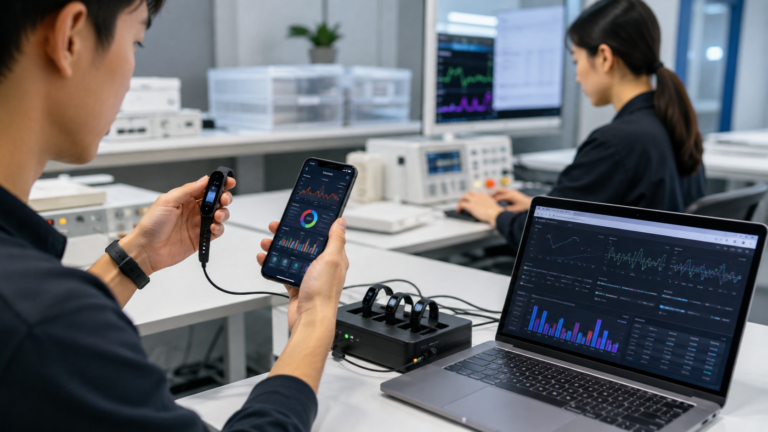
System integrators often deploy smart watches for workforce wellness or patient monitoring. You need sensors that deliver consistent, accurate data. Before bulk ordering, request a sample unit and compare the optical heart rate and SpO2 values against a validated device like a chest strap or fingertip pulse oximeter during various activity levels. Sleep tracking is harder to validate without polysomnography, but you can at least check that the device records consistent sleep stages over several nights.
Insist on the sensor supplier’s datasheet (e.g., from a known brand like AMS or a comparable OSRAM sensor). A transparent supplier will provide accuracy specifications and test conditions. Higher accuracy in SpO2 and heart rate often correlates with better optical design and algorithm quality—a key differentiator in the smart watches market.

2. API Access and Firmware Customization
Your smart watch will be part of a larger system. Check whether the device is compatible with your platform through an open API or SDK. Look for documentation that includes endpoints for streaming sensor data, command queues, and user management. Also, verify authentication methods (OAuth 2.0 or tokens) that meet your security requirements.
For deep integration, you may need firmware or app customization. Ask the supplier if they support modifying the watch’s firmware to adjust sampling rates, enable specific alerts, or add custom data fields. This is common in OEM/ODM projects, but you must clarify intellectual property rights and whether the source code is accessible. A supplier that offers flexible API and firmware support will lower your integration cost and time.
3. Battery Life and Safety Compliance
Battery performance is critical for user adoption. Determine the battery capacity (mAh) and typical usage time under your load profile. But safety is non-negotiable. For lithium-ion batteries, air shipment requires UN38.3 certification and an MSDS document. Verify that the supplier can provide these certificates for the exact battery model used. Also, ask about battery management system (BMS) protections: overcharge, over-discharge, and short-circuit protection.
If you are selling into the U.S., consider that the Consumer Product Safety Commission may have guidelines on lithium battery safety. Compliance is not just a formality; a battery failure in the field could cause legal liability and reputational damage. Ensure the supplier has passed aging tests and can show battery cycle test reports.
4. Water Resistance and Durability Testing
System integrators often deploy wearables in demanding environments, from outdoor work crews to industrial facilities. Verify the device’s IP rating (e.g., IP67, IP68) and request test reports. Also, ask about drop tests from typical waist height and temperature cycle tests. Ensure the device can handle sweat and humidity without degrading sensor performance.
Consistent water resistance is achieved through design and manufacturing tolerances. The supplier should have in-process testing procedures, such as air leak tests and periodic sample checking. You can request a pre-production sample to run your own IP and drop tests before full production. For additional robustness, check if the watch case material (metal versus plastic) meets your impact requirements.
5. Required Certifications for U.S. Market
Depending on wireless capabilities (Bluetooth, Wi-Fi, cellular), your smart watch may require FCC authorization in the U.S. Most Bluetooth-only devices can qualify under Part 15 rules with a Declaration of Conformity (DoC), but you must still verify the FCC ID. Ask the supplier for a copy of the FCC grant and test report. If the device has cellular connectivity, it may require additional FCC and carrier certification. Note that certification requirements change with product configuration; always verify with your compliance partner. For other markets, CE, RoHS, and REACH may apply, but those are not the focus for U.S. buyers.
Also, consider medical device regulations if you position the watch as a medical device. The FDA has strict classification; if the watch only provides wellness data, it may not require FDA clearance, but you must avoid making medical claims. For more, see the FDA medical device guidance. Always consult with a regulatory expert to confirm requirements for your specific use case.
6. OEM/ODM Options and Customization
Even if you plan to sell the watch under your own brand, you should understand the supplier’s OEM/ODM capabilities. This includes customization of hardware (casing, band materials), firmware (boot logo, pre-installed apps), and software (companion app). During purchase decisions, this flexibility can be a deciding factor. Discuss MOQ and lead times early; typical MOQs range from 500 to 1000 units for a custom band color, while firmware modifications may require higher volumes.
Ask for a clear product development process: how they handle tooling, sample approval, and design changes. A dedicated OEM/ODM supplier will offer a structured roadmap from concept to mass production. Review their previous work to see if they have experience with system integration projects. If they claim to offer API or cloud support, validate with technical documentation and a sandbox environment.
7. Manufacturing Quality and Auditability
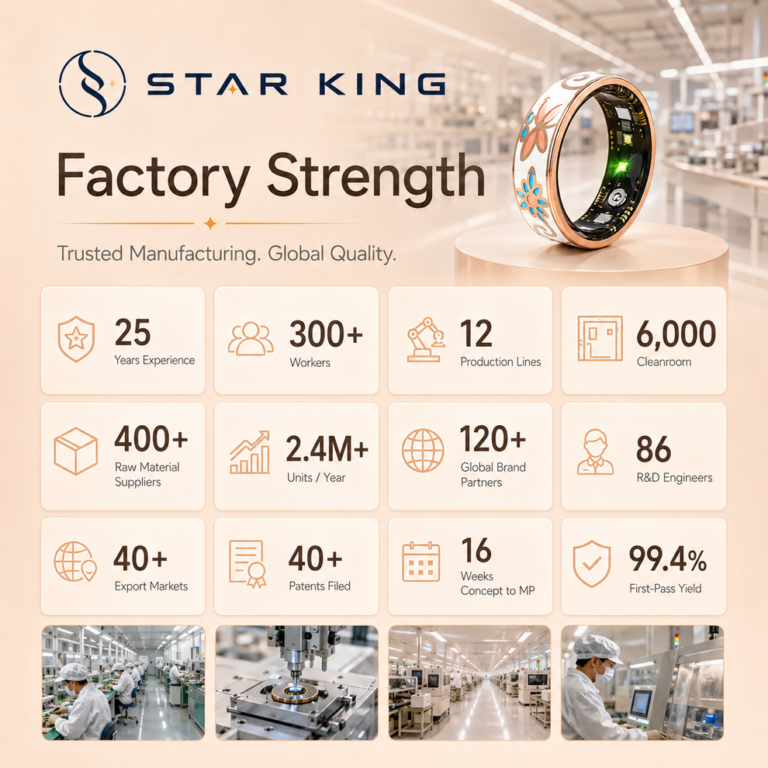
Bulk orders demand consistent quality. Request the supplier’s quality management certifications (e.g., ISO 9001). Ask about their incoming material inspection, in-process QC, and final product testing. Ideally, they have automated test fixtures for battery and sensor functions. Also, ask about their defect rate (e.g., < 1%) and warranty policy.
You can request a factory audit or use a third-party inspection service to verify their claims. During the audit, check for maintenance of test equipment, calibration records, and traceability. A reputable supplier will welcome audits. For extra assurance, specify a pre-shipment inspection (PSI) by an independent agency such as SGS or TUV using an AQL (Acceptable Quality Limit) standard like 2.5. If you don’t have audit experience, consider hiring a local agent in China to perform the inspection during production.
Supplier Evaluation Comparison Table
| Criterion | Questions to Ask Supplier | Why It Matters |
|---|---|---|
| Sensor accuracy | What sensor brand and accuracy specs? Can you share test reports? | Data reliability is key for your solution’s performance. |
| API documentation | Is there an open API/SDK? Are endpoints documented? | Reduces integration time. |
| Battery safety | Provide UN38.3 and MSDS. What BMS protections exist? | Compliance and safety. |
| Water resistance | What IP rating? Can you supply test reports? | Determines use case. |
| Certifications | Do you have FCC ID? Is CE available for EU? | Avoids import delays and legal issues. |
| Customization | How much can be customized? What are MOQs for each level? | Branding and feature needs. |
| Quality control | Describe your QC process. Do you allow factory audits? | Ensures product consistency. |
Common Mistakes System Integrators Make
- Ignoring OEM style options until after purchase: Some suppliers offer only stenciled logos, while others can do full casing customization. Ask early.
- Assuming all watches have open APIs: Some devices are locked to their own cloud. Verify data export capabilities or API access before committing.
- Failing to run a real-world field test: A short pilot with 10-20 devices can reveal connectivity issues, battery drain, or sensor inaccuracies in your target environment.
- Not verifying battery certificates: Some suppliers may say they have UN38.3 but only for a different battery model. Insist on the exact battery.
- Forgetting firmware update support: Over-the-air updates require infrastructure. Confirm the supplier provides firmware update tools or if you must build your own.
- Skipping risk evaluation for intellectual property: If you develop custom firmware or modifications, ensure you own the IP. Get a written agreement.
Practical Buyer Checklist
- Request a pre-production sample and run your own accuracy and battery drain tests.
- Review API documentation and conduct a small integration test in your sandbox.
- Ask for a copy of UN38.3, MSDS, and FCC certificate for the specific model.
- Verify water resistance rating and ask for test reports or request a sample for your own IP test.
- Clarify MOQ, lead time, and customization costs with the supplier.
- Conduct a factory audit or hire a third-party inspection company.
- Discuss warranty and after-sales support: what is your return policy for defects?
- Confirm intellectual property ownership if any custom development occurs.
- Plan for firmware updates: who is responsible for security patches?
FAQs
1. What is the typical MOQ for bulk smart watch orders with OEM customization?
MOQs vary by customization depth. For simple logo printing, MOQ may be as low as 500 units; for case color changes, you might need 2,000–3,000. Firmware and app customization often require a development fee and higher MOQs. Always request a specific quote from your supplier.
2. How do I know if a smart watch is FCC compliant?
Look for an FCC ID printed on the device or in the software. You can search that ID on the FCC Website (fcc.gov) to verify authorization. If the supplier does not provide an FCC ID, confirm whether the device is exempt and consult with a compliance expert.
3. Can I integrate data from these watches into my own cloud platform?
This depends on the watch manufacturer. If they offer an open API or a cloud-to-cloud solution, you can stream data to your system. Some require you to use their proprietary app first. Ask suppliers about data export methods, frequency, and security protocols.
4. What is the typical lead time for a custom smart watch order?
For standard models with minimal customization, lead time is typically 3-4 weeks after payment and sample approval. For full custom UI or firmware, expect 8-12 weeks including development and testing. Always factor in shipping time.
5. Are there restrictions on importing smart watches into the United States?
You must comply with FCC and possibly FDA (if medical claims). Also, ensure battery safety documentation is in place when shipping. Currently, Li-ion batteries are allowed to ship by air but need to comply with IATA regulations and your carrier’s requirements.
6. What is the difference between wellness and medical smart watches?
Wellness watches provide general health information (e.g., step count, heart rate) but not for diagnosis. Medical watches meet stringent accuracy standards and may require FDA clearance. If your integrator project involves clinical decision-making, you should consider an FDA-approved device and discuss with regulatory counsel.
7. How important is water resistance for indoor corporate use?
Even for indoor corporate wellness programs, water resistance is crucial to protect from sweat and occasional splashes. An IP67 rated watch is generally sufficient for most office environments. For industrial outdoor use, consider IP68 and robust casing.
Conclusion
Ordering bulk smart watches for system integration is a multi-faceted decision. By verifying sensor accuracy, API accessibility, battery safety, water resistance, certifications, OEM options, and manufacturing quality, you can mitigate risks and ensure that the devices meet your technical and business needs. Even if you have a trusted hardware partner, revisiting the seven checks against each new supplier candidate will help you avoid costly integration failures and compliance headaches.
When you are ready to move forward, discuss your requirements with a seasoned smart wearable manufacturer. The right supplier will not only provide a device but also offer transparent documentation, reasonable customization paths, and a quality control process that aligns with your enterprise expectations. This way, you can focus on delivering a reliable solution to your end clients.
Request a quotation now to compare technical specifications and explore how our smart watches can integrate into your solution. Or, if you need further assistance, our engineering team can help you evaluate your requirements.
Discuss Your Smart Wearable OEM/ODM Project
Planning a smart ring, smart watch, smart band, AI glasses, AI translator, or AI voice mouse project? Contact STAR KING to discuss product positioning, sample testing, customization scope, certification requirements, lead time, and quotation details.

Team Star King

Scan WhatsApp QR code