
smart ring OEM evaluation: 7 Smart Ring Pitfalls for Startup Brands: An OEM/ODM Evaluation Guide
7 Smart Ring Pitfalls for Startup Brands: An OEM/ODM Evaluation Guide
Evaluating a smart ring manufacturer for your startup? You need to assess technical capability, MOQ, certification, and long-term partnership. This guide defines smart ring OEM evaluation and provides a step-by-step framework to avoid common mistakes. Focus on supplier verification, product specifications, and compliance from the start.
smart ring OEM evaluation: Table of Contents
- Short Answer
- Key Takeaways
- Pitfall 1: Not Verifying Supplier Credentials
- Pitfall 2: Overlooking Certification Requirements
- Pitfall 3: Assuming MOQ is Fixed
- Pitfall 4: Ignoring Hidden Costs
- Pitfall 5: Neglecting App and Firmware Customization
- Pitfall 6: Skipping Sample Testing and Quality Checks
- Pitfall 7: Disregarding IP Protection and Mold Ownership
- Common Mistakes and Red Flags
- Smart Ring OEM Buyer Checklist
- Frequently Asked Questions
- Conclusion
Short Answer
For startup brands, smart ring OEM evaluation requires checking supplier verification, product certifications, MOQ flexibility, total landed costs, customization options, sample testing, and IP protection. Focus on partners who provide transparent documentation and support your market entry.
Key Takeaways
- Supplier verification is the first step to avoid unreliable partners.
- Certifications like CE, FCC, and RoHS are often required for global markets.
- MOQ can vary based on design complexity and customization level.
- Total cost includes tooling, shipping, certifications, and app development.
- App and firmware customization affects user experience and brand loyalty.
- Sample testing and pre-shipment inspections are non-negotiable.
- IP protection and mold ownership prevent costly disputes.
Pitfall 1: Not Verifying Supplier Credentials
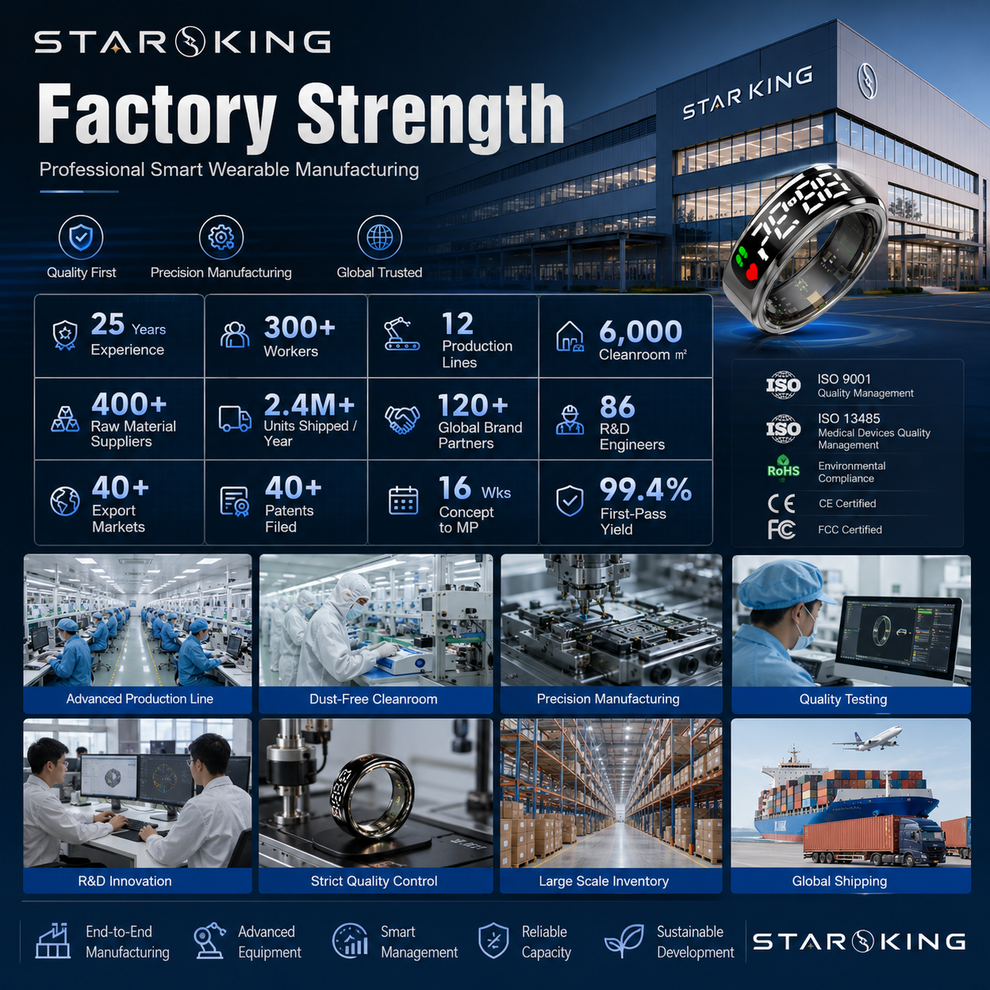
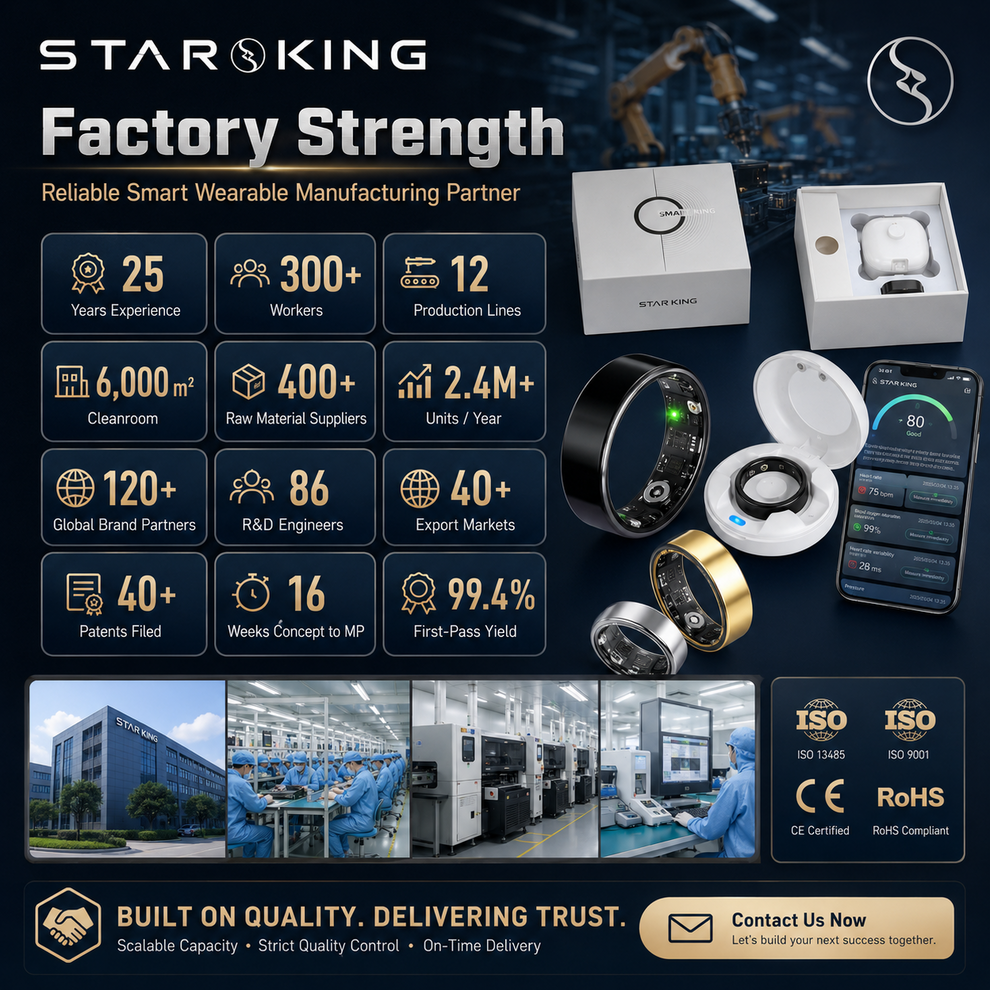
Smart ring vendors range from large contract manufacturers to small trading companies. A supplier may present excellent marketing materials but lack production capacity or quality control. Startup brands often skip background checks, assuming that all Chinese suppliers are similar.
How to evaluate:
- Request business licenses and factory audit reports (e.g., BSCI, ISO).
- Verify the address and production lines via video calls or third-party audits.
- Check for a dedicated R&D team and track record with smart wearables.
- Ask for references from clients in similar markets.
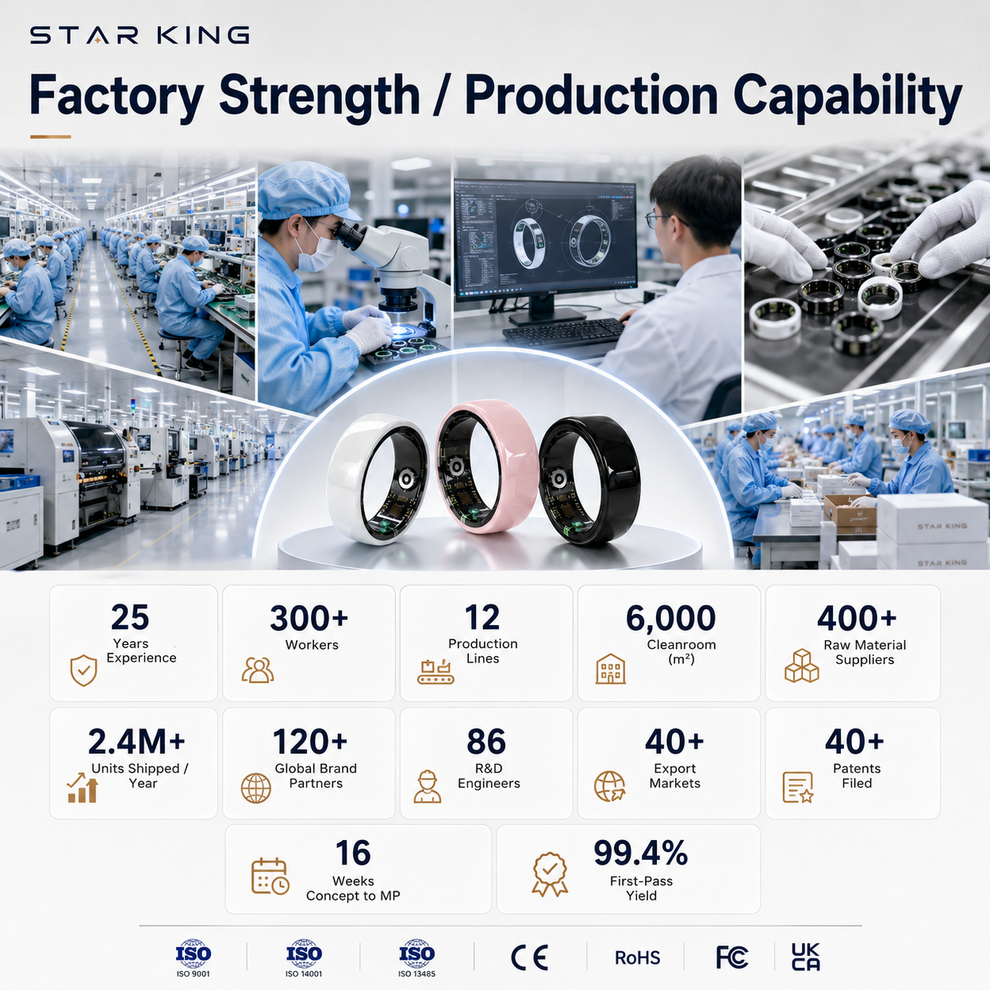
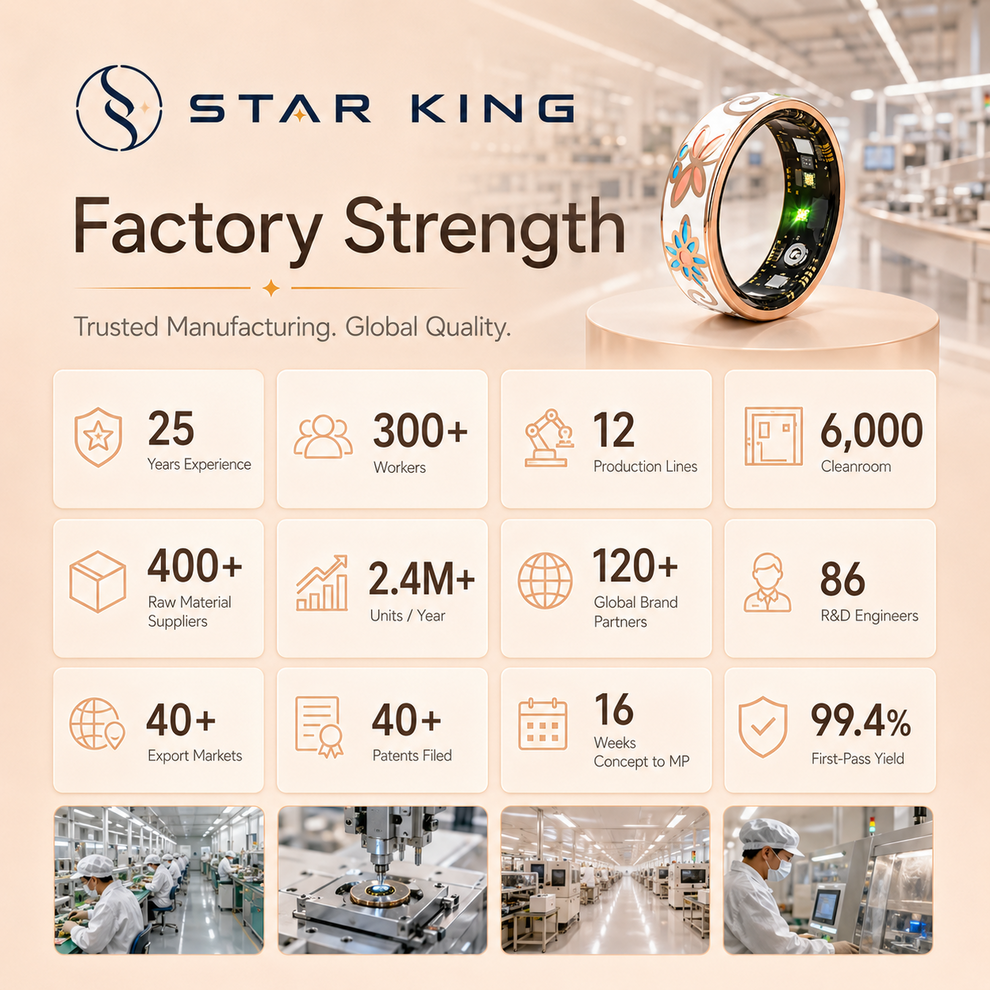
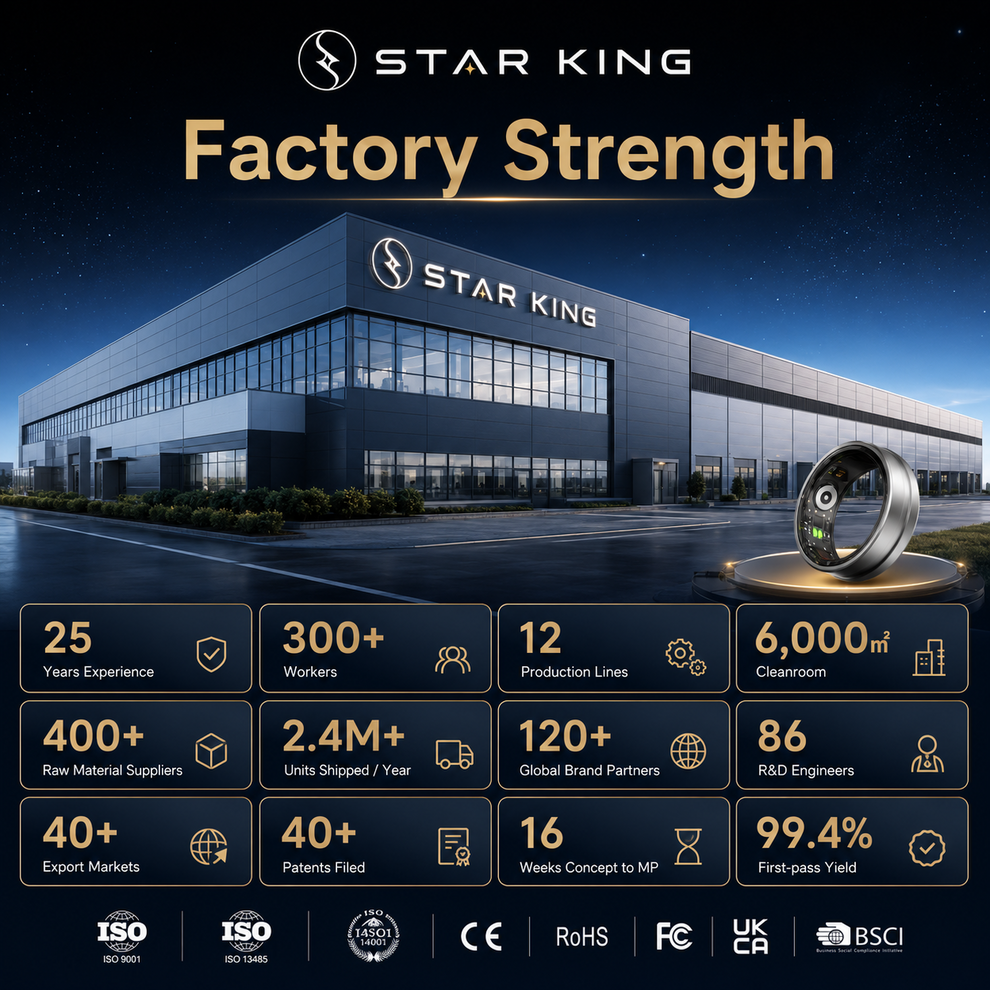
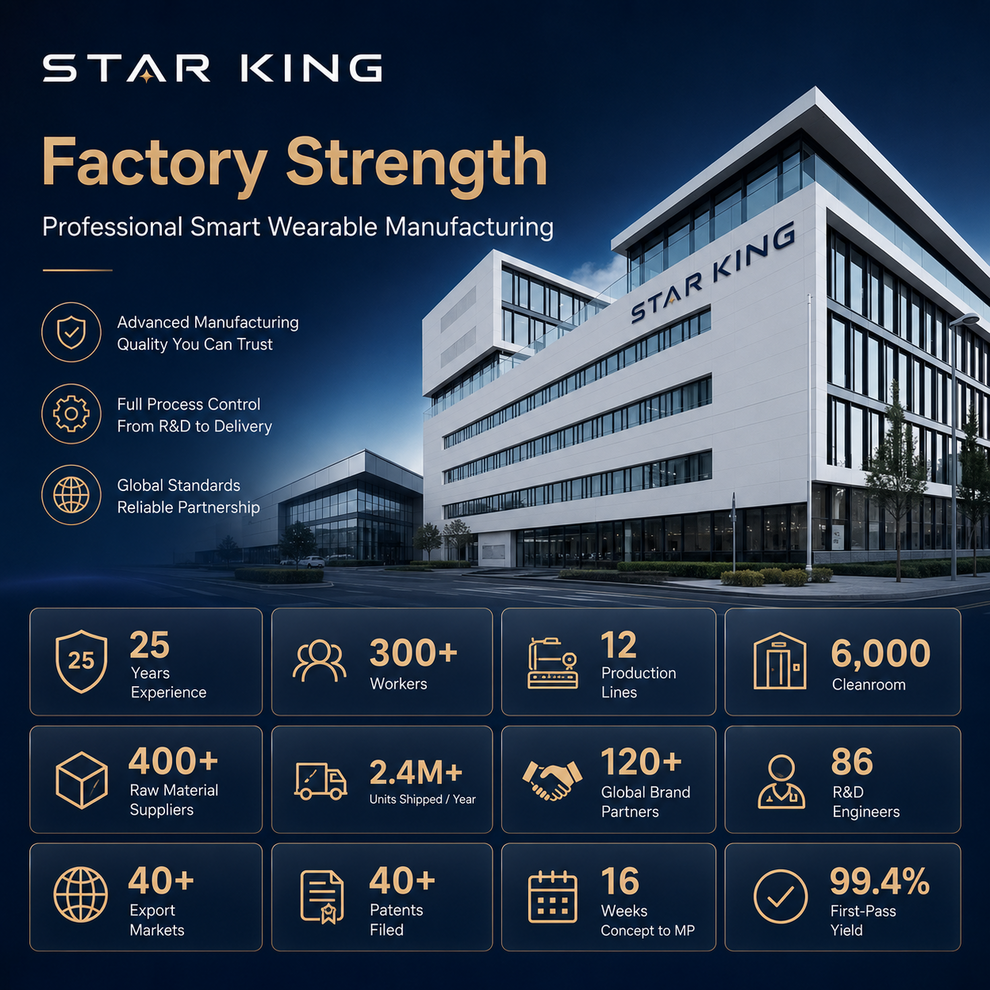
For a comprehensive approach, consider STAR KING as an example of a manufacturer that openly shares capabilities. Always verify independently.
Pitfall 2: Overlooking Certification Requirements
Smart rings include batteries and wireless radios. Therefore, they typically require certifications like CE (EU), FCC (US), RoHS, and battery-specific UN38.3 transport compliance. Startup brands often assume the supplier will handle all certifications, but they may not be included in the quote.
Certifications depend on your target market and product configuration. For example, if you sell in the EU, CE marking may be required. In the US, FCC Part 15 applies. The supplier should provide evidence of certification or the ability to obtain them. Since regulations change, you should verify with your legal advisor or the certification body.
Key facts:
| Certification | Region | Relevance |
|---|---|---|
| CE | EU | Required for many electronic products |
| FCC | US | Required for intentional radiators like smart rings |
| RoHS | EU/Global | Restricts hazardous substances |
| UN38.3 | International | Battery transport safety |
Always ask which certifications are included in the unit price and which you must handle separately. For more on product quality, see health and fitness wearables.
Pitfall 3: Assuming MOQ is Fixed
MOQ (minimum order quantity) is often negotiable and depends on component sourcing, tooling, and assembly complexity. A startup may hear “500 units” and walk away, but some suppliers offer lower initial run with higher unit price. Conversely, a very low MOQ may indicate poor scaling ability.
Evaluation approach:
- Ask for MOQ for different customization levels: standard, logo print, custom band, full hardware design.
- Request a price breakdown showing how MOQ impacts cost.
- Consider phased orders: initial pilot then scale up.
For a realistic projection, use the smart ring product page to understand current options. Always negotiate with data.
Pitfall 4: Ignoring Hidden Costs
The unit price is only one part of landed cost. Hidden costs include tooling, packaging design, app customization, certification fees, shipping, tariffs, and replacement units. Startups often overshoot budget because they only compare ex-factory prices.
Landed cost checklist:
- Ex-factory price vs. FOB vs. DDP.
- Tooling or NRE (non-recurring engineering) costs.
- Custom packaging and logo design.
- Firmware and app development fees.
- Testing and certification expenses.
- Shipping and insurance.
Evaluate with a fitness tracking application in mind. A thorough cost analysis prevents surprises.
Pitfall 5: Neglecting App and Firmware Customization
For smart rings, the companion app and firmware define the user experience. Startup brands may assume they can use a generic app, but that limits brand differentiation. However, fully custom app development can be expensive.
Customization levels:
| Level | Description | Cost/Time |
|---|---|---|
| White-label | Supplier’s app with your brand name/logo | Low |
| Custom branding | Recolor, apk icon, minor UI changes | Medium |
| Full custom app | Unique features, own cloud, from scratch | High |
Decide early what your budget allows. A balance between white-label and custom features suits many startups. For higher productivity use cases, see AI office productivity.
Pitfall 6: Skipping Sample Testing and Quality Checks
Even if a supplier provides a prototype, production units may differ. Relying on the golden sample without batch testing leads to quality surprises. Startup brands often skip pre-shipment inspection to save cost, but this is risky.
Testing stages:
- Initial sample: function, battery life, comfort.
- Pilot run: test 10-50 units for reliability.
- Pre-shipment inspection: check appearance, function, and packaging.
Ask for test reports such as sleep tracking accuracy. Insist on a clear quality standard.
Pitfall 7: Disregarding IP Protection and Mold Ownership
Your brand’s IP includes trademarks, design patents, and the mold for your unique casing. Without a contract, the supplier could reuse your mold for other buyers. Startups often focus on price and forget to secure ownership.
Protection steps:
- Sign a non-disclosure agreement before sharing specifications.
- Specify mold ownership in the contract.
- Register your trademark in your target markets.
- Request a lock or unique design to prevent reuse.
Work with suppliers who respect your IP. For more on product differentiation, see the STAR KING blog for industry insights.
Common Mistakes and Red Flags
- Choosing the lowest quote without understanding cost drivers.
- Not visiting the factory or requesting a live video audit.
- Accepting vague certification promises without documentation.
- Assuming MOQ is unchangeable.
- Ignoring software integration risks.
- Not planning for battery shipping restrictions.
Smart Ring OEM Buyer Checklist
- Supplier verification completed (license, audit, references).
- Certification requirements defined per target market.
- MOQ confirmed for your customization level.
- Landed cost model built with all expenses.
- App/firmware customization scope agreed.
- Sample testing and inspection plan established.
- IP protection contract signed.
Frequently Asked Questions
What is the typical MOQ for smart ring OEM?
MOQ varies from 200 to 1000 units depending on customization. Standard designs often have lower MOQs, while custom colors or materials increase the minimum.
How long does it take to develop a custom smart ring?
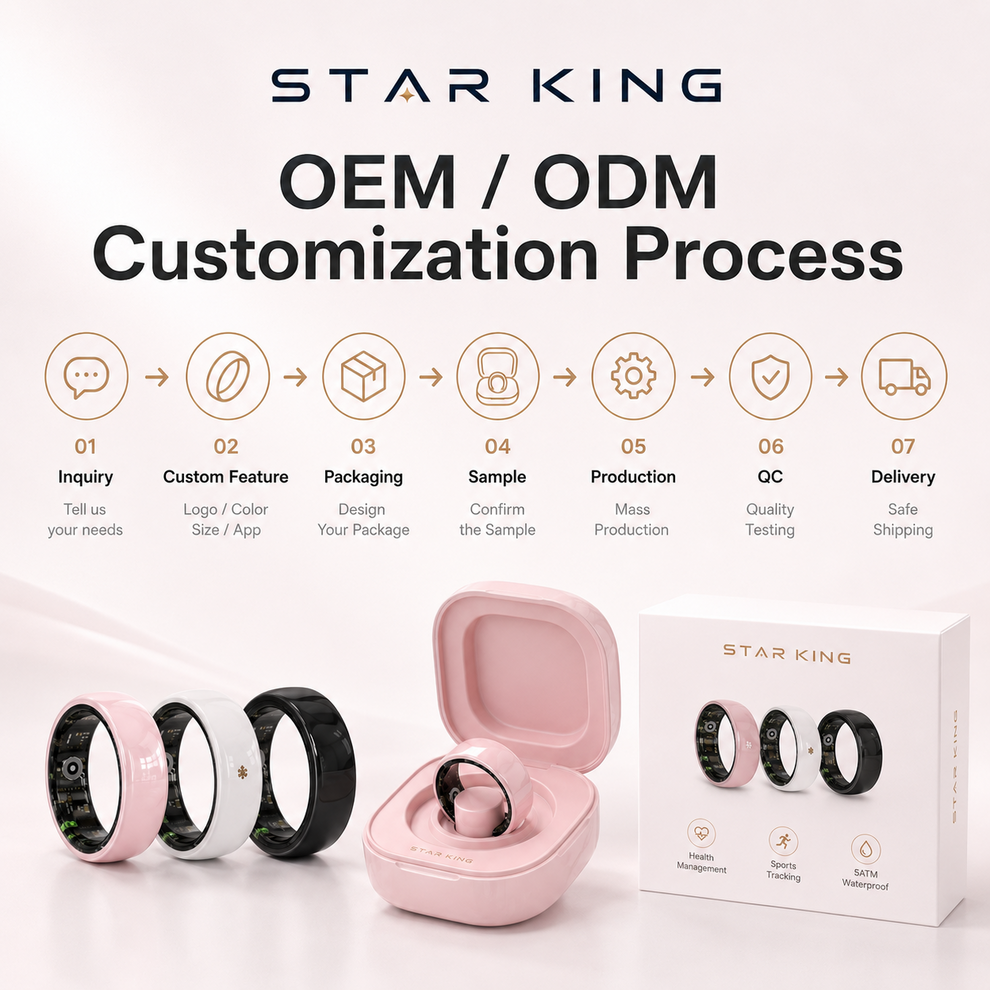
Lead time ranges from 4 to 12 weeks for samples, plus 4-8 weeks for production, depending on complexity. Tooling and firmware take extra time.
Do I need to obtain CE and FCC for a smart ring?
If you sell in the EU and US, CE and FCC are typically required. Check with your supplier or a compliance lab for your specific configuration.
Can I use my own app with the smart ring?
Yes, but you need API access or a custom app development plan with the supplier. This adds cost but increases brand control.
What is the difference between OEM and ODM?
OEM means you provide the design and supplier manufactures. ODM means supplier provides the design and you customize branding. ODM is faster, OEM gives more uniqueness.
How should I handle battery shipping?
Smart rings contain lithium batteries, so shipments must comply with UN38.3. Work with your freight forwarder and supplier to ensure proper documentation and packaging.
What does a typical startup budget for smart ring development?
Expect $10,000-$50,000 for initial inventory, tooling, and certification, depending on order size and customization. Use cost analysis to refine.
Conclusion
Evaluating a smart ring OEM partner is a multi-step process that goes beyond comparing prices. By addressing supplier credibility, certifications, MOQ, costs, customization, testing, and IP protection, you can mitigate risks and launch a competitive product. Use this guide as your decision framework.
Ready to discuss your smart ring project? Request samples or speak with our OEM/ODM team to get a transparent quote and timeline.
Author Bio: Team Star King specializes in smart wearables, AI hardware, and OEM/ODM manufacturing insights. With a focus on B2B sourcing, we help startups and established brands navigate product development, quality, and compliance. Visit our blog for more.
For B2B buyers, smart ring OEM evaluation evaluation should connect specifications, factory process control, certification planning, packaging, and delivery risk into one sourcing decision.
For B2B buyers, smart ring OEM evaluation evaluation should connect specifications, factory process control, certification planning, packaging, and delivery risk into one sourcing decision.
For B2B buyers, smart ring OEM evaluation evaluation should connect specifications, factory process control, certification planning, packaging, and delivery risk into one sourcing decision.
For B2B buyers, smart ring OEM evaluation evaluation should connect specifications, factory process control, certification planning, packaging, and delivery risk into one sourcing decision.
For B2B buyers, smart ring OEM evaluation evaluation should connect specifications, factory process control, certification planning, packaging, and delivery risk into one sourcing decision.
For B2B buyers, smart ring OEM evaluation evaluation should connect specifications, factory process control, certification planning, packaging, and delivery risk into one sourcing decision.
For B2B buyers, smart ring OEM evaluation evaluation should connect specifications, factory process control, certification planning, packaging, and delivery risk into one sourcing decision.
For B2B buyers, smart ring OEM evaluation evaluation should connect specifications, factory process control, certification planning, packaging, and delivery risk into one sourcing decision.
Useful Official References for Buyers
- FCC equipment authorization guidance
- European Commission CE marking information
- Bluetooth SIG specifications
Discuss Your Smart Wearable OEM/ODM Project
Planning a smart ring, smart watch, smart band, AI glasses, AI translator, or AI voice mouse project? Contact STAR KING to discuss product positioning, sample testing, customization scope, certification requirements, lead time, and quotation details.
Author Bio

Team Star King

Scan WhatsApp QR code