
smart watch manufacturer selection: How to Vet a Smart Watch Manufacturer for Corporate Procurement: 9 Critical Checks for US Buyers
smart watch manufacturer selection buyers need a supplier evaluation process that checks product fit, OEM/ODM capability, compliance documents, quality control, pricing, lead time, and after-sales support before placing a bulk order.
Table of Contents
Table of Contents
How to Vet a Smart Watch Manufacturer for Corporate Procurement: 9 Critical Checks for US Buyers
Short Answer: For corporate procurement teams in the United States, selecting a smart watch manufacturer requires a structured evaluation of OEM/ODM capabilities, quality systems, international certifications (such as FCC, CE, RoHS), battery safety (UN38.3), and supply chain reliability. This article outlines 9 critical checks that help you minimize risk and choose a partner that can meet your specification, timeline, and compliance needs.
smart watch manufacturer selection: Table of Contents
- Introduction
- Key Takeaways
- Check 1: Assess OEM/ODM vs. Off-the-Shelf
- Check 2: Verify Manufacturing and Quality Systems
- Check 3: Confirm Certifications and Compliance
- Check 4: Evaluate Battery Safety and Compliance
- Check 5: Review Software, App, and Firmware Customization
- Check 6: Assess MOQ, Lead Times, and Scalability
- Check 7: Examine Packaging and Branding Options
- Check 8: Understand Intellectual Property and Tooling Ownership
- Check 9: Gauge After-Sales Support and Warranty
- Common Mistakes When Choosing a Supplier
- Smart Watch Manufacturer Evaluation Checklist
- Frequently Asked Questions (FAQ)
- Conclusion
- Request a Quote or Discuss an OEM Project
Introduction
Corporate procurement teams in the United States are increasingly integrating smart watches into employee wellness programs, field operations, and remote health monitoring. However, selecting the right smart watch manufacturer is not a simple product choice—it involves evaluating factory capabilities, compliance with FCC and other regulations, battery safety, and long-term supply reliability. This article provides a structured, 9-step approach to vet a smart watch manufacturer for corporate procurement, helping you avoid costly mistakes and secure a partner that can deliver quality, certified devices at scale.
By applying these checks, you can differentiate between consumer-focused suppliers and B2B manufacturers that understand corporate requirements such as customization, certification, and after-sales support.

Key Takeaways
- Supplier selection must go beyond product specs—evaluate the factory’s quality systems, certifications, and financial stability.
- Certification requirements vary by target market and product configuration; verify FCC, CE, RoHS, and battery compliance with the supplier.
- Battery safety (UN38.3, MSDS) is non-negotiable for US imports—ensure the supplier can provide documentation.
- OEM/ODM capability, including firmware and app customization, is critical for building a unique corporate solution.
- Define your MOQ, lead time, and scalability expectations before committing to a supplier.
- IP and tooling ownership must be clarified in the contract to protect your product design.

Key Facts for Buyers
| Factor | What to Check | Why It Matters |
|---|---|---|
| Manufacturing Type | OEM (off-the-shelf with branding) vs. ODM (custom design) | Defines your level of control and investment. |
| Quality Systems | ISO 9001, quality control processes, testing protocols | Ensures consistent product quality for corporate deployment. |
| Certifications | FCC (US), CE (EU), RoHS, battery UN38.3 | Required to legally sell or import in the US and other markets. |
| Battery Safety | UN38.3, MSDS, battery quality certifications | Mitigates risk of recalls, shipping issues, and liability. |
| Software Customization | Firmware, app, API integration capabilities | Allows tailoring to your corporate wellness or data needs. |
| MOQ & Lead Time | Minimum order quantities, production lead times | Affects inventory planning and project timelines. |
| IP Ownership | Tooling and design ownership clauses | Protects your product design from being reused by competitors. |

Check 1: Assess OEM/ODM vs. Off-the-Shelf
Understand whether the manufacturer offers truly customizable OEM/ODM services or only pre-built models. For corporate procurement, you may need specific features, branding, or software integration. An ODM partner can develop a smart watch from reference designs, while an OEM partner can customize an existing model with your logo and color. Evaluate which aligns with your brand strategy and budget.
Check 2: Verify Manufacturing and Quality Systems
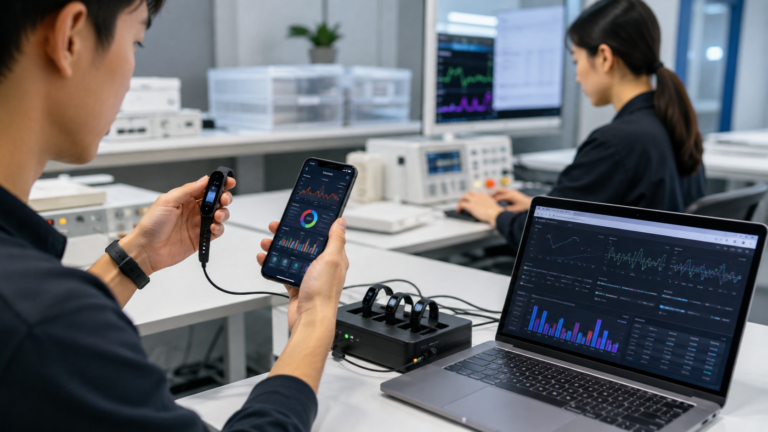
Ask for their quality management system (QMS) certifications, such as ISO 9001. Inquire about their quality control processes, including incoming material inspection, in-line QC, and final pre-shipment inspection. A reliable manufacturer should welcome third-party audits and provide test reports for components like displays, batteries, and sensors.
Check 3: Confirm Certifications and Compliance
For the US market, smart watches typically require FCC Part 15 certification for intentional radiators, and may also need to comply with RoHS for hazardous substances. Depending on features, additional certifications may apply. The FCC’s Equipment Authorization page outlines requirements. The supplier should provide copies of test reports or work with you to obtain certifications. Certification requirements vary by product configuration and target market; verify specifics.
Check 4: Evaluate Battery Safety and Compliance
Battery safety is critical for corporate procurement. Ensure the supplier provides UN38.3 certification for lithium batteries and an MSDS (Material Safety Data Sheet). The IATA DGR guidelines must be followed for air transport. Battery quality directly impacts safety, performance, and product lifespan.
Check 5: Review Software, App, and Firmware Customization
Corporate use may require integration with HR systems, health dashboards, or custom data privacy policies. Determine if the manufacturer offers API access, firmware customization, and white-label app development. Clarify who owns the app’s intellectual property and how data is handled and secured.
Check 6: Assess MOQ, Lead Times, and Scalability
Define your expected order quantities and production ramp-up. Ask for MOQ and lead time for initial orders and repeat orders. Inquire about their production capacity and how they manage scalability. This is especially important for corporate-wide rollouts that may require phased deliveries.
Check 7: Examine Packaging and Branding Options
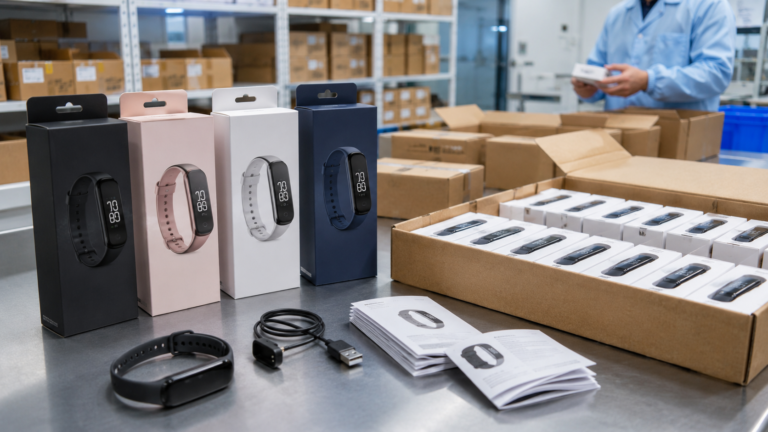
Corporate procurement often requires custom packaging for retail or employee distribution. Ask about packaging design, materials, and customization options. Verify they can handle logo imprinting, custom boxes, and possibly multilingual user manuals.
Check 8: Understand Intellectual Property and Tooling Ownership
If you co-develop a product, ensure your contract defines IP ownership. Tooling is often owned by the buyer after development costs are paid. Obtain clear clauses regarding design and patent rights to prevent the manufacturer from selling your product to competitors.
Check 9: Gauge After-Sales Support and Warranty
Corporate buyers need reliable warranty and technical support. Confirm the manufacturer’s warranty terms (e.g., 1-year for devices), their return/repair process, and whether they can supply spare parts. Evaluate their responsiveness and whether they provide firmware updates for bug fixes.
Common Mistakes When Choosing a Smart Watch Supplier
- Focusing only on price: Low unit costs can lead to high failure rates and hidden certification fees.
- Ignoring certifications: Selling without FCC can result in customs seizure or fines.
- Assuming all suppliers offer ODM: Some only sell standard models with minimal customization.
- Overseeing battery safety: Non-compliant batteries pose serious logistics and safety risks.
- Not clarifying IP ownership: Your design may be copied, hurting your brand.
Smart Watch Manufacturer Evaluation Checklist
- Are you looking for OEM (branding existing device) or ODM (custom design)?
- Does the manufacturer have ISO 9001 or similar quality certifications?
- Can they provide FCC, CE, RoHS, UN38.3, and MSDS documentation?
- What is their MOQ and typical lead time for your order?
- Do they offer firmware and app customization? What about API access?
- Can they handle custom packaging and branding?
- Who owns the tooling and IP in a co-development agreement?
- What warranty and after-sales support do they provide?
- Can they support scalability for corporate-wide rollouts?
Frequently Asked Questions (FAQ)
Q1: What is the typical MOQ for OEM smart watch manufacturing?
MOQ varies widely by manufacturer and complexity. Off-the-shelf models may have MOQs of 500–1000 units, while ODM projects might require 3000+ units. Always discuss your specific volume and negotiation options.
Q2: How long does it take to get a custom smart watch produced?
For minor customizations (logo, packaging), 4-6 weeks after approval. New ODM designs can take 4-6 months including development and testing. Include time for certification.
Q3: Can I use the manufacturer’s existing smart watch and add my logo?
Yes, many manufacturers offer private-label options where you choose an existing model and customize the casing, software splash screen, and packaging. This is the fastest path to market.
Q4: How do I know if the smart watch complies with FCC regulations?
Ask for the FCC grant of equipment authorization or test report. You can also search the FCC database using the FCC ID number printed on the product. Verify that the device is certified for the exact model you plan to import.
Q5: What certifications are needed for lithium batteries in smart watches?
For shipping and safety, UN38.3 certification is required. Additionally, MSDS documentation is needed for transport. Some markets may also require battery standards like UL 1642 or IEC 62133.
Q6: Can the manufacturer help with app development or API integration?
Some manufacturers offer app customization or have partnerships with app developers. Discuss your needs early. API access may be available for third-party integrations, but may require additional fees.
Q7: What are the risks of using a non-certified smart watch in a corporate wellness program?
Beyond legal penalties for non-compliance, you risk data privacy issues, safety hazards from batteries, and reputational damage. It can also void insurance coverage and hinder future procurement.
Conclusion
Selecting a smart watch manufacturer for corporate procurement requires a systematic approach. By checking manufacturing capabilities, quality systems, certifications, battery safety, customization options, MOQ, IP ownership, and after-sales support, you can mitigate risks and build a reliable supply chain. Remember that certification requirements depend on your target market and product configuration—always verify with the manufacturer and regulatory bodies.
Ready to Discuss Your OEM/ODM Smart Watch Project?
STAR KING offers OEM/ODM and private-label solutions for smart watches, backed by strong manufacturing and customization capabilities. Request a quotation or contact our team to discuss your specific corporate procurement needs.
Buyers can also review STAR KING Smart Watches OEM/ODM options to compare product positioning, customization scope, and sample planning.
Discuss Your Smart Wearable OEM/ODM Project
Planning a smart ring, smart watch, smart band, AI glasses, AI translator, or AI voice mouse project? Contact STAR KING to discuss product positioning, sample testing, customization scope, certification requirements, lead time, and quotation details.

Team Star King

Scan WhatsApp QR code