
smart watch sourcing guide: Smart Watch Sourcing for US Distributors: 7 Checks Before You Commit in 2026
October 4, 2026 · Team Star King

Smart Watch Sourcing for US Distributors: 7 Checks Before You Commit in 2026
This smart watch sourcing guide is written for US distributors who need a repeatable way to screen suppliers before signing a purchase order. The short answer: evaluate a smart watch manufacturer on seven checks — product roadmap and firmware capability, OEM/ODM or private label fit, MOQ and cost drivers, sample validation, quality control, US compliance (including FCC and battery rules), and lead time with after-sales support. The sections below explain how to run each check, what evidence to request, and where distributor margins are usually lost.
Table of Contents
Table of Contents
Distributors rarely fail because they picked the wrong color of watch case. They fail because they skipped a check that only surfaced later — a missing FCC ID, a battery that cannot ship as expected, or an app that stops receiving updates. A supplier who can walk you through all seven checks with documents in hand is a lower-risk partner than one who only offers a competitive unit price.
For reference, the US market for connected wearables remains large and channel-driven, and buyers entering it often need both product and compliance data. The FCC equipment authorization database and the IEC standards library are two official sources worth bookmarking as you review supplier claims.
smart watch sourcing guide: Table of Contents
- Short Answer: What Should US Distributors Check First?
- Key Takeaways
- Key Facts for Buyers
- What Is Smart Watch Sourcing for a Distributor?
- Check 1: Product Roadmap and Firmware Capability
- Check 2: OEM, ODM, or Private Label Fit
- Check 3: MOQ and the Real Cost Drivers
- Check 4: Sample Testing and Validation
- Check 5: Quality Control in Mass Production
- Check 6: US Compliance, FCC, and Battery Shipping
- Check 7: Lead Time and After-Sales Support
- OEM vs. ODM vs. Private Label: Decision Table
- Common Mistakes and Buyer Red Flags
- Practical Buyer Checklist
- FAQ
- Conclusion
Short Answer: What Should US Distributors Check First?
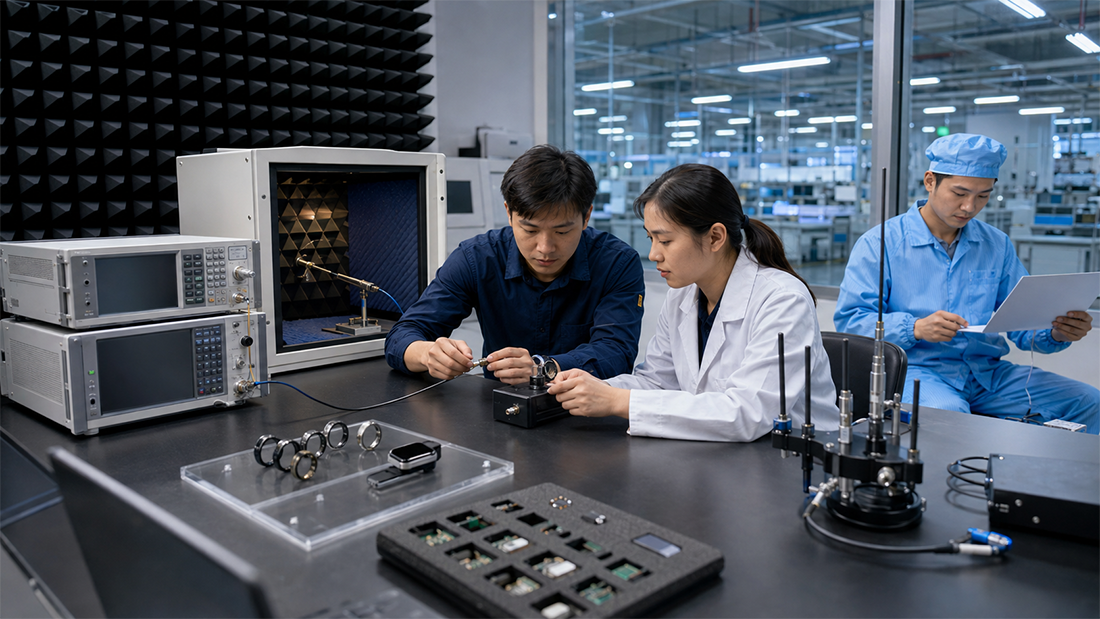
Start with compliance and firmware, then move to commercial terms. Confirm the supplier can support US-facing documentation such as FCC equipment authorization where applicable, battery shipping documentation, and a firmware update plan. Only after those are credible should you negotiate MOQ, pricing tiers, and packaging. This order prevents you from investing in a brand plan that a compliance gap would later stall.
Key Takeaways
- Screen for compliance and firmware support before unit price; these are the hardest gaps to fix later.
- OEM, ODM, and private label differ mainly in how much design ownership and tooling cost you carry.
- MOQ usually depends on materials, tooling, packaging, and firmware customization, not just color.
- Always validate with production-representative samples, not golden samples.
- Battery shipping rules affect cost and schedule; confirm documentation and mode of transport early.
- Ask who owns the tooling and ID files when the relationship ends.
- Treat supplier claims as hypotheses until you see documents, test reports, or a live device.

Key Facts for Buyers
| Item | What to Confirm | Why It Matters to a Distributor |
|---|---|---|
| FCC authorization | Whether the specific model has an FCC ID and grantee code | Supports US import and retail listing requirements |
| Battery shipping | UN 38.3 test summary and transport documents | Affects freight cost, mode, and delivery time |
| MOQ | Per model, per color, and for custom packaging | Drives inventory cash and SKU breadth |
| Firmware/App | Update cadence, who owns the app, data terms | Protects warranty exposure and brand reputation |
| Quality plan | IQC, IPQC, OQC, aging, drop, waterproof tests | Reduces returns and channel conflict |
| Lead time | Sample, tooling, mass production, and shipping windows | Sets your launch and replenishment dates |
| Tooling/IP | Who owns molds, ID files, and firmware code | Determines exit risk if you switch suppliers |
What Is Smart Watch Sourcing for a Distributor?
Smart watch sourcing, for a distributor, is the process of selecting a manufacturer and product configuration, then verifying that the product can be imported, marketed, and supported in your target market at a margin that covers your channel costs. It is not the same as buying finished consumer goods off a shelf. A distributor typically needs a stable model, predictable replenishment, defensible compliance, and a support path for retailers or end customers.
How buyers should evaluate a supplier: look for evidence across three layers. First, product evidence — real devices, firmware history, sensor behavior. Second, process evidence — inspection records, test protocols, traceability. Third, commercial evidence — clear MOQ, cost breakdown logic, and lead time commitments. A supplier strong in only one layer is a partial partner.
Most first-time distributors find a supplier through trade shows, sourcing platforms, or referrals. The screening work is the same regardless of channel: verify identity, capability, and consistency before you allocate budget. If you are still comparing form factors, our overview of smart watches for OEM and private label programs is a useful reference for category scope.
Check 1: Product Roadmap and Firmware Capability
A distributor needs a model that will still be supported in two or three years. Ask the supplier how often firmware is updated, how bugs are reported and fixed, and whether the companion app is maintained by the supplier or a third party. Firmware capability is often the difference between a watch that ages well and one that becomes unsellable after a phone OS update.
Questions that reveal firmware maturity
- How many firmware releases shipped in the last 12 months, and for which models?
- Who writes and maintains the companion app, and where is the data hosted?
- How are sensor accuracy and battery life regression-tested after updates?
- Can you provide a sample update log or release notes?
For US buyers, also ask how the product handles data privacy expectations. Consumer wearables commonly collect health-adjacent data, and retailers increasingly ask about data handling. Note that health monitoring features on consumer devices are typically wellness indicators, not medical diagnostics, unless the product is separately regulated. If your channel requires medical claims, treat that as a distinct project and verify requirements carefully.

Check 2: OEM, ODM, or Private Label Fit
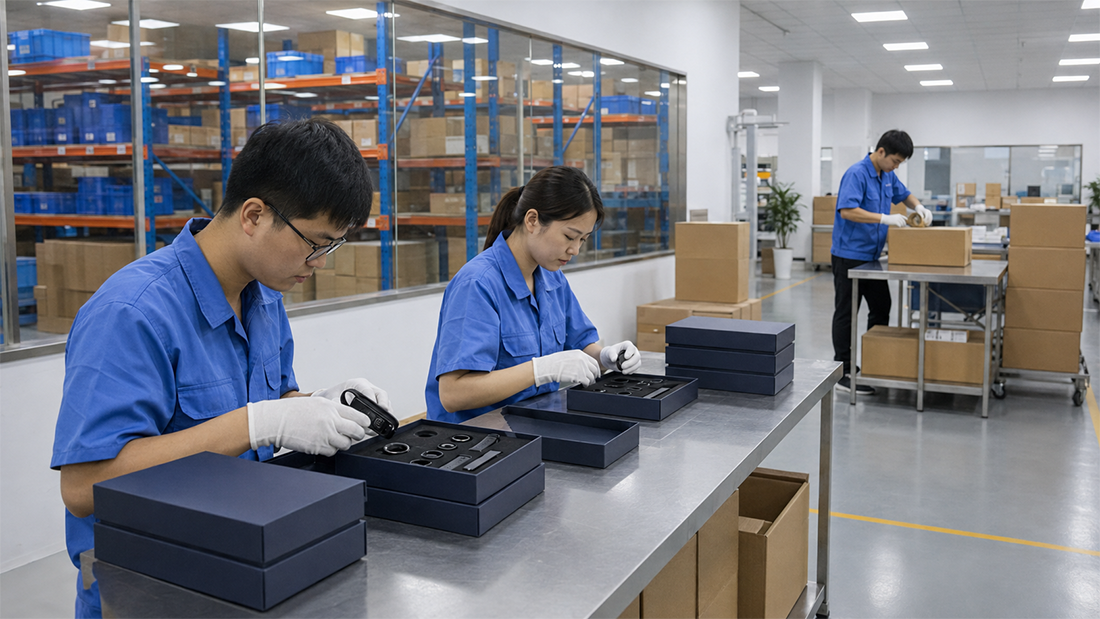
The three models differ in design ownership and cost. In ODM, the manufacturer owns the design and you brand it. In OEM, you bring or specify the design, and the manufacturer builds to it. Private label usually sits on an existing platform with your logo, packaging, and app naming. For a distributor, ODM or private label is often the fastest path; OEM makes sense when you need a differentiated form factor or features.
Choose based on your margin plan and time to market, not on prestige. A private label program on a proven platform can launch sooner, while a fully custom OEM program may require tooling, industrial design, and longer validation. Our private label OEM/ODM solution page outlines how branding, packaging, firmware naming, and app customization are typically combined.
What customization usually includes
- Logo on the case, strap, or buckle, and on the retail box
- Packaging design, inserts, and user manual language
- App name, splash screen, and account branding
- Firmware defaults such as language, units, and watch faces
- Accessory bundle, such as extra straps or a charging dock
A practical middle step: if you are exploring a broader wearable catalog, request samples of adjacent categories such as smart rings or smart bands to compare which category matches your channel best before committing tooling budget.
Check 3: MOQ and the Real Cost Drivers
MOQ is rarely a single number. It is a function of materials, tooling, packaging, and firmware work. A supplier may offer a low MOQ on a standard model and a much higher MOQ once you introduce a custom enclosure or printed box. Ask for MOQ by configuration, not by product name.
Typical cost drivers
- Tooling and molds, if a custom enclosure is required
- Custom packaging print runs and insert tooling
- Firmware or app customization hours
- Certification testing scope for the specific configuration
- Battery capacity and display technology
- Freight mode, including battery handling requirements
Build a simple landed-cost model for a low, mid, and high scenario. Include unit price, tooling amortization, packaging, certification, freight, duty where applicable, and a returns allowance. Distributors often underestimate returns and freight, which quietly remove margin. If your channel is e-commerce, our smart retail and e-commerce solutions page is a useful lens on packaging and listing needs.
Soft CTA: If you want a faster read on MOQ and pricing tiers for a specific configuration, our team can share current options and a sample plan tailored to a US distributor model.
Check 4: Sample Testing and Validation
Golden samples impress; production-representative samples protect you. Ask for samples from a recent production lot, ideally with the same firmware version and components you would receive in mass production. Test the device the way your customers will: paired to a phone, over several days, with real activity and sleep data.
A 7-day sample test plan
- Day 1: unbox, pair, charge, and record initial battery behavior
- Day 2-3: exercise tracking, heart rate, and notification reliability
- Day 4-5: sleep tracking, app syncing, and data export behavior
- Day 6: waterproof and drop handling in normal use conditions
- Day 7: firmware update, then retest core functions
Document each finding with photos and timestamps. This record becomes the basis of your quality agreement and your retail support scripts. If a supplier resists production-representative sampling, treat it as a red flag.

Check 5: Quality Control in Mass Production
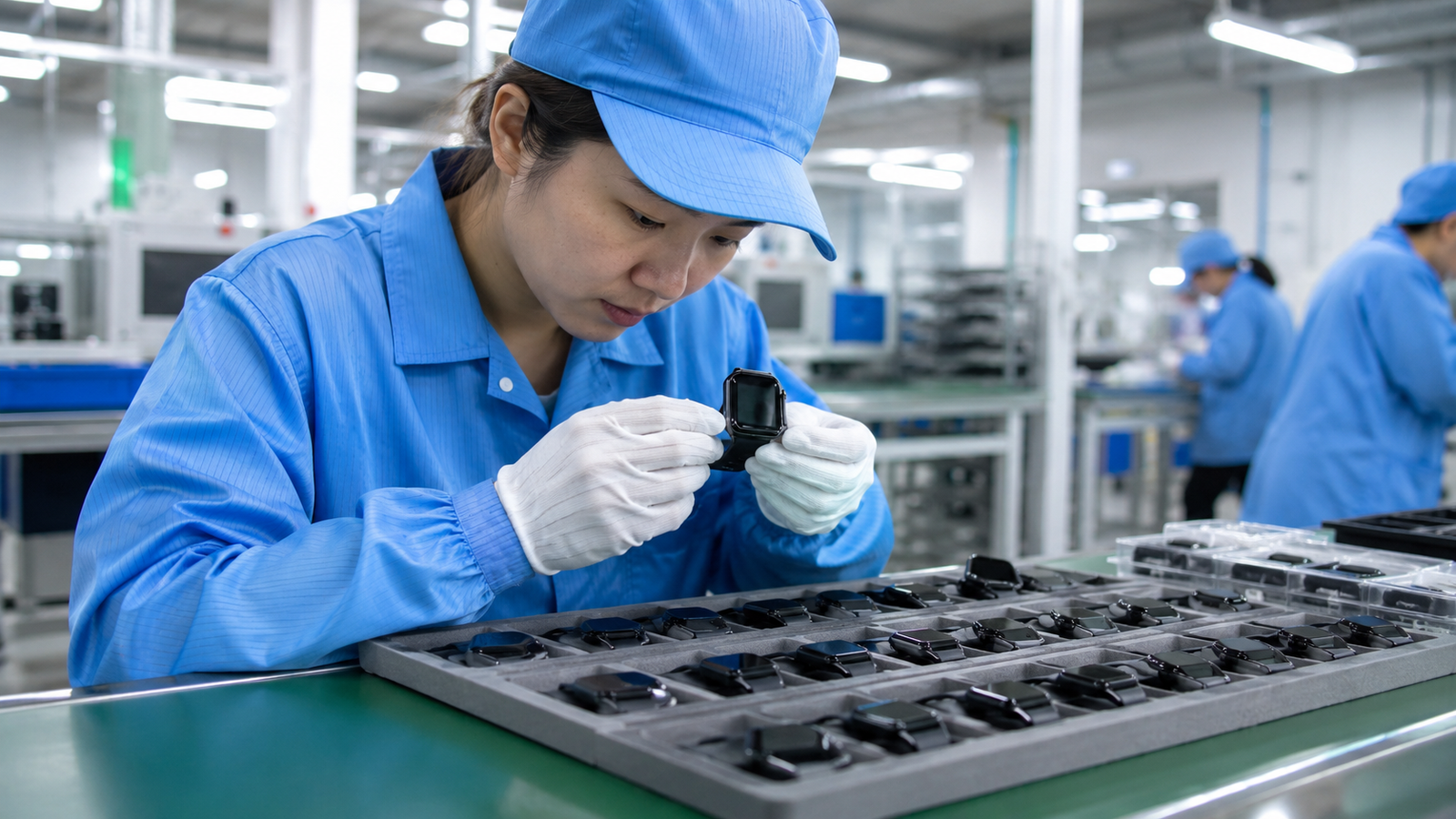
Quality control is a process, not a promise. Ask for the inspection plan across incoming materials, in-process assembly, and outgoing finished goods. For wearables, specific tests matter: battery aging, drop, waterproof, and functional checks after charging cycles.
Evidence to request
- Incoming quality control checklist for key components
- In-process checks for assembly and firmware flashing
- Outgoing quality control sampling plan and AQL level, if stated
- Aging and charge-discharge test records
- Drop, waterproof, and button/strap durability tests
Pair the plan with a pre-shipment inspection by a third party when order value justifies it. Inspectors look for cosmetic defects, packaging accuracy, and quantity. Distributors who inspect at the right moment often avoid a full container of returns. Our resources blog covers related supplier and quality topics you can use to build your own criteria.
Check 6: US Compliance, FCC, and Battery Shipping
For US distribution, the two most common compliance topics are radio equipment authorization and battery transport. A smart watch with Bluetooth or Wi-Fi typically involves radio frequency requirements, and the applicable authorization depends on the product’s radio configuration. Verify the specific model’s status in the FCC database rather than relying on a general “FCC certified” statement. Certification scope depends on the exact configuration and the target market, so buyers should verify model-by-model.
Compliance documents to collect
- FCC equipment authorization or supplier declaration where applicable
- Radio and safety test reports relevant to the configuration
- Battery UN 38.3 test summary and related transport documentation
- Material compliance statements such as RoHS where required
- Safety data documentation for battery-containing shipments, if requested by the carrier
Battery shipping deserves early attention. Lithium batteries are regulated in transport, and requirements typically depend on cell type, capacity, packaging, and the mode of transport. Ask your supplier and freight forwarder how the specific product will be documented and shipped, and confirm this before you set a retail launch date.
External reference: the FCC equipment authorization database lets you search by grantee and product code to verify listed models.
Check 7: Lead Time and After-Sales Support
Ask for a lead time breakdown, not a single number: sample lead time, tooling and pilot run, mass production window, and shipping transit. Each segment can slip independently, and distributors who plan by segment recover faster when one stage delays.
After-sales questions
- What is the defect rate assumption, and how are claims handled?
- Are spare parts such as straps, chargers, and batteries available?
- What is the warranty period, and who decides replacement versus repair?
- Is there a documented RMA process with timelines?
A distributor’s reputation is built on how quickly a problem is resolved. Choose a supplier with a clear claims path and spare parts availability, especially if you sell through retail chains that expect replacement stock.
OEM vs. ODM vs. Private Label: Decision Table
| Factor | ODM | OEM | Private Label |
|---|---|---|---|
| Who owns the design | Manufacturer | Buyer or jointly specified | Manufacturer platform |
| Typical upfront cost | Low to medium | Higher (tooling, ID) | Lowest |
| Time to first shipment | Shorter | Longest | Shortest |
| Differentiation | Medium | Highest | Low to medium |
| MOQ pressure | Moderate | Often highest | Usually lowest |
| Best for | Most distributors | Brand builders with budget | Fast market entry and testing |
| Main risk | Shared platform competitors | Tooling cost and delay | Limited differentiation |
Use this table with your own margin target. If you need speed and low risk, start with private label or ODM. If you need a unique product and can fund tooling, OEM becomes viable once volume is proven.
Common Mistakes and Buyer Red Flags
- Accepting a general “certified” claim without the model-level record.
- Negotiating price before confirming MOQ by configuration.
- Testing golden samples that do not match production.
- Ignoring battery shipping documents until freight is booked.
- Assuming the app will be maintained indefinitely without a written commitment.
- Not asking who owns tooling, ID files, and firmware code.
- Choosing the lowest quote without a landed-cost comparison.
Red flags include refusal to share test records, vague answers about the app owner, changing specification details between conversations, and pressure to pay a large deposit before sampling.
Practical Buyer Checklist
- Confirm supplier identity, factory role, and product list
- Request production-representative samples and a firmware history
- Confirm MOQ per model, color, and packaging configuration
- Build a landed-cost model for low, mid, and high volumes
- Collect compliance documents for the exact model
- Confirm battery UN 38.3 documentation and shipping method
- Agree on quality plan, AQL, and pre-shipment inspection terms
- Define lead time by stage and after-sales RMA process
- Clarify tooling, IP ownership, and end-of-relationship terms
- Set a pilot order before committing to a full program
FAQ
How many suppliers should a US distributor evaluate?
Three to five qualified suppliers is usually enough to compare capability, compliance, and terms. More than that adds work without changing the decision.
Is FCC certification always required for a smart watch?
It depends on the radio configuration and intended use. Products with certain radios typically require authorization, but the applicable path varies. Buyers should verify the exact model in the FCC database and confirm with the supplier.
What MOQ should I expect for smart watches?
It depends on the configuration. Standard models often carry lower MOQ than custom enclosures or printed packaging. Always ask for MOQ by configuration rather than a single product-level number.
Can I get my logo and packaging on a smart watch?
Yes for most private label programs. Logo placement, packaging, app naming, and firmware defaults are typically customizable, and the cost depends on print and tooling requirements.
How long does a pilot order usually take?
It varies with configuration. Ask the supplier to break lead time into sampling, tooling, mass production, and shipping segments so you can plan each stage.
Who should own the app and firmware?
Ownership and maintenance terms should be written into the agreement. For private label or ODM, the supplier often maintains the app, so confirm update cadence and data handling in the contract.
How do I reduce returns?
Validate production-representative samples, agree on a quality plan with inspection, and prepare clear support scripts. Documented pre-shipment inspection typically reduces cosmetic and packaging defects.
Conclusion
A smart watch sourcing guide is only useful if it changes your screening order. For US distributors, the sequence is compliance, firmware, and quality first, then MOQ, price, and packaging. That order protects your brand, your cash, and your retail relationships. Run the seven checks, document each answer, and start with a pilot order before scaling.
STAR KING supports international B2B buyers with smart watch OEM/ODM and private label programs across smart wearables and AI hardware. To move forward, request product samples and share your target configuration, volume range, and market so the team can respond with options and next steps.
Primary CTA: Request smart watch samples and discuss your OEM/ODM project.

Discuss Your Smart Wearable OEM/ODM Project
Planning a smart ring, smart watch, smart band, AI glasses, AI translator, or AI voice mouse project? Contact STAR KING to discuss product positioning, sample testing, customization scope, certification requirements, lead time, and quotation details.

Team Star King

Scan WhatsApp QR code
Leave a Reply