
Smart Rings for Corporate Wellness: 7 Procurement Checks for Bulk Orders
November 16, 2026 · Team Star King
Smart Rings for Corporate Wellness: 7 Procurement Checks for Bulk Orders
Selecting smart rings for corporate wellness programs requires balancing employee health goals with procurement realities: minimum order quantities (MOQs), data privacy compliance, battery safety for international shipping, and reliable lead times. This guide gives corporate procurement teams seven actionable checks to evaluate suppliers, compare specifications, and negotiate bulk orders with confidence, reducing risk and ensuring program success.
Table of Contents
Table of Contents
smart rings for corporate wellness: Table of Contents
- Short Answer
- Key Takeaways
- Key Facts for Buyers
- 1. Define Program Objectives and Success Metrics
- 2. Verify Sensor Accuracy and Health Features
- 3. Confirm Data Privacy and Security Compliance
- 4. Evaluate Battery Safety and International Shipping
- 5. Assess App Integration and Firmware Customization
- 6. Understand MOQ, Pricing, and Lead Times
- 7. Plan Logistics and After-Sales Support
- Comparison Table: Smart Ring Features for Corporate Wellness
- Common Mistakes
- Buyer Checklist
- FAQ
- Conclusion
Short Answer
When procuring smart rings for corporate wellness, focus on seven critical checks: clear program goals, verified sensor accuracy, data privacy compliance (GDPR, HIPAA), battery safety certifications (UN38.3, MSDS), app integration capabilities, transparent MOQ and lead times, and robust after-sales support. Prioritize suppliers that provide detailed specifications, sample testing, and customization options to align with your wellness objectives.
Key Takeaways
- Smart rings for corporate wellness must align with employee health goals and measurable outcomes.
- Data privacy and security are non-negotiable; verify compliance with regional regulations.
- Battery safety certifications like UN38.3 and MSDS are essential for international shipping.
- MOQ and lead times directly impact program rollout and budget; negotiate early.
- App integration and firmware customization enhance user adoption and program effectiveness.
- Thorough sample testing and pilot programs reduce deployment risks.
- Plan for after-sales support, warranty, and spare parts to ensure long-term success.
Key Facts for Buyers
| Consideration | Typical Requirement | Buyer Action |
|---|---|---|
| MOQ | 500–1,000 units (varies by supplier) | Negotiate based on pilot size; confirm with [STAR KING TO CONFIRM] |
| Lead Time | 4–8 weeks after sample approval | Plan rollout accordingly; request production schedule |
| Data Privacy | GDPR, HIPAA compliance | Request data processing agreement and security documentation |
| Battery Certification | UN38.3, MSDS for air shipping | Verify certificates before ordering |
| Sensor Accuracy | ±5 bpm for heart rate (typical) | Conduct sample testing with employee group |
| App Integration | iOS/Android, API available | Test compatibility with existing wellness platforms |
| After-Sales | 1-year warranty, spare parts availability | Clarify support terms and replacement process |
1. Define Program Objectives and Success Metrics
Before evaluating suppliers, clarify what your corporate wellness program aims to achieve. Common objectives include reducing healthcare costs, improving employee engagement, or supporting remote health monitoring. Define measurable KPIs such as participation rate, step count increase, or sleep quality improvement. This will guide your selection of smart ring features and supplier capabilities.
For example, if stress management is a priority, prioritize rings with heart rate variability (HRV) tracking. If sleep improvement is key, focus on sleep staging accuracy. Align these requirements with your supplier’s product roadmap and customization options.
2. Verify Sensor Accuracy and Health Features
Sensor accuracy directly impacts program credibility. Request detailed specifications for heart rate, blood oxygen (SpO2), and sleep tracking. While consumer-grade sensors are not medical devices, they should provide consistent data. Ask suppliers for validation reports or third-party test results—but be wary of unverified claims.
Conduct a pilot test with a small employee group to compare ring data against clinical-grade devices. This hands-on validation reduces risk before bulk purchase. Also, consider feature trade-offs: longer battery life often means fewer sensors. Balance your wellness goals with practical usage.
3. Confirm Data Privacy and Security Compliance
Employee health data is sensitive. Ensure suppliers comply with relevant regulations such as GDPR (EU), HIPAA (US healthcare), and local data protection laws. Request documentation on data encryption, storage, and access controls. Clarify whether data is stored locally or in the cloud, and who owns the data.
For corporate wellness, anonymized data aggregation may suffice, reducing privacy risks. But if individual data is collected, obtain employee consent and ensure the supplier provides a data processing agreement. Avoid suppliers who cannot demonstrate robust security practices.
4. Evaluate Battery Safety and International Shipping
Smart rings contain lithium batteries, which are regulated for air transport. Suppliers must provide UN38.3 test reports and MSDS (Material Safety Data Sheet) for shipping. Verify these documents are current and match the specific battery used in the ring.
Additionally, check for other certifications like CE, FCC, and RoHS, which vary by target market. Confirm that the supplier can provide certificates for the exact model you order. Without proper documentation, shipments may face delays or rejection.
5. Assess App Integration and Firmware Customization
The companion app is critical for user engagement. Evaluate the app’s user experience, compatibility with iOS and Android, and ability to integrate with existing corporate wellness platforms via API. Some suppliers offer white-label apps or firmware customization for branding.
If you require custom features—like integration with a corporate challenge platform—discuss development timelines and costs. Firmware customization may affect MOQ and lead time, so plan accordingly. Request a demo account to test the app before committing.
6. Understand MOQ, Pricing, and Lead Times
MOQs for smart rings typically range from 500 to 1,000 units, but this varies by supplier and customization level. For corporate wellness programs, you may start with a pilot batch of 100–200 units, which could incur higher per-unit costs. Negotiate a scalable MOQ that accommodates your rollout plan.
Pricing depends on features, materials, packaging, and order volume. Request a detailed quotation that includes tooling costs (if custom design), certification fees, and shipping. Lead times usually range from 4 to 8 weeks after sample approval; confirm the production schedule and buffer for potential delays.
7. Plan Logistics and After-Sales Support
International shipping of smart rings requires proper documentation and logistics partners experienced in battery-containing devices. Clarify Incoterms, shipping methods, and insurance. For large orders, consider drop-shipping to multiple office locations.
After-sales support is crucial for employee satisfaction. Confirm warranty terms (typically 1 year), replacement process for defective units, and availability of spare parts. A supplier with responsive support reduces administrative burden.
Comparison Table: Smart Ring Features for Corporate Wellness
| Feature | Basic Model | Advanced Model | Premium Model |
|---|---|---|---|
| Heart Rate Monitoring | Yes | Yes (with HRV) | Yes (with HRV & alert) |
| SpO2 Tracking | No | Yes | Yes |
| Sleep Tracking | Basic | Advanced | Advanced + coaching |
| Battery Life | 5–7 days | 4–5 days | 3–4 days |
| App Integration | Standard | API available | API + white-label |
| Customization | Logo on ring | Custom packaging | Full OEM design |
| MOQ | 1,000 | 500 | 250 |
| Certifications | CE, FCC, RoHS | + UN38.3, MSDS | + IP68 |
Note: Specifications vary by supplier; confirm details with [STAR KING TO CONFIRM].
Common Mistakes
- Ignoring data privacy regulations: Failing to verify compliance can lead to legal issues and employee distrust.
- Underestimating lead times: Last-minute orders may miss program launch dates; always buffer for production and shipping.
- Skipping sample testing: Without a pilot, you risk poor adoption or inaccurate data.
- Overlooking battery certifications: Missing UN38.3 or MSDS can cause customs delays.
- Choosing solely on price: Low-cost rings may lack durability or support, increasing long-term costs.
- Not planning for after-sales: Without a clear warranty process, defective units become a burden.
Buyer Checklist
- Define wellness objectives and KPIs.
- Request sensor accuracy reports and conduct pilot test.
- Verify data privacy compliance (GDPR, HIPAA).
- Obtain UN38.3 and MSDS certificates.
- Test app integration and API capabilities.
- Negotiate MOQ, pricing, and lead times.
- Confirm warranty and after-sales support terms.
- Plan logistics and customs documentation.
- Review packaging and branding options.
- Establish a return and replacement process.
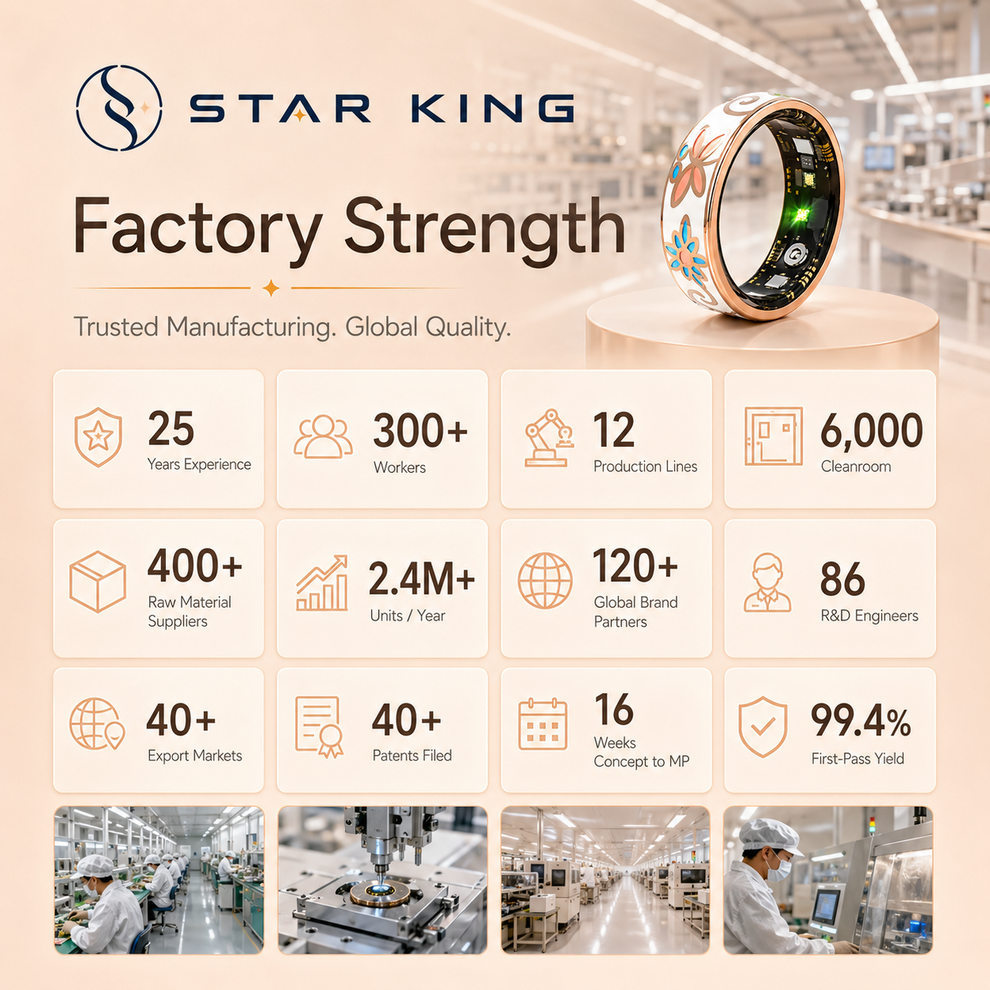
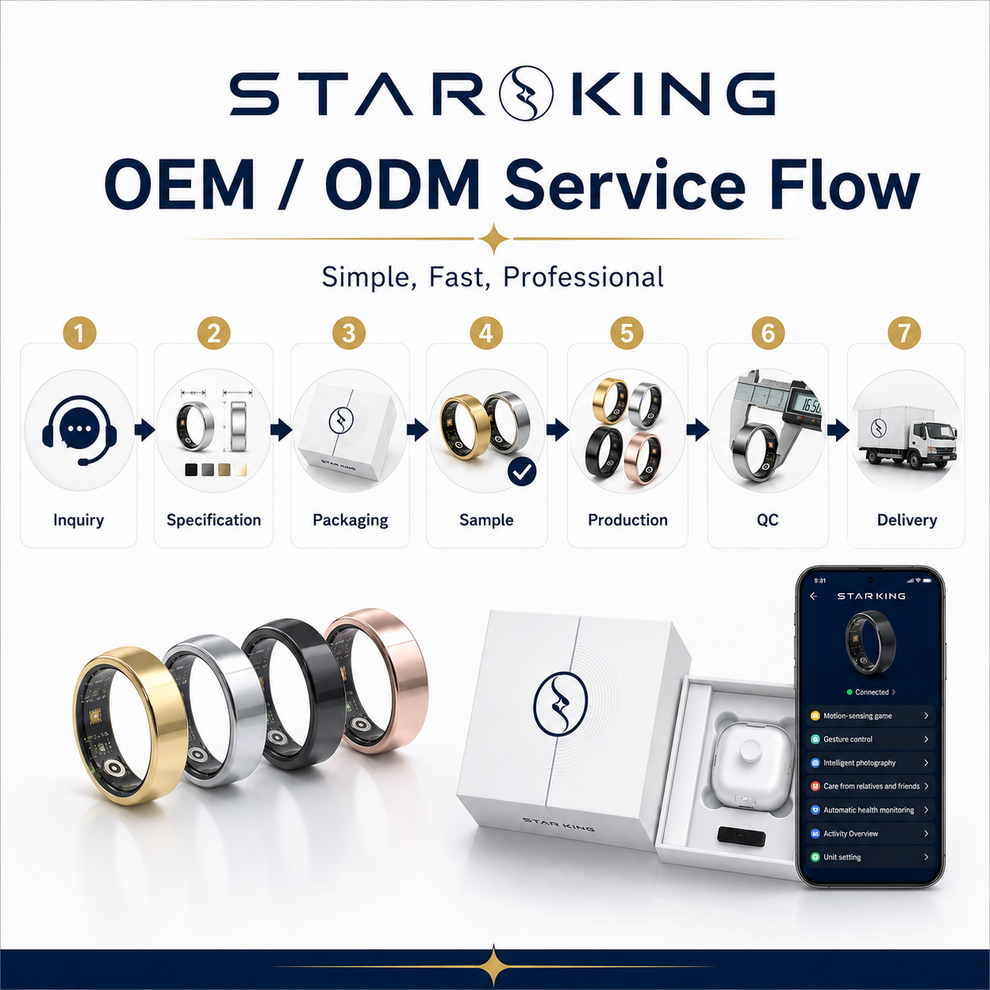
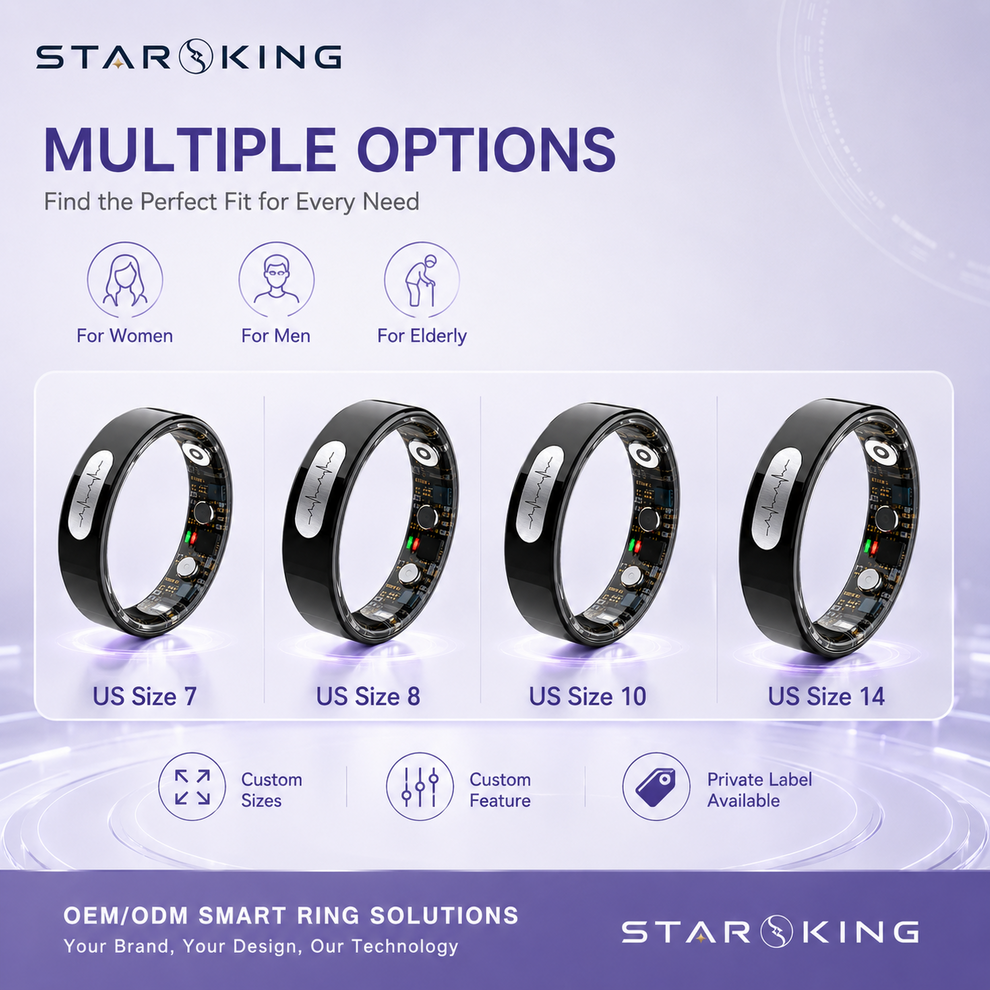
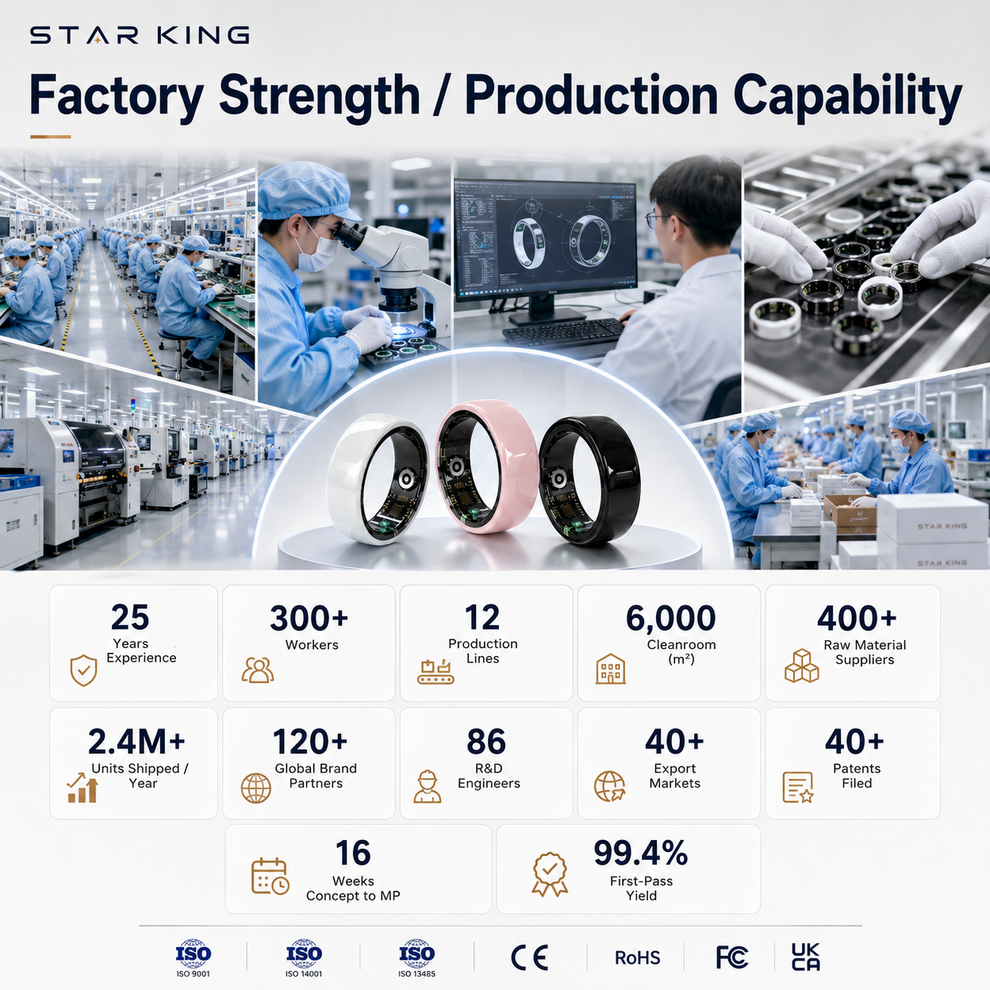
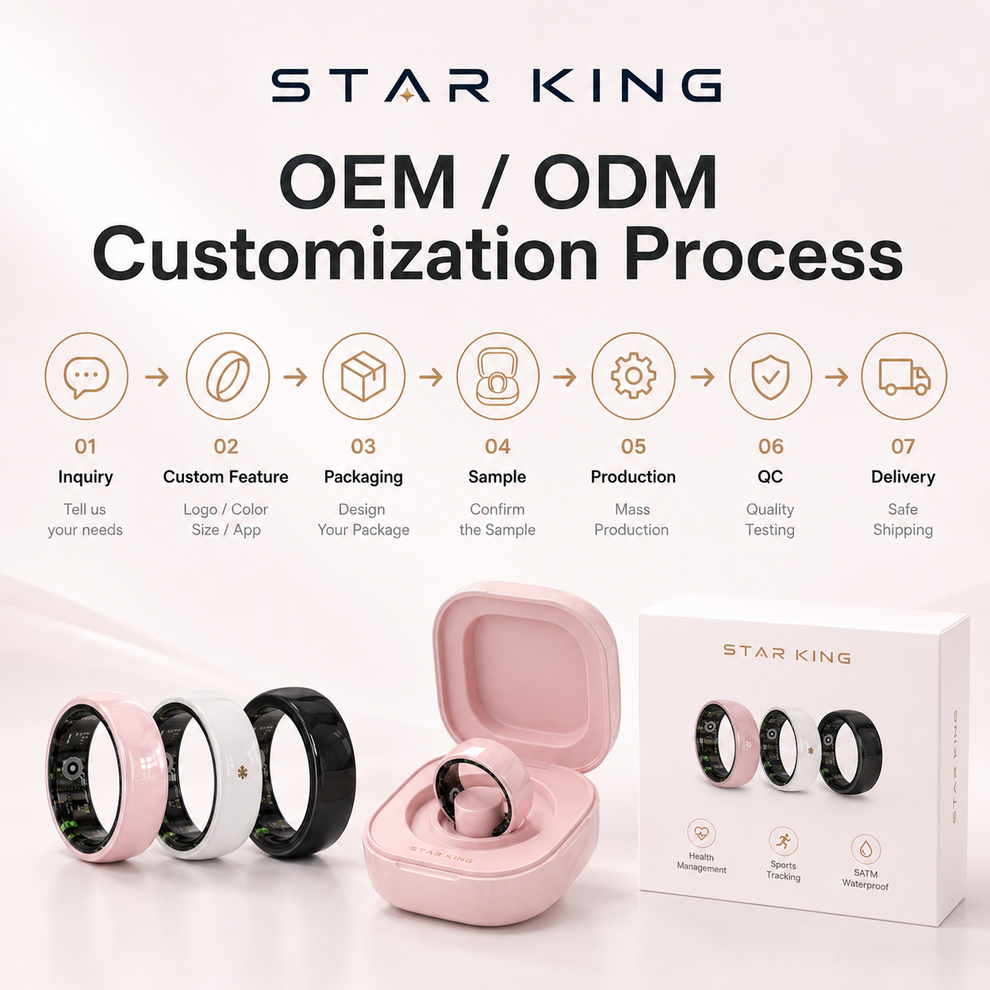
Buyers can also review STAR KING Smart Rings OEM/ODM options to compare product positioning, customization scope, and sample planning.
FAQ
What is the typical MOQ for smart rings in corporate wellness programs?
MOQs usually range from 500 to 1,000 units, but some suppliers offer lower MOQs for pilot programs. Negotiate based on your rollout plan and customization needs.
How can we ensure employee data privacy with smart rings?
Choose suppliers that comply with GDPR and HIPAA, provide data processing agreements, and offer anonymized data options. Always obtain employee consent.
What certifications are required for shipping smart rings internationally?
At minimum, UN38.3 and MSDS for the battery. Depending on the market, CE, FCC, RoHS, and others may be required. Verify with your supplier.
Can smart rings integrate with our existing wellness platform?
Many suppliers offer APIs for integration. Request a demo and technical documentation to confirm compatibility before ordering.
How long does it take to receive a bulk order?
Lead times are typically 4–8 weeks after sample approval, depending on order size and customization. Plan for additional shipping time.
What after-sales support should we expect?
Look for at least a 1-year warranty, a clear replacement process, and availability of spare parts. Responsive support reduces administrative burden.
Are smart rings accurate enough for corporate wellness?
Consumer-grade smart rings provide useful trends but are not medical devices. Validate accuracy through pilot testing against clinical devices.
Conclusion
Procuring smart rings for corporate wellness requires careful evaluation of supplier capabilities, product specifications, and compliance. By following these seven checks, you can select a reliable partner, mitigate risks, and launch a successful program that engages employees and delivers measurable health outcomes.
STAR KING CTA
Ready to explore smart rings for your corporate wellness program? Request a quotation or discuss your OEM/ODM requirements with our team. We can provide samples, specifications, and customization options to match your needs.
Useful Official References for Buyers
- FCC equipment authorization guidance
- European Commission CE marking information
- Bluetooth SIG specifications
Discuss Your Smart Wearable OEM/ODM Project
Planning a smart ring, smart watch, smart band, AI glasses, AI translator, or AI voice mouse project? Contact STAR KING to discuss product positioning, sample testing, customization scope, certification requirements, lead time, and quotation details.

Team Star King

Scan WhatsApp QR code
Leave a Reply