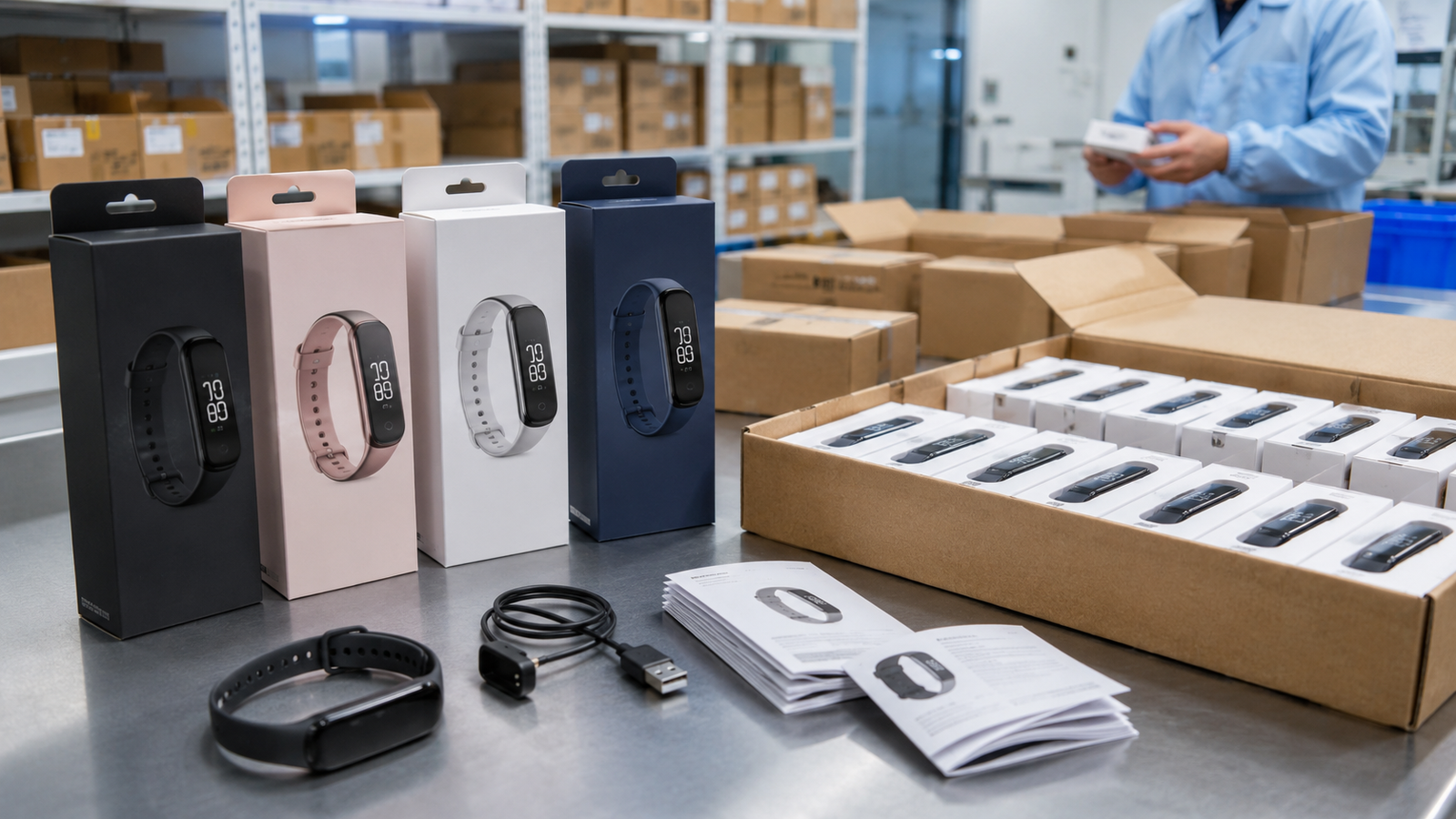
Smart Rings for Amazon Sellers: 7 Proven Steps to Source and Private-Label in 2026
Smart Rings for Amazon Sellers: 7 Proven Steps to Source and Private-Label in 2026
Smart rings for Amazon sellers are a viable private-label category in 2026 — but only if you treat sourcing as a supply-chain project, not a one-click purchase. The short answer: validate demand and compliance first, choose between OEM and ODM, confirm MOQ and tooling ownership, test samples against written acceptance criteria, and lock battery and customs documentation before any reorder. Amazon wearable sellers most often fail on battery shipping documentation, firmware/app quality, and unresolved IP risk — not on the ring itself.
Table of Contents
Table of Contents
smart rings for Amazon sellers: Short Answer
To launch a smart ring on Amazon, you need a supplier that supports OEM/ODM, provides testable samples, declares battery and compliance documentation, and matches your MOQ to a realistic first production run. Focus keyword, MOQ planning, firmware stability, and UN38.3 documentation are the four decisions that determine whether your launch survives its first 90 days.

Table of Contents
- Key Takeaways
- Direct Answer: How Do Amazon Sellers Source Smart Rings?
- Key Facts for Buyers
- Step 1: Validate Your Amazon Niche Before You Talk to Suppliers
- Step 2: Choose OEM vs ODM vs Private Label
- Step 3: Understand MOQ, Tooling, and Cost Drivers
- Step 4: Order and Test Samples Like a Procurement Team
- Step 5: Verify Quality Control and Battery Documentation
- Step 6: Map Certifications to Your Target Marketplaces
- Step 7: Plan Lead Time, Reorders, and After-Sales
- OEM vs ODM vs Private Label Decision Table
- Common Mistakes and Buyer Red Flags
- Practical Buyer Checklist
- FAQ
- Conclusion

Key Takeaways
- Smart rings for Amazon sellers usually succeed as a differentiated private-label product, not as a generic catalog copy.
- MOQ, tooling, firmware stability, and battery documentation influence total landed cost more than unit price.
- ODM shortens time-to-market; OEM increases differentiation but adds tooling cost and lead time.
- UN38.3, MSDS, and marketplace compliance documentation are often blocking items for lithium-powered wearables.
- Own your listing, brand, images, and app strategy — do not let a supplier control your Amazon storefront.
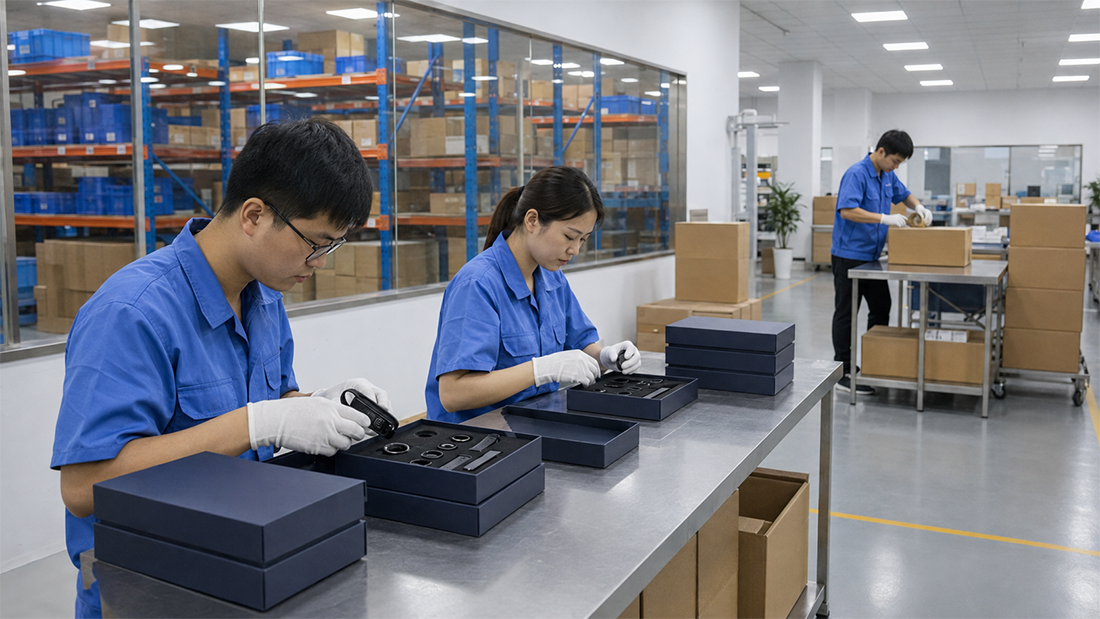
Direct Answer: How Do Amazon Sellers Source Smart Rings?
Amazon sellers source smart rings by shortlisting 3–5 OEM/ODM factories, requesting samples against a written specification, verifying battery and compliance documentation, and then negotiating a first production run sized to their ad budget and sell-through expectations. Most first orders stay small, then scale once the listing proves conversion and return rates are stable. [Image suggestion: smart ring OEM assembly line — ALT includes focus keyword.]

Key Facts for Buyers
| Buyer Question | What to Expect | What to Verify |
|---|---|---|
| First order MOQ | Often starts in the hundreds of units for stocked ODM models; custom housings typically require larger runs. [STAR KING TO CONFIRM] | Written MOQ per SKU and per color/size |
| Sample lead time | Samples from stock can ship quickly; custom colors or packaging take longer. [STAR KING TO CONFIRM] | Sample lead time in writing |
| Production lead time | Typically weeks, varying with quantity, customization, and battery shipping method. [STAR KING TO CONFIRM] | Mass production and shipping lead-time split |
| Battery documentation | UN38.3 test summary, MSDS, and packaging instructions for lithium cells | Reports match battery in your SKU |
| Compliance | Depends on product configuration and destination market | Buyers should verify applicable certification |
| App & firmware | App branding and firmware changes vary by supplier | Written app-customization terms |
Step 1: Validate Your Amazon Niche Before You Talk to Suppliers
Verify demand signals, not just search volume
Before requesting quotations, look at review velocity, average rating, and return complaints in your target sub-niche (sleep, fitness, or wellness). Listings with high traffic but low ratings often indicate a product gap you can address through firmware ergonomics or app experience rather than a new housing.
Estimate landed cost, not just unit price
The unit price you negotiate in China is rarely the landed cost on Amazon. Add freight, duties, FBA fees, platform referral fees, and returns provision. For a practical planning reference, sellers can review Amazon’s official seller documentation on fees and fulfillment.
Step 2: Choose OEM vs ODM vs Private Label
ODM: fastest route to market
With ODM, you select an existing design and change packaging, logo, app name, and color options. This shortens development time and reduces tooling cost. It is the most common starting point for Amazon sellers testing a new category.
OEM / private label: differentiation with more commitment
OEM / private label involves customization of hardware, firmware, app, or packaging. This builds a defensible brand but requires clear tooling ownership, agreed deliverables, and higher minimums. For a broader view of what customization touches, see STAR KING’s Private Label OEM/ODM solution.
Step 3: Understand MOQ, Tooling, and Cost Drivers
MOQ is determined by tooling amortization, component MOQ, battery supply, and packaging runs. Cosmetic finishes, colors, and ring sizes multiply minimums because they fragment production. Ask your supplier for a per-SKU MOQ table, not a single number.
- Tooling: molds, fixtures, and test jigs — clarify who pays and who owns them.
- Battery: cell size and shipping logistics influence both MOQ and freight.
- Packaging: custom print runs may have their own MOQ.
- App branding: white-label app work may carry a fixed project fee.
Step 4: Order and Test Samples Like a Procurement Team
Write acceptance criteria before the sample arrives
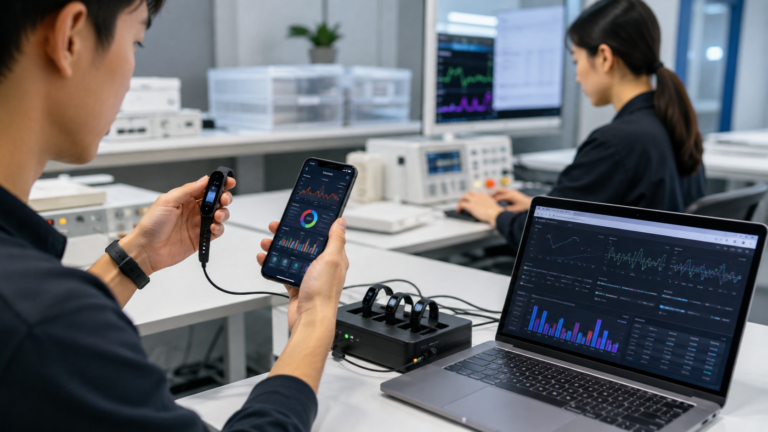
List measurable checks: ring size fit, charging behavior, app pairing reliability, firmware stability, and return-flow clarity. Tie each to a pass/fail threshold. During this stage, a soft next step is to discuss your specification with the supplier early: “If your team is comparing smart ring ODMs, sharing a draft specification usually shortens the sample cycle.”
Test the app, not just the ring
Wearable returns on Amazon frequently stem from app onboarding failures, syncing errors, or unclear data dashboards. Test the app on both iOS and Android and confirm firmware update procedures.
Step 5: Verify Quality Control and Battery Documentation
Lithium-powered wearables trigger both marketplace and carrier requirements. Buyers should verify:
- UN38.3 test summary and MSDS for the actual battery in your SKU
- Ageing and charging-cycle testing reports
- IP or water-resistance test results for your rating
- Pre-shipment inspection criteria and sampling plan
STAR KING’s smart rings are available for buyer specifications, including QC and documentation requirements. [STAR KING TO CONFIRM specific test reports]
Step 6: Map Certifications to Your Target Marketplaces
Certification requirements depend on product configuration, wireless features, and destination market. A wearable that ships to the US may require a FCC authorization; a product sold into the EU may need CE marking and related documentation. If a wearable is marketed near health claims, buyers should verify limits in their market. FDA documentation on general wellness products can be a useful reference point: FDA guidance. Always verify with your compliance team before listing.
Step 7: Plan Lead Time, Reorders, and After-Sales
Lead time planning should separate production from shipping, especially for battery-powered goods that may travel by air or sea. Plan reorder triggers based on sell-through velocity and consider spare parts for high-return SKUs. Do not let the supplier own after-sales communication; the Amazon seller owns the customer relationship.
OEM vs ODM vs Private Label: Decision Table
| Model | Customization Level | Typical Best For | Primary Risk |
|---|---|---|---|
| ODM | Packaging, logo, app naming | Fast Amazon category tests | Low differentiation |
| Private label | Brand + packaging + app skin | Building repeat brand equity | App and brand-control disputes |
| OEM | Hardware, firmware, app, tooling | Defensible niche products | Tooling cost and lead time |
Common Mistakes and Buyer Red Flags
- Agreeing to MOQ verbally with no written SKU breakdown.
- Accepting ambiguous or missing UN38.3 and MSDS documentation.
- Skipping app testing on both platforms.
- Letting a supplier use your Amazon images to sell the same product to competitors.
- Assuming certification exists without a scope review.
- Commissioning tooling without a written ownership clause.
Practical Buyer Checklist
- Confirm MOQ per SKU, per color, and per size.
- Confirm sample lead time and production lead time separately.
- Request full battery documentation for your exact battery.
- Confirm certification scope and target markets (buyers should verify).
- Agree tooling ownership and firmware/app customization terms.
- Establish pre-shipment inspection and QC acceptance criteria.
- Define reorder triggers and spare-part supply.
FAQ
1. What is a typical MOQ for smart rings for Amazon sellers?
MOQ varies widely. Stocked ODM models may open at lower quantities, while custom tooling, colors, and packaging push minimums higher. Always request a written per-SKU MOQ table. [STAR KING TO CONFIRM]
2. Can I get a private-label app and packaging?
Many OEM/ODM partners support packaging and app branding. The scope, timeline, and cost should be documented before the first order. [STAR KING TO CONFIRM]
3. Which certifications do I need to sell a smart ring on Amazon?
Requirements depend on the wireless configuration, battery, and destination market. Sellers should verify FCC, CE, RoHS, and battery documentation with a compliance team before listing.
4. How long does production take?
Lead time varies with quantity, customization, and battery shipping method. Separate production and shipping lead times in your plan. [STAR KING TO CONFIRM]
5. How do I compare samples objectively?
Use written acceptance criteria covering fit, charging, app pairing, firmware stability, and documentation accuracy, then score each sample identically.
6. What are the biggest risks for Amazon wearable sellers?
The most common risks are missing battery documentation, unstable firmware, unresolved IP concerns, and reorder lead-time surprises.
7. Should I start with OEM or ODM?
Most sellers start with ODM to validate the niche, then move to OEM or deeper private label once conversion and return data justify higher investment.
Conclusion
Sourcing smart rings for Amazon sellers is a sequence of verifiable decisions: validate the niche, pick the right customization model, confirm MOQ and tooling, test samples against written criteria, verify battery and compliance documentation, and plan reorders before your first sell-out. Treat the supplier as a production partner rather than a catalog vendor, and your launch will survive the category’s most common failure points.
STAR KING supports buyers across OEM, ODM, and private-label projects in the smart wearable and AI hardware space. For a broader view of how the manufacturing workflow applies to wearables, review our blog and product pages.
Primary CTA
When you are ready to move from research to production, Request a quotation with your target market, expected first order quantity, and customization scope so STAR KING can confirm MOQ, lead time, sample plan, and documentation requirements.
Discuss Your Smart Wearable OEM/ODM Project
Planning a smart ring, smart watch, smart band, AI glasses, AI translator, or AI voice mouse project? Contact STAR KING to discuss product positioning, sample testing, customization scope, certification requirements, lead time, and quotation details.

Team Star King

Scan WhatsApp QR code