
Smart Bands for Private Label in the EU: 7 Critical Steps for a Compliant Product Launch
November 10, 2026 · Team Star King
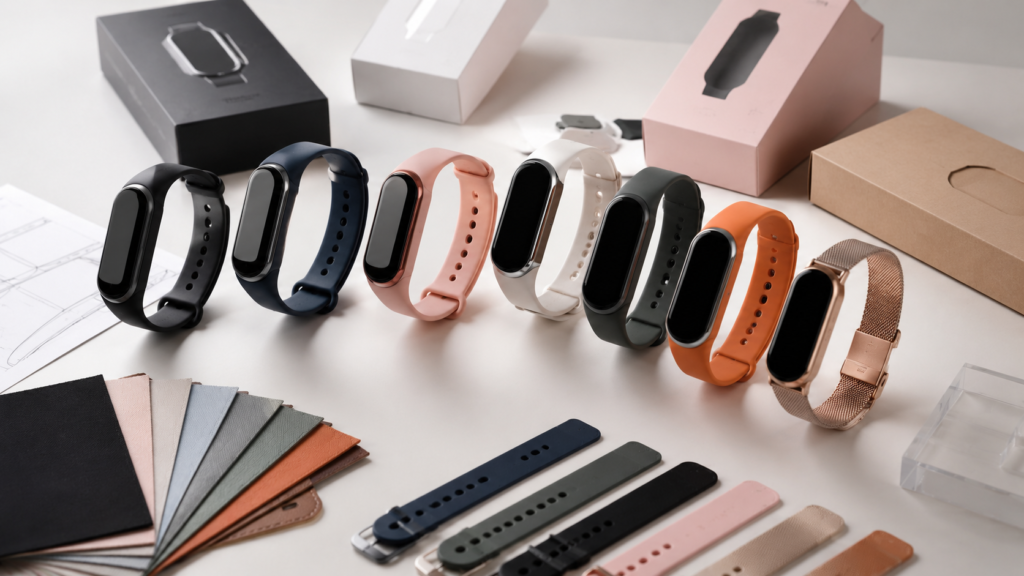
Smart Bands for Private Label in the EU: 7 Critical Steps for a Compliant Product Launch
Launching smart bands for private label in the EU requires careful planning and execution. This guide outlines seven critical steps to ensure your product meets regulatory requirements, quality standards, and market expectations. Whether you’re an importer, distributor, or retail chain, following these steps will help you avoid costly delays and build a successful private-label wearable line.
Table of Contents
Table of Contents
smart bands for private label: Table of Contents
- Short Answer
- Key Takeaways
- Key Facts for Buyers
- Step 1: Define Your Target Market and Product Requirements
- Step 2: Select a Manufacturing Partner with EU Compliance Expertise
- Step 3: Understand MOQ, Pricing, and Lead Time
- Step 4: Validate Samples and Prototypes
- Step 5: Ensure Quality Control and Testing
- Step 6: Navigate Certifications and Compliance
- Step 7: Plan Packaging, Logistics, and After-Sales Support
- Common Mistakes and Buyer Red Flags
- Buyer Checklist
- FAQ
- Conclusion

Short Answer
To successfully launch smart bands for private label in the EU, you must: (1) define product specs and target market; (2) choose an OEM/ODM partner experienced with EU regulations; (3) confirm MOQ, pricing, and lead times; (4) test samples rigorously; (5) implement quality control; (6) secure required certifications (CE, RoHS, etc.); and (7) plan packaging and after-sales support. Each step is critical to avoid delays and ensure compliance.

Key Takeaways
- EU market entry requires careful attention to CE marking, RoHS, and battery regulations.
- Select a manufacturing partner with proven experience in EU compliance and quality control.
- MOQ and lead times vary by supplier; negotiate early and plan for testing phases.
- Sample validation and pre-shipment inspections reduce risk and ensure product quality.
- Packaging and after-sales support are essential for brand success and customer satisfaction.
Key Facts for Buyers
| Consideration | Key Details |
|---|---|
| Regulatory Compliance | CE marking (RED, EMC, LVD), RoHS, WEEE, REACH, UN38.3 for batteries. Requirements depend on product features (e.g., Bluetooth, heart rate). |
| MOQ | Typically 500–1,000 units for private label; [STAR KING TO CONFIRM] exact MOQ based on customization. |
| Lead Time | Standard production: 30–45 days after sample approval; [STAR KING TO CONFIRM] for custom designs. |
| Testing | Pre-shipment inspection, drop testing, waterproof testing (if applicable), aging testing for battery. |
| Certifications | CE, FCC (if selling to US), RoHS, UN38.3, MSDS. Not all products are certified by default; verify with supplier. |

Step 1: Define Your Target Market and Product Requirements
Before sourcing, clarify which EU countries you’ll target and what features your smart bands should have. Consider fitness tracking, heart rate monitoring, sleep tracking, blood oxygen monitoring, and battery life. Also decide on app integration, compatibility (iOS/Android), and design. This specification will guide your supplier selection and ensure the final product meets local preferences.
Key Questions to Answer
- Which EU markets will you sell in? (Note: language and packaging requirements vary.)
- What health metrics are essential? (e.g., heart rate, SpO2, sleep)
- What is your target retail price? This affects component quality.
- Do you need custom firmware or app?
Step 2: Select a Manufacturing Partner with EU Compliance Expertise
Choose an OEM/ODM manufacturer experienced with EU regulations. Look for suppliers who can provide CE certification, RoHS compliance, and have a track record of exporting to Europe. Request references and ask about their quality management system (e.g., ISO 9001). A reliable partner will guide you through compliance and testing.
For smart bands, consider STAR KING’s smart bands, which support OEM/ODM projects. Verify their experience with EU clients and ask for sample compliance documents.
Supplier Evaluation Criteria
- Experience with EU clients and regulations.
- Quality control processes and testing facilities.
- Ability to customize hardware and software.
- Transparent communication and documentation.
Step 3: Understand MOQ, Pricing, and Lead Time
MOQ and pricing depend on customization level. Standard models may have lower MOQs (e.g., 500 units), while fully custom designs require higher volumes. Discuss lead times early, as certification and testing add weeks. Ask for a detailed quotation including tooling costs, packaging, and shipping.
For private label, factor in logo printing, custom packaging, and app branding. These add cost but enhance brand value. Request a cost breakdown to compare suppliers.
| Customization Level | Typical MOQ | Lead Time |
|---|---|---|
| Standard model with logo | 500 units | 30–40 days |
| Custom packaging | 1,000 units | 35–45 days |
| Custom design/firmware | 2,000+ units | 45–60 days |
Note: Actual MOQ and lead time depend on supplier capabilities. Confirm with [STAR KING TO CONFIRM].
Step 4: Validate Samples and Prototypes
Always test samples before mass production. Evaluate build quality, sensor accuracy, battery life, app usability, and comfort. Compare against your specifications and conduct stress tests (e.g., drop, water resistance). If possible, test with a small group of users in your target market.
Request pre-production samples that match final materials and packaging. Document any issues and require corrections before proceeding.
Step 5: Ensure Quality Control and Testing
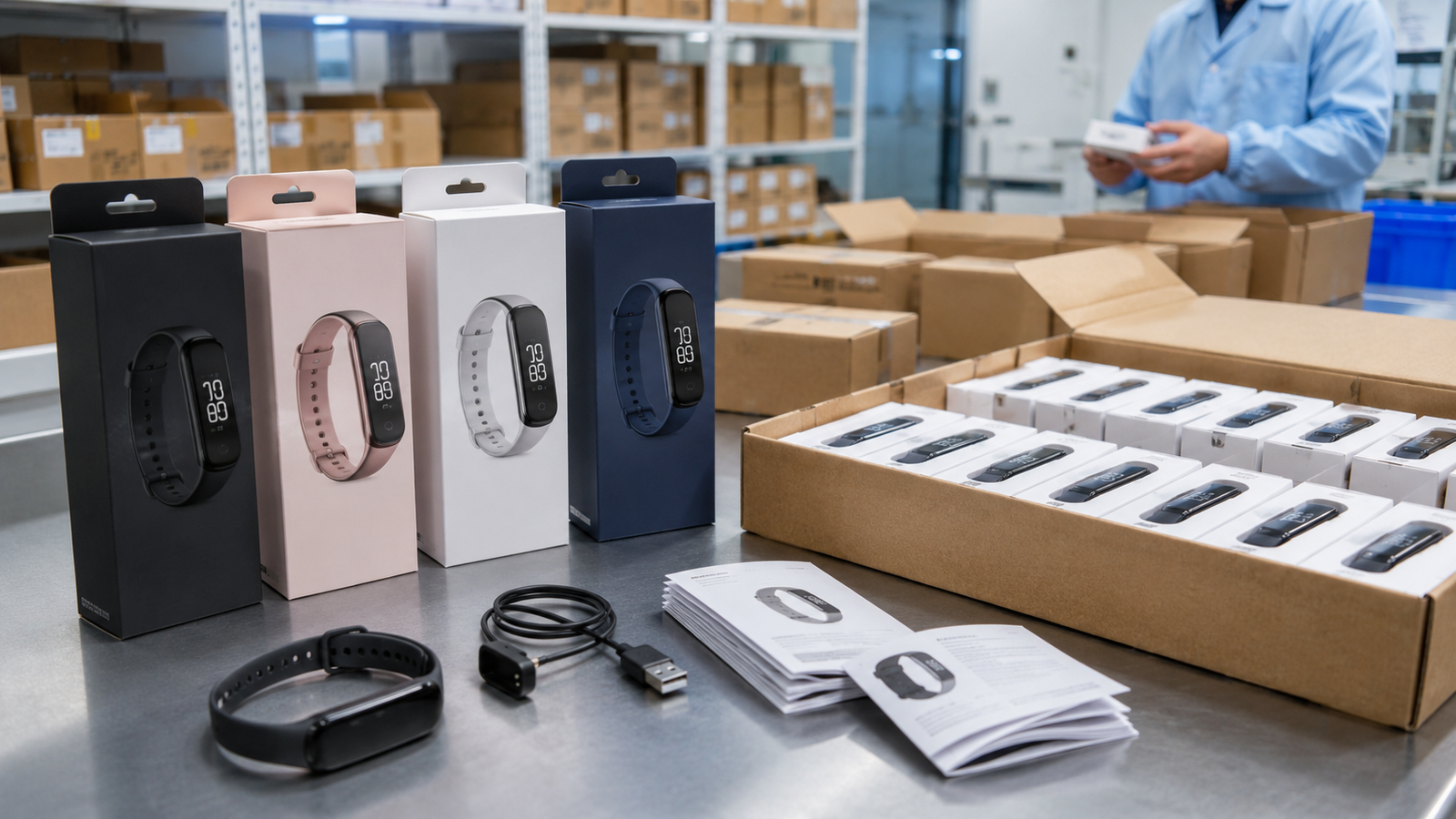
Implement a quality control plan. This includes in-process inspections and pre-shipment inspection (PSI). Ask your supplier about their testing protocols for:
– Battery safety (UN38.3, IEC 62133)
– Waterproof rating (IP67/IP68)
– Drop testing
– Aging testing
– EMC and RF testing
Third-party inspection services can provide an unbiased assessment. Ensure the supplier provides test reports for each batch.
Step 6: Navigate Certifications and Compliance
EU market access requires CE marking. For smart bands, relevant directives include:
– Radio Equipment Directive (RED) 2014/53/EU
– EMC Directive 2014/30/EU
– RoHS Directive 2011/65/EU
– WEEE Directive 2012/19/EU
– REACH Regulation (EC) No 1907/2006
– Battery Directive 2006/66/EC (as applicable)
Additionally, if your smart band includes a lithium battery, UN38.3 testing and MSDS are required for shipping. Work with your supplier to obtain necessary documentation. Note that certification requirements depend on product configuration and target market. Buyers should verify compliance with a qualified lab.
For more details, refer to the European Commission’s CE marking page and the RoHS guide.
Step 7: Plan Packaging, Logistics, and After-Sales Support
Design packaging that complies with EU labeling requirements (e.g., CE mark, WEEE symbol, importer details). Plan logistics for lithium batteries: they are classified as dangerous goods and require proper documentation (UN38.3, MSDS). Choose a freight forwarder experienced with electronics.
After-sales support is crucial for brand reputation. Define warranty terms (e.g., 12 months) and spare parts availability. Ask your supplier about their defect rate and repair process.
Common Mistakes and Buyer Red Flags
- Assuming all smart bands are CE certified without verification.
- Overlooking battery safety documentation (UN38.3, MSDS).
- Not testing app integration and firmware updates.
- Underestimating lead times due to certification delays.
- Choosing suppliers without EU experience.
- Ignoring after-sales support and spare parts.
- Not budgeting for compliance testing.
Buyer Checklist
- Define product specs and target EU markets.
- Request samples and test functionality.
- Verify supplier’s EU compliance experience.
- Confirm MOQ, pricing, and lead time in writing.
- Review quality control and testing procedures.
- Obtain copies of CE, RoHS, UN38.3, and MSDS documents.
- Plan packaging and logistics for lithium batteries.
- Agree on warranty and after-sales terms.
FAQ
1. What certifications are required for smart bands in the EU?
Smart bands typically require CE marking (RED, EMC, RoHS), and if they include a lithium battery, UN38.3 and MSDS. WEEE and REACH also apply. Requirements depend on product features.
2. What is the typical MOQ for private label smart bands?
MOQ varies by supplier and customization. Standard models with logo may start at 500 units; full customization often requires 1,000+ units. Confirm with your supplier.
3. How long does production take for private label smart bands?
Lead time is typically 30–45 days after sample approval, excluding certification and shipping. Custom designs may take longer.
4. Can I customize the app and firmware?
Yes, many OEM/ODM suppliers offer app and firmware customization for private label. Discuss requirements and costs early.
5. What should I check in a sample?
Check build quality, sensor accuracy, battery life, app functionality, and comfort. Conduct stress tests and compare to specifications.
6. How do I ensure quality during mass production?
Implement pre-shipment inspections and request test reports. Consider third-party inspection for large orders.
7. What are common red flags with suppliers?
Lack of EU compliance documentation, refusal to provide references, unclear MOQ, and poor communication are red flags.
Conclusion
Launching smart bands for private label in the EU requires careful planning and a reliable manufacturing partner. By following these seven steps, you can navigate compliance, quality, and logistics to bring a successful product to market. Remember to verify all certifications and test thoroughly before mass production.
STAR KING CTA
Ready to start your private label smart band project? Contact STAR KING to discuss your requirements, request samples, or get a quotation. Our team can guide you through customization, compliance, and production.
Discuss Your Smart Wearable OEM/ODM Project
Planning a smart ring, smart watch, smart band, AI glasses, AI translator, or AI voice mouse project? Contact STAR KING to discuss product positioning, sample testing, customization scope, certification requirements, lead time, and quotation details.

Team Star King

Scan WhatsApp QR code
Leave a Reply