
Smart Bands for Education Technology Companies: 7-Point EU Procurement Blueprint for 2026
October 7, 2026 · Team Star King

Smart Bands for Education Technology Companies: 7-Point EU Procurement Blueprint for 2026
Direct Answer: To source smart bands for education technology deployments in the European Union, buyers should verify CE marking scope, RoHS and battery documentation (UN38.3, MSDS), confirm GDPR-aligned data handling through a Data Processing Agreement, and model total landed cost including EU customs, 21% typical import VAT, and reverse-logistics for damaged units. A representative EU procurement process runs 68 days from PO to delivery when documentation is ready before the PO.
Table of Contents
Table of Contents
Education technology companies evaluating smart bands for education face a procurement picture that looks nothing like a consumer retail buy. You are equipping classrooms, after-school programs, or vocational training cohorts with 500 to 20,000 units, and every unit is a potential liability if consent, data handling, or battery documentation is incomplete. This guide walks through the seven decision points that determine whether a shipment clears EU customs and passes a school board review — or sits in a warehouse while your launch date slips.
smart bands for education: Table of Contents
- What Buyers Should Evaluate Before Selecting an Education Smart Band Supplier
- Short Answer: The 7-Point EU Procurement Checklist
- Key Facts for Buyers
- 1. Product Specifications: What Actually Matters in a Classroom
- 2. Certifications and EU Compliance: CE, RoHS, RED, and Battery Rules
- 3. GDPR and Student Data: Contract Clauses That Protect You
- 4. OEM/ODM and Private Label Options
- 5. MOQ, Unit Price, and Total Landed Cost
- 6. Sample Testing and Pilot Programs
- 7. Lead Time, Logistics, and Reverse Logistics
- Supplier-Ready vs. Consumer-Grade Smart Bands: Comparison Table
- Common Mistakes and Buyer Red Flags
- Practical Buyer Checklist
- Frequently Asked Questions
- Conclusion

What Buyers Should Evaluate Before Selecting an Education Smart Band Supplier
“Smart bands for education” is not a product category with a standard specification sheet. It is a procurement scenario where wearable hardware overlaps with data protection law, minor-safety design, and institutional purchasing rules. A smart band for a 14-year-old student in a German Gymnasium is functionally different from a smart band for a 60-year-old corporate wellness participant.
For education technology companies, the practical questions usually collapse to four: Can the device be managed centrally without each student handing over a personal phone number? Does the companion app comply with GDPR for minors? Is the battery documented for air freight? And can the manufacturer support a 3-year hardware refresh cycle without changing the form factor?
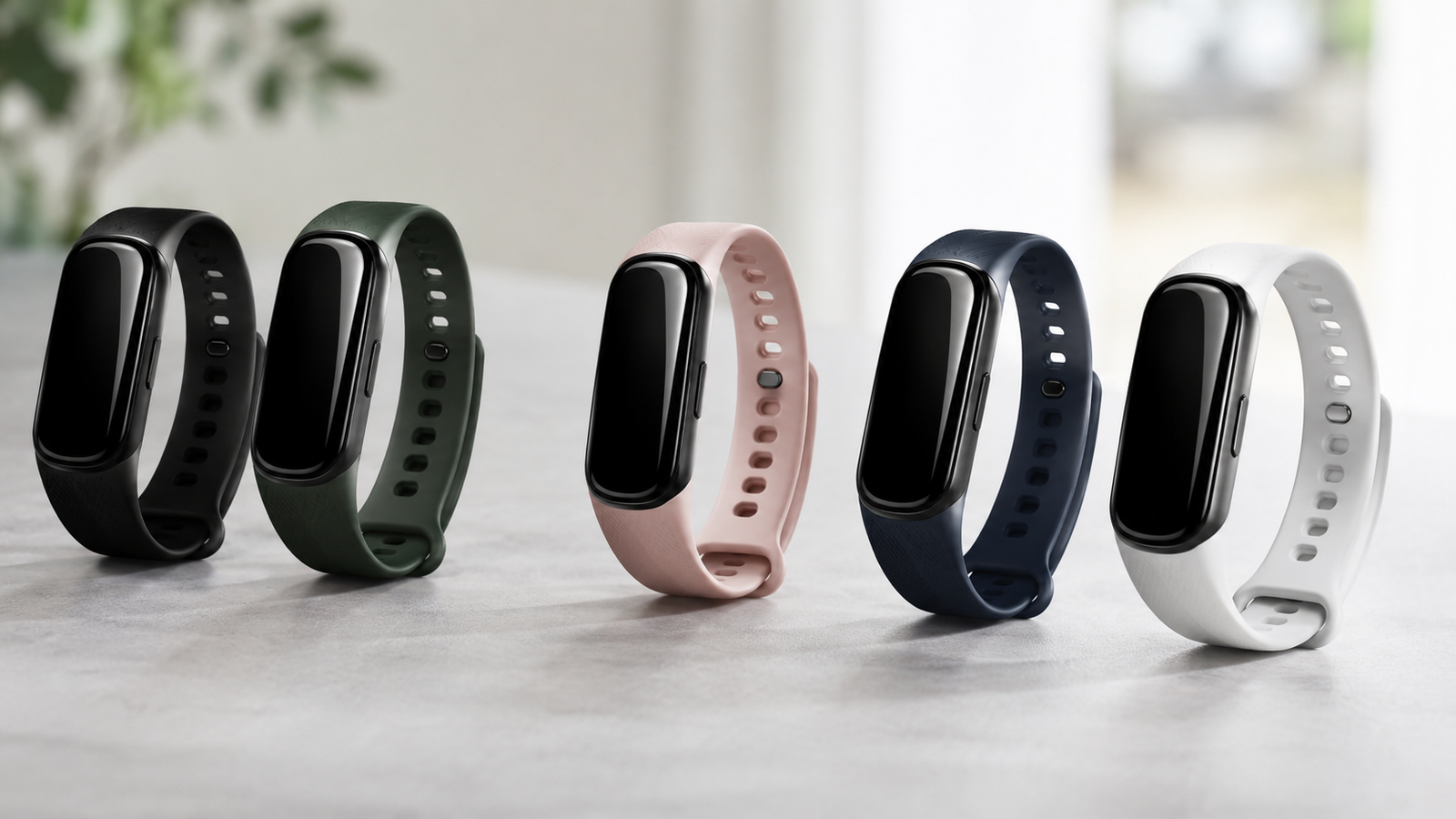
STAR KING’s smart band platform is built around these questions. The smart bands product line supports firmware and app customization, so an education technology company can ship a deployment where devices are provisioned through a school-managed tenant rather than a consumer app store account. That single architectural decision changes the GDPR surface area dramatically.
Short Answer: The 7-Point EU Procurement Checklist
- Confirm CE marking scope — including RED (Radio Equipment Directive) if the band has Bluetooth.
- Obtain RoHS and battery documentation — UN38.3 test summary and MSDS for the lithium-polymer cell.
- Sign a GDPR-compliant Data Processing Agreement — naming the EU data controller and clarifying sub-processors.
- Specify OEM vs. ODM — decide whether you are buying a finished product or co-developing firmware and app.
- Lock MOQ and landed cost — model the unit price FOB plus freight, duty, VAT, and reverse logistics.
- Run a pilot — 50–200 units across 2–3 schools for 4–6 weeks before full PO.
- Agree lead time in writing — production slot, inspection window, and buffer for customs clearance.

Key Facts for Buyers
| Item | Typical EU Requirement | Who Verifies |
|---|---|---|
| CE marking | Required for wearables with radio (RED) or low-voltage electronics | Manufacturer declares; buyer verifies DoC |
| RoHS | Restricted substances — applies to electrical equipment | Manufacturer provides test report |
| Lithium battery | UN38.3 test summary + MSDS for air freight | Manufacturer provides; carrier reviews |
| GDPR | DPA required if personal data of EU residents processed | Buyer as controller; supplier as processor |
| EU import VAT | Standard rates vary (e.g., 19–21% in DE/FR) | Buyer’s customs broker |
| WEEE | E-waste registration in some member states | Buyer or authorized representative |
Buyers should verify the exact certification and registration requirements with their EU-based legal counsel and customs broker, because obligations vary by product configuration and member state.

1. Product Specifications: What Actually Matters in a Classroom
Consumer smart band marketing emphasizes step counts and screen colors. Education deployments care about different attributes.
Battery life and charging logistics
A classroom of 30 students charging 30 magnetic pogo-pin cables every night is a logistical problem. Buyers should target at least 7 days of typical use per charge, and specify a charging dock that handles 10–20 units simultaneously. STAR KING can quote multi-port charging docks as part of the OEM package; the exact dock configuration is [STAR KING TO CONFIRM] per project.
Strap material and durability
Education bands get dropped, chewed by younger students, and sanitized with alcohol wipes. Specify silicone or TPE straps with a Shore hardness that resists tearing, and confirm that the strap formulation tolerates repeated IPA wiping. This belongs in the sample validation protocol, not in a brochure.
Sensor set
Most education use cases need only a subset: heart rate, step/activity, and optionally SpO2 or skin temperature for research programs. Adding clinical-grade sensors increases cost, calibration burden, and — in the EU — can change how the device is classified. Do not buy sensors you will not use.
Display and interaction
For younger cohorts, a minimal display reduces distraction and breaks. For vocational or sports-science programs, an OLED display with clear numeric readouts may be preferred. Confirm the display type and touch behavior in the sample phase.
2. Certifications and EU Compliance: CE, RoHS, RED, and Battery Rules
The European Union requires CE marking for most electronics sold into the single market. For a Bluetooth-enabled smart band, the relevant directives typically include the Radio Equipment Directive (RED) and RoHS. The manufacturer should be able to provide a Declaration of Conformity and supporting test reports.
Buyers should not assume that a supplier’s “CE” statement covers every SKU in a catalog. Certification attaches to a product configuration. If you change the battery capacity, the antenna design, or the radio module, the documentation may need to be reissued. Ask for the DoC that matches your exact BOM.
Battery shipping is a separate track. Lithium-polymer cells are classified as dangerous goods for air transport; the manufacturer typically provides a UN38.3 test summary and an MSDS. Your freight forwarder decides whether the shipment can fly passenger or cargo, and under what packaging. The IATA Dangerous Goods Regulations are the operative reference for air carriers.
For the electronics side, the European Commission CE marking portal is the authoritative starting point. Do not rely on third-party blog summaries when your school board asks for proof.
3. GDPR and Student Data: Contract Clauses That Protect You
This is the step that sinks the most education technology procurements. A smart band collects physiological and behavioral data. If even one user is a student in the EU, GDPR applies — regardless of where the manufacturer is located.
Buyers should insist on:
- A Data Processing Agreement (DPA) naming the education technology company as controller and the manufacturer as processor.
- A list of sub-processors (cloud hosting, analytics, push notification services).
- Data minimization — the app should collect only fields you actually need.
- Deletion and export capabilities, with a defined retention period.
- Confirmation of whether data is stored in the EU or transferred outside under standard contractual clauses.
If the supplier cannot sign a DPA, the deployment is not ready for EU schools. This is not negotiable, and it is the clearest red flag in the entire evaluation.
4. OEM/ODM and Private Label Options
Education technology companies usually choose one of three engagement models:
| Model | What You Get | Best For | Trade-off |
|---|---|---|---|
| Private Label | Existing smart band with your logo, packaging, and app skin | Fast market entry, pilot programs | Limited differentiation |
| OEM | Modified hardware and/or firmware to your spec | Brands with defined requirements | Longer development, tooling cost |
| ODM | Co-developed product with custom app and data pipeline | Platform companies building a defensible product | Highest investment, longest lead time |
For most education technology companies entering the EU, Private Label is the right starting point for a pilot, followed by OEM once the pilot validates usage. STAR KING provides OEM and ODM engagement through its private label OEM/ODM program, including logo, packaging, firmware, and app customization.
A practical note on firmware: if your platform needs to provision devices through an MDM or school-managed tenant, confirm that the supplier can expose an API or support a provisioning profile. This is a firmware-level decision and cannot be retrofitted cheaply after tooling is committed.
5. MOQ, Unit Price, and Total Landed Cost
MOQ for smart bands is driven by component sourcing and assembly line setup. Common MOQ bands are 500, 1,000, and 3,000 units. Below 500, buyers often pay a per-unit premium because the supplier cannot amortize setup. STAR KING’s specific MOQ tiers are [STAR KING TO CONFIRM] per project, because they depend on customization depth.
Landed cost components
- FOB unit price — the ex-factory price at the port of departure.
- Freight — air (faster, higher cost, stricter battery rules) or sea/rail (slower, cheaper).
- Import duty — HS code dependent; wearables typically fall under electronics codes. Confirm with your broker.
- Import VAT — 19–27% depending on member state; recoverable if you are VAT-registered.
- Customs clearance and broker fees — per shipment.
- Reverse logistics — warranty replacements and DOA units.
A 1,000-unit order that looks 30% cheaper FOB can lose that advantage after freight mode, duty, and reverse-logistics provisions are added. Model the full number before you compare quotations.
6. Sample Testing and Pilot Programs
Never scale to a full PO from a datasheet. A structured pilot protects the deployment.
Phase 1 — Engineering samples (2–4 units)
Verify form factor, strap comfort, charging behavior, and app pairing. Check that the firmware supports your provisioning model.
Phase 2 — Pilot units (50–200 units)
Run for 4–6 weeks across 2–3 schools or training cohorts. Measure battery life in real use, dropout rate, and student onboarding friction. Collect teacher feedback on charging logistics.
Phase 3 — Pre-production sample
Request a unit built on the production line with final tooling, final firmware, and final packaging. This is the sample that should go to your compliance reviewer.
Document each phase with photos, serial numbers, and firmware version. If a supplier resists a pilot, treat it as a warning sign — legitimate manufacturers support pilots because they reduce returns and disputes.
As a soft CTA: if you are building a pilot specification, the STAR KING team can help translate your requirements into a sample plan and a component list. A short call is usually faster than another round of email.
7. Lead Time, Logistics, and Reverse Logistics
Typical lead time for a Private Label smart band order is 30–45 days after artwork and sample approval, plus transit. OEM and ODM projects extend this significantly because tooling and firmware development sit in front of mass production. Buyers should plan a buffer for customs clearance, especially during peak season (Q4) and around EU public holidays.
Reverse logistics deserves a clause in the contract. Define:
- DOA handling window (commonly 30 days from receipt).
- Warranty period and whether replacements ship from EU stock or from the factory.
- Who bears return freight for failed units.
- Spare parts availability for the refresh cycle (straps, charging docks).
For a 3-year deployment, strap replacement is the most common service event. Order spare straps with the original PO — they are cheap at that point and expensive later.
Supplier-Ready vs. Consumer-Grade Smart Bands: Comparison Table
| Attribute | Consumer-Grade Band | Supplier-Ready Education Band |
|---|---|---|
| Provisioning | Consumer app store account | Managed tenant / provisioning API |
| GDPR documentation | Generic privacy policy | DPA, sub-processor list, retention policy |
| Battery docs | May be partial | UN38.3 summary + MSDS |
| Packaging | Retail-ready | Bulk or school-kit packaging |
| Warranty | Consumer terms | Contractual terms with spare parts |
| Firmware | Locked | Customizable per project |
Common Mistakes and Buyer Red Flags
Mistake 1 — Treating GDPR as a checklist item after the PO
Data protection belongs in the supplier evaluation, not in post-order paperwork. If the DPA is not signed before the PO, you are exposed from the moment the first student pairs a band.
Mistake 2 — Assuming “CE” covers everything
CE is a family of directives. A band with Bluetooth falls under RED; a band with a screen and battery also touches RoHS and possibly WEEE. Verify the exact applicable directives for your SKU.
Mistake 3 — Ignoring battery shipping rules until the freight quote
UN38.3 and MSDS documents take time to issue. If they are not ready when the goods are, the shipment waits.
Mistake 4 — Buying only for the purchase, not the refresh cycle
Education deployments run for years. A supplier who cannot support spare straps and docks in year two is a one-time vendor, not a partner.
Red flags
- Refuses to sign a DPA.
- Cannot produce a DoC matching your BOM.
- Will not support a pilot.
- Quotes a price without specifying what is included (freight, duty, packaging).
- Changes the account manager weekly during the quotation stage.
Practical Buyer Checklist
| # | Action | Completed |
|---|---|---|
| 1 | Define the use case and cohort size (students, staff, both) | ☐ |
| 2 | Specify required sensors and reject unused ones | ☐ |
| 3 | Request DoC, RoHS report, UN38.3 summary, MSDS | ☐ |
| 4 | Confirm GDPR DPA and data residency | ☐ |
| 5 | Choose Private Label, OEM, or ODM model | ☐ |
| 6 | Model landed cost including VAT and reverse logistics | ☐ |
| 7 | Run a 50–200 unit pilot before full PO | ☐ |
| 8 | Agree warranty, spares, and lead time in writing | ☐ |
Frequently Asked Questions
What is the minimum order quantity for education smart bands?
MOQ depends on customization depth. Private Label orders commonly start at 500–1,000 units; OEM projects with firmware changes typically require higher volumes to amortize development. Confirm the exact tier with the supplier for your configuration.
Do smart bands for education need CE marking in the EU?
Yes, for most electronic wearables sold into the EU. Bluetooth-enabled bands typically fall under the Radio Equipment Directive and RoHS. The manufacturer should provide a Declaration of Conformity for the exact product configuration you are buying.
Can the supplier sign a GDPR Data Processing Agreement?
Reputable suppliers serving EU education customers should be able to sign a DPA that names you as controller and them as processor, with a sub-processor list. If a supplier refuses, do not proceed with an EU school deployment.
How long does delivery take from PO to EU warehouse?
For Private Label orders with approved samples, production commonly runs 30–45 days, plus air or sea transit and customs clearance. OEM and ODM projects take longer because tooling and firmware development precede mass production.
What documents are needed to ship lithium battery smart bands by air?
Typically a UN38.3 test summary and an MSDS are required by carriers. Requirements can vary by carrier and route; confirm with your freight forwarder before booking.
Are smart band health readings medical-grade?
Consumer and education smart bands are not medical devices and should not be used for diagnosis or treatment. Any clinical or research use requires separate regulatory assessment and appropriate device classification.
Can I get custom packaging for a school kit?
Yes. Packaging customization is standard in Private Label and OEM programs. School-kit packaging (multi-unit trays, teacher instructions, charging docks) is typically quoted per project.
Conclusion
Sourcing smart bands for education in the European Union is a compliance-heavy, documentation-driven purchase. The hardware is rarely the hard part. The DPA, the DoC that matches your BOM, the UN38.3 file, and the reverse-logistics clause decide whether your deployment launches on time or stalls in a customs warehouse.
Start with a pilot. Specify only the sensors you need. Put GDPR in the supplier evaluation, not the after-sales pile. Model landed cost, not just FOB. And choose a supplier who will still answer the phone in year three, when you need 2,000 replacement straps.
Work With STAR KING
STAR KING supports education technology companies with Private Label, OEM, and ODM smart band programs, including logo and packaging customization, firmware and app options, and sample development for pilot deployments. Documentation scope depends on the exact product configuration and target EU member state.
Next step: request a quotation and confirm which certifications, battery documents, and data-handling terms apply to your specific education deployment.
Request a quote for your education smart band project →
Discuss Your Smart Wearable OEM/ODM Project
Planning a smart ring, smart watch, smart band, AI glasses, AI translator, or AI voice mouse project? Contact STAR KING to discuss product positioning, sample testing, customization scope, certification requirements, lead time, and quotation details.

Team Star King

Scan WhatsApp QR code
Leave a Reply