
smart band suppliers: Smart Bands for EU Retail Chains: 10 Critical Checks Before You Place a Bulk Order
November 9, 2026 · Team Star King
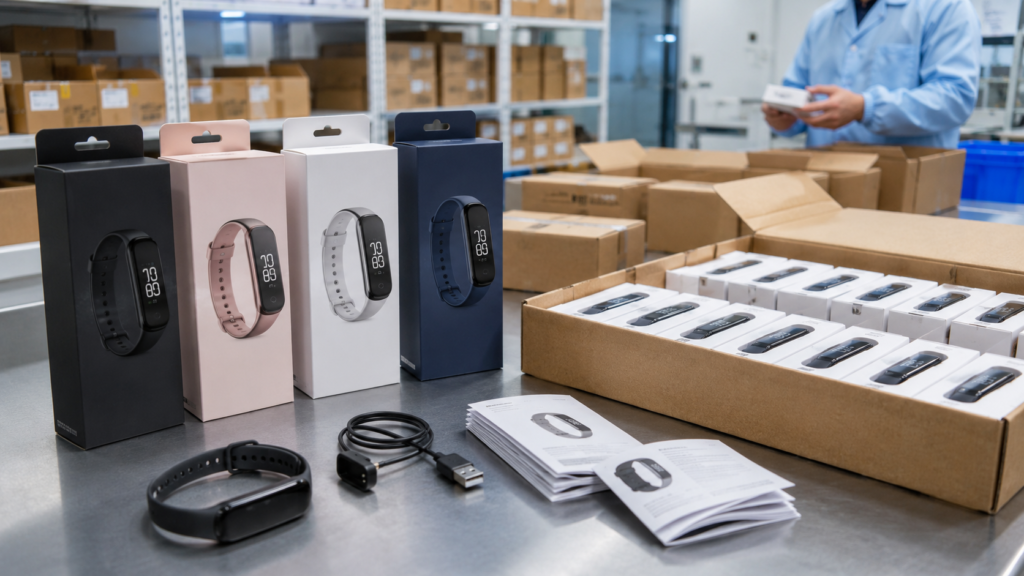
smart band suppliers buyers need a supplier evaluation process that checks product fit, OEM/ODM capability, compliance documents, quality control, pricing, lead time, and after-sales support before placing a bulk order.
Table of Contents
Table of Contents
Smart Bands for EU Retail Chains: 10 Critical Checks Before You Place a Bulk Order
If you are a retail chain sourcing smart bands for the European Union, the most important step before placing a bulk order is to verify compliance, supplier capability, and total landed cost through a structured RFQ checklist. Smart bands for EU retail chains require CE marking, RoHS compliance, and often REACH and WEEE registration, plus battery safety documentation such as UN38.3. This guide gives you 10 critical checks, a buyer checklist, and a comparison framework to evaluate suppliers and avoid costly delays or recalls.
smart band suppliers: Table of Contents
- Short Answer
- Key Takeaways
- Key Facts for Buyers
- 1. Verify CE and RoHS Compliance (and Beyond)
- 2. Confirm Battery Safety and Transport Documentation
- 3. Assess Supplier Manufacturing and Quality Systems
- 4. Evaluate Product Specifications and Feature Trade-offs
- 5. Understand MOQ, Pricing, and Landed Cost
- 6. Plan Lead Times and Production Scheduling
- 7. Review Customization Options: OEM, ODM, Private Label
- 8. Check Software, App, and Firmware Support
- 9. Validate Packaging and Retail Readiness
- 10. Clarify After-Sales, Warranty, and Spare Parts
- Comparison Table: OEM vs ODM vs Private Label
- Common Mistakes and Buyer Red Flags
- Practical Buyer Checklist
- FAQ
- Conclusion

Short Answer
To successfully source smart bands for EU retail chains, buyers should verify CE and RoHS compliance, request UN38.3 and MSDS documentation, audit the supplier’s quality system, confirm MOQ and lead times, and test samples against EU market requirements. A structured RFQ with clear technical and compliance questions reduces risk and ensures smooth retail distribution.

Key Takeaways
- EU retail chains must ensure smart bands meet CE, RoHS, REACH, and WEEE requirements; battery safety documentation is also critical.
- Supplier evaluation should cover manufacturing capability, quality control, and ability to provide customization (OEM/ODM/private label).
- MOQ, lead times, and landed cost are key negotiation points; plan for certification and testing lead times.
- Sample testing and pre-shipment inspection are non-negotiable for retail-grade quality.
- Clarify software support, app updates, and after-sales responsibilities before signing a contract.

Key Facts for Buyers
| Factor | Typical Requirement for EU Retail Chains |
|---|---|
| Compliance | CE marking (RED, EMC, LVD), RoHS, REACH, WEEE registration |
| Battery Safety | UN38.3 test report, MSDS, IEC 62133 compliance |
| MOQ | Typically 500–1,000 units per model/color for private label; lower for stock models |
| Lead Time | 30–60 days for stock, 60–90 days for customized orders |
| Testing | Pre-shipment inspection, drop testing, waterproof testing, aging testing |
| Customization | Logo, packaging, app branding, firmware settings |

1. Verify CE and RoHS Compliance (and Beyond)
CE marking is mandatory for smart bands sold in the EU, covering the Radio Equipment Directive (RED), EMC, and possibly LVD. Request a copy of the EU Declaration of Conformity and test reports from an accredited lab. RoHS compliance ensures restricted substances are below limits. REACH applies to chemical substances, and WEEE registration is required for electronic waste. Buyers should verify that certificates match the exact model and are issued by recognized bodies. Some suppliers may provide self-declarations, but for retail chains, third-party test reports are safer. Always confirm certification scope and validity.
For official reference, see the European Commission CE marking page and RED Directive 2014/53/EU.
2. Confirm Battery Safety and Transport Documentation
Smart bands contain lithium-ion or lithium-polymer batteries, which are regulated for transport. UN38.3 test report and MSDS are required for shipping. IEC 62133 is a common safety standard for batteries. Ask the supplier for these documents and verify they are current. For EU retail, battery safety is also covered under the General Product Safety Directive. Ensure the supplier can provide test summaries and certificates upon request.
3. Assess Supplier Manufacturing and Quality Systems
Request an audit report or plan a factory visit. Key areas: ISO 9001 certification, incoming material inspection, in-process quality control, and final testing. Check if the supplier has experience with EU retailers and can provide references. Evaluate their production capacity and flexibility. STAR KING’s smart bands are manufactured under strict quality control [STAR KING TO CONFIRM specific certifications].
4. Evaluate Product Specifications and Feature Trade-offs
Smart bands vary in display type, battery life, sensor accuracy, water resistance, and connectivity. For retail, balance cost with features that appeal to your customers. Consider heart rate monitoring, blood oxygen monitoring, sleep tracking, and fitness tracking. Battery life of 7–14 days is common. IP68 water resistance is often expected. Decide between Bluetooth calling or notification-only models. Provide clear specs to your supplier to avoid mismatches.

5. Understand MOQ, Pricing, and Landed Cost
MOQ depends on customization level. For private label, MOQ may be 500–1,000 units per model. Stock models may have lower MOQ. Pricing is affected by components, order volume, and customization. Landed cost includes freight, duties (typically 0–4% for smart bands under HS code 8517.62 or 9102), VAT, and compliance testing. Request a detailed quotation with all costs. Negotiate payment terms and Incoterms.
6. Plan Lead Times and Production Scheduling
Standard lead time for stock smart bands is 30–45 days; customized orders may take 60–90 days. Factor in certification testing (2–4 weeks) and shipping (sea freight 30–40 days to EU). Plan orders well ahead of retail seasons. Confirm production capacity and schedule with the supplier. Avoid peak periods like pre-Chinese New Year.
7. Review Customization Options: OEM, ODM, Private Label
OEM: you provide design and specs, supplier manufactures. ODM: supplier offers ready design, you customize branding. Private label: supplier’s product with your logo and packaging. For retail chains, private label is common for brand differentiation. Discuss logo placement, packaging design, app branding, and firmware settings. Confirm tooling ownership if custom molds are involved.
8. Check Software, App, and Firmware Support
Smart bands rely on companion apps for data sync and settings. Ensure the supplier provides a stable app (iOS/Android) and can customize it with your branding. Clarify firmware update policy and bug fix support. Data privacy (GDPR) is critical; confirm data storage and processing comply with EU regulations. Request an API if you need integration with your own systems.
9. Validate Packaging and Retail Readiness
Retail packaging must meet EU labeling requirements: CE mark, importer information, manufacturer details, and language requirements. Packaging should protect the product and be retail-ready. Consider eco-friendly materials. Request packaging samples and verify barcodes (EAN/UPC) and security tags if needed.
10. Clarify After-Sales, Warranty, and Spare Parts
Define warranty period (typically 12–24 months), return policy, and spare parts availability. For retail chains, a clear RMA process is essential. Ask about defective rate and how replacements are handled. Confirm if the supplier provides technical support for your customer service team.
Comparison Table: OEM vs ODM vs Private Label
| Model | Description | MOQ | Customization | Best For |
|---|---|---|---|---|
| OEM | You provide design/specs; supplier manufactures | High (1,000+) | Full | Brands with unique design |
| ODM | Supplier’s design; you customize branding | Medium (500–1,000) | Logo, packaging, app | Quick market entry |
| Private Label | Supplier’s product with your brand | Low–Medium (500–1,000) | Logo, packaging | Retail chains testing market |
Common Mistakes and Buyer Red Flags
- Accepting photocopied or expired certificates without verifying authenticity.
- Overlooking battery documentation (UN38.3, MSDS) and risking shipment delays.
- Choosing the lowest price without considering total landed cost and quality.
- Not testing samples thoroughly before mass production.
- Failing to clarify app support and data privacy terms.
- Ignoring packaging and labeling requirements for EU retail.
- Red flag: supplier refuses factory audit or provides vague answers on compliance.
Practical Buyer Checklist
- ☐ Request CE, RoHS, REACH, WEEE documentation for exact model.
- ☐ Obtain UN38.3, MSDS, and IEC 62133 reports for battery.
- ☐ Verify supplier ISO 9001 and quality control process.
- ☐ Confirm MOQ, pricing, and Incoterms; calculate landed cost.
- ☐ Agree on lead time and production schedule.
- ☐ Review customization options and tooling ownership.
- ☐ Test app functionality and GDPR compliance.
- ☐ Approve packaging and labeling artwork.
- ☐ Define warranty, RMA, and spare parts terms.
- ☐ Arrange pre-shipment inspection.
Buyers can also review STAR KING Smart Bands OEM/ODM options to compare product positioning, customization scope, and sample planning.
FAQ
What certifications are required for smart bands sold in the EU?
Smart bands typically require CE marking (RED, EMC, LVD), RoHS, and WEEE registration. REACH may apply. Battery products need UN38.3 and MSDS for transport. Always verify with the supplier and a compliance expert.
What is the typical MOQ for private label smart bands?
MOQ varies by supplier and customization. For private label, common MOQ is 500–1,000 units per model/color. Stock models may have lower MOQ. Discuss with your supplier.
How long does production and shipping take for a bulk order to the EU?
Production lead time is typically 30–45 days for stock and 60–90 days for customized orders. Sea freight to EU ports takes about 30–40 days. Plan for certification and inspection time.
Can I customize the app for my retail brand?
Many suppliers offer app customization (logo, colors, features). Confirm data privacy and GDPR compliance. Some may charge additional development fees.
What should I check in a sample before mass production?
Test all functions: heart rate, blood oxygen, sleep tracking, battery life, water resistance, and app connectivity. Verify build quality and packaging.
How do I verify a supplier’s compliance documents?
Check certificate numbers with issuing labs, ensure model numbers match, and ask for original copies. Cross-check with EU declaration of conformity.
Conclusion
Sourcing smart bands for EU retail chains requires careful due diligence. By following these 10 critical checks, you can select a reliable supplier, ensure compliance, and avoid costly mistakes. STAR KING supports retail chains with OEM/ODM and private label solutions for smart bands. Request a quotation or discuss your OEM/ODM project to get started.
Discuss Your Smart Wearable OEM/ODM Project
Planning a smart ring, smart watch, smart band, AI glasses, AI translator, or AI voice mouse project? Contact STAR KING to discuss product positioning, sample testing, customization scope, certification requirements, lead time, and quotation details.

Team Star King

Scan WhatsApp QR code
Leave a Reply