
smart band suppliers: EU Smart Band Sourcing Guide 2026: 7 Checks for Amazon FBA Sellers
October 7, 2026 · Team Star King
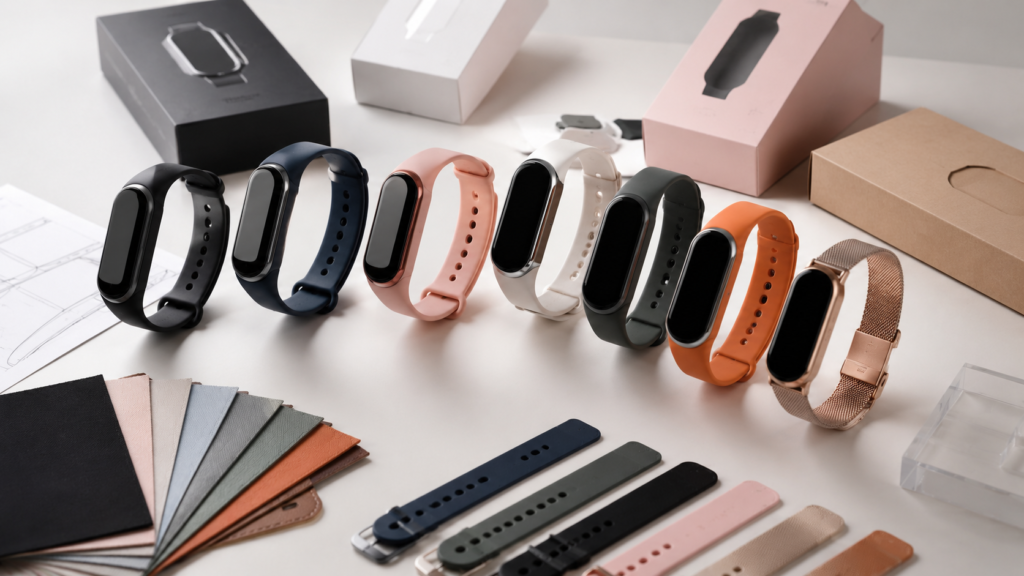
smart band suppliers buyers need a supplier evaluation process that checks product fit, OEM/ODM capability, compliance documents, quality control, pricing, lead time, and after-sales support before placing a bulk order.
Table of Contents
Table of Contents
EU Smart Band Sourcing Guide 2026: 7 Checks for Amazon FBA Sellers
Smart band OEM for EU Amazon sellers means selecting a manufacturer that can deliver consistent firmware, EU-compliant documentation, retail-ready private label packaging, and reliable lead times for FBA replenishment. In practice, you should verify seven areas before sending an RFQ: product specification and sensor strategy, OEM/ODM scope, MOQ and price drivers, sample validation, compliance and labeling for the EU, packaging and app customization, and delivery plus after-sales terms. Each check has a cost, and skipping any one typically shows up later as listing suspensions, returns, or tied-up inventory.
smart band suppliers: Table of Contents
- Direct Answer
- Key Takeaways
- Key Facts for Buyers
- 1. Start With the Listing Promise and Work Backwards
- 2. Choose Your Sourcing Model: OEM vs ODM vs Private Label
- 3. Understand MOQ and What Actually Drives Unit Price
- 4. Validate Samples Like a Buyer, Not a Reviewer
- 5. Treat EU Compliance as a Deliverable, Not a Sticker
- 6. Plan Packaging, App, and Firmware Around Your Brand
- 7. Lock Lead Time, Shipping, and After-Sales Terms
- Comparison Table: Sourcing Options for EU Amazon Sellers
- Common Mistakes and Buyer Red Flags
- Practical Buyer Checklist for Your RFQ
- FAQ
- Conclusion
Direct Answer
For EU Amazon sellers, the safest smart band OEM approach is to pick one product platform (ODM baseline plus light OEM customization), confirm EU-facing compliance documents and labeling expectations with the supplier, validate a production-intent sample against your listing claims, and only then negotiate MOQ, packaging, and app branding. This reduces the risk of needing redesigns after tooling or inventory commitments.
Key Takeaways
- Specify the listing promise first. Battery life, sensor set, app compatibility, and water resistance claims must match what you can verify.
- Separate OEM, ODM, and private label scope in your RFQ so pricing and lead time are comparable across suppliers.
- MOQ is negotiable within limits, but it usually tracks tooling, packaging runs, and firmware/app changes.
- Samples must be production-intent, not demo units, if you plan to publish performance claims on Amazon.
- EU compliance is product-specific. CE marking, RoHS, battery transport documents, and labeling depend on configuration and channel; buyers should verify requirements for each SKU.
- App and privacy are part of your product. If your app collects health data, your EU privacy approach belongs in the RFQ.
- Plan lead time backwards from FBA restock dates, including festival shutdowns and battery shipping constraints.
Key Facts for Buyers
| RFQ Area | What to Ask | Why It Matters for EU Amazon Sellers |
|---|---|---|
| Product platform | Which ODM baseline model, firmware version, and sensor configuration? | Avoids rebuilding your listing if specs change after sampling. |
| Compliance documents | Which documents are available per SKU (e.g., test reports, declarations, battery transport docs)? | Marketplace and customs checks may request specific documents. |
| MOQ | MOQ by color, by packaging type, and by custom logo/app tier? | Color and packaging often set true minimum order quantities. |
| Sample policy | Sample fee, lead time, and whether it is production-intent? | Prevents mismatches between sample claims and mass production. |
| App/firmware | Who owns customization, and what is the release cycle for updates? | App stability and branding influence reviews and returns. |
| Lead time | Production lead time after deposit and packaging approval? | FBA restock windows and Q4 demand require buffer planning. |
| After-sales | Warranty term, spare parts availability, and DOA policy? | Protects your seller metrics when defects occur. |
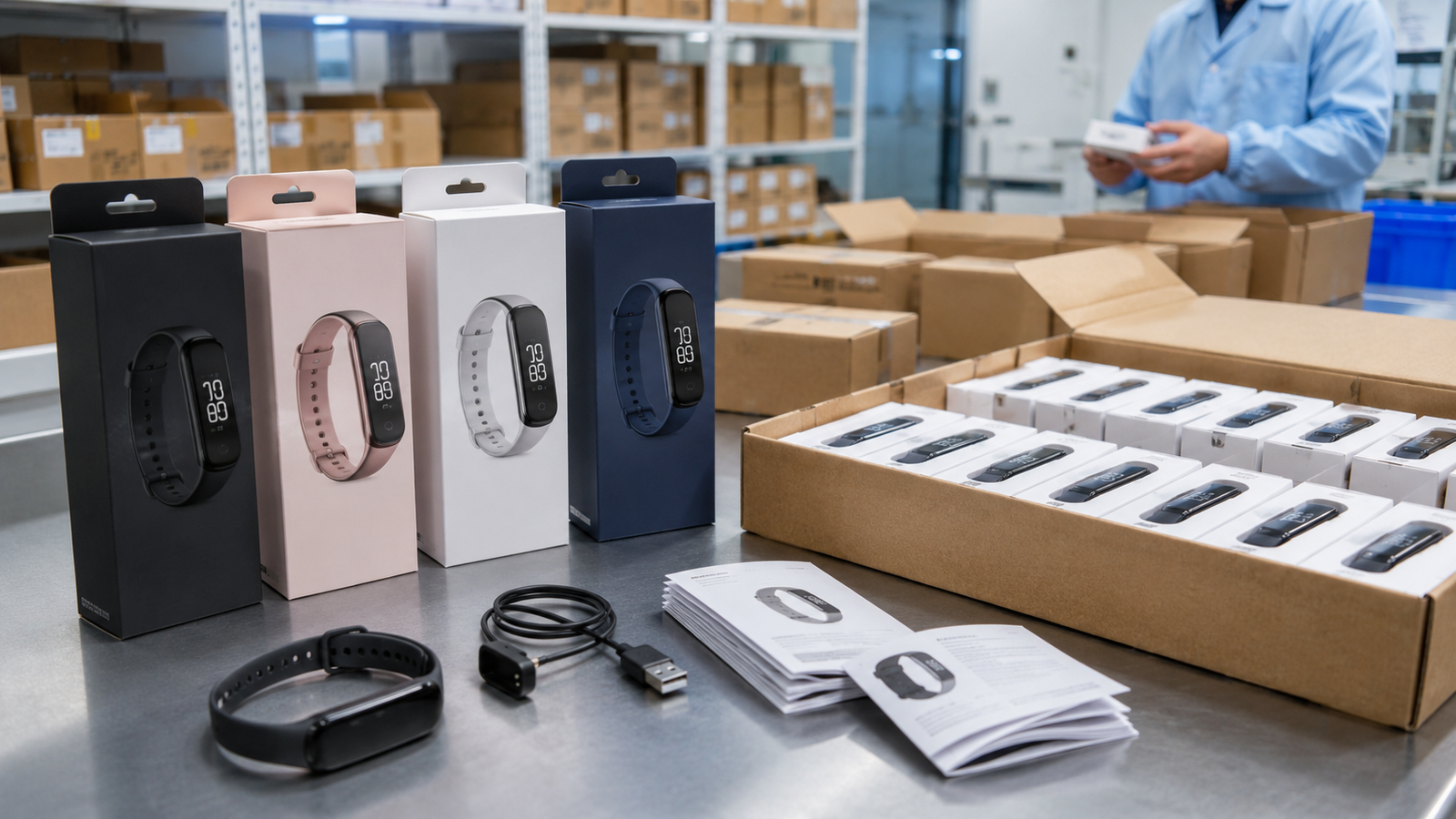
[IMAGE PLACEHOLDER 1]
Suggested caption: Overview of the seven RFQ checks for smart band OEM for EU Amazon sellers.
1. Start With the Listing Promise and Work Backwards
Most smart band sourcing problems start with a listing that was written before the product was chosen. Amazon listings need specific, defensible claims. If your title says “14-day battery life” or “water resistant for swimming,” you need a manufacturer whose specification can support that consistently across batches.
Define the three claims you will not compromise on
Buyers typically pick one or two hero claims and two support claims. For smart bands, hero claims often include battery life, display type, and health/fitness features. Support claims include app compatibility, notifications, and comfort. Put these in your RFQ as measurable requirements.
- Battery life: ask for the test condition (screen brightness, heart rate tracking on/off, notification frequency).
- Water resistance: ask what rating the specific SKU targets, and how it is verified in production.
- Sensor set: confirm whether heart rate, blood oxygen, or sleep features are enabled by default, and what the app displays.
Decide whether you are selling a brand or a commodity
If you compete on price, your sourcing question is cost, MOQ, and reliability. If you compete on brand, your sourcing question is differentiation: packaging, app experience, firmware stability, and documentation quality. Both paths are valid, but they lead to different suppliers and different MOQs.
2. Choose Your Sourcing Model: OEM vs ODM vs Private Label
Suppliers often use OEM, ODM, and private label interchangeably, which makes quotes hard to compare. Define terms in your RFQ.
ODM baseline
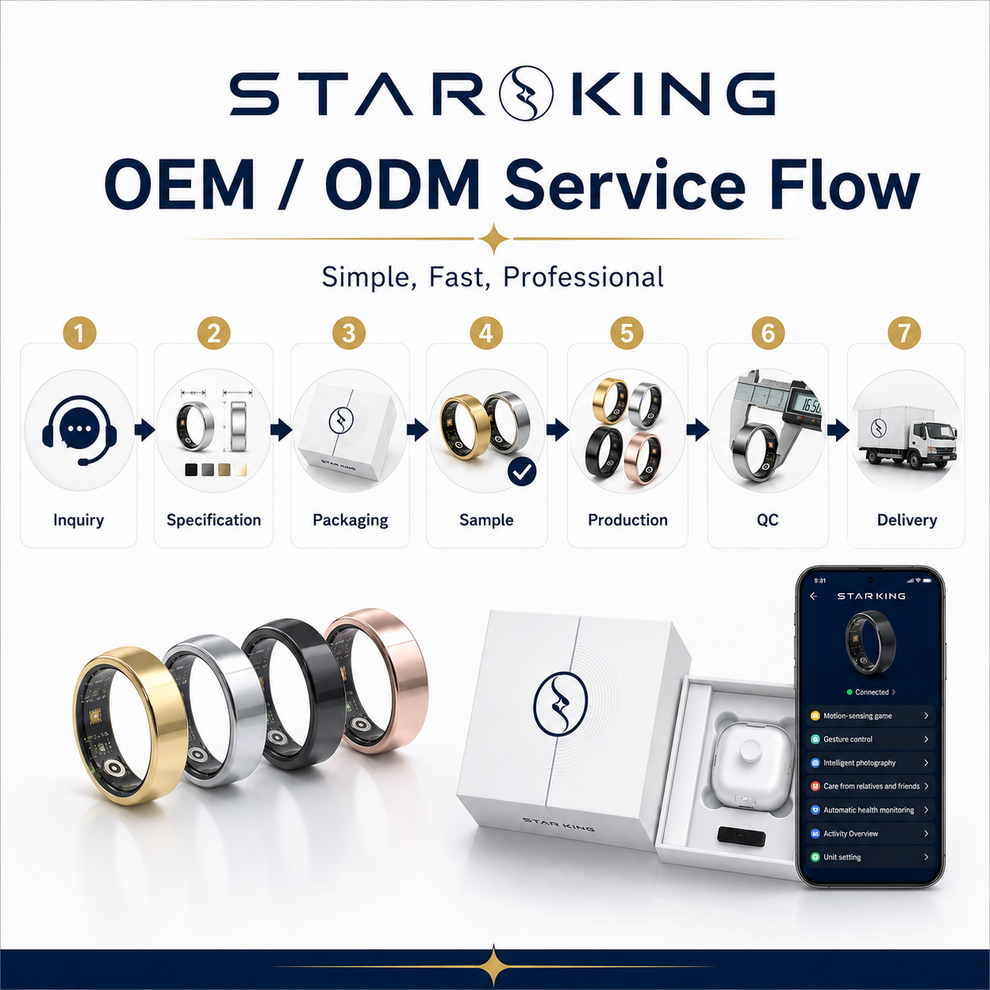
You select an existing design and customize limited elements, such as logo, packaging, UI language, or app skin. This is usually the fastest route for Amazon sellers entering the EU, because the platform already exists and tooling costs are avoided or reduced.
OEM with light customization
You keep the core hardware but change branding, bundle contents, charging accessories, or app presentation. This is common when sellers want a distinct listing without new tooling.
Private label
Private label can mean anything from your logo on the band to a fully branded app and retail packaging system. Clarify which layers are included: device, charging cable, manual, gift box, and app.
For smart bands specifically, the practical difference between ODM and OEM is often the firmware and app layer. If you need custom UI flows or specific data screens, ask whether firmware customization is available and who maintains it after launch.
If you are also planning adjacent SKUs, it helps to align your supplier across categories. For example, a wearable line that includes both smart bands and smart watches can share app architecture and packaging standards, which simplifies listing management.
Soft CTA: If you are building an EU-facing lineup, it can be useful to compare platform options and customization scope early, so your RFQ reflects what is actually producible.
3. Understand MOQ and What Actually Drives Unit Price
MOQ is rarely a single number. Suppliers may quote an MOQ per model, per color, per packaging type, and per customization tier. Two supplier quotes that look identical can differ by tens of percent once packaging and app requirements are included.
Price drivers you should ask about
- Hardware configuration: display type, sensor set, battery capacity, charging method, and casing material.
- Packaging: plain box vs printed retail box vs premium gift box with inserts and multilingual manuals.
- Branding: logo method (print vs laser vs plate), placement, and color matching.
- App and firmware: custom app skin, language packs, and feature enablement.
- Compliance documentation: which reports are provided and whether they are per model or per family.
- Shipping: carton configuration, battery shipping requirements, and whether the supplier can support your freight forwarder.
MOQ planning for Amazon sellers
Plan MOQ against your realistic sell-through, not your best-case launch. If your MOQ is 1,000 units per color and you launch with five colors, you are committing to 5,000 units before you know which color converts. Many sellers start with one or two colors, then expand after review velocity.
If your sourcing plan spans wearable categories, it may be useful to review how private label OEM/ODM programs structure customization tiers across products. That can help you bundle MOQs more efficiently.
4. Validate Samples Like a Buyer, Not a Reviewer
Sample evaluation is where Amazon sellers either protect their listing or inherit a returns problem. A demo unit can pass a quick check and still fail in production.
Request production-intent samples
Ask the supplier to confirm whether the sample matches mass production in firmware, sensor calibration, battery, and packaging. If the sample is a demo unit, treat performance claims as unverified.
Test the parts that affect reviews
- App onboarding: install, pairing, account creation, and language options.
- Data accuracy consistency: observe whether readings are stable during normal use (not medical accuracy).
- Battery behavior: charge cycles, standby drain, and whether battery percentage is reliable.
- Comfort and fit: strap materials, clasp durability, and sizing range.
- Notifications: message display, vibration strength, and disconnect behavior.
- Water exposure: follow the supplier’s care instructions; if you plan to market swimming, verify the specific rating.
Document your sample test
Keep a written record of the sample firmware version, test date, and your observations. If issues appear in mass production, this record helps you resolve disputes faster.
[IMAGE PLACEHOLDER 2]
Suggested caption: Production-intent sample validation for smart band OEM for EU Amazon sellers.
5. Treat EU Compliance as a Deliverable, Not a Sticker
Compliance requirements depend on the product configuration, the intended use, and the destination market. For EU-facing listings, sellers should verify requirements with the supplier and, where relevant, with a compliance professional. The presence of a CE mark on a sample does not automatically mean every SKU and variation is covered.
Documents to ask about in your RFQ
- EU declaration of conformity for the specific model or family, if applicable.
- Test reports relevant to the product’s electrical and radio characteristics, as applicable.
- RoHS-related documentation for restricted substances, if applicable.
- Battery transport documents, such as UN38.3 test reports and MSDS, when lithium batteries are shipped.
- Labeling: importer details, warnings, and language requirements can vary by country and channel.
For official reference points, buyers often review the European Commission CE marking overview and the Radio Equipment Directive (RED) 2014/53/EU. Because rules and interpretations change, verify current requirements for your exact product and market.
Battery shipping and FBA
Smart bands contain lithium batteries. Transport requirements may include UN38.3 documentation and proper labeling. Amazon may also require battery-related documentation for certain listings. Confirm with your supplier and your freight forwarder what documents are needed for your route and channel.
[IMAGE PLACEHOLDER 3]
Suggested caption: Compliance document checklist for EU smart band listings.
6. Plan Packaging, App, and Firmware Around Your Brand
Packaging and app experience are often what separate a commodity listing from a brand listing. They are also common sources of delay because artwork and firmware changes require approval cycles.
Packaging customization questions
- What is the minimum order quantity for printed retail boxes vs plain boxes?
- Who provides dielines, and who approves print proofs?
- How many languages can be included in the manual and on the box?
- Are SKU/barcode labels applied by the supplier or by you?
App and firmware questions
- Is the app a supplier-owned app with your branding, or a fully separate app build?
- What data does the app collect, and where is it stored?
- How are firmware updates delivered, and can they affect pairing or battery behavior?
- What happens to app support if you switch suppliers later?
For EU sellers, privacy and data handling are part of product quality. If the app collects personal or health-related data, your terms, disclosures, and data flow should be reviewed with appropriate advisors. This is not a marketing detail; it is a risk area.
7. Lock Lead Time, Shipping, and After-Sales Terms
Lead time should be planned backwards from the date your inventory must be available in Amazon fulfillment centers. Build buffers for documentation, packaging approvals, freight, and customs.
Lead time components
- Sample and approval: sample delivery, testing, and feedback cycles.
- Pre-production: artwork, firmware configuration, and packaging proofs.
- Production: stated lead time after deposit and approvals.
- Inspection: pre-shipment inspection scheduling.
- Shipping: air vs sea vs rail, battery handling, and customs clearance.
- Inbound to FBA: receiving delays during peak periods.
After-sales terms to define
- Warranty period and what it covers.
- DOA handling and replacement policy.
- Availability of spare parts, such as straps and charging cables.
- Technical support channel and response expectations.
- Firmware issue escalation process.
If your product line includes multiple wearable formats, consistent after-sales terms across smart rings and bands can reduce support complexity for your team.
Comparison Table: Sourcing Options for EU Amazon Sellers
| Sourcing Model | Customization Scope | Typical MOQ Pressure | Time to Launch | Best For |
|---|---|---|---|---|
| ODM baseline | Logo, packaging, UI language, app skin (limited) | Lower | Faster | Testing demand and reviews before scaling |
| OEM with light customization | Branding, bundle, packaging, some firmware options | Moderate | Moderate | Sellers who want differentiation without new tooling |
| Private label | Branded device, packaging, app, manuals | Higher | Longer | Brand builders with a multi-year roadmap |
| Full custom development | New industrial design, tooling, custom firmware/app | Highest | Longest | Teams with proven demand and funding |
Common Mistakes and Buyer Red Flags
These issues appear repeatedly in smart band sourcing, especially for EU sellers managing documentation and FBA performance.
- Accepting a sample that is not production-intent. If the supplier cannot confirm sample-to-production consistency, treat performance claims as unverified.
- Assuming one compliance document covers all SKUs. Different colors or configurations may or may not be covered; verify per SKU.
- Ignoring packaging MOQ. Printed boxes often have separate minimums and longer lead times.
- Underestimating app dependency. If the app is supplier-owned, your brand experience depends on their roadmap.
- No written warranty and DOA policy. This creates friction when Amazon customers report defects.
- Planning launch around a single color. If it underperforms, you may be locked into inventory.
- No pre-shipment inspection. A basic inspection can catch labeling, packaging, and function issues before freight.
Red flags in supplier communication
- Vague answers about firmware version or app ownership.
- Refusal to provide documentation samples or labeling details.
- Quotes that do not separate tooling, packaging, and customization costs.
- Unwillingness to confirm production-intent sample status.
- Pressure to pay a large deposit before specification sign-off.
Practical Buyer Checklist for Your RFQ
- Hero claims defined with measurable test conditions.
- ODM/OEM/private label scope written in plain terms.
- MOQ by model, color, and packaging type.
- Unit price breakdown: hardware, packaging, branding, compliance docs, shipping terms.
- Production-intent sample requested and evaluated.
- EU compliance documents identified per SKU; gaps noted.
- Battery transport documents confirmed for your shipping route.
- Packaging artwork process, dielines, and approval steps.
- App/firmware ownership, update cycle, and data handling questions.
- Lead time breakdown and buffer for FBA inbound.
- Warranty, DOA policy, and spare parts availability.
- Inspection plan before shipment.
If you are finalizing an RFQ and want to compare customization tiers side by side, it can help to review smart retail and e-commerce solutions to align packaging and channel requirements with your product plan.
FAQ
What does “smart band OEM for EU Amazon sellers” usually include?
It typically includes selecting an existing smart band platform (ODM) and customizing branding, packaging, language, and sometimes app presentation. Full custom hardware development is possible but usually involves tooling and longer timelines.
Which certifications do I need to sell a smart band on Amazon in the EU?
Requirements depend on the product configuration and channel. Buyers commonly ask for CE-related documentation, RoHS-related documentation, and battery transport documents such as UN38.3 and MSDS. Amazon may request specific documents for certain listings. Verify current requirements for your exact product and market.
How should I set MOQ for a first smart band order?
Start with your realistic sell-through for the first 60–90 days, then choose one or two colors and simple packaging. Increase MOQ only after you have review velocity and return data.
What is a fair lead time for smart band production?
Lead time depends on packaging, firmware configuration, and order size. Ask for a breakdown: sample lead time, pre-production approvals, production, inspection, and shipping. Include buffers for peak periods and customs.
Can I use my own app with an ODM smart band?
Sometimes. It depends on whether the supplier provides an SDK or supports app customization. Ask who owns the app, how updates are delivered, and what data is collected and where it is stored.
How do I compare two smart band suppliers fairly?
Use the same RFQ template, require the same document list, and request production-intent samples from both. Compare total landed cost with packaging and compliance included, not just unit price.
What documents should I request before paying a deposit?
At minimum: specification sheet, packaging artwork approval process, compliance document list per SKU, battery transport documents, warranty/DOA policy, and a written lead time schedule.
Conclusion
Smart band sourcing for EU Amazon sellers is a documentation and specification exercise as much as a price negotiation. The sellers who avoid expensive mistakes define their listing claims first, lock the sourcing model, validate production-intent samples, and treat compliance, packaging, app ownership, and lead time as part of the product. If you follow the seven checks above, your RFQ will be clearer, your supplier comparisons will be fairer, and your launch will be less exposed to returns and listing issues.
STAR KING CTA
Ready to move from research to a concrete quote? STAR KING supports smart band OEM/ODM and private label projects for EU-facing brands and Amazon sellers. You can request samples, compare specifications, and confirm customization options, MOQ, packaging, and documentation requirements in one conversation.
Request a smart band OEM quotation and sample plan.
Discuss Your Smart Wearable OEM/ODM Project
Planning a smart ring, smart watch, smart band, AI glasses, AI translator, or AI voice mouse project? Contact STAR KING to discuss product positioning, sample testing, customization scope, certification requirements, lead time, and quotation details.

Team Star King

Scan WhatsApp QR code
Leave a Reply