
AI voice mouse sourcing: 7 Critical Checks for Sourcing AI Voice Mice: A System Integrator’s Guide to the Middle East Market
October 19, 2026 · Team Star King
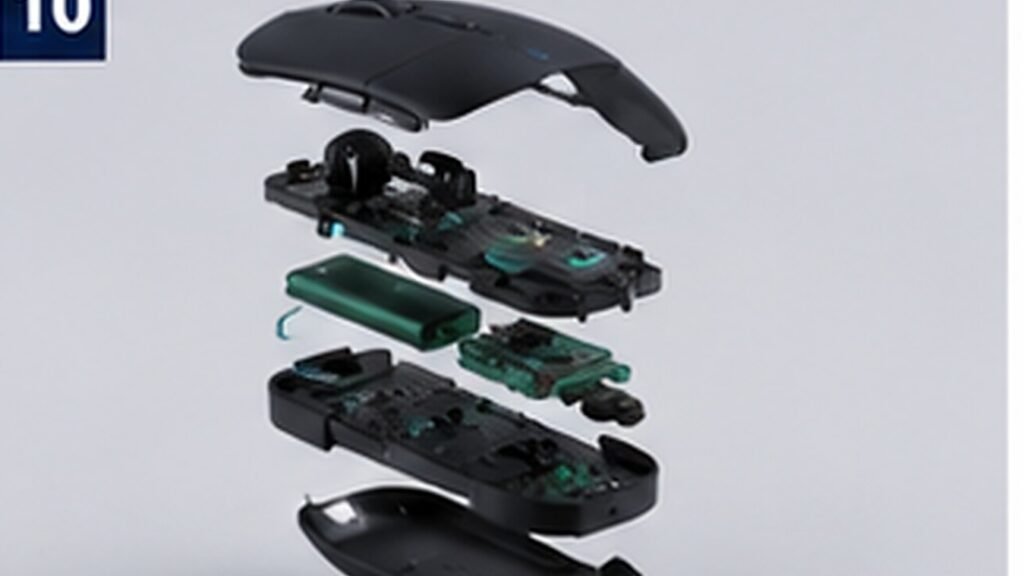
AI voice mouse sourcing buyers need a supplier evaluation process that checks product fit, OEM/ODM capability, compliance documents, quality control, pricing, lead time, and after-sales support before placing a bulk order.
Table of Contents
Table of Contents
7 Critical Checks for Sourcing AI Voice Mice: A System Integrator’s Guide to the Middle East Market
If you are a system integrator sourcing an AI voice mouse for a Middle East project, the decision hinges on seven checks: language support (especially Arabic), hardware and firmware quality, software integration options, compliance with local import regulations, OEM/ODM terms, total landed cost, and after-sales support. This guide walks you through each check with practical criteria, so you can evaluate suppliers confidently and avoid costly deployment delays.
AI voice mouse sourcing: Short Answer
To source an AI voice mouse for Middle East system integration projects, prioritize suppliers that can demonstrate Arabic (and ideally English) voice recognition performance, provide SDK/API access for integration with existing systems, and offer clear documentation on compliance with local regulations. Verify MOQ, lead times, and warranty terms early, and request sample units for hands-on testing with your target applications. Working with an experienced OEM/ODM partner like STAR KING can streamline the process, but you must confirm all specifications and certifications for your specific project.

Table of Contents
- Introduction
- Key Takeaways
- Key Facts for Buyers
- 1. Language and Voice Recognition Accuracy
- 2. Hardware Design and Build Quality
- 3. Software, Firmware, and Integration Options
- 4. Compliance and Certification for the Middle East
- 5. OEM/ODM and Customization Capabilities
- 6. MOQ, Pricing, and Total Landed Cost
- 7. After-Sales Support and Warranty
- Comparison Table: Supplier Evaluation Criteria
- Common Mistakes and Buyer Red Flags
- Practical Buyer Checklist
- FAQ
- Conclusion

Key Takeaways
- Arabic language support and dialect handling are critical for Middle East deployments; test voice recognition accuracy with local accents.
- Prioritize suppliers that offer SDK/API access for integration with your software stack, and clarify firmware customization options.
- Confirm compliance with local regulations (e.g., CITC in Saudi Arabia, TDRA in UAE) and request documentation early.
- Evaluate total landed cost, including shipping, duties, and taxes, rather than just unit price.
- Request samples and run pilot tests before committing to bulk orders; verify warranty and after-sales support terms.
- Work with OEM/ODM partners that have experience in the Middle East market and can provide references or case studies.
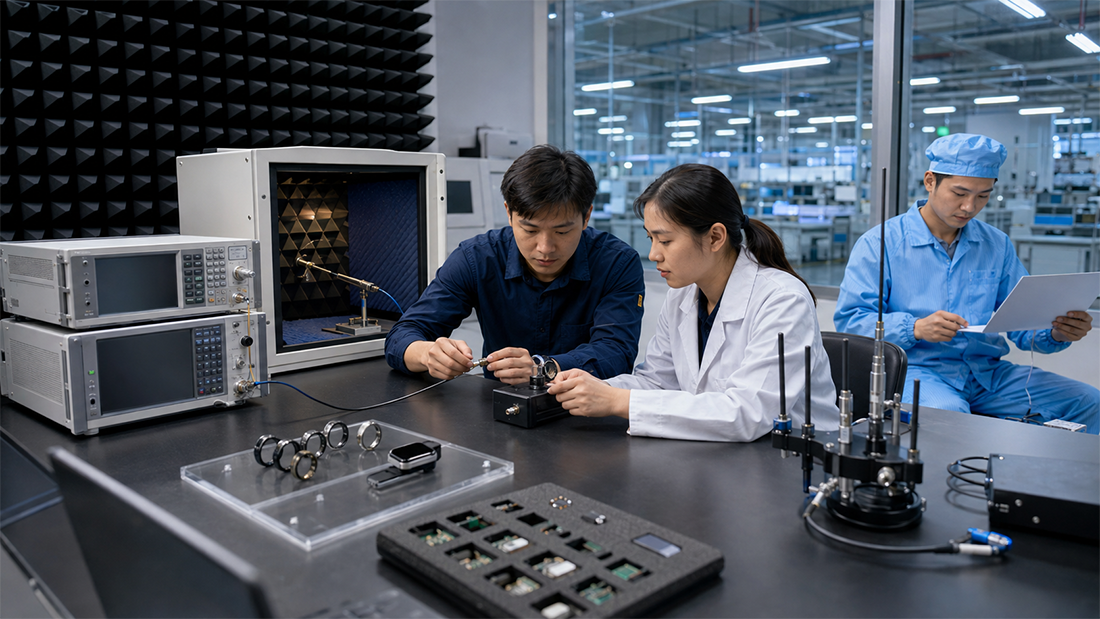
Key Facts for Buyers
| Factor | Typical Consideration |
|---|---|
| Languages Supported | Arabic (MSA and dialects), English, French (for North Africa) — confirm with supplier [STAR KING TO CONFIRM] |
| Voice Recognition Accuracy | Test with local accents; aim for >95% accuracy in quiet environments |
| Connectivity | Bluetooth 5.0 or higher, USB dongle options, wired USB-C |
| Battery Life | Typically 10-20 days on a charge, depending on usage; confirm specs |
| Compliance | CE, FCC, RoHS for general; local approvals may be required |
| MOQ | Varies by supplier; often 500-1000 units for OEM [STAR KING TO CONFIRM] |
| Lead Time | 30-60 days after sample approval, depending on customization |
| Warranty | 12 months standard; extendable upon agreement |
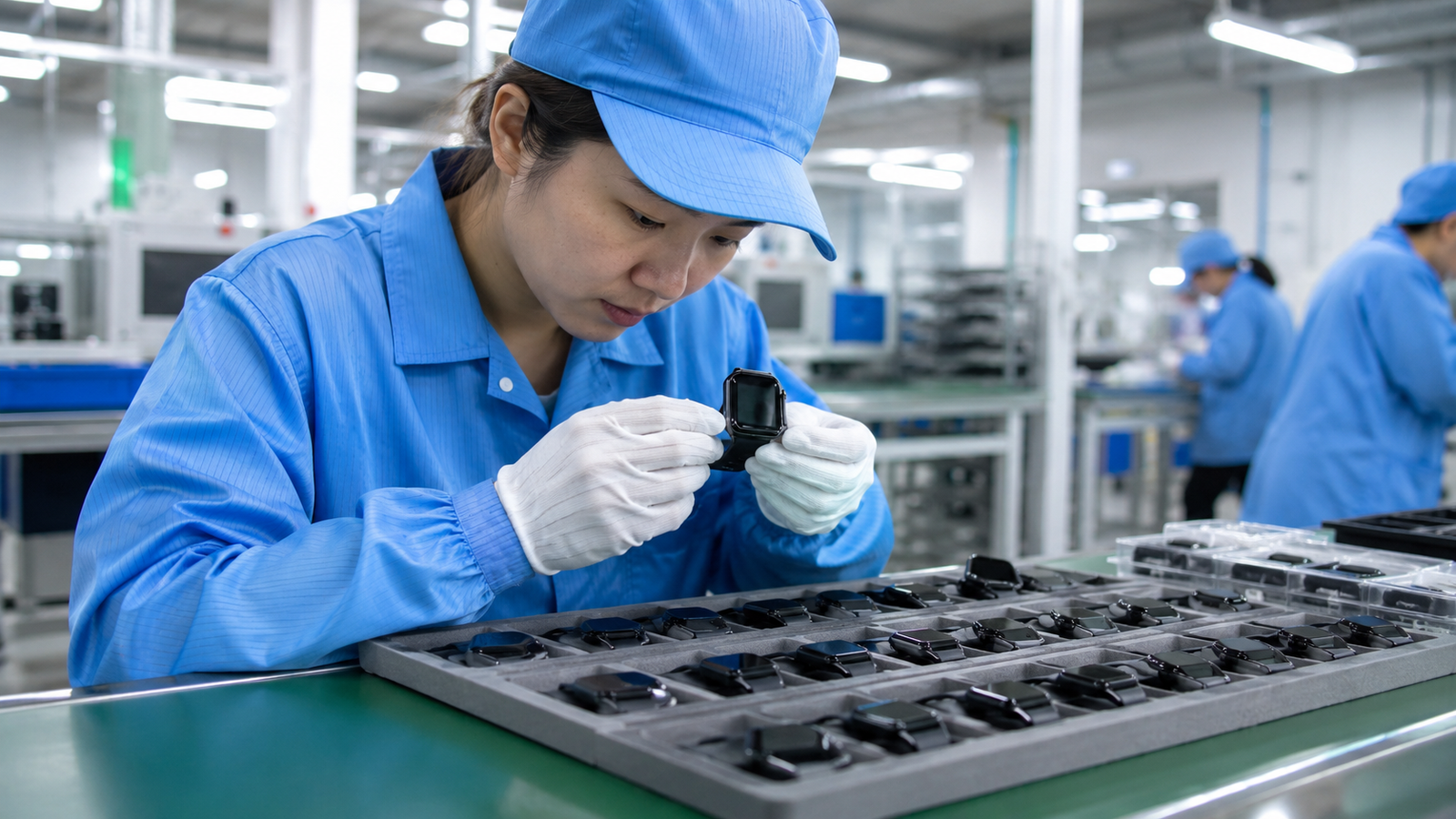
Introduction
System integrators in the Middle East face unique challenges when sourcing AI voice mice: the need for robust Arabic language support, compliance with regional telecom regulations, and seamless integration with existing IT infrastructure. Whether you are deploying voice-enabled workstations for government offices, call centers, or smart meeting rooms, choosing the right supplier can make or break your project. This guide provides seven critical checks to evaluate potential partners, ensuring your procurement decision meets both technical and commercial requirements.
1. Language and Voice Recognition Accuracy
The first check is language support. For Middle East markets, the AI voice mouse must accurately recognize Arabic (including dialects) and English, and possibly French for North African regions. Ask suppliers for details on their speech recognition engine, supported languages, and accuracy benchmarks. Request a sample to test with local users and accents. Verify that the mouse can handle code-switching (mixing Arabic and English) common in technical environments. Also, consider whether the device requires an internet connection for cloud-based recognition or offers offline capabilities for secure environments.
2. Hardware Design and Build Quality
Evaluate the mouse’s ergonomics, durability, and materials. System integrators often deploy devices in high-use environments, so build quality matters. Check for sensor accuracy, button lifecycle, and wireless interference. Request MTBF (Mean Time Between Failures) data if available. Also, consider the battery type (replaceable vs. rechargeable) and charging method. For mass deployments, standardization of components and availability of spare parts are important. If you need customization, such as branding or specific colors, confirm the supplier’s capabilities in industrial design and tooling.
3. Software, Firmware, and Integration Options
Integration flexibility is key for system integrators. Does the AI voice mouse come with an SDK or API for custom software development? Can the firmware be customized to support specific voice commands or workflows? Check compatibility with operating systems (Windows, macOS, Linux) and common enterprise software (Microsoft Office, CRM systems). For privacy-sensitive deployments, ask about data processing: whether voice data is stored locally or in the cloud, and what encryption is used. Ensure the supplier can provide documentation and technical support for integration.
4. Compliance and Certification for the Middle East
Compliance is non-negotiable. At minimum, the product should have CE, FCC, and RoHS certifications. For Middle East countries, additional approvals may be required: in the UAE, the Telecommunications and Digital Government Regulatory Authority (TDRA) regulates radio and telecommunication equipment; in Saudi Arabia, the Communications, Media, and Technology Commission (CITC) mandates type approval for wireless devices. Verify that the supplier can provide the necessary test reports and certificates. Also, consider labeling and packaging requirements in Arabic. Work with the supplier to ensure all documentation is in order before shipment.
5. OEM/ODM and Customization Capabilities
If you need a private-label solution, assess the supplier’s OEM/ODM experience. Ask about minimum order quantities for custom branding, packaging, and firmware modifications. Review their product development process: do they offer industrial design support, prototyping, and tooling? For AI voice mouse, firmware customization (e.g., adding specific voice commands or integrating with third-party services) is often required. Confirm ownership of intellectual property and molds. Request references from previous OEM projects, particularly in the Middle East.
6. MOQ, Pricing, and Total Landed Cost
Understand the supplier’s MOQ for standard and customized products. Pricing should be broken down by component and customization. Calculate the total landed cost, including shipping, import duties, and taxes. For the Middle East, consider air freight vs. sea freight lead times and costs. Also, factor in the cost of compliance testing and certification if not already covered. Negotiate payment terms and currency to mitigate exchange rate risks.
7. After-Sales Support and Warranty
Reliable after-sales support is essential for long-term deployments. Clarify the warranty period (typically 12 months), what it covers, and the process for returns or repairs. Ask about the availability of spare parts and technical support channels. For large projects, consider a service level agreement (SLA) that defines response times and resolution. Also, check whether the supplier has local support or partners in the Middle East region.
Comparison Table: Supplier Evaluation Criteria
| Criteria | What to Look For | Red Flag |
|---|---|---|
| Language Support | Confirmed Arabic and English support; sample testing available | Vague claims without demonstration |
| Integration Options | SDK/API, firmware customization, documented protocols | No customization possible; closed system |
| Compliance | CE, FCC, RoHS; local approvals (TDRA, CITC) as needed | Unable to provide certificates or test reports |
| OEM/ODM Experience | Proven track record, references, in-house design team | No case studies; outsources all development |
| MOQ & Pricing | Clear MOQ tiers; transparent cost breakdown | Hidden fees; unrealistic low prices |
| After-Sales | Defined warranty, spare parts availability, local support | No clear warranty terms; slow response |
Common Mistakes and Buyer Red Flags
- Ignoring dialect variations: Failing to test with local accents can lead to poor user adoption.
- Overlooking compliance: Shipping without proper certifications can result in customs delays or fines.
- Underestimating integration complexity: Assuming the mouse will work out-of-the-box with your systems without SDK or customization.
- Choosing on price alone: Low unit cost may be offset by high defect rates or lack of support.
- Not requesting samples: Skipping pilot testing can lead to surprises in bulk orders.
- Red flag: Supplier cannot provide detailed specifications or certification documents.
- Red flag: No clear MOQ or lead time commitments.
- Red flag: Poor communication or evasive answers to technical questions.
Practical Buyer Checklist
- Confirmed language support (Arabic, English) and tested with local accents.
- Reviewed hardware specifications and requested MTBF data.
- Verified SDK/API availability and integration documentation.
- Checked compliance certificates (CE, FCC, RoHS) and local approvals (TDRA, CITC).
- Discussed OEM/ODM options, MOQ, and customization capabilities.
- Calculated total landed cost, including shipping and duties.
- Clarified warranty, after-sales support, and spare parts availability.
- Requested samples and conducted pilot testing.
- Requested references from similar projects in the Middle East.
FAQ
1. What is the typical MOQ for an OEM AI voice mouse order?
MOQ varies by supplier and customization level. For standard products with logo changes, MOQ may be 500 units; for full firmware customization, it could be 1,000 units or more. Confirm with your supplier. [STAR KING TO CONFIRM]
2. Which certifications are required for importing AI voice mice into the UAE?
Typically, CE and FCC are baseline. For the UAE, TDRA type approval may be required for wireless devices. Verify with a local compliance consultant.
3. Can the AI voice mouse support Arabic dialects?
Support varies by model. Some suppliers offer dialect support (e.g., Gulf, Egyptian, Levantine). Request a sample and test with your target users.
4. How long does it take to develop a custom firmware for the AI voice mouse?
Development time depends on complexity. Simple changes (e.g., adding voice commands) may take 2-4 weeks; full integration with your software could take 2-3 months. Plan accordingly.
5. What is the warranty period for bulk orders?
Standard warranty is 12 months. Some suppliers offer extended warranties for an additional cost. Clarify coverage and repair process.
6. Can I get a sample before placing a bulk order?
Yes, most suppliers provide samples for a fee, which is often refundable upon order confirmation. Request samples early in the evaluation.
7. How do I ensure data privacy with voice recognition?
Ask about data processing: offline vs. cloud-based recognition, encryption, and data storage policies. For sensitive environments, offline models are preferable.
Conclusion
Sourcing AI voice mice for Middle East system integration projects requires careful evaluation of language support, integration capabilities, compliance, and supplier reliability. By following the seven checks outlined in this guide, you can mitigate risks and ensure a successful deployment. Remember to request samples, verify certifications, and clarify all terms before committing to a bulk order. A thorough procurement process now will save time and resources later.
Ready to Discuss Your AI Voice Mouse Project?
STAR KING specializes in OEM/ODM manufacturing of AI hardware, including AI voice mice tailored for system integrators. We support customization, provide samples for testing, and offer guidance on compliance for Middle East markets. Request a quotation or discuss your OEM/ODM project with our team today. [STAR KING TO CONFIRM]
For more information on our AI voice mouse, visit the product page. Explore our AI Office Productivity solutions and Private Label OEM/ODM services. Read more guides on our blog.
Useful Official References for Buyers
- FCC equipment authorization guidance
- European Commission CE marking information
- Bluetooth SIG specifications
Discuss Your Smart Wearable OEM/ODM Project
Planning a smart ring, smart watch, smart band, AI glasses, AI translator, or AI voice mouse project? Contact STAR KING to discuss product positioning, sample testing, customization scope, certification requirements, lead time, and quotation details.

Team Star King

Scan WhatsApp QR code
Leave a Reply