
AI voice mouse sourcing: How to Source AI Voice Mouse for Middle East Private Label Brands: 7 Critical Steps to a Successful RFQ in 2026
November 26, 2026 · Team Star King
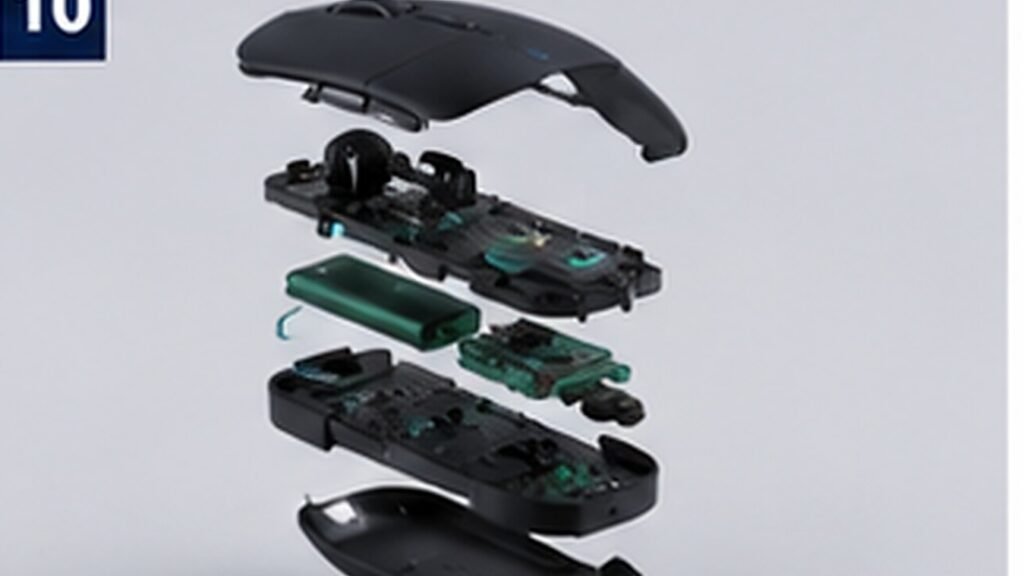
How to Source AI Voice Mouse for Middle East Private Label Brands: 7 Critical Steps to a Successful RFQ in 2026
AI voice mouse sourcing is the process of identifying, evaluating, and requesting quotations from manufacturers that can supply voice-controlled mouse hardware under a private-label brand for the Middle East market. For private-label brands, the most efficient approach is to prepare an RFQ that specifies Arabic and English voice support, interface requirements, MOQ expectations, target certification, packaging needs, and shipment terms before contacting suppliers. This guide gives you a 7-step RFQ framework to compare suppliers and reduce procurement risk.
Table of Contents
Table of Contents
AI voice mouse sourcing: Table of Contents
- Short Answer: What Should Middle East Buyers Put in an AI Voice Mouse RFQ?
- Key Takeaways
- Key Facts for Buyers
- Step 1: Define the Product Use Case and Voice Language Requirements
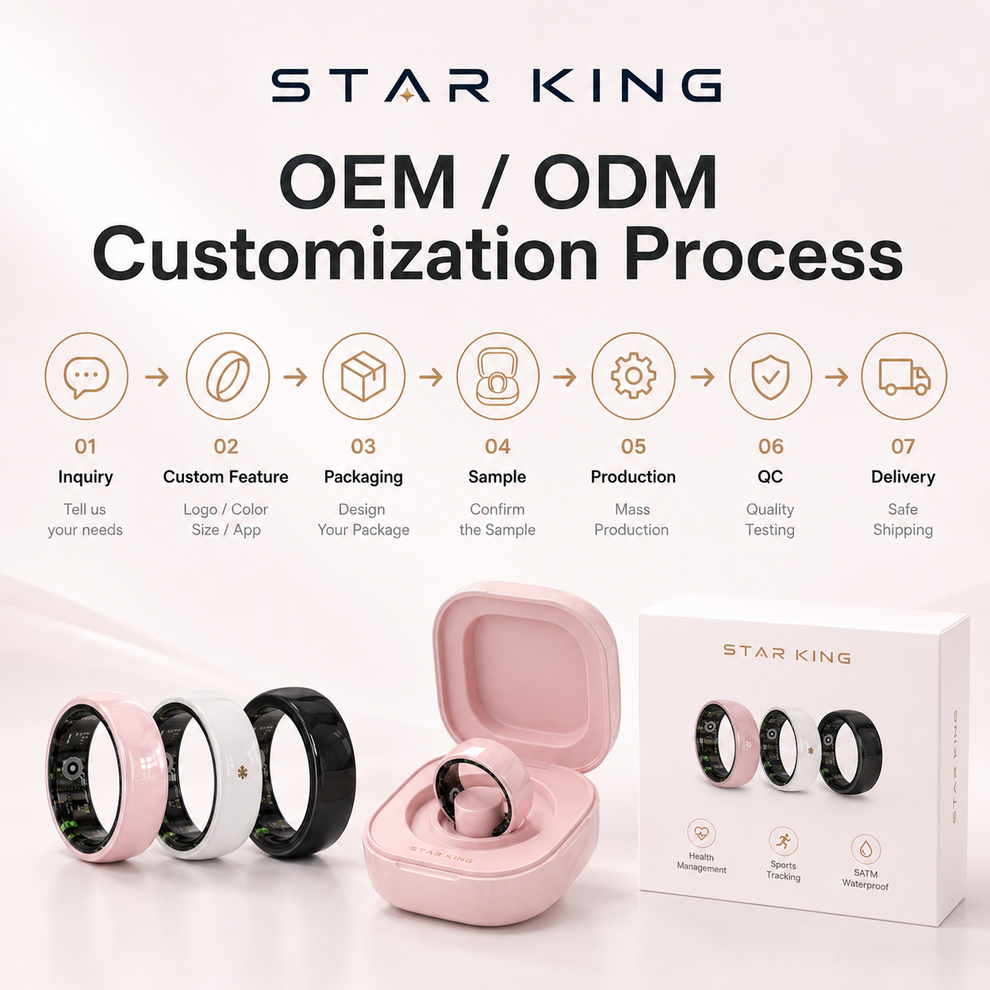
- Step 2: Decide Between OEM, ODM, and Private Label Models
- Step 3: Prepare a Technical Specification Sheet
- Step 4: Evaluate Supplier Capability and References
- Step 5: Plan Certification and Import Compliance for the Middle East
- Step 6: Confirm MOQ, Pricing Structure, and Lead Time
- Step 7: Validate Samples and Quality Control Before Mass Production
- AI Voice Mouse Supplier Comparison Table
- Common Mistakes and Buyer Red Flags
- Practical Buyer Checklist for AI Voice Mouse RFQ
- FAQ
- Conclusion

Short Answer: What Should Middle East Buyers Put in an AI Voice Mouse RFQ?
An effective AI voice mouse RFQ for Middle East private-label brands should state the operating languages (Arabic and English at minimum), voice input method, connection type, software or app requirements, target retail price, expected annual volume, packaging and branding needs, required certifications, and preferred Incoterms. Including these details helps suppliers respond with accurate pricing, realistic MOQs, and a production timeline, which shortens the evaluation cycle.
Key Takeaways
- Arabic voice support and regional keyboard layouts are core selection criteria, not optional extras.
- Private label is usually fastest to launch; ODM offers more differentiation; full OEM suits brands with proven volume.
- Certification requirements typically depend on product configuration and destination country; buyers should verify with local authorities.
- MOQ and tooling costs are the biggest drivers of unit price for first orders.
- Sample testing should include voice recognition accuracy, latency, comfort, and compatibility with common operating systems.
- Lithium battery shipping documentation may be required if the mouse includes a rechargeable battery.
Key Facts for Buyers
| Procurement Factor | Typical Consideration for Middle East Private-Label Brands |
|---|---|
| Core languages | Arabic and English are essential; additional languages may depend on firmware capability. |
| Product model | Private label (logo/packaging), ODM (existing design with customization), or OEM (new tooling). |
| MOQ range | Usually lower for private label on existing models; higher for custom tooling. Confirm with supplier. |
| Certification | CE, FCC, RoHS may apply; GCC market may require G-Mark; buyers should verify with local regulators. |
| Sample lead time | Typically 7–15 days for standard samples; custom samples may take longer. |
| Mass production lead time | Commonly 25–45 days after sample approval and deposit; confirm with supplier. |
| Battery shipping | If rechargeable, UN38.3 and MSDS documents are typically required by carriers. |
Step 1: Define the Product Use Case and Voice Language Requirements
Before you contact suppliers, clarify how the AI voice mouse will be used in your market. In the Middle East, business and education buyers often expect Arabic voice input alongside English. Consumer buyers may value bilingual support for productivity and accessibility. Define whether the device will primarily serve office productivity, education, call centers, or general retail. This decision affects firmware, microphone quality, and software integration.
Voice language support is not just a software toggle. It depends on the speech recognition engine, firmware customization, and whether the supplier can provide an app or driver that supports Arabic. Ask suppliers to demonstrate Arabic dictation and command recognition during sampling. For related AI office hardware, see our AI office productivity solutions.
Step 2: Decide Between OEM, ODM, and Private Label Models
Private-label brands typically choose one of three engagement models:
- Private Label: Use an existing AI voice mouse design, apply your logo, packaging, and documentation. Fastest to market, lowest tooling cost, but limited design differentiation.
- ODM: Customize an existing platform with firmware changes, app branding, or hardware tweaks such as button layout or color. Balances differentiation and speed.
- OEM: Develop a new enclosure and tooling. Highest differentiation and IP control, but requires higher investment and longer timeline.
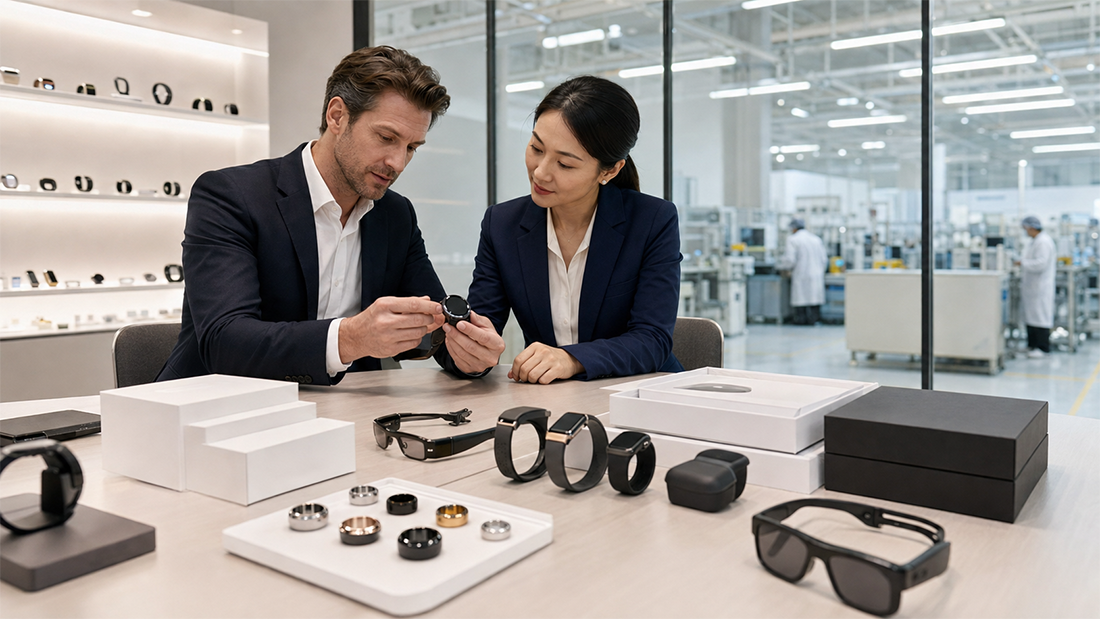
For first-time launches in the Middle East, private label on a proven ODM platform is often the most practical entry. As volume grows, you can transition to more customized ODM or OEM. Review private label OEM/ODM solutions to understand customization options.
Step 3: Prepare a Technical Specification Sheet
A detailed specification sheet reduces ambiguity in quotations. Include the following sections:
- Hardware: connection type (2.4 GHz, Bluetooth, or dual-mode), sensor resolution, button count, battery type and capacity, charging method, dimensions, weight, and materials.
- Voice and software: supported languages, speech recognition engine, required app or driver, OS compatibility (Windows, macOS, Android, iOS), and privacy/data handling.
- Packaging: retail box design, language requirements (Arabic/English), user manual, and regulatory labels.
- Compliance: target certifications and any labeling requirements for GCC countries.
Providing this sheet with your RFQ helps suppliers quote accurately and avoids later disputes. If you need guidance on voice-enabled devices, explore our AI voice mouse product page.
Step 4: Evaluate Supplier Capability and References
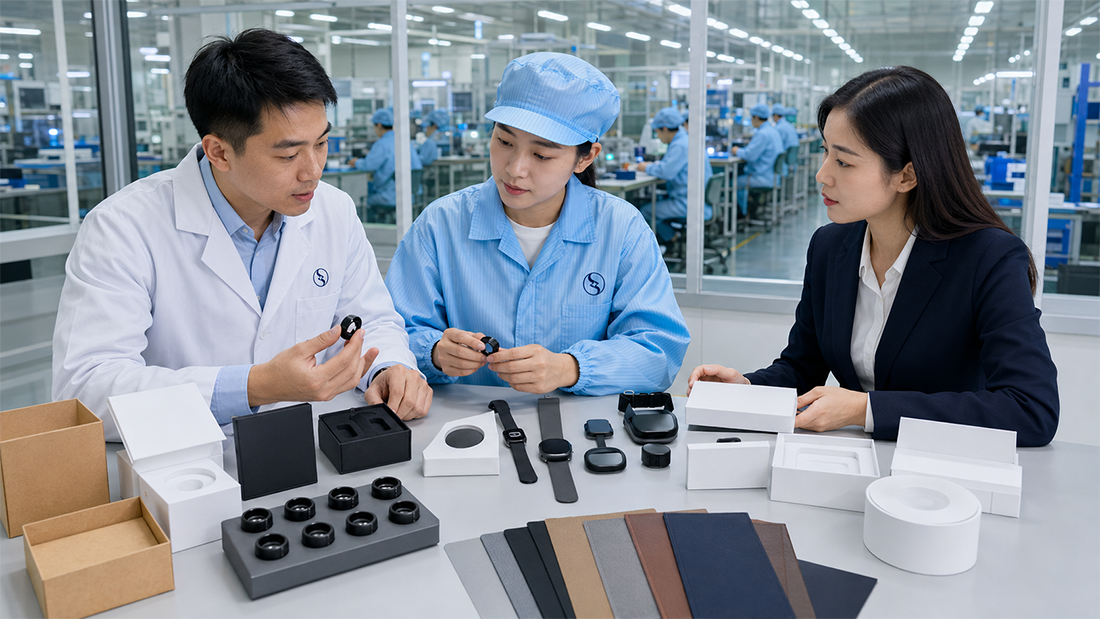
Not all suppliers that list AI voice mice have in-house firmware and app development. Ask for evidence of voice recognition integration, Arabic language support, and experience with Middle East clients. Request references or case studies if available. Verify factory capabilities through video audits or third-party inspection. For broader supplier evaluation, see our sourcing and procurement blog resources.
Key questions to ask:
- Do you develop firmware in-house or outsource?
- Which speech recognition engine do you use, and how is Arabic supported?
- Can you provide an app or driver with your brand and ours?
- What is your experience with GCC certification?
Step 5: Plan Certification and Import Compliance for the Middle East
Certification requirements vary by country and product configuration. In the GCC, electronic products may require G-Mark (GCC conformity mark), and radio-frequency devices typically need type approval. CE and FCC may be relevant if you also sell to Europe or North America. RoHS compliance is commonly requested. For devices with rechargeable batteries, UN38.3 and MSDS documents are usually required for air shipping. Buyers should verify specific requirements with local authorities or accredited labs. Official references include the GCC Standardization Organization (GSO) and the U.S. Federal Communications Commission (FCC) for RF equipment. For battery transport, refer to IATA Dangerous Goods Regulations.
Ask suppliers to confirm which certifications they can support and whether they will provide test reports. Do not assume all products carry all certifications; confirm per SKU and destination.
Step 6: Confirm MOQ, Pricing Structure, and Lead Time
MOQ and pricing depend on the customization level. Private label on an existing model may have MOQs in the hundreds; ODM with firmware changes may require higher volumes; OEM with new tooling typically requires the highest MOQ. Request a clear quotation that separates unit price, tooling cost, sample cost, packaging cost, and certification cost. Also ask for lead time from sample approval to mass production, and plan for Chinese New Year and holiday closures.
Use the comparison table below to structure supplier responses.
AI Voice Mouse Supplier Comparison Table
| Evaluation Criterion | Supplier A | Supplier B | Supplier C |
|---|---|---|---|
| Arabic voice support | Yes/No | Yes/No | Yes/No |
| Private label MOQ | — | — | — |
| Tooling cost | — | — | — |
| Sample lead time | — | — | — |
| Mass production lead time | — | — | — |
| Certifications supported | — | — | — |
| App/driver customization | — | — | — |
For more on MOQ planning and lead times, see our blog guides.
Step 7: Validate Samples and Quality Control Before Mass Production
Always test samples before committing to bulk. Evaluate voice recognition accuracy for Arabic and English, latency, microphone sensitivity in noisy environments, ergonomics, battery life, and compatibility with common operating systems. Also review build quality, button feel, and packaging. If possible, conduct a pilot order and inspect before shipment. Quality control should include pre-shipment inspection and functional testing. For related AI hardware quality considerations, see our AI office solutions.
Common Mistakes and Buyer Red Flags
- Ignoring Arabic language support until too late: Confirm firmware capability before tooling.
- Assuming certifications are included: Clarify which certificates are held and which require additional testing.
- Underestimating MOQ for custom designs: Ask for tiered MOQ based on customization.
- No sample testing in real conditions: Test with local accents and typical office noise.
- Unclear IP ownership: If you pay for tooling, confirm mold ownership in writing.
- Ignoring battery shipping rules: Ensure UN38.3 and MSDS are available.
Practical Buyer Checklist for AI Voice Mouse RFQ
- Defined target market and languages (Arabic/English).
- Selected engagement model (private label, ODM, OEM).
- Prepared specification sheet.
- Requested certifications and test reports.
- Confirmed MOQ, tooling cost, and pricing structure.
- Agreed sample lead time and mass production lead time.
- Planned quality control and pre-shipment inspection.
- Verified battery shipping documentation.
- Clarified IP and mold ownership if applicable.
- Reviewed warranty and after-sales terms.
If you are ready to discuss your AI voice mouse project, request a quotation with your specifications.
FAQ
What is the typical MOQ for a private-label AI voice mouse?
MOQ depends on the supplier and customization level. For private label on an existing model, MOQs may start in the hundreds; custom firmware or tooling usually requires higher volumes. Confirm with each supplier.
Can the AI voice mouse support Arabic voice commands?
Yes, but support depends on the speech recognition engine and firmware. Ask suppliers to demonstrate Arabic dictation and commands during sampling.
Which certifications are needed for GCC countries?
G-Mark may be required for certain products, and radio-frequency devices often need type approval. Requirements vary by country; verify with local authorities.
How long does shipping take to the Middle East?
Shipping time depends on the method. Air freight typically takes 5–10 days; sea freight may take 25–40 days. Factor customs clearance and local delivery.
Can I customize the packaging and user manual in Arabic?
Most private-label suppliers offer packaging and manual customization, including Arabic language. Confirm minimum order quantities for custom packaging.
What if my target market requires specific testing?
Discuss with suppliers early. They may be able to arrange testing with accredited labs, but costs and lead times vary.
Conclusion
AI voice mouse sourcing for Middle East private-label brands requires careful attention to language support, certification, MOQ, and quality control. By following these 7 steps, you can build an RFQ that helps suppliers respond accurately and lets you compare offers on a like-for-like basis. Start with a clear specification, test samples thoroughly, and confirm compliance early to avoid delays.
STAR KING CTA
STAR KING supports private-label brands with AI voice mouse customization and OEM/ODM solutions. To move forward, request a quotation or discuss your project with our team. We can help you confirm specifications, sample requirements, and certification needs for your market.
Discuss Your Smart Wearable OEM/ODM Project
Planning a smart ring, smart watch, smart band, AI glasses, AI translator, or AI voice mouse project? Contact STAR KING to discuss product positioning, sample testing, customization scope, certification requirements, lead time, and quotation details.

Team Star King

Scan WhatsApp QR code
Leave a Reply