AI voice mouse sourcing guide: How to Source AI Voice Mice for Corporate Procurement in the Middle East: 7 Critical Checks for 2026
How to Source AI Voice Mice for Corporate Procurement in the Middle East: 7 Critical Checks for 2026
This AI voice mouse sourcing guide explains how Middle East corporate procurement teams can evaluate suppliers, confirm compliance, plan pilot programs, and negotiate MOQs and landed costs for 2026 deployments. It outlines seven practical checks covering product specs, regional import rules, privacy requirements, and total cost of ownership. Use it to build a shortlist and run a structured proof of concept.
Table of Contents
Table of Contents
AI voice mouse sourcing guide: Table of Contents
- Short Answer
- Key Takeaways
- Key Facts for Buyers
- What Is an AI Voice Mouse and Why It Matters for Middle East Procurement
- Check 1: Product Specs and Real-World Language Support
- Check 2: Supplier Evaluation and Manufacturer Verification
- Check 3: MOQ, Pricing, and Landed Cost Factors
- Check 4: Sample Testing and Pilot Program Design
- Check 5: Quality Control and Import Compliance for the Middle East
- Check 6: Data Privacy, Security, and Corporate IT Requirements
- Check 7: Software, Firmware, and Scaling to Mass Production
- AI Voice Mouse vs. Standard Mouse: Procurement Comparison
- Common Mistakes and Buyer Red Flags
- Practical Buyer Checklist
- FAQ
- Conclusion
- Next Steps with STAR KING
Short Answer
Sourcing AI voice mice for Middle East corporate procurement requires verifying real-world Arabic and English accuracy, confirming supplier evidence, validating import and certification requirements for each country, and piloting before scaling. Buyers should treat privately and securely transmitted voice data, MOQ tiers, and landed cost as equally important as hardware specs.
Key Takeaways
- AI voice mice convert speech to text and commands locally or in the cloud; procurement must confirm the processing model and data handling.
- Language support varies by model; test Arabic, English, and any other relevant dialects in the actual office acoustic environment.
- MOQs, tooling, and customization levels determine unit price and lead time; clarify these before requesting quotes.
- Middle East import rules differ by country; buyers should verify certification and customs requirements with the supplier and local authorities.
- Run a 20–50 unit pilot with IT and a business unit to measure productivity gains before committing to a rollout.
- Map total landed cost, including shipping, duties, VAT, and warranty support, not just FOB price.
Key Facts for Buyers
| Item | What to Verify | Typical Range / Note |
|---|---|---|
| MOQ | Standard vs. customized units | Customization may raise MOQ; confirm per model private label program |
| Language support | Arabic, English, others | Test in office noise; confirm offline vs. online |
| Data privacy | On-device vs. cloud | Align with corporate IT policy; request documentation |
| Compliance | CE, FCC, RoHS, battery rules | Country-specific; verify with supplier and local customs |
| Lead time | Samples, mass production | Varies by customization; plan buffer for GCC import |
| Warranty | Term, RMA process | Clarify spares and regional support options |
| Pilot size | 20–50 units | Include IT, procurement, and one business unit |
What Is an AI Voice Mouse and Why It Matters for Middle East Procurement
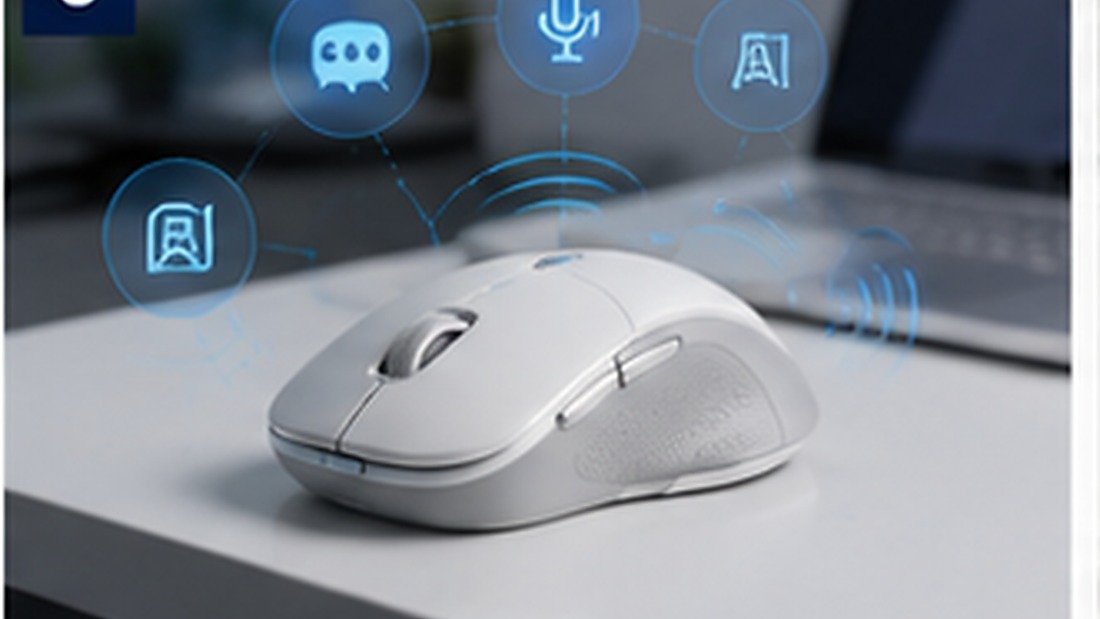
An AI voice mouse is a computer mouse that integrates a microphone and voice processing to enable dictation, voice commands, and in some models real-time translation. For corporate buyers in the Middle East, it can reduce typing time for multilingual staff and support accessibility and workplace productivity goals. However, procurement decisions should focus on language accuracy, data handling, and integration with existing IT environments rather than consumer-style feature lists.
Middle East organizations often operate in mixed-language offices where Arabic and English are used interchangeably. Voice input tools may improve document creation speed, but performance depends on acoustic conditions, accent coverage, and whether processing happens on-device or through a cloud service. Buyers should request test units and define success metrics for a pilot before considering a broader deployment.
Check 1: Product Specs and Real-World Language Support
Specification sheets rarely capture how a voice mouse performs in a busy open-plan office. Procurement teams should define required languages—typically Arabic and English, possibly French or Urdu depending on the workforce—and test recognition accuracy with representative users. Confirm whether speech processing is on-device, cloud-based, or hybrid, because this affects latency, privacy, and network requirements.
Specs to confirm before shortlisting
- Microphone array type and noise handling
- Supported languages and offline capability
- Compatibility with Windows, macOS, and common enterprise software
- Battery life and charging method
- Connection type (USB receiver, Bluetooth, or both)
Ask the supplier for a written statement on language coverage and any known limitations. If your organization has accessibility requirements, verify that the device can be configured to meet them; do not assume consumer-grade voice features map directly to enterprise needs.
Check 2: Supplier Evaluation and Manufacturer Verification
Supplier evaluation should go beyond price. Request business license documentation, factory audit summaries if available, and references that can be verified. Verify whether the supplier is a manufacturer or a trading company, because this affects customization flexibility, communication speed, and accountability for quality issues. You can review STAR KING’s AI voice mouse product page as a starting point for specification discussions.
Evidence to request
- Company registration and export history
- Product test reports relevant to the target market
- Warranty and RMA process description
- Lead time estimates for samples and mass production
For Middle East buyers, ask whether the supplier has experience with regional import procedures and whether they can provide documentation in formats accepted by local customs. If the supplier cannot clearly explain these steps, treat it as a risk.
Check 3: MOQ, Pricing, and Landed Cost Factors
MOQ and pricing depend on whether you buy a standard model or request customization. Logo printing, packaging changes, firmware adjustments, and app white-labeling each affect minimum order quantities and tooling costs. Buyers should request a tiered price list and clarify what triggers a higher MOQ.
Cost components to model
- Unit price at different quantities
- Tooling or setup fees for customization
- Packaging and logo application costs
- Shipping, insurance, and duties
- VAT and customs clearance in the destination country
- Warranty and spare parts provisioning
A low FOB price can hide high landed cost. Build a spreadsheet that includes freight, import duties, and any local certification testing. If you plan to distribute across multiple GCC countries, confirm whether one compliance file can be reused or whether each market has separate requirements—typically depends on the product and local regulations, so verify with authorities.
Check 4: Sample Testing and Pilot Program Design
Order samples before committing to bulk purchase. Test them with actual users in the target office environment, including native Arabic and English speakers. Define measurable pilot goals, such as time saved per document or user satisfaction scores, and run the pilot for a fixed period, for example four to six weeks.
Pilot structure that works
- 20–50 units distributed across departments
- Baseline productivity measurement before deployment
- Weekly feedback on accuracy and comfort
- IT review of software installation and data flow
Samples may be available at a cost that can sometimes be credited toward a future order; confirm this with the supplier. Document all pilot findings because they will inform your final specification and negotiation.
Check 5: Quality Control and Import Compliance for the Middle East
Compliance requirements vary by country and product configuration. Common documents include CE marking for certain markets, FCC for the United States (not directly applicable to Middle East but often requested as a quality signal), RoHS for hazardous substances, and battery-related documentation such as UN 38.3 for lithium batteries. Middle East countries may have their own certification schemes, so buyers should verify with local customs or standards bodies.
Quality control should include pre-shipment inspection, functional testing, and aging tests. Ask the supplier for their QC process and whether third-party inspection is allowed. For more on quality expectations, see AI office solutions and relevant compliance resources.
Compliance documents to request
- CE and RoHS declarations if applicable
- Battery test summary (UN 38.3) and MSDS
- Country-specific certificates if required
- Packaging and labeling compliance
Do not assume a product is certified for your market without written confirmation. Certification scope often depends on specific model variants and radio modules used.
Check 6: Data Privacy, Security, and Corporate IT Requirements
Voice data is sensitive. Procurement must coordinate with IT and legal to confirm whether audio is processed on-device, in the cloud, or both; where data is stored; and whether it can be deleted on demand. Some organizations require data residency within the region, which may not be available for all cloud-based voice services.
Ask the supplier for a data flow description and whether they can provide a data processing agreement. If the device requires an app or account, review the permissions and update policy. For Middle East entities with strict data protection rules, this check can be a gating factor.
Check 7: Software, Firmware, and Scaling to Mass Production
Scaling from pilot to full deployment involves firmware stability, app updates, and support processes. Confirm whether the supplier can provide firmware customization, such as default language or hotkey changes, and how updates are delivered. For private-label projects, discuss app customization and branding early, as these affect development time and cost.
Mass production planning should include a buffer for Chinese New Year and other holidays, plus shipping time to the Middle East. Ask for a production schedule and milestone tracker. If you need ongoing supply, discuss spare parts availability and end-of-life policies.
AI Voice Mouse vs. Standard Mouse: Procurement Comparison
| Factor | AI Voice Mouse | Standard Mouse |
|---|---|---|
| Primary use | Dictation, commands, translation | Pointing and clicking |
| Language support | Model-dependent; test Arabic/English | Not applicable |
| Data privacy | Requires review | Lower concern |
| Price | Higher; varies by features | Lower |
| IT integration | Software/app needed | Plug and play |
| Pilot need | Recommended | Minimal |
Common Mistakes and Buyer Red Flags
- Choosing on price alone without confirming language accuracy and privacy model.
- Assuming certifications are universal; requirements differ by country and model.
- Skipping a pilot and ordering bulk units that fail in real offices.
- Ignoring landed cost, including duties and VAT.
- Not clarifying MOQ triggers for customization.
Red flags include vague answers about compliance, refusal to provide test data, and pressure to order large quantities before sampling.
Practical Buyer Checklist
- Define required languages and test with native speakers.
- Collect supplier documentation: license, test reports, warranty terms.
- Request tiered pricing and clarify MOQ for customization.
- Order samples and run a 20–50 unit pilot.
- Verify compliance documents for each target country.
- Review data privacy with IT and legal.
- Calculate total landed cost.
- Agree on lead times and production milestones.
- Confirm after-sales support and spare parts.
If you’re comparing options for a Middle East rollout, reviewing our blog can help you frame the right questions before you request a quote.
FAQ
What is the typical MOQ for an AI voice mouse order?
MOQ depends on whether you order a standard model or request customization. Standard models often have lower MOQs than private-label versions, but exact numbers vary by supplier and configuration. Always confirm in writing.
Does an AI voice mouse support Arabic accurately?
Support varies by model. Test with native Arabic speakers in your office environment and confirm whether processing is on-device or cloud-based.
Which certifications are required for Middle East imports?
Requirements differ by country. Common documents include CE, RoHS, and battery test summaries such as UN 38.3. Buyers should verify with local customs or standards bodies.
How long does a pilot take?
A meaningful pilot typically runs four to six weeks with 20–50 units, including IT review and user feedback.
Can we get the device branded with our logo?
Yes, logo and packaging customization is often available, but it may affect MOQ and lead time. Discuss details with the supplier.
What about data privacy?
Ask the supplier to describe how voice data is processed and stored. Some organizations require on-device processing or regional data residency.
Conclusion
Sourcing AI voice mice for Middle East corporate procurement in 2026 requires a structured approach: define language and privacy needs, verify the supplier, confirm compliance, and pilot before scaling. By following the seven checks in this AI voice mouse sourcing guide, procurement teams can reduce risk and build a business case grounded in real productivity data.
Next Steps with STAR KING
Ready to evaluate AI voice mice for your organization? Request a quotation or discuss an OEM/ODM project with STAR KING. We can provide product samples, customization options, and compliance documentation to support your procurement process. Visit Get a Quote to start the conversation.
Useful Official References for Buyers
- FCC equipment authorization guidance
- European Commission CE marking information
- Bluetooth SIG specifications
Discuss Your Smart Wearable OEM/ODM Project
Planning a smart ring, smart watch, smart band, AI glasses, AI translator, or AI voice mouse project? Contact STAR KING to discuss product positioning, sample testing, customization scope, certification requirements, lead time, and quotation details.

Team Star King

Scan WhatsApp QR code