AI voice mouse sourcing: Buy AI Voice Mice from China in 2026: 7 Smart Checks for Middle East Amazon Sellers
Buy AI Voice Mice from China in 2026: 7 Smart Checks for Middle East Amazon Sellers
Sourcing an AI voice mouse for the Middle East means matching Arabic and MENA speech input, MOQ, certifications and branded packaging before you commit a single unit to FBA. The AI voice mouse sourcing process should start with a supplier that can show test reports, a defined MOQ, and working Arabic firmware — not a catalog with a translated product description. STAR KING manufactures AI voice mice for B2B buyers and can quote OEM, ODM and private-label programs at https://starkingsmartring.com/products/ai-voice-mouse/ with certification coverage that typically depends on the exact SKU and configuration you order.
Table of Contents
Table of Contents
AI voice mouse sourcing: Short Answer
For an Amazon listing in the Middle East, a workable AI voice mouse offer usually pairs a private-label device with demonstrated Arabic/MENA voice input, a factory MOQ you can fund, and market-appropriate certification. Treat the purchase as a supply-chain decision, not a catalog decision: verify the reports per SKU, test an Arabic sample, confirm the packaging and warranty terms, and only then scale the FBA order. Certification and import requirements vary by destination market, so buyers should verify the latest rules before placing production orders.
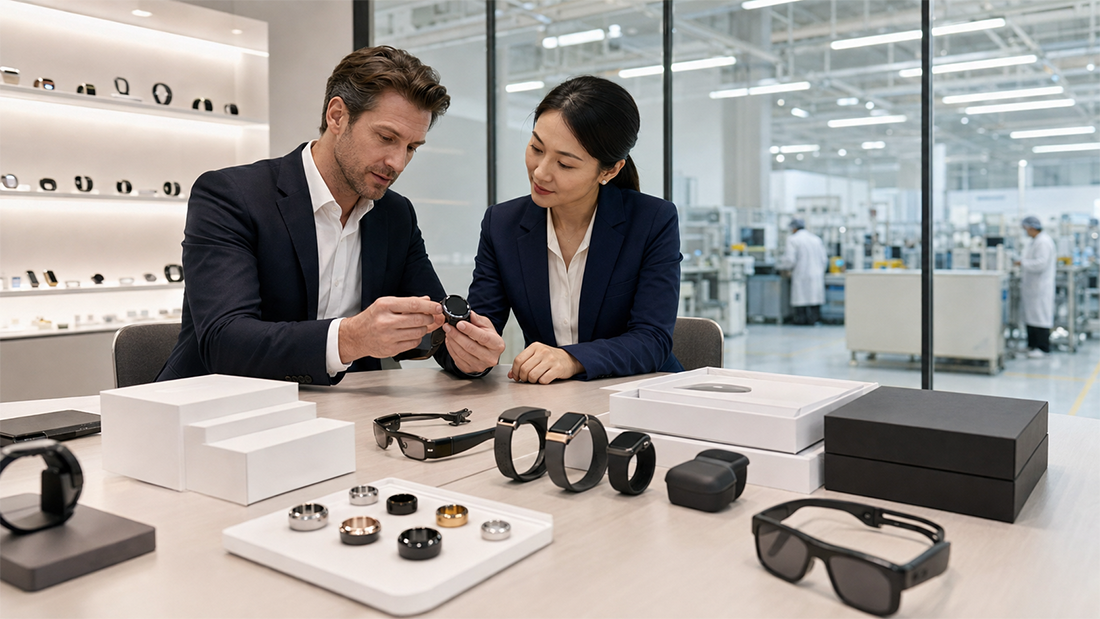
Table of Contents
- What Is an AI Voice Mouse and Why the Middle East Is Different
- 7 Smart Checks Before You Buy
- What Drives Landed Cost
- Common Mistakes and Buyer Red Flags
- Practical Buyer Checklist
- FAQ
- Conclusion
Key Takeaways
- The Middle East is not a single language market — cloud-based AI voice typically handles more languages than offline models, while offline support overall is limited.
- Ask for the specific certificate or test report number for the exact SKU you plan to import, not a brand-level claim that oversimplifies certification.
- MOQ and price are shaped by branding scope, packaging, language packs, tooling and order quantity.
- Arabic and other MENA languages such as Persian, Turkish and Hebrew are usually supported on cloud-connected models; offline voice support overall is limited.
- Test an Arabic sample on your own workflow and an Android device before placing a bulk order.
Key Facts for Buyers
| Buyer Question | What to Know | Why It Matters |
|---|---|---|
| What is an AI voice mouse? | A computer mouse with a microphone and AI software or companion app that turns speech into text, commands or translated output. | Defines the product your Amazon listing is competing on. |
| Is Arabic supported? | Product-specific; cloud models cover far more languages than offline models. Arabic and other MENA languages such as Persian, Turkish and Hebrew are usually handled by cloud-connected models. STAR KING per-language coverage: [STAR KING TO CONFIRM]. | Wrong language support is the fastest way to Amazon returns. |
| Typical retail band | Tier A about US$45–70; Tier B about US$25–45; Tier C (bulk) about US$10–20. Illustrative only. | Sets your pricing and ad-spend assumptions. |
| Common MOQ range | Often 1,000–3,000 units for private label; stock 100–500 units. STAR KING MOQ and sample policy: [STAR KING TO CONFIRM]. | Determines your cash commitment and test budget. |
| Certification | RoHS and CE are common for EU-bound electronics; FCC for US-bound; battery reports may be needed for cross-border shipping. Coverage is per SKU. | Non-compliant stock can be held or rejected at customs. |
| Lead time planning | Samples often 5–15 business days; production often 15–30 business days after deposit and artwork approval. Confirm in writing. | Drives your FBA/restock calendar. |
| Warranty and spares | Usually 12 months for B2B; spare-part policy must be agreed in the contract. STAR KING terms: [STAR KING TO CONFIRM]. | Protects your Amazon seller rating and account health. |
For regional logistics and channel context, the UAE’s national trade and customs authority publishes current import guidance at UAE Ministry of Economy, and the U.S. market’s hardware and battery rules are summarized by the FCC.
What Is an AI Voice Mouse and Why the Middle East Is Different
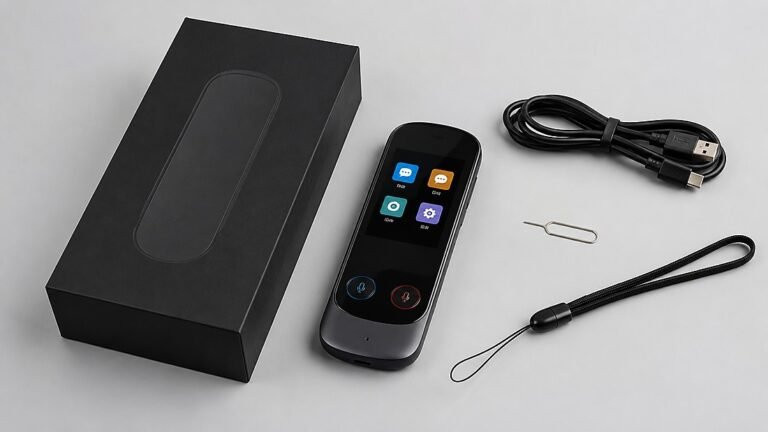
An AI voice mouse is a computer mouse that combines a microphone, a control or function button, and AI software — either on the device, in a companion desktop or mobile app, or in the cloud — to convert speech into text, commands, meeting notes or translations. Some models also act as a lightweight AI translator during calls, which overlaps with the standalone translator category the industry tracks, while the primary value for most buyers is dictation and workflow speed.
For an Amazon seller in the Middle East, the market adds three specific variables that a US or EU-only launch does not carry:
- Language mix. A single listing may serve Arabic, English, French (in parts of North Africa and the Levant), Turkish, Persian and Hebrew buyers. Cloud-based AI models generally cover this range; offline models usually support a narrow set. Offline voice support overall is limited, so a microphone-plus-cloud design remains the mainstream approach in this category.
- Platform compliance. Selling electronics on Amazon requires product documentation, and electrical safety documentation for the UAE is issued by the Emirates Authority for Standardization and Metrology. Certificates are tied to a specific model and mark scheme, so a certificate covering one configuration may not automatically extend to another, and the applicable mark scheme can differ by destination.
- Customer expectations. Amazon.sa, Amazon.ae and noon shoppers expect Arabic-language packaging and support, which pushes branded packaging and localized instruction manuals from a nice-to-have to a listing requirement.
That is why AI voice mouse sourcing for this region starts with language coverage and compliance, and only then moves to price.
Soft CTA: If you want to see which voice-mouse configurations are production-ready for MENA-language buyers, you can compare the current lineup here: AI Voice Mouse product page.
7 Smart Checks Before You Buy
1. Verify MENA Language Support and Offline vs Cloud Models
Ask the supplier to demonstrate, on video or on a live sample, dictation in Arabic and at least one other target language (for example Persian, Turkish or Hebrew). Some models include an AI translator mode for real-time translation, which can raise the retail price. Offline voice support overall is limited, so the realistic question is not “does it work offline?” but “does the cloud model cover my top three languages?”
How to verify: request a recorded demo in each priority language, test on-site or via a sample, and ask for the list of supported languages in writing on the quotation.
2. Confirm the AI Voice Mouse MOQ, Sample Policy and Lead Time
MOQ is rarely one number. Suppliers often quote a lower MOQ for stock/neutral units and a higher MOQ for full private-label customization because tooling, printing and firmware language packs need to be set up. Treat samples, tooling and production as three separate line items on the quotation.
How to verify: request a written quotation that breaks out sample cost, tooling cost, unit price by quantity band, and production lead time. STAR KING’s exact MOQ, sample policy and tooling terms are [STAR KING TO CONFIRM].
3. Check Hardware Specifications and Firmware Behavior
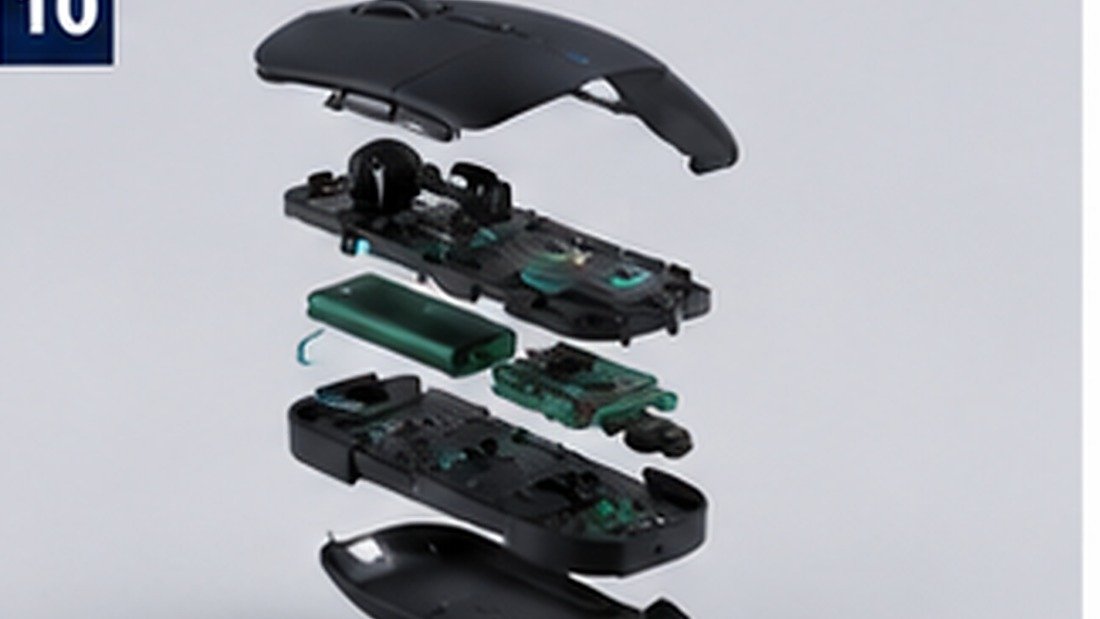
Two voice mice with the same product photo can behave very differently in use. Ask about microphone array or single-mic design, connection type (2.4 GHz receiver versus Bluetooth versus USB-C), battery capacity, and whether the AI function needs a desktop app, a mobile app or a cloud account.
| Use Case | Better Fit | Why |
|---|---|---|
| Free-flow writing, coding, long documents | Cloud AI voice typing | Higher accuracy; offline voice support overall is limited. |
| Bilingual meetings and live translation | Voice mouse with translator mode | Real-time translation and AI voice typing in one device. |
| Government offices and data-sensitive workplaces | Model with on-device processing where available | Reduces cloud dependency; verify the exact capability. |
| High-volume data entry on a budget | Tier C bulk model | Lower unit price; confirm language list before ordering. |
4. Understand Private Label and OEM Scope — and What It Costs
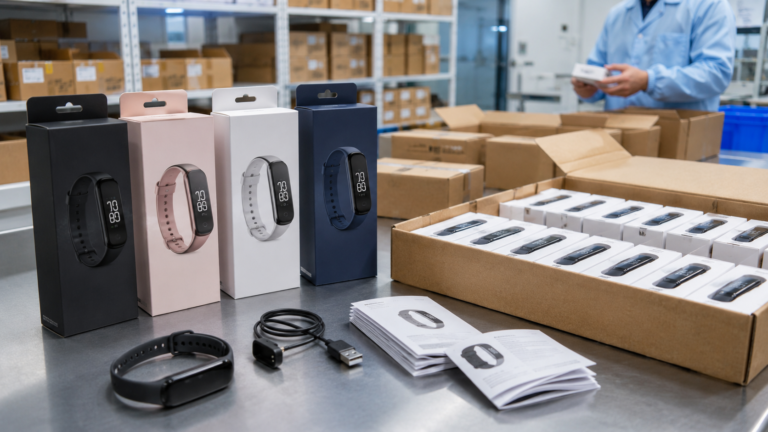
Private label for a voice mouse typically includes logo printing on the device and receiver, custom packaging, custom blank user manual, and possibly a custom boot logo or app skin. Full ODM scope can go further into firmware language defaults and app-level branding.
- Logo customization: device, receiver dongle, USB-C cable, box and manual.
- Packaging customization: custom box artwork, insert, and an Arabic or bilingual manual.
- App customization: co-branded splash screen or app name may be available depending on platform.
Each customization step moves the order from stock units into a tooling/printing cycle, so cost and lead time rise accordingly.
5. Map Certifications to the Exact SKU and Destination
Certification is not a single checkbox. Note that the UK’s post-Brexit mark is the UKCA mark, while EU-bound product uses CE. RoHS and CE are common requirements for EU-bound electronics; FCC is common for US-bound electronics. Saudi Arabia, Egypt and the UAE maintain their own conformity programs (including Saber/SASO in Saudi Arabia, the UAE’s ECAS scheme, and GOEIC in Egypt), so buyers should verify current requirements before shipping. Products with lithium batteries also need battery documentation for transport, and the industry standard is the UN Manual of Tests and Criteria, Part III, subsection 38.3 (UN 38.3), published by the United Nations Economic Commission for Europe.
STAR KING does not confirm that every model carries every certificate; coverage is per SKU and per target market. Ask for the report number and the covered model name, and confirm on the quotation that the required certificates for your destination will be included. Whether a wireless mouse also needs model-specific radio approvals depends on the radio module and the destination market, so buyers should verify with the supplier and a compliance agent.
6. Control Packaging, Branding and the Amazon Listing Details
Middle East listings live or die on the detail page. Plan the following before production:
- Barcode and FNSKU plan: confirm with your supplier whether they print FNSKU labels or you apply them at a prep center.
- Arabic manual and box text: RTL layout errors are a top cause of negative reviews; review a PDF proof before mass printing.
- Certificate of Origin: GCC member states generally require a Certificate of Origin; confirm format and issuing chamber before production.” If a supplier cannot state an origin, that is a red flag.
- Warranty card insert: a bilingual warranty card reduces A-to-Z claims and protects your seller rating.
7. Sample Validation, QC and Pre-Shipment Inspection
Treat samples as a paid test of the supplier, not a formality. Request at least two units from your intended configuration, test on the devices you use, and record failures in writing.
| Test Item | Sample Stage | Mass Production |
|---|---|---|
| Logo and print accuracy | Confirm after first sample | Golden sample retained for comparison |
| Arabic/MENA language list | Test on your own device | Re-verify on the production firmware version |
| USB-C fit and charging | Daily test | 100% charging test |
| Pairing to Android and Windows | Multiple pairing cycles | Sampled units re-checked |
| Packaging and manual | PDF proof and physical mock-up | Pre-shipment inspection with functional testing |
Commonly used acceptance baseline: a pre-shipment inspection often uses an AQL based on ISO 2859-1 (commonly AQL 2.5 for major defects and AQL 4.0 for minor defects). Define the inspection agency, timing and AQL levels in the purchase order so both sides measure the same way.
If you plan to sell wearable or complementary AI hardware alongside the mouse, STAR KING also supports a broader AI device roadmap; the private-label process is described here: Private Label OEM/ODM solutions.
What Drives Landed Cost
Unit price is only one line of your P&L. Build a landed-cost model before you commit to an FBA shipment.
| Landed Cost Component | What Affects It |
|---|---|
| Unit price (EXW/FOB) | Quantity band, branding scope, language pack, tooling cost |
| Packaging and printing | Custom box, bilingual manual, inserts, FNSKU labels |
| Certification and testing | Per-model reports and destination-market conformity programs |
| Freight (air/sea) | Weight and volume, lithium-battery handling rules |
| Duty and VAT | destination tariff schedule, VAT registration, tariff code |
| FBA/3PL fees | Prep, labeling, storage, monthly inventory fees |
| Advertising and returns | CPC, review policy, return rate on language mismatch |
Practical note: FOB and CIF are common Incoterms; for a first order, CIF or DDP is easier to model, while FOB gives you more control over your own forwarder. Whatever you choose, get a written duty and tax estimate for your destination before you commit. A realistic margin model assumes high return risk in the first months on any voice/language product, so price with room to absorb it.
Common Mistakes and Buyer Red Flags
Mistakes to Avoid
- Trusting a translated catalog or reseller website. Verify the product page and language demo yourself.
- Accepting a brand-level certification claim. Ask for the certificate number and the model it covers.
- Ordering at a low MOQ without a paid sample. Small runs are exactly where language and firmware surprises hide.
- Ignoring the battery classification. Lithium batteries affect air freight and documentation; plan around it.
- Treating one Middle East country as the whole region. Saudi, UAE and Egypt have different conformity rules.
Buyer Red Flags
- “Arabic is supported” with no demo, no language list and no version number.
- “All our products are CE and FCC certified” with no per-SKU documentation.
- Unwillingness to sign an NDA or to name the tooling owner if you pay for custom molds or firmware.
- A sample price that changes after you raise the customization level, with no written revision.
- A quote that omits the Incoterm, HS code, country of origin or Certificate of Origin availability.
Practical Buyer Checklist
- ☐ Requested a live or recorded dictation demo in Arabic and one other MENA language
- ☐ Requested the supported-language list in writing on the quotation
- ☐ Confirmed MOQ, sample cost and tooling cost separately
- ☐ Requested the certificate or report number for the exact model and destination
- ☐ Confirmed UN 38.3 / battery documentation status and MSDS availability
- ☐ Received a packaging and manual mock-up in the destination language
- ☐ Agreed an AQL level and named a pre-shipment inspection plan
- ☐ Received a landed-cost quote including duty, VAT and international freight
- ☐ Received a written warranty term and spare-parts commitment
- ☐ Confirmed country of origin and Certificate of Origin availability
- ☐ Reviewed the firmware or app update policy and cloud/data region
- ☐ Agreed payment terms (deposit and balance) and the production schedule
FAQ
Can an AI voice mouse work with Arabic and other MENA languages offered on my Amazon.sa listing?
In most cases, yes, if you choose a cloud-connected device whose app lists Arabic and any second language (Persian, Turkish or Hebrew) you plan to advertise. Because per-language cloud accuracy changes over time, ask the supplier to re-confirm the current language list in writing before you place the production order, and test the final firmware on the units you receive.
What MOQ should I expect for a private-label AI voice mouse?
Private label generally has a higher MOQ than stock/neutral units because the order involves logo printing, packaging and possibly a firmware language pack. Orders are commonly in the 1,000–3,000 unit range for full private label, while stock/neutral orders can start lower; some suppliers accept 100–500 units. Ask STAR KING directly for current terms, as MOQ and sample policy are [STAR KING TO CONFIRM].
Which certifications do I need for Saudi Arabia, the UAE and Egypt?
Requirements depend on the product and the destination. Saudi Arabia uses the Saber/SASO regime, the UAE uses ECAS and other schemes, and Egypt uses GOEIC procedures; many programs also require an IEC 62133-2 battery test report for handheld electronics with lithium batteries. Always verify the current scope of certification with the supplier, your compliance agent and the local customs authority before shipping.
Can I ship an AI voice mouse by air given the lithium battery?
Often, yes, provided the shipment has the right battery documentation and meets the applicable lithium-battery shipping requirements; this typically depends on cell type, Watt-hour rating and the carrier’s own rules. New and existing products may use different cell types, so confirm the battery spec in writing. Note that a device can be declared ‘lithium battery exempt’ yet still require placarding and documentation as a Class 9 dangerous good.
Who owns the tooling and firmware if I fund a custom design?
Tooling and firmware ownership is a commercial decision that should be documented in the contract, not assumed. If you pay for mold or firmware setup, ask for written terms stating who owns the intellectual property and what happens to it at the end of the agreement. The industry-standard tooling-ownership question is often framed as ‘who owns the tool’ and should be answered before milestone payments.
What warranty and spare-parts terms should I ask for?
For B2B consumer electronics, 12 months is a common starting point. Ask for the warranty scope in writing, the process for fault claims, and whether spare parts (receivers, cables, batteries) will be available for the expected selling life of the listing. STAR KING’s specific warranty and spare-parts policy is [STAR KING TO CONFIRM].
Should I put the AI voice mouse in an Amazon FBA shipment or launch via a local 3PL?
For a first launch, many Middle East sellers route a small trial batch through a local 3PL (or Amazon’s own FBA program) to test the listing, then move to bulk FBA once the return rate and review velocity are stable. The trade-off is lower upfront cash for the 3PL route versus lower storage and handling fees and Prime badging for FBA.
Conclusion
For an Amazon seller targeting the Middle East in 2026, the AI voice mouse is a purchasable, differentiated product with a clear regional advantage: a multilingual buyer base that rewards devices with genuine Arabic and MENA language support. The seven checks above are not a formality — they are the difference between a listing that reviews well and a stock write-off. Work through the checklist, buy one sample before you buy one thousand units, and keep every certification, packaging and warranty commitment on the written quotation where you can enforce it.
STAR KING works with B2B buyers on AI hardware programs, from single-model private label through to ODM development, and can share current specifications, certification coverage and customization options on request. If you have already selected your target market and need to move from research to a testable sample, the next step is a short specification and quotation conversation. Request a quotation or discuss your OEM/ODM AI voice mouse project and we will confirm MOQ, lead time, certification availability and sample plan for your target market.
Discuss Your Smart Wearable OEM/ODM Project
Planning a smart ring, smart watch, smart band, AI glasses, AI translator, or AI voice mouse project? Contact STAR KING to discuss product positioning, sample testing, customization scope, certification requirements, lead time, and quotation details.

Team Star King

Scan WhatsApp QR code