
AI Voice Mouse for Middle East Distributors: 7 Checks Before Your First Bulk Order
October 29, 2026 · Team Star King
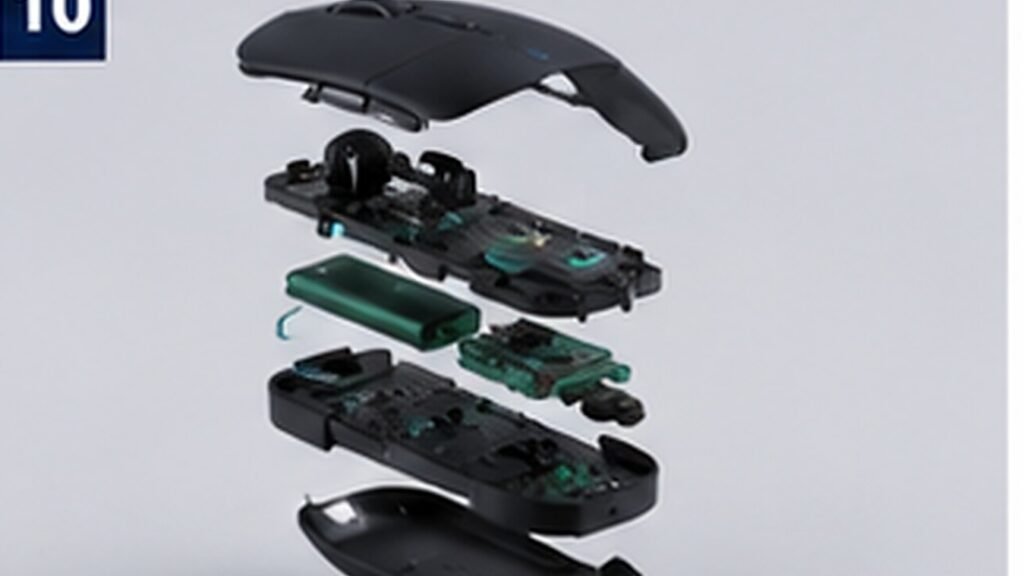
AI Voice Mouse for Middle East Distributors: 7 Checks Before Your First Bulk Order
An AI voice mouse is a computer mouse that combines standard cursor control with built-in microphones and speech-to-text software, letting users dictate, translate, or issue voice commands without a separate headset. For distributors in the Middle East, the buying decision in 2026 is less about whether the category exists and more about which supplier can prove language support, certification, and commercial terms before you commit to inventory. This guide walks through seven checks that separate a viable AI voice mouse program from a costly first order.
Table of Contents
Table of Contents
Short Answer
Before placing a first bulk order for an AI voice mouse in the Middle East, distributors should verify five things: accuracy of Arabic and other regional language dictation, the software and app model (bundled, subscription, or cloud-dependent), certification for your destination country, MOQ and lead time, and the OEM/Private Label terms. Prices typically depend on language coverage, firmware licensing, and packaging, so request a sample unit and a written quotation with landed-cost assumptions before negotiating volume.
Key Takeaways
- Voice accuracy in Arabic dialects is the single most important product test for Middle East distributors — test it on real hardware, not a demo video.
- Confirm whether software is bundled, licensed per unit, or subscription-based, because this changes your resale price and after-sales burden.
- Certification is country-specific and product-configuration-specific; ask for documentation tied to the exact SKU you will import.
- MOQ, tooling, and packaging decisions drive your landed cost more than the unit price quoted in an initial email.
- A small paid sample run, tested in your own office, is cheaper than a container of returns.
Table of Contents
- What Is an AI Voice Mouse and Why Distributors Are Watching It
- Check 1: Arabic and Regional Language Accuracy
- Check 2: Software, App, and Cloud Model
- Check 3: Certification and Import Compliance
- Check 4: MOQ, Pricing, and Lead Time
- Check 5: OEM, ODM, and Private Label Terms
- Check 6: Quality Control and Sample Validation
- Check 7: Channel Fit, Warranty, and After-Sales
- Key Facts for Buyers
- Comparison Table: Entry-Level vs. OEM-Grade AI Voice Mouse
- Common Mistakes and Buyer Red Flags
- Practical Buyer Checklist
- FAQ
- Conclusion
What Is an AI Voice Mouse and Why Distributors Are Watching It
An AI voice mouse is a peripheral that merges a conventional optical or wireless mouse with speech recognition and AI-driven text processing. Users speak into microphones built into the device, and the companion software converts speech to text, translates phrases, or triggers commands. In office and education markets, the appeal is speed: fast dictation, hands-lighter multitasking, and accessibility support for users with limited typing ability.
For a distributor, this is a category with two layers of margin risk. The hardware is comparatively simple to source; the software layer is where differentiation, licensing, and support questions concentrate. A supplier who can explain both clearly is worth a longer conversation. STAR KING’s AI Voice Mouse product line is one starting point for spec review, but the checks below apply to any vendor you evaluate.
Middle East demand is not homogeneous. A reseller selling into Gulf markets with high English proficiency and a large expatriate workforce has different language priorities than a distributor serving government or education buyers who need Arabic-first workflows. Define your top two buyer segments before you shortlist suppliers.

Check 1: Arabic and Regional Language Accuracy
Language accuracy is the make-or-break test for this product in the Middle East. Marketing pages often list “supports 100+ languages,” but list coverage and usable accuracy are different claims.
What to test on a real sample
- Modern Standard Arabic dictation at normal speaking pace, in a quiet office.
- Regional dialect handling — at minimum, test the dialect most common in your target market.
- Mixed-language phrasing — many regional professionals speak Arabic with embedded English terms such as product names and numbers.
- Noise tolerance — test in an open-plan office, not a silent room.
- Punctuation and formatting — does the software insert Arabic punctuation correctly?
Why it matters in procurement: a mouse that claims Arabic support but returns low accuracy will generate returns and negative reviews in a market where word-of-mouth drives resale. Ask the supplier whether language models run on-device or in the cloud, and whether accuracy depends on an internet connection. [STAR KING TO CONFIRM: full list of Middle East languages and dialect coverage per model.]
Check 2: Software, App, and Cloud Model
The software model determines your total cost of ownership. Ask three questions: Is the software bundled with hardware, licensed per device, or subscription-based? Does it require a vendor account and internet connection? Who provides technical support to your end customers?
For distribution, a bundled or perpetual license is easier to resell because you avoid recurring billing disputes. A subscription model can be attractive for corporate accounts but complicates retail packaging, since the buyer must activate a service. Cloud-based processing raises data-handling questions that enterprise and government buyers in the region may ask about. Confirm where speech data is processed and whether the device can operate offline. [STAR KING TO CONFIRM: licensing terms and offline/on-device capability by model.]
If your customers need productivity software ecosystems around the device, review the AI office productivity solution overview to see how voice hardware is typically positioned alongside other office tools.
Check 3: Certification and Import Compliance
Certification is a documentation exercise, not a promise. Requirements vary by destination country, by product configuration (wireless radio, battery, mains adapter), and by whether the device is sold bundled with software. Distributors should ask for certificates tied to the exact SKU, and should verify them with the issuing body or an accredited lab rather than accepting PDFs at face value.
Documents to request
- Radio and EMC compliance for wireless models, aligned to the destination market’s regulator.
- Battery transport documentation if the mouse contains a lithium cell — typically UN 38.3 test summaries and safety data sheets.
- RoHS or equivalent hazardous-substance declarations.
- Country-specific import registrations where applicable — buyers should verify with a local customs broker.
For wireless products, reference the Bluetooth SIG for qualification information and the U.S. FCC for general equipment authorization context, since many Chinese suppliers test to U.S. and EU standards first. Neither replaces local Gulf requirements, and your customs broker should confirm what your destination market actually enforces. Use cautious phrasing in your own marketing — do not claim certifications you have not received.
Check 4: MOQ, Pricing, and Lead Time
MOQ and machinery are where first orders go wrong. A distributor planning a small trial with retail chains or corporate accounts needs MOQ tiers that match test-order volumes; a distributor planning a container needs a production schedule.
Unit price is only one input. Packaging tooling, logo printing, custom firmware, and shipping all affect landed cost. Lithium batteries add transport restrictions and paperwork that can change routing and timing. Build a landed-cost sheet before you compare quotations.
Pricing drivers to confirm in writing
- Base unit price at stated quantities.
- Logo, packaging, and manual customization fees.
- Tooling or setup charges, if any.
- Sample fees and whether they are credited against the bulk order.
- Incoterms, shipping method, and expected transit time to your port.
- Payment terms and deposit percentage.
Confirm lead time from order confirmation, not from contract signing. [STAR KING TO CONFIRM: MOQ tiers, standard lead time, and payment terms by model and volume.]
Check 5: OEM, ODM, and Private Label Terms
Most Middle East distributors eventually want their own brand on the box. Ask what level of customization the supplier supports: logo printing on the device, retail packaging, user manual, firmware splash screen, or full industrial design changes.
Tooling ownership and IP are easy to overlook. If you pay for a mold or custom packaging, confirm in writing who owns it and what happens if the relationship ends. If you commission custom software, define source-code and data ownership. STAR KING’s private label OEM/ODM program is one reference point for the conversation, and the questions above should be asked of any supplier you shortlist.
A practical check: request a written quote for two scenarios — one with logo-only customization and one with packaging plus manual localization — so you can see how customization scales with volume.
Check 6: Quality Control and Sample Validation
Buy a sample before you buy a pallet. Test the unit yourself, in your office, with the software you will ship. Then ask the supplier how they inspect bulk production. A credible supplier can describe incoming material checks, functional testing, aging or burn-in where relevant, and pre-shipment inspection.
Sample validation plan
- Test voice accuracy in Arabic, English, and mixed speech.
- Test wireless pairing stability over several days.
- Test battery behavior over a full workday.
- Test the software installation process as an end user would.
- Ask for AQL inspection terms and whether a third-party inspection is allowed.
If a supplier resists samples or third-party inspection, that is a procurement signal worth heeding. Review the STAR KING resources blog for additional supplier-evaluation frameworks.
Check 7: Channel Fit, Warranty, and After-Sales
How you sell determines what the product must support. Corporate procurement buyers may ask for invoices, warranty terms, and asset tagging; education buyers may need bulk software deployment and local-language manuals; retail chains need branded packaging and predictable replacement policies.
Warranty and spare parts are frequently negotiated late and cost distributors margin later. Agree in advance on the warranty length, the process for defective returns, and whether you or the supplier absorb shipping on replacements. [STAR KING TO CONFIRM: warranty period and RMA process.]
For corporate wellness or office-rollout accounts, position the device as part of a broader business and education solution, where voice hardware is procured alongside displays and other office technology.
Key Facts for Buyers
| Factor | What to confirm | Why it matters |
|---|---|---|
| Language support | Arabic and regional dialect accuracy, offline vs. cloud | Drives returns and reviews |
| Software model | Bundled, per-unit license, or subscription | Changes resale price and support load |
| Certification | SKU-specific documents for your destination country | Customs clearance and resale legality |
| MOQ | Tier structure and sample credit | Caps first-order risk |
| Lead time | From order confirmation | Planning retail or tender timelines |
| Customization | Logo, packaging, manual; tooling ownership | Brand value and IP |
| Warranty | Length, RMA process, who pays shipping | Net margin after returns |
Comparison Table: Entry-Level vs. OEM-Grade AI Voice Mouse
| Criterion | Entry-level catalog unit | OEM/ODM-grade unit |
|---|---|---|
| Language coverage | Broad list, shallow testing | Documented accuracy per language |
| Software | Vendor app, connection required | Documented offline/on-device behavior where offered |
| Packaging | Generic | Localized, brandable |
| Certification | Generic reports | SKU-specific documentation |
| MOQ | One-size-fits-all | Volume tiers |
| Support | Email only | Defined RMA and spare-parts process |
Common Mistakes and Buyer Red Flags
- Buying on demo video alone. A polished video does not prove Arabic accuracy in your office.
- Assuming certifications transfer. Certificates are configuration- and market-specific.
- Ignoring software licensing. A subscription hidden in the box becomes your customer-service problem.
- Underestimating battery shipping. Lithium batteries add documentation and routing constraints.
- No written tooling ownership. Custom molds you paid for should be documented.
- Red flag: vague answers on MOQ, lead time, or warranty. Precision in writing is a credibility signal.
- Red flag: pressure to skip samples. No reputable manufacturer needs to bypass validation.
Practical Buyer Checklist
- [ ] Defined top two buyer segments for your market.
- [ ] Paid sample ordered and tested in your own office.
- [ ] Arabic and mixed-language accuracy documented.
- [ ] Software licensing model confirmed in writing.
- [ ] SKU-specific certification documents requested and verified.
- [ ] Landed-cost sheet built with Incoterms and freight.
- [ ] MOQ tiers, lead time, and payment terms quoted.
- [ ] Customization scenarios priced separately.
- [ ] Tooling and IP ownership documented.
- [ ] Warranty and RMA process agreed.
FAQ
What is the difference between an AI voice mouse and a standard mouse?
A standard mouse controls the cursor. An AI voice mouse adds microphones and speech software so users can dictate, translate, or issue commands. The software layer is what separates one supplier from another.
How many sample units should a distributor buy?
Buy at least two to five units so you can test in parallel and keep one sealed for reference. Confirm whether sample fees are credited against the bulk order.
Can I get an AI voice mouse with my own brand?
Private label is typically available, but the level of customization — logo only, packaging, manual, firmware — affects MOQ and tooling fees. Confirm terms in writing.
Are certifications valid for every Middle East country?
No. Requirements vary by country and configuration, and buyers should verify with a local customs broker. Ask for documentation tied to the exact SKU you will import.
How long should lead time be for a first order?
It depends on configuration and volume. Request a written schedule measured from order confirmation, and add buffer for lithium battery shipping documentation.
Does the mouse need an internet connection to work?
Many voice models rely on cloud processing. Ask specifically whether on-device or offline operation is available, because it affects enterprise and government sales.
Conclusion
The AI voice mouse category is growing in the Middle East, but distributor margin is won or lost in the details: language accuracy you tested on real hardware, software terms you documented, certification tied to the right SKU, and commercial terms that fit your channel. Work through the seven checks in order, and you will have a defensible shortlist instead of a container of surprises.
Next Step
Ready to compare specifications or request a sample? Contact our team to request a quotation for your target market, review private label and OEM customization options, and confirm certification requirements for your destination country. Request an AI voice mouse quotation.
Discuss Your Smart Wearable OEM/ODM Project
Planning a smart ring, smart watch, smart band, AI glasses, AI translator, or AI voice mouse project? Contact STAR KING to discuss product positioning, sample testing, customization scope, certification requirements, lead time, and quotation details.

Team Star King

Scan WhatsApp QR code
Leave a Reply