AI translators RFQ guide: AI Translators for System Integrators in Southeast Asia: 7 Steps to a Winning RFQ
AI Translators for System Integrators in Southeast Asia: 7 Steps to Build a Better RFQ
Our AI translators RFQ guide is built for system integrators sourcing AI translation hardware for Southeast Asia. It gives you a seven-step process to lock specs, MOQ, compliance, lead time, and after-sales terms in writing before you commit to a batch. If you are building multilingual kiosks, service desks, fleet tools, or field kits, use these steps to turn a vague requirement into an approved, repeatable purchase. This guide reduces risk by converting assumptions into verified, written requirements.
Table of Contents
Table of Contents
AI translators RFQ guide: Table of Contents
- Short Answer
- Key Takeaways
- Key Facts for Buyers
- Step 1 — Map the Use Case Before You Request a Price
- Step 2 — Choose the Right Collaboration Model: OEM, ODM, or White Label
- Step 3 — Write a Spec That Tests Translation Quality
- Step 4 — Plan MOQ and Landed Cost for Southeast Asia
- Step 5 — Qualify Certification and Lithium Battery Shipping
- Step 6 — Lock Lead Time, Warranty, and Spare Parts
- Step 7 — Run a Pilot and Scale in Phases
- Common Mistakes and Buyer Red Flags
- Practical Buyer Checklist
- FAQ
- Conclusion

Short Answer
To run a clean AI translators RFQ for Southeast Asia, define the use case and languages first, then specify offline behavior, battery runtime, connectivity, SIM/eSIM needs, and an accuracy test. Finally, obtain a written quotation that separates unit cost, tooling or NRE, compliance documents, shipping, and warranty terms. Once confirmed, pilot one deployment site before scaling. The fastest path to a reliable result is testing sample units against your own phrases and verifying packaging and logistics, since translation accuracy and compliance often depend on the exact configuration and target country.

Key Takeaways
- Language coverage is only useful if it is tested on your real phrases, accents, and environments.
- Offline translation mode is often a hard requirement for field or low-connectivity deployments.
- MOQ and lead time usually vary by hardware platform and customization level; confirm before budgeting.
- Certification and battery shipping requirements depend on the exact product and destination country.
- Lock a pilot-to-scale plan so you can validate performance before placing larger orders.
- Move to RFQ with a structured, written spec; it reduces back-and-forth and quoting risk.
Key Facts for Buyers
| Decision Area | What to Confirm with the Supplier | Why It Matters |
|---|---|---|
| Language pairs and domains | Supported and tested language pairs, domain relevance, SIM/eSIM plans | Defines real usability across borders in Southeast Asia |
| Offline translation | Offline mode availability and accuracy; [STAR KING TO CONFIRM] | Ensures operation where connectivity is weak |
| Connectivity | Wi-Fi, cellular (4G/5G), eSIM, Bluetooth; [STAR KING TO CONFIRM] | Enables device management and updates |
| Battery and runtime | Capacity, runtime, charging method, safety documentation | Field shifts last different lengths; runtime sets shift length |
| MOQ and pricing | MOQ, unit price tiers, NRE/tooling; [STAR KING TO CONFIRM] | Determines feasibility and landed cost |
| Certification | Available documents per config; market-specific requirements | Enables market entry where regulations apply |
| Shipping of lithium batteries | UN38.3 test summary, MSDS, packaging; [STAR KING TO CONFIRM] | Required for compliant transport |
| Lead time and warranty | Production schedule, warranty terms, spares; [STAR KING TO CONFIRM] | Automation projects fail on delays and missing parts |
| Software integration | SDK/API availability, firmware customization; [STAR KING TO CONFIRM] | Determines integration effort and lifecycle cost |

Step 1 — Map the Use Case Before You Request a Price
System integrators rarely buy a single AI translator; they embed devices into a solution. Start by listing where translation happens: a public counter, a factory floor, a hospital reception, a hotel, a police checkpoint, or a logistics hub across Southeast Asia. Each environment changes the hardware requirements.
Consider these factors:
- Location and noise: Indoor lobbies allow cloud translation; noisy or remote sites favor offline, on-device processing.
- Language set: Prioritize languages your users actually speak, including regional variants. For multilingual device deployment across ASEAN, translators are typically deployed on business and education solution sets.
- Concurrency: Two-way conversation versus multi-party interpretation changes microphone and speaker needs.
- Privacy: For medical, legal, or HR uses, data handling and offline processing may be required.
- Integration: If the device becomes part of a larger system, you will need SDK/API hooks and device management. Learn more about AI translators features to plan around existing capabilities.
Example use cases
- Public service help desk: Reliable offline translation with clear audio and fast wake-up.
- Corporate reception: Broad language coverage with a branded enclosure.
- Field service kit: Rugged accessories, long battery life, and spare batteries.
- Education: Lower cost per unit with managed deployment and shared charging.
Write a one-paragraph use case: who uses it, where, for how long, and with whom. This becomes the reference document pushed through the RFQ.
Step 2 — Choose the Right Collaboration Model: OEM, ODM, or White Label
Your collaboration model determines how much hardware and software you control. For system integrators with brand and support obligations, there is usually a trade-off between speed, cost, and uniqueness.
| Model | What You Get | Best For | Watch-for |
|---|---|---|---|
| White label | Existing device with light branding | Fast pilot, limited budget | Low differentiation |
| OEM | Standard hardware, your brand, packaging, firmware settings | Branded rollouts with moderate volume | Hidden dependency on default software |
| ODM | Customized enclosure and features based on a proven platform | Differentiated products and channel exclusivity | Tooling cost and longer lead time |
Discuss customization options in an OEM/ODM project context: enclosure, logo, packaging, firmware behavior, and app integration. If you plan to scale into multiple verticals, choosing a platform that can be re-skinned is a strategic decision. Review private label OEM/ODM solutions to compare models and clarify what should be written into the RFQ.
For a mid-stage deployment, a practical entry point is a short soft launch: procure a pilot batch to validate usability, then commit to a larger OEM/ODM order once field feedback is positive. If you want to evaluate how a pilot and a private-label transition can work together, request product samples and a preliminary quote rather than reverse-engineering options from brochures alone.
Step 3 — Write a Spec That Tests Translation Quality
Translation quality is the most contested purchase criterion and the hardest to compare across suppliers. Define how you will test it before you receive quotations.
- Phrase set: Provide 30–50 representative phrases from your real environment, including accents, industry terms, names, and numbers.
- Offline vs online: Test both modes where relevant and record quality differences.
- Latency: Measure response time for two-way conversations.
- Noise handling: Test in noisy locations if that reflects your deployment.
- Accuracy metric: Agree on a scoring method (e.g., acceptable / not acceptable, or a 1–5 scale) and record it per phrase.
- Privacy: Confirm how data is processed and whether local processing is available.
Include a short specification for usability, such as display size, touch response, speaker output, wake phrase, and physical controls. If the device will be shared, ask about user management, session logs, and usage reporting. For organizations that require device management or analytics, ask for SDK/API details and data handling before you finalize the RFQ. When testing sample units, measure the impact of real-world usage on AI translators battery life and thermal behavior.
Specs to specify in writing
- Supported languages and offline language set
- Display size and type, touch capabilities
- Battery capacity, runtime, charging method
- Connectivity, SIM/eSIM options, Wi-Fi bands
- SDK/API availability, firmware customization options
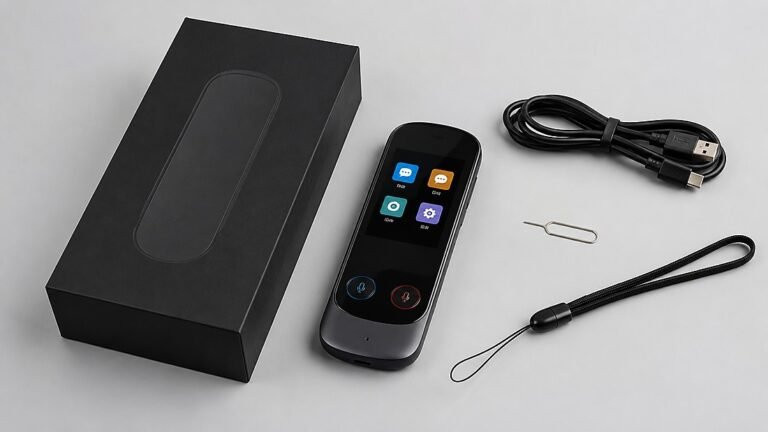
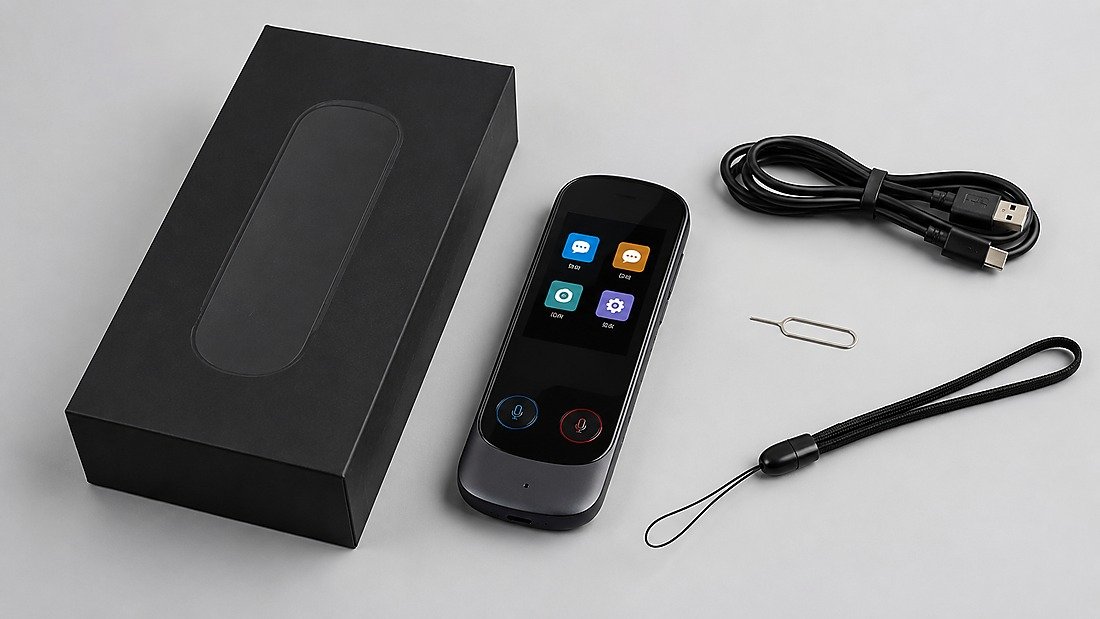
- Accessories (charger, cable, case, lanyard)
Step 4 — Plan MOQ and Landed Cost for Southeast Asia
MOQ and unit price interact directly with customization and lead time. Requesting a price without MOQ context usually produces a number that is unrealistic for your budget stage.
- MOQ: Ask for the MOQ per SKU and the MOQ for OEM/ODM customization separately. They are often different.
- Unit cost: Request price tiers (e.g., 100 / 500 / 1,000 units) to model scaling.
- NRE/tooling: For ODM, tooling and development fees may apply and may be one-time.
- Landed cost: Calculate unit price + freight + duties/taxes + insurance + handling. For cross-border automation in vehicle and logistics projects, include field deployment costs.
- Payment terms: Clarify deposit, batch payments, and balance terms.
In Southeast Asia, import duties and tax treatment vary by country, so landed cost is not uniform. Ask the supplier to quote Incoterms (e.g., EXW, FOB, CIF, DDP) clearly and state which costs are included. This step is where most budget plans fail if unverified.
Step 5 — Qualify Certification and Lithium Battery Shipping
Certification requirements depend on the product configuration and the destination market. Some devices can ship with existing certificates, while customized versions may require additional testing. Request a compliance matrix that maps each document to the exact model and target country.
Certification and battery documentation to request
- CE marking documentation where applicable (EU)
- FCC documentation where applicable (US)
- RoHS compliance statements
- UN38.3 test summary for lithium batteries
- MSDS for battery shipments by air/sea
- Other local requirements as advised by your importer
Battery shipping is a common delay point. Translation devices with lithium batteries may require UN38.3 documentation and compliant packaging. Review the official IATA lithium battery guidance and the FCC equipment authorization pages for up-to-date rules, and confirm carrier requirements before booking freight. In the EU, the EU market surveillance regulation sets out general compliance obligations; national interpretations can differ.
Do not assume all configurations share the same certificates. Ask for the certificate number, model name, and test date, and verify that the listed model matches your quoted configuration.
Step 6 — Lock Lead Time, Warranty, and Spare Parts
Lead time and after-sales terms determine whether a project stays on schedule. Vague promises create downstream risk for integrators who have committed to clients.
- Lead time: Ask for production lead time after deposit, plus sample and tooling lead times.
- Warranty: Clarify coverage duration, what is covered, and the return process.
- Spare parts: Confirm availability of batteries, chargers, and key components during and after warranty.
- Repair process: Decide whether you will repair locally or ship back; get the process in writing.
- Firmware updates: Ask how updates are delivered and how long support is provided.
For integrators, spare part availability is often more important than the initial price. A device that cannot be repaired in-country can create service failures that outweigh hardware savings. Put the terms in the RFQ and confirm what must be ordered as a spare kit.
Step 7 — Run a Pilot and Scale in Phases
A pilot procurement gives you real data on usability and integration before you commit to larger volumes. Plan the pilot with written success criteria up front, and keep the sampling and measurement short and focused.
- Sample order: Order a small batch from production-intent units so test results predict batch quality.
- Success criteria: Translation quality score, battery runtime, charging time, drop/durability experience, and support responsiveness.
- Feedback loop: Collect user and IT feedback, then map it to a final specification.
- Scaling: Schedule the production order after the pilot passes your criteria, and lock price tiers.
Run a pilot review meeting after 2–4 weeks. Document changes you want in the next order, including firmware behavior, accessory kits, and packaging. If you plan a broad deployment, decide early whether you will use a dealer console or SIM management tool to control data usage; ask whether such tools are available. For multi-country automation in Southeast Asia, review remote health wearables as example of devices designed for managed, multi-site deployments.
Common Mistakes and Buyer Red Flags
Common mistakes
- Requesting prices without a use-case or language list.
- Assuming certification covers every configuration and destination.
- Comparing unit prices without shipping and duty costs.
- Approving a spec without testing real phrases and accents.
- Skipping spare parts and warranty details.
Red flags
- Quotes that do not identify the exact model name and included accessories.
- Certificates that list a different model or are not provided in full.
- No commitment on lead time, warranty, or spare parts.
- Unclear battery shipping documentation.
- No pilot or sample process offered before large orders.
Practical Buyer Checklist
- [ ] Use case and language list documented
- [ ] Offline translation tested with your phrases
- [ ] Connectivity, SIM/eSIM, and device management confirmed
- [ ] Battery runtime and charging requirements verified
- [ ] MOQ per SKU and customization MOQ in writing
- [ ] Incoterms and landed cost confirmed
- [ ] Compliance matrix with model numbers and target countries
- [ ] UN38.3, MSDS, and battery shipping documents reviewed
- [ ] Lead time, warranty, and spare parts terms agreed
- [ ] Pilot success criteria and scale-up schedule set
FAQ
What does the RFQ process for AI translators look like for a system integrator?
It starts with a written use case and language list, followed by a specification, sampling, testing, and a full quotation covering unit cost, MOQ, compliance, shipping, lead time, and warranty. The final step is a pilot, then a phased production order.
Which languages and offline modes should I test for a Southeast Asia deployment?
Test the languages your users actually speak with regional variants in mind, and confirm offline mode accuracy and availability. Southeast Asia has many language combinations, so the required set varies by country and venue, not by supplier claims.
How do MOQ and customization affect the price?
MOQ and customization usually interact: higher MOQ often lowers unit cost, while OEM/ODM customization can add tooling or NRE fees. Ask for separate MOQs and price tiers so you can model the total investment before committing.
What certification should I expect for exporting AI translators to Southeast Asia?
Required certification depends on the exact product and destination country. CE, FCC, RoHS, UN38.3, and MSDS may apply, and buyers should verify local requirements with their importer or compliance advisor before shipping.
How should I handle lithium battery shipping for bulk AI translator orders?
Request UN38.3 test summaries and MSDS, confirm packaging, and follow carrier and IATA requirements. Shipping methods may determine what documentation is needed, so verify before booking freight.
Do AI translators support app, firmware, or SDK customization?
Support varies by platform and supplier. Ask about firmware settings, SDK/API access, app integration, and dealer consoles during the RFQ. [STAR KING TO CONFIRM]
How do I mitigate supply chain risk when importing from China?
Mitigate risk with samples, documented specifications, clear Incoterms, verified certification, spare parts planning, and a phased order schedule. Buyers should also confirm quality control procedures, such as pre-shipment inspection and drop or aging testing, when applicable.
Conclusion
For system integrators, AI translators are not a standalone purchase; they are part of a deployable solution. A structured RFQ that defines language coverage, offline behavior, connectivity, battery, compliance, lead time, and warranty terms gives you a verifiable basis for comparison. Southeast Asia adds complexity because regulations, logistics, and language needs differ by market. The seven steps above help you move from a general requirement to a tested, documented procurement with a clear scale-up path.
To reduce risk further, keep the specification, the compliance matrix, and the pilot results together as a single reference document for future orders. This keeps you consistent across multiple sites and vendors and makes it easier to update requirements as your projects evolve.
STAR KING CTA
If you are ready to move from planning to sourcing, STAR KING can support AI translator requests with OEM/ODM and private label options, customization, and configuration discussions. Request a quote and share your target languages, volumes, and deployment countries so we can respond with a structured proposal and sample options.
Discuss Your Smart Wearable OEM/ODM Project
Planning a smart ring, smart watch, smart band, AI glasses, AI translator, or AI voice mouse project? Contact STAR KING to discuss product positioning, sample testing, customization scope, certification requirements, lead time, and quotation details.

Team Star King

Scan WhatsApp QR code