
AI Translators OEM/ODM Guide: 7 Checks for System Integrators in Southeast Asia
October 10, 2026 · Team Star King
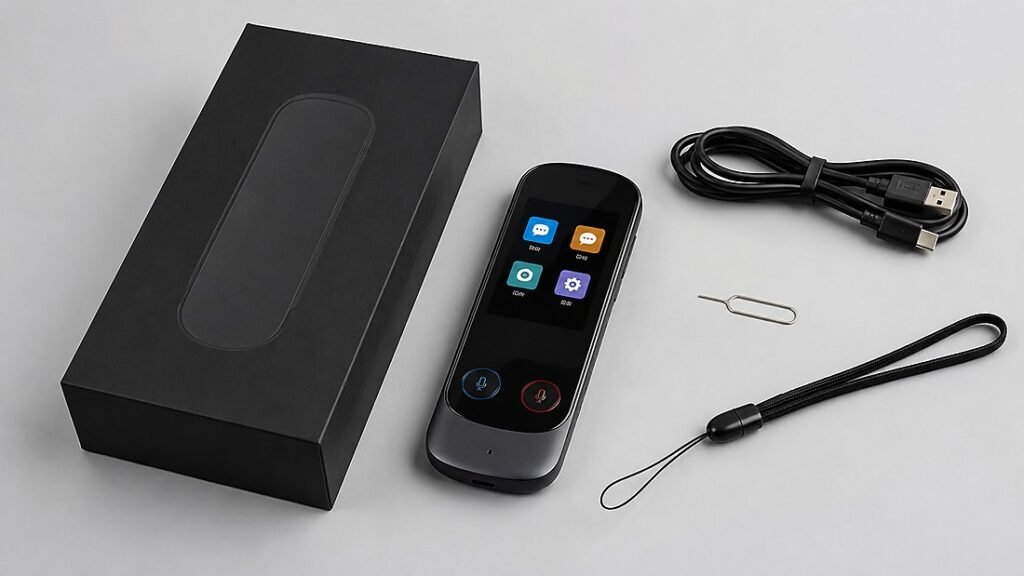
AI Translators OEM: 7 Checks for System Integrators in Southeast Asia
If you are a system integrator in Southeast Asia, AI translators OEM sourcing starts with your deployment model, not the device catalog. The right partner must match your language coverage, deliver a stable API/SDK so your platform can control and monitor devices, document certifications for every market you ship to, and confirm MOQ and lead time in writing before tooling starts. This guide gives you seven checks, plus tables and a buyer checklist, to evaluate an AI translators OEM program before you commit purchase orders.
Table of Contents
Table of Contents
Table of Contents
- Short Answer: What Should System Integrators Verify First?
- Key Takeaways
- Key Facts for Buyers
- What an AI Translators OEM Program Usually Includes
- Check 1: Deployment Scenario and Language Coverage for Southeast Asia
- Check 2: SDK, API, and Firmware Control
- Check 3: Hardware Trade-Offs Buyers Usually Underestimate
- Check 4: Sample Testing Before You Commit
- Check 5: MOQ, Price Drivers, and Landed Cost
- Check 6: Certifications, Batteries, and Import Compliance
- Check 7: Supply Agreement, Warranty, and Spare Parts
- OEM vs ODM vs White-Label: Decision Table
- Common Mistakes and Buyer Red Flags
- Practical Buyer Checklist
- FAQ
- Conclusion and Next Step
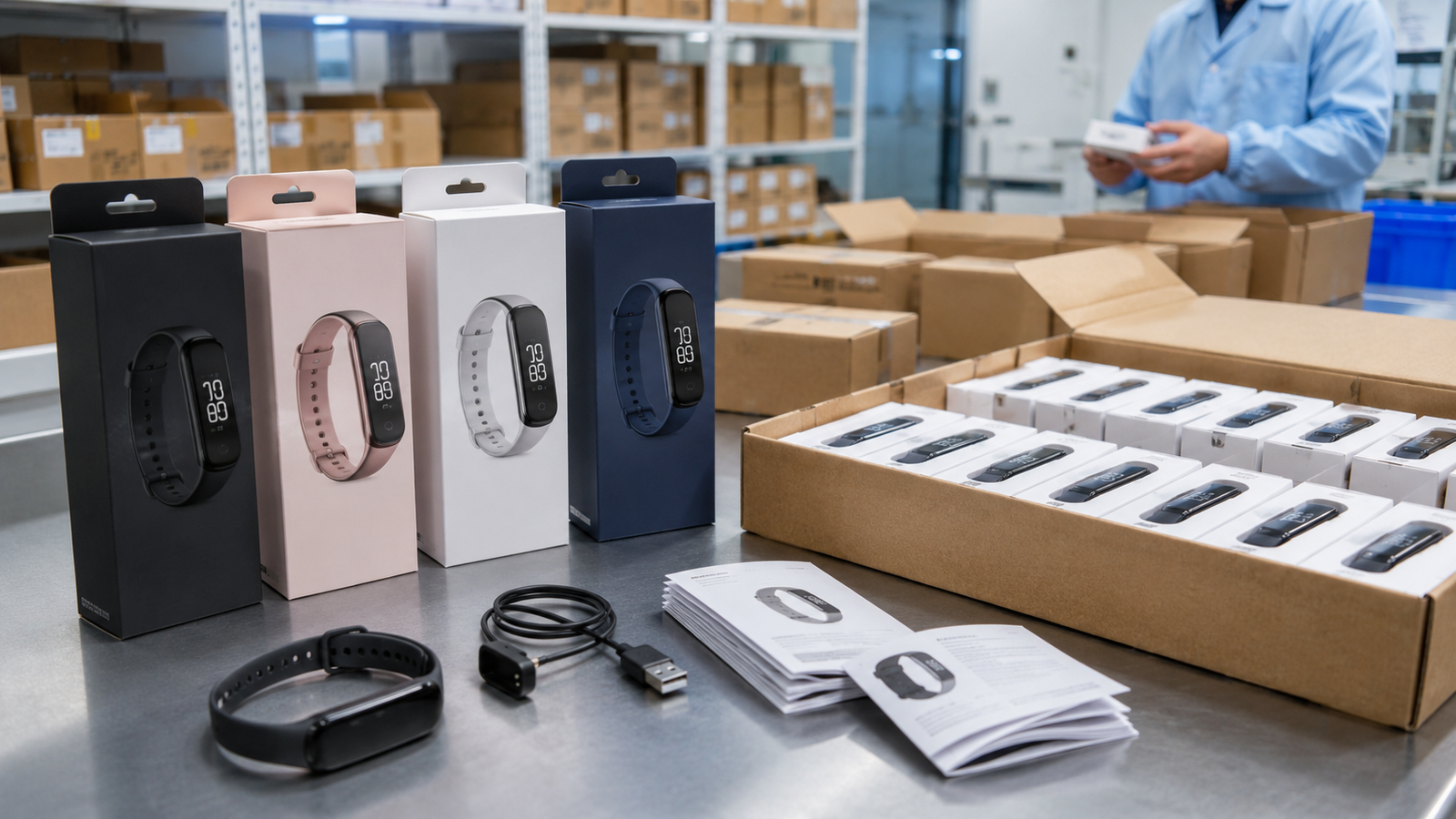
Short Answer: What Should System Integrators Verify First?
Before placing an order, confirm four things in writing: (1) your required Southeast Asia languages are supported on the firmware version you will receive; (2) an API/SDK exists that lets your platform manage devices and push configuration; (3) the exact certifications needed for your destination countries, plus UN38.3 and MSDS for the lithium battery; and (4) MOQ, tooling cost, lead time, and packaging requirements for your first batch. If any of these is vague, treat the program as unconfirmed.

Key Takeaways
- Language coverage for Southeast Asia is a firmware and cloud-service decision, not a spec-sheet number.
- For integrators, the SDK/API matters more than the enclosure. Ask how devices are provisioned, updated, and monitored.
- AI translators OEM pricing is driven by chipset, memory, microphone array, connectivity, language packs, and tooling—not by brand alone.
- Certification scope depends on radio modules, battery, charger, and target market. Buyers should verify current status for every SKU and destination.
- Content accuracy, offline behavior, and battery life should be tested with your own scripts and accents before you scale.
- A written supply agreement covering lead time, warranty, spare parts, and firmware update responsibility prevents expensive surprises.
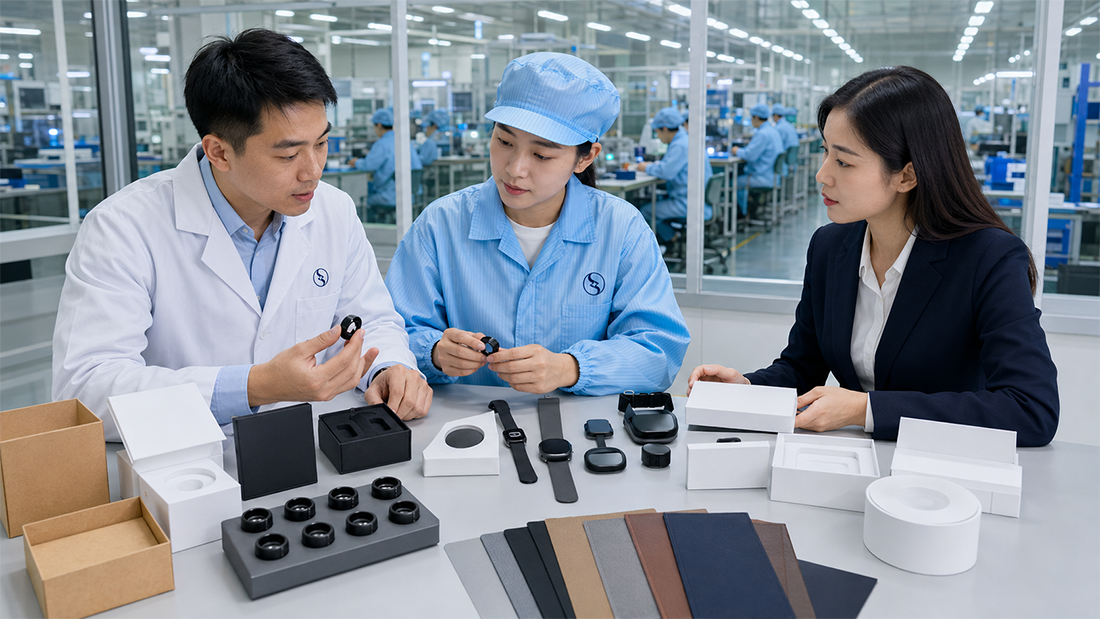
Key Facts for Buyers
| Item | What to Confirm | Why It Matters |
|---|---|---|
| Focus of this guide | AI translators OEM sourcing for system integrators in Southeast Asia | Aligns device choice with deployment requirements |
| Core evaluation areas | Languages, SDK/API, hardware, testing, MOQ, compliance, supply terms | Covers the full purchase decision |
| Battery documentation | UN38.3 test summary and MSDS | Commonly requested for air freight of lithium batteries |
| Radio-certification scope | Depends on Wi-Fi, Bluetooth, cellular, and destination country | Country requirements vary; verify per SKU and market |
| Primary cost drivers | Chipset, memory, mics, connectivity, language packs, tooling, packaging | Explains price gaps between quotes |
| Best first step | Request samples plus SDK documentation and a certification plan | Reduces technical and compliance risk |
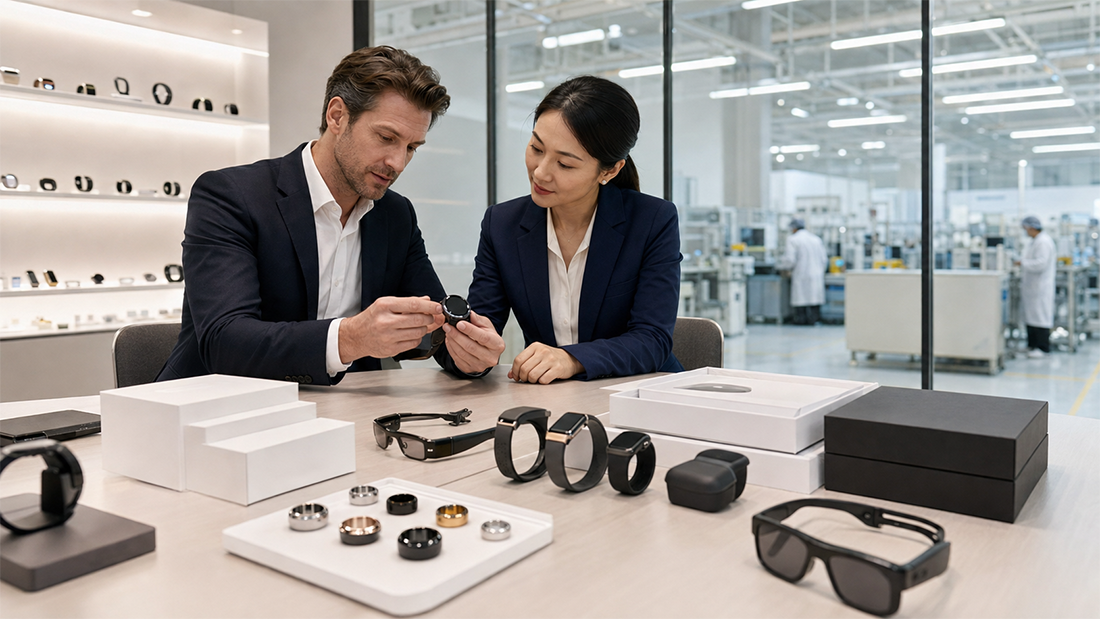
What an AI Translators OEM Program Usually Includes
An AI translators OEM program lets a buyer sell a translation device under their own brand, with defined customization of hardware appearance, firmware behavior, and packaging. In practice, the program covers three layers: the physical device (enclosure, buttons, microphones, speaker, display, battery), the translation stack (speech recognition, speech-to-text, machine translation, text-to-speech, and cloud services), and the integration layer (mobile app, API/SDK, device management). As a system integrator, your buying decision sits mostly in layer three, because your value to end clients comes from how the device connects to your software, dashboards, and support workflows.
For a broader view of AI hardware categories that integrators commonly bundle, see the AI Office Productivity solution and the AI Translators product line.
Check 1: Deployment Scenario and Language Coverage for Southeast Asia
Define the use case before the SKU
Southeast Asia deployments usually fall into a few patterns: hospitality front desks, cross-border logistics and customs handling, field service and construction, healthcare intake, and education. Each pattern shapes language priority, form factor, and privacy requirements. A hotel in Bangkok may need Thai, English, Mandarin, Japanese, and Korean. A logistics operator moving goods across borders may prioritize Bahasa Indonesia, Vietnamese, Thai, Filipino, and English, often with offline fallback in low-signal yards.
Ask for language support by mode
“Supports 100+ languages” is not a buying specification. Ask the supplier to list, for your shortlist of languages, which modes are supported: full two-way speech translation, text-only translation, offline phrase packs, and image/OCR translation. Then confirm the firmware build and cloud service that deliver those modes.
Use a simple coverage matrix as part of your Business & Education deployment plan.
| Language | Deployment Priority | Mode Needed | Offline Fallback | Sample Test Notes |
|---|---|---|---|---|
| English | Baseline | Two-way speech | Preferred | Accent range test |
| Bahasa Indonesia | High | Two-way speech | Optional | Local phrase test |
| Vietnamese | High | Two-way speech | Optional | Tone accuracy |
| Thai | Medium | Two-way speech | Optional | Formality levels |
| Filipino | Medium | Two-way speech | Optional | Code-switching test |
Integration implication: If your client requires offline operation in a specific corridor, that reduces the candidate list immediately and may change the chipset and memory requirements.
Check 2: SDK, API, and Firmware Control
For system integrators, this is the make-or-break section. Ask the supplier to share, under NDA if needed, an SDK/API document that covers device provisioning, user/account binding, language configuration, over-the-air firmware updates, usage logs or telemetry, and error reporting. Also confirm whether the translation engines are hosted by the manufacturer or by a third-party cloud, because that affects cost per minute, data residency, and continuity planning.
Integration questions to send in writing
- What SDKs are provided (Android, iOS, Linux, or REST)?
- Is there a device management portal, and does it expose an API?
- How are OTA updates pushed, signed, and rolled back?
- Can translation engines be swapped or restricted for a specific market?
- What are API rate limits, and what happens if a cloud region fails?
- What data is stored on device, and what is transmitted to the cloud?
Firmware customization in practice
Typical firmware customizations for integrators include boot logo, default language pair, restricted menus, kiosk mode, auto-start of a translation session, and disablement of consumer features that do not fit a B2B deployment. Confirm which customizations are configuration changes (fast, low cost) and which require new firmware branches (slower, more cost).
Firmware and app workload should be planned alongside your private label OEM/ODM program, not negotiated after the first PO.
Check 3: Hardware Trade-Offs Buyers Usually Underestimate
Two devices with the same language list can perform very differently. In noisy or multi-speaker environments, the microphone array, noise suppression, and voice-activity detection matter more than the display. For long shifts, battery capacity and charging method drive operator satisfaction. For field use, IP rating and drop resistance may matter more than screen size.
| Specification | Low-Cost Choice | Higher-Cost Choice | When the Upgrade Pays Off |
|---|---|---|---|
| Microphone | Single mic | Mic array with noise suppression | Two-way use in noisy lobbies, yards, or vehicles |
| Connectivity | Wi-Fi + Bluetooth | Wi-Fi + Bluetooth + cellular/eSIM | Mobile field teams outside Wi-Fi coverage |
| Battery | Smaller cell, shorter runtime | Larger cell or fast-charge dock | Full-shift operation and shared-device pools |
| Display | Small text display | Dual-screen or larger panel | Face-to-face interpretation and training use |
| Enclosure | Standard plastic | Reinforced, sealed, higher IP rating | Outdoor, industrial, and logistics environments |
Integration implication: Choose hardware around the noisiest, longest, and most mobile scenario you expect, then confirm the supplier can hold that configuration for repeat orders.
Check 4: Sample Testing Before You Commit
Samples should be tested against your own script, not a demo clip. Prepare 30–50 sentences that reflect your deployment, including names, addresses, product terms, numbers, and regional accents. Record results for accuracy, latency, and failure patterns.
Sample evaluation record
| Test Item | Method | Target | Observed Result |
|---|---|---|---|
| Speech accuracy | 50-sentence script per language | Agreed pass level | Document per unit |
| Latency | Measure seconds per sentence | Fit conversation flow | Record peak latency |
| Noise handling | Test at 65–75 dB background | Usable in real sites | Note dropouts |
| Battery runtime | Continuous use cycle | Match shift length | Log charge cycles |
| OTA update | Push a firmware update | No device bricking | Test rollback |
| API control | Provision and configure remotely | Works with your platform | Capture logs |
Sample-stage costs are minor compared with a full-batch mistake. If a supplier cannot provide a working sample with your intended firmware and region settings, treat the program as unproven.
Check 5: MOQ, Price Drivers, and Landed Cost
MOQ and price depend heavily on whether you choose an existing model with logo and packaging changes, or a customized enclosure that requires tooling. Existing models usually carry lower MOQ and shorter lead time. Custom tooling raises both. Ask each supplier to separate one-time costs (tooling, certification, firmware development, packaging plates) from unit costs (bill of materials, assembly, testing, packing).
| Model | MOQ Range (typical) | Lead Time | Customization Scope | Cost Profile |
|---|---|---|---|---|
| Logo + packaging on existing model | Lowest | Short | Branding only | Lowest setup |
| Firmware + app rebranding | Low to medium | Medium | Software and branding | Moderate setup |
| Custom enclosure (existing PCBA) | Medium | Longer (tooling) | Hardware and branding | Tooling cost added |
| Full ODM (new design) | Highest | Longest | End-to-end | Development-heavy |
[STAR KING TO CONFIRM: MOQ bands, tooling cost, and lead times for AI translator models.]
Integration implication: For a pilot in one Southeast Asia market, an existing model with firmware configuration and packaging customization usually gets you to a live deployment faster, leaving tooling for a later stage once volumes are proven.
Check 6: Certifications, Batteries, and Import Compliance
Certification needs depend on the product configuration and the destination market. For a translation device with Wi-Fi, Bluetooth, or cellular radios, buyers should expect radio equipment requirements, EMC and safety requirements, and in some markets additional registration. Requirements vary by country and change over time, so verify current rules with a testing lab or your importer of record.
Documents to request
- CE and UKCA documentation where applicable for European markets; FCC documentation where applicable for the United States.
- RoHS and REACH statements for restricted substances, as required by the destination market.
- UN38.3 test summary and MSDS for the lithium battery, commonly requested for air freight.
- Radio test reports for the specific module and frequency bands used in the SKU.
- Safety reports for the charger and any external power supply.
For reference, buyers can review the FCC equipment authorization process on the FCC Office of Engineering and Technology site and the EU radio equipment requirements on the European Commission Radio Equipment Directive page. Battery transport rules are published by IATA, and Bluetooth declaration requirements are described by the Bluetooth SIG.
Certification status should be confirmed per SKU and per destination, in writing, before shipment. If a supplier claims blanket certification for all models and all countries, ask for the certificate numbers and the exact model listings.
Check 7: Supply Agreement, Warranty, and Spare Parts
The purchase decision does not end at the PO. For integrators, the operating cost after delivery often exceeds the unit price difference between suppliers. Ask for a written supply agreement that states lead time, shipping terms, warranty period, faulty-unit handling, spare parts availability, and who is responsible for firmware updates and security patches.
Terms worth negotiating
- Warranty period and DOA (dead on arrival) policy with a defined replacement process.
- Spare parts availability window, especially for batteries, displays, and chargers.
- Firmware update commitment and end-of-life notice period.
- Escalation path for field failures, including a technical contact.
- Tooling ownership and mold/IP terms if you fund custom tooling.
Integration implication: For multi-year deployments, a supplier that documents update and spare-part commitments reduces the risk of stranded devices mid-contract.
If your roadmap includes adjacent AI hardware for the same client base, it can be efficient to discuss AI voice peripherals or AI smart glasses in the same sourcing conversation.
OEM vs ODM vs White-Label: Decision Table
| Model | What You Control | Supplier Responsibility | Best For |
|---|---|---|---|
| White-label | Brand and packaging | Whole device, firmware, app | Fast pilot with minimal engineering |
| OEM | Brand, packaging, selected firmware settings | Design, manufacturing, base firmware | Integrators who need brand consistency |
| ODM | Requirements, features, interface | Design, development, manufacturing | Custom deployments and differentiated products |
The right choice depends on how much control your deployment needs and how much internal engineering time you can allocate. A program that starts white-label can move to OEM or ODM later as volumes and requirements grow.
Common Mistakes and Buyer Red Flags
- Buying on language count alone. A large language list tells you nothing about accuracy, offline behavior, or latency for your priority languages.
- Ignoring the integration layer. Without an API/SDK and device management, your support team ends up handling devices manually.
- Assuming certifications transfer across SKUs. Radio modules, batteries, and chargers change certification scope.
- Skipping battery documentation. Missing UN38.3 or MSDS documents can delay air freight and customs clearance.
- No written lead-time commitment. Verbal schedules are not a plan.
- Unclear tooling ownership. If you pay for tooling, the ownership terms should be in the contract.
- Vague warranty terms. Confirm who pays return freight and how replacements are processed.
Red flags include refusing to provide firmware version details, refusing an NDA before sharing SDK documentation, quoting a single price without separating setup and unit costs, and claiming certifications without certificate numbers or model listings.
Practical Buyer Checklist
- Language modes confirmed for each priority Southeast Asia language, per firmware build.
- SDK/API documentation reviewed by your engineering team.
- Device management and OTA update process tested on a sample.
- Hardware configuration matched to your noisiest and longest operating scenario.
- Sample tested with your own 30–50 sentence script and local accents.
- Battery runtime tested against shift length.
- MOQ, tooling cost, and lead time confirmed in writing, with setup and unit costs separated.
- Certification requirements identified per destination country, with documents to be verified per SKU.
- UN38.3 test summary and MSDS requested for the battery.
- Warranty, DOA policy, spare parts, and firmware update commitments included in the supply agreement.
- Tooling ownership and IP terms documented if you fund tooling.
- Packaging and logo artwork approved against a physical pre-production sample.
FAQ
What is the typical MOQ for AI translators OEM orders?
MOQ depends on the model and customization level. Logo and packaging changes on an existing model usually carry the lowest MOQ, while custom tooling raises both MOQ and lead time. Ask for MOQ per configuration in writing. [STAR KING TO CONFIRM: MOQ bands for AI translator models.]
Can the device interface connect to our own platform through an API?
Many programs provide a REST API and a device management portal, but coverage varies. Request the SDK/API document and test provisioning, configuration, and OTA updates on a sample before committing to volume.
Do we need UN38.3 and MSDS for shipping AI translators?
Translation devices contain lithium batteries, and air carriers commonly require a UN38.3 test summary and MSDS. Requirements are typically governed by transport regulations, and buyers should verify current rules with their freight forwarder and the applicable authority.
Which certifications are required for Southeast Asia?
It depends on the country, the radio modules in the SKU, and the product category. Some markets require radio type approval, and others require additional registration. Verify current requirements with a testing lab or your importer of record before shipment.
Can firmware and app be customized for kiosk or B2B modes?
Common customizations include boot logo, default language pair, restricted menus, kiosk mode, and auto-start of a translation session. Ask which changes are configuration and which require a new firmware branch, as this affects cost and timeline.
How do we reduce the risk of a bad first batch?
Test a working sample with your own scripts and accents, confirm firmware version and region settings, agree on a pre-shipment inspection scope, and separate one-time setup costs from unit costs in the contract.
Conclusion and Next Step
For system integrators in Southeast Asia, AI translators OEM sourcing is a technical and operational decision more than a catalog choice. Language coverage, SDK/API control, hardware configuration, sample testing, MOQ, compliance documentation, and supply terms determine whether a deployment runs smoothly or consumes your support budget. Work through the seven checks in this guide, document every confirmation in writing, and treat unverified claims as open items.
To move from evaluation to a concrete plan, request a quotation and sample discussion for your target languages and deployment scenario. STAR KING can review your language matrix, firmware and app requirements, packaging needs, and certification plan for your destination markets. Request a quote or samples, and confirm the specifications, MOQ, lead time, and compliance documents for your configuration before placing a purchase order.
Request a quotation for your AI translators OEM project.
Discuss Your Smart Wearable OEM/ODM Project
Planning a smart ring, smart watch, smart band, AI glasses, AI translator, or AI voice mouse project? Contact STAR KING to discuss product positioning, sample testing, customization scope, certification requirements, lead time, and quotation details.

Team Star King

Scan WhatsApp QR code
Leave a Reply