
AI translators: 7 Essential Checks Before You Import AI Translators to Southeast Asia: A 2026 Buyer’s Guide
November 9, 2026 · Team Star King
7 Essential Checks Before You Import AI Translators to Southeast Asia: A 2026 Buyer’s Guide
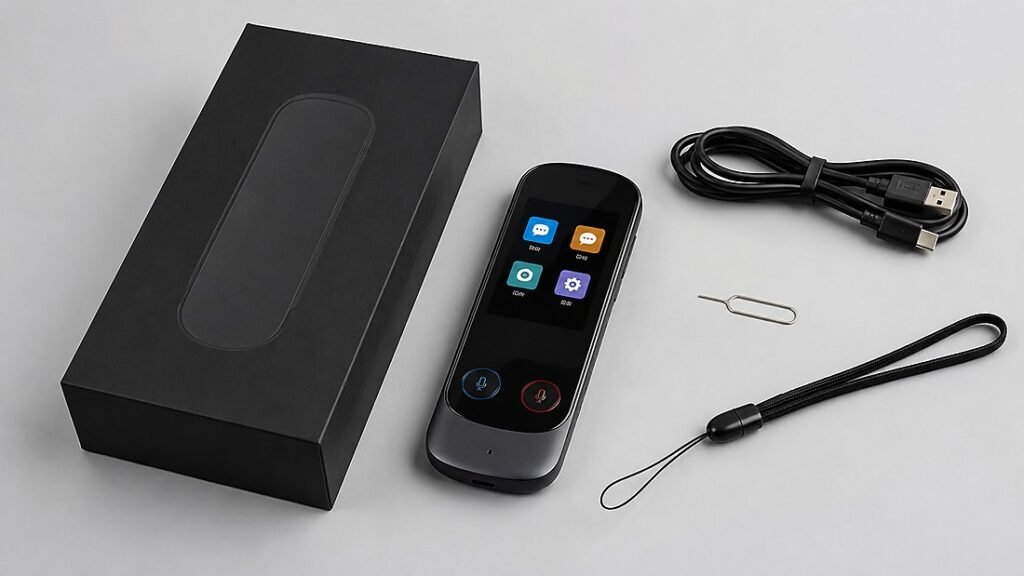
Importing AI translators to Southeast Asia requires more than selecting a device with many languages. You must verify product specifications, real-time translation quality, battery and connectivity standards, certification for each target country, MOQ and lead times, and after-sales support. This guide walks importers through seven checks that reduce risk and improve margin in a fast-growing region.
Table of Contents
Table of Contents
AI translators: Direct Answer
To import AI translators successfully, buyers should confirm the device supports the specific SEA languages needed, verify real-time translation latency and accuracy on sample units, ensure certification (CE, FCC, RoHS, UN38.3) for each market, and plan MOQ, lead times, and landed costs with your supplier. STAR KING offers OEM/ODM options for AI translators with customizable software and packaging.
Table of Contents
- Introduction
- Key Takeaways
- Key Facts for Buyers
- 1. Verify Language Coverage for Southeast Asia
- 2. Test Real-Time Translation Accuracy and Latency
- 3. Evaluate Hardware and Connectivity for Local Networks
- 4. Confirm Certification and Import Compliance
- 5. Plan MOQ, Pricing, and Landed Costs
- 6. Assess Supplier Support and After-Sales
- 7. Review Customization Options: OEM/ODM and Private Label
- Common Mistakes
- Buyer Checklist
- FAQ
- Conclusion
Key Takeaways
- Language support and real-time accuracy are critical for adoption in multilingual Southeast Asia.
- Certification requirements vary by country; verify CE, FCC, RoHS, UN38.3, and MSDS for each market.
- MOQ and lead times should be aligned with your sales forecast and cash flow.
- OEM/ODM options allow branding and software customization to differentiate in local channels.
Key Facts for Buyers
| Factor | What to Check | Typical Range / Note |
|---|---|---|
| Language coverage | Support for Bahasa Indonesia, Thai, Vietnamese, Malay, Filipino | May vary by model; verify with sample |
| Translation latency | Real-time performance under 1-2 seconds | Test on live samples |
| Connectivity | Wi-Fi, 4G, Bluetooth compatibility | Ensure local network bands |
| Certification | CE, FCC, RoHS, UN38.3, MSDS | Depends on product configuration and destination |
| MOQ | Minimum order quantity | [STAR KING TO CONFIRM] |
| Lead time | Production and shipping | [STAR KING TO CONFIRM] |
1. Verify Language Coverage for Southeast Asia
Southeast Asia is home to hundreds of languages, but for consumer AI translators, focus on the major languages of your target markets: Bahasa Indonesia, Thai, Vietnamese, Malay, Filipino, and English. Confirm that the device supports both speech-to-speech and text translation for these languages.
Some devices may list many languages but deliver poor accuracy for less common ones. Request a demo or sample to test the languages your customers will use most. For importers, language coverage directly affects product-market fit and return rates.
STAR KING’s AI translators are designed for multilingual communication; confirm supported languages for your target markets with the supplier.
2. Test Real-Time Translation Accuracy and Latency
Real-time translation is the core value proposition. Latency above two seconds can frustrate users, especially in face-to-face conversations. Request sample units and test in realistic scenarios: noisy environments, different accents, and various speaking speeds.
Check for offline translation capabilities if your market has spotty connectivity. Also, evaluate the app or device interface for ease of use. For B2B buyers, consider offering a trial period to key distributors or retailers to gather feedback before bulk orders.
3. Evaluate Hardware and Connectivity for Local Networks
Hardware quality impacts durability and user experience. Check battery life, build quality, screen readability, and microphone sensitivity. For connectivity, ensure the device supports Wi-Fi and cellular bands used in Southeast Asia (e.g., 4G LTE bands).
Bluetooth pairing with smartphones should be stable. If the device relies on a companion app, verify that the app is available in local app stores and supports the languages needed. Also, consider the availability of spare parts and accessories in the region.
4. Confirm Certification and Import Compliance
Certification requirements for AI translators typically depend on the destination country and product configuration. Common requirements include CE for EU, FCC for US, RoHS for hazardous substances, UN38.3 for lithium batteries, and MSDS for battery shipping. For Southeast Asia, check local telecom and safety regulations.
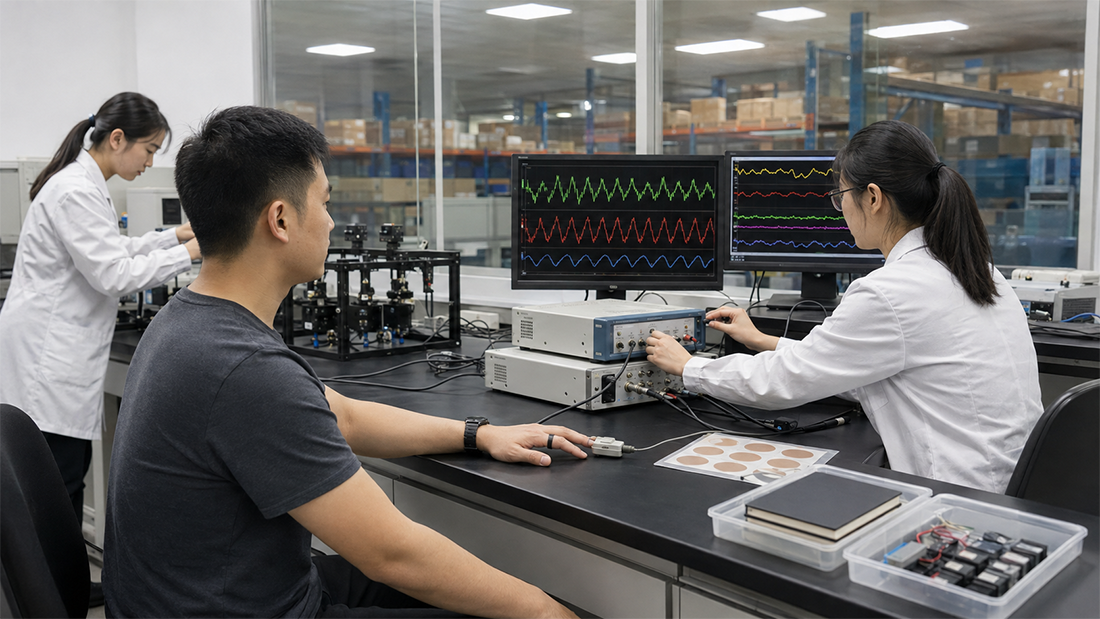
Buyers should verify certification directly with the supplier and, where possible, request test reports. Do not assume all products are certified; confirm per model and market. For official reference, consult the FCC and IEC websites for standards, and local authority sites for each SEA country.
5. Plan MOQ, Pricing, and Landed Costs
MOQ varies by supplier and customization level. For AI translators, MOQ may range from a few hundred to several thousand units. Discuss MOQ with STAR KING to align with your sales forecast. Pricing depends on features, order volume, and customization.
Calculate landed costs including freight, import duties, taxes, and certification fees. Southeast Asian countries have different import duty rates; use a landed cost calculator or consult a customs broker. Factor in warranty and return rates to protect margins.
6. Assess Supplier Support and After-Sales
Reliable after-sales support is crucial for B2B buyers. Ask about warranty terms, repair turnaround, and availability of spare parts. Check if the supplier provides technical training or marketing materials for your sales channels.
For e-commerce sellers, ensure the supplier can support drop-shipping or small batch replenishment if needed. STAR KING offers private label OEM/ODM solutions that can include customized packaging and branding.
7. Review Customization Options: OEM/ODM and Private Label
Differentiation is key in competitive markets. OEM/ODM allows you to customize hardware, software, packaging, and branding. For AI translators, you might customize the language set, app interface, logo, and packaging to suit local preferences.
Discuss with STAR KING about firmware customization, app localization, and packaging design. Ensure intellectual property ownership and mold ownership terms are clear. Customization increases MOQ and lead time, so plan accordingly.
Common Mistakes
- Assuming one certification covers all Southeast Asian countries; check each market.
- Underestimating language accuracy issues leading to high return rates.
- Ignoring after-sales support and spare parts availability.
- Not calculating landed costs accurately, eroding margins.
Buyer Checklist
- Request samples and test translation accuracy for target languages.
- Verify certifications for each destination country.
- Clarify MOQ, lead times, and payment terms.
- Calculate landed costs including duties and taxes.
- Confirm warranty and after-sales support.
- Discuss customization options and IP ownership.
FAQ
What certifications are needed to import AI translators to Southeast Asia?
Certifications vary by country; typically CE, FCC, RoHS, UN38.3, and MSDS may be required. Verify with local authorities and confirm with the supplier.
What is the typical MOQ for AI translators?
MOQ depends on the supplier and customization. Contact STAR KING for specific MOQ based on your order.
How can I test translation accuracy before bulk order?
Request sample units and test with native speakers in realistic scenarios. Consider a trial with distributors.
What is the lead time for AI translator orders?
Lead time varies by order volume and customization; discuss with the supplier for a production schedule.
Can I customize the AI translator with my brand?
Yes, OEM/ODM options allow logo, packaging, and software customization. Discuss with STAR KING.
Conclusion
Importing AI translators to Southeast Asia presents a significant opportunity, but success depends on thorough due diligence. By following these seven checks, you can mitigate risks, ensure product quality, and build a profitable product line. Remember to verify certifications, test samples, and plan your supply chain carefully.
Ready to discuss your AI translator import project? Request a quotation or ask about samples and OEM/ODM options.
Discuss Your Smart Wearable OEM/ODM Project
Planning a smart ring, smart watch, smart band, AI glasses, AI translator, or AI voice mouse project? Contact STAR KING to discuss product positioning, sample testing, customization scope, certification requirements, lead time, and quotation details.

Team Star King

Scan WhatsApp QR code
Leave a Reply